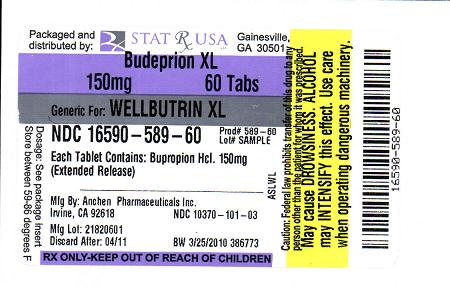
The following Structured Product Label (SPL) was submitted to the FDA by Stat Rx Usa Llc for the product Budeprion (NDC 16590-589). This document serves as the official prescribing information, containing essential scientific data and clinical materials required for healthcare providers and patients.
This specific version of the label includes detailed information regarding boxed warning, description, clinical pharmacology, clinical studies, indications & usage, contraindications, warnings, precautions, and other regulatory disclosures. Use the navigation below to review specific sections of the FDA submission.
Boxed Warning
BOXED WARNING
Suicidality and Antidepressant Drugs
Antidepressants increased the risk compared to placebo of
suicidal thinking and behavior (suicidality) in children, adolescents, and young
adults in short-term studies of major depressive disorder (MDD) and other
psychiatric disorders. Anyone considering the use of bupropion hydrochloride
extended-release tablets (XL) or any other antidepressant in a child,
adolescent, or young adult must balance this risk with the clinical need.
Short-term studies did not show an increase in the risk of suicidality with
antidepressants compared to placebo in adults beyond age 24; there was a
reduction in risk with antidepressants compared to placebo in adults aged 65 and
older. Depression and certain other psychiatric disorders are themselves
associated with increases in the risk of suicide. Patients of all ages who are
started on antidepressant therapy should be monitored appropriately and observed
closely for clinical worsening, suicidality, or unusual changes in behavior.
Families and caregivers should be advised of the need for close observation and
communication with the prescriber. Bupropion hydrochloride extended-release
tablets (XL) are not approved for use in pediatric patients. (See WARNINGS:
Clinical Worsening and Suicide Risk, PRECAUTIONS: Information for Patients, and
PRECAUTIONS: Pediatric Use)
Description
DESCRIPTION
Bupropion hydrochloride extended-release tablets (XL), an
antidepressant of the aminoketone class, are chemically unrelated to tricyclic,
tetracyclic, selective serotonin re-uptake inhibitor, or other known
antidepressant agents. Its structure closely resembles that of diethylpropion;
it is related to phenylethylamines.
It is designated as
(±)-1-(3-chlorophenyl)-2-[(1,1-dimethylethyl)amino]-1-propanone hydrochloride.
The molecular weight is 276.2. The molecular formula is C13H18ClNO•HCl. Bupropion hydrochloride
powder is white, crystalline, and highly soluble in water. It has a bitter taste
and produces the sensation of local anesthesia on the oral mucosa. The
structural formula is:

Budeprion Xl 150mg Structure Image (Budeprion Xl 150mg Structure)
BUDEPRION XL 150MG STRUCTURE IMAGE
Bupropion hydrochloride extended-release tablets (XL) are supplied for oral
administration as 150-mg and 300-mg, round white to off-white extended-release
tablets. Each tablet contains the labeled amount of bupropion hydrochloride and
the inactive ingredients: ethyl alcohol, ethylcellulose, hydrochloric acid,
hydroxypropylcellulose, methacrylic acid copolymer, povidone, silicon dioxide
and hydrogenated vegetable oil. The tablets are printed with edible black ink.
The insoluble shell of the extended-release tablet may remain intact during
gastrointestinal transit and is eliminated in the feces. USP drug release
testing is pending
Clinical Pharmacology
CLINICAL PHARMACOLOGY
Pharmacodynamics: Bupropion is a
relatively weak inhibitor of the neuronal uptake of norepinephrine, and
dopamine, and does not inhibit monoamine oxidase or the re-uptake of serotonin.
While the mechanism of action of bupropion, as with other antidepressants, is
unknown, it is presumed that this action is mediated by noradrenergic and/or
dopaminergic mechanisms.
Pharmacokinetics: Bupropion is a racemic mixture. The
pharmacologic activity and pharmacokinetics of the individual enantiomers have
not been studied. The mean elimination half-life (±SD) of bupropion after
chronic dosing is 21 (±9) hours, and steady-state plasma concentrations of
bupropion are reached within 8 days.
In a study comparing 14-day dosing with bupropion hydrochloride
extended-release tablets (XL) 300 mg once daily to the immediate-release
formulation of bupropion at 100 mg 3 times daily, equivalence was demonstrated
for peak plasma concentration and area under the curve for bupropion and the 3
metabolites (hydroxybupropion, threohydrobupropion, and erythrohydrobupropion).
Additionally, in a study comparing 14-day dosing with bupropion hydrochloride
extended-release tablets (XL) 300 mg once daily to the sustained-release
formulation of bupropion at 150 mg 2 times daily, equivalence was demonstrated
for peak plasma concentration and area under the curve for bupropion and the 3
metabolites.
Absorption: Following oral administration of
bupropion hydrochloride extended-release tablets (XL) to healthy volunteers,
time to peak plasma concentrations for bupropion was approximately 5 hours and
food did not affect the Cmax or AUC of bupropion.
Distribution: In vitro tests show that
bupropion is 84% bound to human plasma proteins at concentrations up to 200
mcg/mL. The extent of protein binding of the hydroxybupropion metabolite is
similar to that for bupropion, whereas the extent of protein binding of the
threohydrobupropion metabolite is about half that seen with bupropion.
Metabolism: Bupropion is extensively
metabolized in humans. Three metabolites have been shown to be active:
hydroxybupropion, which is formed via hydroxylation of the tert-butyl group of bupropion, and the amino-alcohol
isomers threohydrobupropion and erythrohydrobupropion, which are formed via
reduction of the carbonyl group. In vitro findings suggest that cytochrome
P450IIB6 (CYP2B6) is the principal isoenzyme involved in the formation of
hydroxybupropion, while cytochrome P450 isoenzymes are not involved in the
formation of threohydrobupropion. Oxidation of the bupropion side chain results
in the formation of a glycine conjugate of meta-chlorobenzoic acid, which is
then excreted as the major urinary metabolite. The potency and toxicity of the
metabolites relative to bupropion have not been fully characterized. However, it
has been demonstrated in an antidepressant screening test in mice that
hydroxybupropion is one half as potent as bupropion, while threohydrobupropion
and erythrohydrobupropion are 5-fold less potent than bupropion. This may be of
clinical importance because the plasma concentrations of the metabolites are as
high or higher than those of bupropion.
Because bupropion is extensively metabolized, there is the potential for
drug-drug interactions, particularly with those agents that are metabolized by
the cytochrome P450IIB6 (CYP2B6) isoenzyme. Although bupropion is not
metabolized by cytochrome P450IID6 (CYP2D6), there is the potential for
drug-drug interactions when bupropion is co-administered with drugs metabolized
by this isoenzyme (see PRECAUTIONS: Drug Interactions).
In humans, peak plasma concentrations of hydroxybupropion occur approximately
7 hours after administration of bupropion hydrochloride extended-release tablets
(XL). Following administration of bupropion hydrochloride extended-release
tablets (XL), peak plasma concentrations of hydroxybupropion are approximately 7
times the peak level of the parent drug at steady state. The elimination
half-life of hydroxybupropion is approximately 20 (±5) hours, and its AUC at
steady state is about 13 times that of bupropion. The times to peak
concentrations for the erythrohydrobupropion and threohydrobupropion metabolites
are similar to that of the hydroxybupropion metabolite. However, their
elimination half-lives are longer, approximately 33 (±10) and 37 (±13) hours,
respectively, and steady-state AUCs are 1.4 and 7 times that of bupropion,
respectively.
Bupropion and its metabolites exhibit linear kinetics following chronic
administration of 300 to 450 mg/day.
Elimination: Following oral administration of
200 mg of 14C-bupropion in humans, 87% and 10% of the
radioactive dose were recovered in the urine and feces, respectively. However,
the fraction of the oral dose of bupropion excreted unchanged was only 0.5%, a
finding consistent with the extensive metabolism of bupropion.
Population Subgroups: Factors or conditions altering
metabolic capacity (e.g., liver disease, congestive heart failure [CHF], age,
concomitant medications, etc.) or elimination may be expected to influence the
degree and extent of accumulation of the active metabolites of bupropion. The
elimination of the major metabolites of bupropion may be affected by reduced
renal or hepatic function because they are moderately polar compounds and are
likely to undergo further metabolism or conjugation in the liver prior to
urinary excretion.
Hepatic: The effect of hepatic impairment on
the pharmacokinetics of bupropion was characterized in 2 single-dose studies,
one in patients with alcoholic liver disease and one in patients with mild to
severe cirrhosis. The first study showed that the half-life of hydroxybupropion
was significantly longer in 8 patients with alcoholic liver disease than in 8
healthy volunteers (32±14 hours versus 21±5 hours, respectively). Although not
statistically significant, the AUCs for bupropion and hydroxybupropion were more
variable and tended to be greater (by 53% to 57%) in patients with alcoholic
liver disease. The differences in half-life for bupropion and the other
metabolites in the 2 patient groups were minimal.
The second study showed no statistically significant differences in the
pharmacokinetics of bupropion and its active metabolites in 9 patients with mild
to moderate hepatic cirrhosis compared to 8 healthy volunteers. However, more
variability was observed in some of the pharmacokinetic parameters for bupropion
(AUC, Cmax, and Tmax) and its
active metabolites (t½) in patients with mild to moderate hepatic cirrhosis. In
addition, in patients with severe hepatic cirrhosis, the bupropion Cmax and AUC were substantially increased (mean difference: by
approximately 70% and 3-fold, respectively) and more variable when compared to
values in healthy volunteers; the mean bupropion half-life was also longer (29
hours in patients with severe hepatic cirrhosis vs 19 hours in healthy
subjects). For the metabolite hydroxybupropion, the mean Cmax was approximately 69% lower. For the combined amino-alcohol
isomers threohydrobupropion and erythrohydrobupropion, the mean Cmax was approximately 31% lower. The mean AUC increased by
about 1½-fold for hydroxybupropion and about 2½-fold for
threo/erythrohydrobupropion. The median Tmax was observed
19 hours later for hydroxybupropion and 31 hours later for
threo/erythrohydrobupropion. The mean half-lives for hydroxybupropion and
threo/erythrohydrobupropion were increased 5- and 2-fold, respectively, in
patients with severe hepatic cirrhosis compared to healthy volunteers (see
WARNINGS, PRECAUTIONS, and DOSAGE AND ADMINISTRATION).
Renal: There is limited information on the
pharmacokinetics of bupropion in patients with renal impairment. An inter-study
comparison between normal subjects and patients with end-stage renal failure
demonstrated that the parent drug Cmax and AUC values
were comparable in the 2 groups, whereas the hydroxybupropion and
threohydrobupropion metabolites had a 2.3 and 2.8-fold increase, respectively,
in AUC for patients with end-stage renal failure. The elimination of the major
metabolites of bupropion may be reduced by impaired renal function (see
PRECAUTIONS: Renal Impairment).
Left Ventricular Dysfunction: During a chronic
dosing study with bupropion in 14 depressed patients with left ventricular
dysfunction (history of CHF or an enlarged heart on x-ray), no apparent effect
on the pharmacokinetics of bupropion or its metabolites was revealed, compared
to healthy volunteers.
Age: The effects of age on the
pharmacokinetics of bupropion and its metabolites have not been fully
characterized, but an exploration of steady-state bupropion concentrations from
several depression efficacy studies involving patients dosed in a range of 300
to 750 mg/day, on a 3 times daily schedule, revealed no relationship between age
(18 to 83 years) and plasma concentration of bupropion. A single-dose
pharmacokinetic study demonstrated that the disposition of bupropion and its
metabolites in elderly subjects was similar to that of younger subjects. These
data suggest there is no prominent effect of age on bupropion concentration;
however, another pharmacokinetic study, single and multiple dose, has suggested
that the elderly are at increased risk for accumulation of bupropion and its
metabolites (see PRECAUTIONS: Geriatric Use).
Gender: A single-dose study involving 12
healthy male and 12 healthy female volunteers revealed no sex-related
differences in the pharmacokinetic parameters of bupropion.
Smokers: The effects of cigarette smoking on
the pharmacokinetics of bupropion were studied in 34 healthy male and female
volunteers; 17 were chronic cigarette smokers and 17 were nonsmokers. Following
oral administration of a single 150-mg dose of bupropion, there was no
statistically significant difference in Cmax, half-life,
Tmax, AUC, or clearance of bupropion or its active
metabolites between smokers and nonsmokers.
Clinical Studies
CLINICAL TRIALS
Major Depressive Disorder: The efficacy of bupropion
as a treatment for major depressive disorder was established with the
immediate-release formulation of bupropion in two 4-week, placebo-controlled
trials in adult inpatients and in one 6-week, placebo-controlled trial in adult
outpatients. In the first study, patients were titrated in a bupropion dose
range of 300 to 600 mg/day of the immediate-release formulation on a 3 times
daily schedule; 78% of patients received maximum doses of 450 mg/day or less.
This trial demonstrated the effectiveness of bupropion on the Hamilton
Depression Rating Scale (HDRS) total score, the depressed mood item (item 1)
from that scale, and the Clinical Global Impressions (CGI) severity score. A
second study included 2 fixed doses of the immediate-release formulation of
bupropion (300 and 450 mg/day) and placebo. This trial demonstrated the
effectiveness of bupropion, but only at the 450-mg/day dose of the
immediate-release formulation; the results were positive for the HDRS total
score and the CGI severity score, but not for HDRS item 1. In the third study,
outpatients received 300 mg/day of the immediate-release formulation of
bupropion. This study demonstrated the effectiveness of bupropion on the HDRS
total score, HDRS item 1, the Montgomery-Asberg Depression Rating Scale, the CGI
severity score, and the CGI improvement score.
In a longer-term study, outpatients meeting DSM-IV criteria for major
depressive disorder, recurrent type, who had responded during an 8-week open
trial on bupropion (150 mg twice daily of the sustained-release formulation)
were randomized to continuation of their same dose of bupropion or placebo, for
up to 44 weeks of observation for relapse. Response during the open phase was
defined as CGI Improvement score of 1 (very much improved) or 2 (much improved)
for each of the final 3 weeks. Relapse during the double-blinded phase was
defined as the investigator’s judgment that drug treatment was needed for
worsening depressive symptoms. Patients receiving continued bupropion treatment
experienced significantly lower relapse rates over the subsequent 44 weeks
compared to those receiving placebo.
Although there are no independent trials demonstrating the antidepressant
effectiveness of bupropion hydrochloride extended-release tablets (XL), studies
have demonstrated similar bioavailability of bupropion hydrochloride
extended-release tablets (XL) to both the immediate-release formulation and to
the sustained-release formulations of bupropion under steady-state conditions,
i.e., bupropion hydrochloride extended-release tablets (XL) 300 mg once daily
was shown to have bioavailability that was similar to that of 100 mg 3 times
daily of the immediate-release formulation of bupropion and to that of 150 mg 2
times daily of the sustained-release formulation of bupropion, with regard to
both peak plasma concentration and extent of absorption, for parent drug and
metabolites
Indications & Usage
INDICATIONS AND USAGE
Major Depressive Disorder: Bupropion
hydrochloride extended-release tablets (XL) are indicated for the treatment of
major depressive disorder.
The efficacy of bupropion in the treatment of a major depressive episode was
established in two 4-week controlled trials of inpatients and in one 6-week
controlled trial of outpatients whose diagnoses corresponded most closely to the
Major Depression category of the APA Diagnostic and Statistical Manual (DSM)
(see CLINICAL TRIALS).
A major depressive episode (DSM-IV) implies the presence of 1) depressed mood
or 2) loss of interest or pleasure; in addition, at least 5 of the following
symptoms have been present during the same 2-week period and represent a change
from previous functioning: depressed mood, markedly diminished interest or
pleasure in usual activities, significant change in weight and/or appetite,
insomnia or hypersomnia, psychomotor agitation or retardation, increased
fatigue, feelings of guilt or worthlessness, slowed thinking or impaired
concentration, a suicide attempt, or suicidal ideation.
The efficacy of bupropion in maintaining an antidepressant response for up to
44 weeks following 8 weeks of acute treatment was demonstrated in a
placebo-controlled trial with the sustained-release formulation of bupropion
(see CLINICAL TRIALS). Nevertheless, the physician who elects to use bupropion
hydrochloride extended-release tablets (XL) for extended periods should
periodically reevaluate the long-term usefulness of the drug for the individual
patient.
Contraindications
CONTRAINDICATIONS
Bupropion hydrochloride extended-release tablets (XL) are
contraindicated in patients with a seizure disorder.
Bupropion hydrochloride extended-release tablets (XL) are contraindicated in
patients treated with ZYBAN® (bupropion hydrochloride
extended-release tablets (SR), Wellbutrin® (bupropion
hydrochloride tablets), the immediate-release formulation, Wellbutrin® SR (bupropion hydrochloride extended-release tablets (SR)),
the sustained-release formulation, or any other medications that contain
bupropion because the incidence of seizure is dose dependent.
Bupropion hydrochloride extended-release tablets (XL) are contraindicated in
patients with a current or prior diagnosis of bulimia or anorexia nervosa
because of a higher incidence of seizures noted in patients treated for bulimia
with the immediate-release formulation of bupropion.
Bupropion hydrochloride extended-release tablets (XL) are contraindicated in
patients undergoing abrupt discontinuation of alcohol or sedatives (including
benzodiazepines).
The concurrent administration of bupropion hydrochloride extended-release
tablets (XL) and a monoamine oxidase (MAO) inhibitor is contraindicated. At
least 14 days should elapse between discontinuation of an MAO inhibitor and
initiation of treatment with bupropion hydrochloride extended-release tablets
(XL).
Bupropion hydrochloride extended-release tablets (XL) are contraindicated in
patients who have shown an allergic response to bupropion or the other
ingredients that make up bupropion hydrochloride extended-release tablets (XL).
Warnings
Clinical Worsening and Suicide Risk: Patients with major depressive disorder (MDD), both adult and pediatric, may experience worsening of their depression and/or the emergence of suicidal ideation and behavior (suicidality) or unusual changes in behavior, whether or not they are taking antidepressant medications, and this risk may persist until significant remission occurs. Suicide is a known risk of depression and certain other psychiatric disorders, and these disorders themselves are the strongest predictors of suicide. There has been a long-standing concern, however, that antidepressants may have a role in inducing worsening of depression and the emergence of suicidality in certain patients during the early phases of treatment. Pooled analyses of short-term placebo-controlled trials of antidepressant drugs (SSRIs and others) showed that these drugs increase the risk of suicidal thinking and behavior (suicidality) in children, adolescents, and young adults (ages 18-24) with major depressive disorder (MDD) and other psychiatric disorders. Short-term studies did not show an increase in the risk of suicidality with antidepressants compared to placebo in adults beyond age 24; there was a reduction with antidepressants compared to placebo in adults aged 65 and older.The pooled analyses of placebo-controlled trials in children and adolescents with MDD, obsessive compulsive disorder (OCD), or other psychiatric disorders included a total of 24 short-term trials of 9 antidepressant drugs in over 4400 patients. The pooled analyses of placebo-controlled trials in adults with MDD or other psychiatric disorders included a total of 295 short-term trials (median duration of 2 months) of 11 antidepressant drugs in over 77,000 patients. There was considerable variation in risk of suicidality among drugs, but a tendency toward an increase in the younger patients for almost all drugs studied. There were differences in absolute risk of suicidality across the different indications, with the highest incidence in MDD. The risk differences (drug vs placebo), however, were relatively stable within age strata and across indications. These risk differences (drug-placebo difference in the number of cases of suicidality per 1000 patients treated) are provided in Table 1.Table 1.Age Range Drug-Placebo Difference in Number of Cases of Suicidalityper 1000 Patients Treated Drug-Related Increasesless than 18 14 additional cases18-24 5 additional cases Drug-Related Diseases25-64 1 fewer case>65 6 fewer casesNo suicides occurred in any of the pediatric trials. There were suicides in the adult trials, but the number was not sufficient to reach any conclusion about drug effect on suicide.It is unknown whether the suicidality risk extends to longer-term use, i.e., beyond several months. However, there is substantial evidence from placebo-controlled maintenance trials in adults with depression that the use of antidepressants can delay the recurrence of depression.All patients being treated with antidepressants for any indication should be monitored appropriately and observed closely for clinical worsening, suicidality, and unusual changes in behavior, especially during the initial few months of a course of drug therapy, or at times of dose changes, either increases or decreases.The following symptoms, anxiety, agitation, panic attacks, insomnia, irritability, hostility, aggressiveness, impulsivity, akathisia (psychomotor restlessness), hypomania, and mania, have been reported in adult and pediatric patients being treated with antidepressants for major depressive disorder as well as for other indications, both psychiatric and nonpsychiatric. Although a causal link between the emergence of such symptoms and either the worsening of depression and/or the emergence of suicidal impulses has not been established, there is concern that such symptoms may represent precursors to emerging suicidality.Consideration should be given to changing the therapeutic regimen, including possibly discontinuing the medication, in patients whose depression is persistently worse, or who are experiencing emergent suicidality or symptoms that might be precursors to worsening depression or suicidality, especially if these symptoms are severe, abrupt in onset, or were not part of the patient’s presenting symptoms.Families and caregivers of patients being treated with antidepressants for major depressive disorder or other indications, both psychiatric and nonpsychiatric, should be alerted about the need to monitor patients for the emergence of agitation, irritability, unusual changes in behavior, and the other symptoms described above, as well as the emergence of suicidality, and to report such symptoms immediately to health care providers. Such monitoring should include daily observation by families and caregivers. Prescriptions for bupropion hydrochloride extended-release tablets (XL) should be written for the smallest quantity of tablets consistent with good patient management, in order to reduce the risk of overdose.Screening Patients for Bipolar Disorder: A major depressive episode may be the initial presentation of bipolar disorder. It is generally believed (though not established in controlled trials) that treating such an episode with an antidepressant alone may increase the likelihood of precipitation of a mixed/manic episode in patients at risk for bipolar disorder. Whether any of the symptoms described above represent such a conversion is unknown. However, prior to initiating treatment with an antidepressant, patients with depressive symptoms should be adequately screened to determine if they are at risk for bipolar disorder; such screening should include a detailed psychiatric history, including a family history of suicide, bipolar disorder, and depression. It should be noted that bupropion hydrochloride extended-release tablets (XL) are not approved for use in treating bipolar depression.Patients should be made aware that bupropion hydrochloride extended-release tablets (XL) contain the same active ingredient found in ZYBAN®, used as an aid to smoking cessation treatment, and that bupropion hydrochloride extended-release tablets (XL) should not be used in combination with ZYBAN®, or any other medications that contain bupropion, such as Wellbutrin® SR (bupropion hydrochloride extended-release tablets (SR)), the sustained-release formulation or Wellbutrin® (bupropion hydrochloride tablets), the immediate-release formulation. Seizures: Bupropion is associated with a dose-related risk of seizures. The risk of seizures is also related to patient factors, clinical situations, and concomitant medications, which must be considered in selection of patients for therapy with bupropion hydrochloride extended-release tablets (XL). Bupropion hydrochloride extended-release tablets (XL) should be discontinued and not restarted in patients who experience a seizure while on treatment. As bupropion hydrochloride extended-release tablets (XL) are bioequivalent to both the immediate-release formulation of bupropion and to the sustained-release formulation of bupropion, the seizure incidence with bupropion hydrochloride extended-release tablets (XL), while not formally evaluated in clinical trials, may be similar to that presented below for the immediate-release and sustained-release formulations of bupropion. * Dose: At doses up to 300 mg/day of the sustained-release formulation of bupropion, the incidence of seizure is approximately 0.1% (1/1,000).Data for the immediate-release formulation of bupropion revealed a seizure incidence of approximately 0.4% (i.e., 13 of 3,200 patients followed prospectively) in patients treated at doses in a range of 300 to 450 mg/day. This seizure incidence (0.4%) may exceed that of some other marketed antidepressants.Additional data accumulated for the immediate-release formulation of bupropion suggested that the estimated seizure incidence increases almost tenfold between 450 and 600 mg/day. The 600 mg dose is twice the usual adult dose and one and one-third the maximum recommended daily dose (450 mg) of bupropion hydrochloride extended-release tablets (XL). Thisdisproportionate increase in seizure incidence with dose incrementation calls for caution in dosing. * Patient factors: Predisposing factors that may increase the risk of seizure with bupropion use include history of head trauma or prior seizure, central nervous system (CNS) tumor, the presence of severe hepatic cirrhosis, and concomitant medications that lower seizure threshold. * Clinical situations: Circumstances associated with an increased seizure risk include, among others, excessive use of alcohol or sedatives (including benzodiazepines); addiction to opiates, cocaine, or stimulants; use of over-the-counter stimulants and anorectics; and diabetes treated with oral hypoglycemics or insulin. * Concomitant medications: Many medications (e.g., antipsychotics, antidepressants, theophylline, systemic steroids) are known to lower seizure threshold.Recommendations for Reducing the Risk of Seizure: Retrospective analysis of clinical experience gained during the development of bupropion suggests that the risk of seizure may be minimized if * the total daily dose of bupropion hydrochloride extended-release tablets (XL) does not exceed 450 mg, * the rate of incrementation of dose is gradual.Bupropion hydrochloride extended-release tablets (XL) should be administered with extreme caution to patients with a history of seizure, cranial trauma, or other predisposition(s) toward seizure, or patients treated with other agents (e.g., antipsychotics, other antidepressants, theophylline, systemic steroids, etc.) that lower seizure threshold.Hepatic Impairment: Bupropion hydrochloride extended-release tablets (XL) should be used with extreme caution in patients with severe hepatic cirrhosis. In these patients a reduced frequency and/or dose is required, as peak bupropion, as well as AUC, levels are substantially increased and accumulation is likely to occur in such patients to a greater extent than usual. The dose should not exceed 150 mg every other day in these patients (see CLINICAL PHARMACOLOGY, PRECAUTIONS, and DOSAGE AND ADMINISTRATION).Potential for Hepatotoxicity: In rats receiving large doses of bupropion chronically, there was an increase in incidence of hepatic hyperplastic nodules and hepatocellular hypertrophy. In dogs receiving large doses of bupropion chronically, various histologic changes were seen in the liver, and laboratory tests suggesting mild hepatocellular injury were noted.
Precautions
General: Agitation and Insomnia: Increased restlessness, agitation, anxiety, and insomnia, especially shortly after initiation of treatment, have been associated with treatment with bupropion. Patients in placebo-controlled trials of major depressive disorder with the sustained-release formulation of bupropion, experienced agitation, anxiety, and insomnia as shown in Table 2.Table 2. Incidence of Agitation, Anxiety, and Insomnia in Placebo-Controlled Trials of Sustained-release Formulation of Bupropion for Major Depressive DisorderAdverse Event Team Sustained-releaseformulation of bupropion300 mg/day(n=376) Sustained-releaseformulation of bupropion400 mg/day(n=114) Placebo(n=385)Agitation 3% 9% 2%Anxiety 5% 6% 3%Insomnia 11% 16% 6%In clinical studies of major depressive disorder, these symptoms were sometimes of sufficient magnitude to require treatment with sedative/hypnotic drugs.Symptoms in these studies were sufficiently severe to require discontinuation of treatment in 1% and 2.6% of patients treated with 300 and 400 mg/day, respectively, of bupropion sustained-release tablets and 0.8% of patients treated with placebo.Psychosis, Confusion, and Other Neuropsychiatric Phenomena: Depressed patients treated with bupropion have been reported to show a variety of neuropsychiatric signs and symptoms, including delusions, hallucinations, psychosis, concentration disturbance, paranoia, and confusion. In some cases, these symptoms abated upon dose reduction and/or withdrawal of treatment.Activation of Psychosis and/or Mania: Antidepressants can precipitate manic episodes in bipolar disorder patients during the depressed phase of their illness and may activate latent psychosis in other susceptible patients. Bupropion hydrochloride extended-release tablet (XL) is expected to pose similar risks.Altered Appetite and Weight: In placebo-controlled studies of major depressive disorder using the sustained-release formulation of bupropion, patients experienced weight gain or weight loss as shown in Table 3.Table 3. Incidence of Weight Gain and Weight Loss in Placebo-Controlled Trials of Sustained-release Formulation of Bupropion for Major Depressive DisorderWeight Change Sustained-releaseformulation of bupropion300 mg/day(n=339) Sustained-releaseformulation of bupropion400 mg/day(n=112) Placebo(n=347)Gained >5lbs 3% 2% 4%Lost >5lbs 14% 19% 6%In studies conducted with the immediate-release formulation of bupropion, 35% of patients receiving tricyclic antidepressants gained weight, compared to 9% of patients treated with the immediate-release formulation of bupropion. If weight loss is a major presenting sign of a patient’s depressive illness, the anorectic and/or weight-reducing potential of bupropion hydrochloride extended-release tablets (XL) should be considered.Allergic Reactions: Anaphylactoid/anaphylactic reactions characterized by symptoms such as pruritus, urticaria, angioedema, and dyspnea requiring medical treatment have been reported in clinical trials with bupropion. In addition, there have been rare spontaneous post-marketing reports of erythema multiforme, Stevens-Johnson syndrome, and anaphylactic shock associated with bupropion. A patient should stop taking bupropion hydrochloride extended-release tablets (XL) and consult a doctor if experiencing allergic or anaphylactoid/anaphylactic reactions (e.g., skin rash, pruritus, hives, chest pain, edema, and shortness of breath) during treatment.Arthralgia, myalgia, and fever with rash and other symptoms suggestive of delayed hypersensitivity have been reported in association with bupropion. These symptoms may resemble serum sickness.Cardiovascular Effects: In clinical practice, hypertension, in some cases severe, requiring acute treatment, has been reported in patients receiving bupropion alone and in combination with nicotine replacement therapy. These events have been observed in both patients with and without evidence of preexisting hypertension.Data from a comparative study of the sustained-release formulation of bupropion, nicotine transdermal system (NTS), the combination of sustained-release bupropion plus NTS, and placebo as an aid to smoking cessation suggest a higher incidence of treatment-emergent hypertension in patients treated with the combination of sustained-release bupropion and NTS. In this study, 6.1% of patients treated with the combination of sustained-release bupropion and NTS had treatment-emergent hypertension compared to 2.5%, 1.6%, and 3.1% of patients treated with sustained-release bupropion, NTS, and placebo, respectively. The majority of these patients had evidence of preexisting hypertension. Three patients (1.2%) treated with the combination of a ZYBAN® and NTS and 1 patient (0.4%) treated with NTS had study medication discontinued due to hypertension compared to none of the patients treated with a sustained-release formulation of bupropion or placebo. Monitoring of blood pressure is recommended in patients who receive the combination of bupropion and nicotine replacement.There is no clinical experience establishing the safety of bupropion hydrochloride extended-release tablets (XL) in patients with a recent history of myocardial infarction or unstable heart disease. Therefore, care should be exercised if it is used in these groups. Bupropion was well tolerated in depressed patients who had previously developed orthostatic hypotension while receiving tricyclic antidepressants, and was also generally well tolerated in a group of 36 depressed inpatients with stable congestive heart failure (CHF). However, bupropion was associated with a rise in supine blood pressure in the study of patients with CHF, resulting in discontinuation of treatment in 2 patients for exacerbation of baseline hypertension.Hepatic Impairment: Bupropion hydrochloride extended-release tablets (XL) should be used with extreme caution in patients with severe hepatic cirrhosis. In these patients, a reduced frequency and/or dose is required. Bupropion hydrochloride extended-release tablets (XL) should be used with caution in patients with hepatic impairment (including mild to moderate hepatic cirrhosis) and reduced frequency and/or dose should be considered in patients with mild to moderate hepatic cirrhosis.All patients with hepatic impairment should be closely monitored for possible adverse effects that could indicate high drug and metabolite levels (see CLINICAL PHARMACOLOGY, WARNINGS, and DOSAGE AND ADMINISTRATION).Renal Impairment: There is limited information on the pharmacokinetics of bupropion in patients with renal impairment. An inter-study comparison between normal subjects and patients with end-stage renal failure demonstrated that the parent drug Cmax and AUC values were comparable in the 2 groups, whereas the hydroxybupropion and threohydrobupropion metabolites had a 2.3 and 2.8-fold increase, respectively, in AUC for patients with end-stage renal failure. Bupropion is extensively metabolized in the liver to active metabolites, which are further metabolized and subsequently excreted by the kidneys. Bupropion hydrochloride extended-release tablets (XL) should be used with caution in patients with renal impairment and a reduced frequency and/or dose should be considered as bupropion and the metabolites of bupropion may accumulate in such patients to a greater extent than usual. The patient should be closely monitored for possible adverse effects that could indicate high drug or metabolite levels.Information for Patients: Prescribers or other health professionals should inform patients, their families, and their caregivers about the benefits and risks associated with treatment with bupropion hydrochloride extended-release tablets (XL) and should counsel them in its appropriate use. A patient Medication Guide About “Antidepressant Medicines, Depression and other Serious Mental Illnesses, and Suicidal Thoughts or Actions” and other important information about using bupropion hydrochloride extended-release tablets (XL) is available for bupropion hydrochloride extended-release tablets (XL). The prescriber or health professional should instruct patients, their families, and their caregivers to read the Medication Guide and should assist them in understanding its contents. Patients should be given the opportunity to discuss the contents of the Medication Guide and to obtain answers to any questions they may have. The complete text of the Medication Guides is reprinted at the end of this document.Patients should be advised of the following issues and asked to alert their prescriber if these occur while taking bupropion hydrochloride extended-release tablets (XL).Clinical Worsening and Suicide Risk: Patients, their families, and their caregivers should be encouraged to be alert to the emergence of anxiety, agitation, panic attacks, insomnia, irritability, hostility, aggressiveness, impulsivity, akathisia (psychomotor restlessness), hypomania, mania, other unusual changes in behavior, worsening of depression, and suicidal ideation, especially early during antidepressant treatment and when the dose is adjusted up or down. Families and caregivers of patients should be advised to observe for the emergence of such symptoms on a day-to-day basis, since changes may be abrupt. Such symptoms should be reported to the patient’s prescriber or health professional, especially if they are severe, abrupt in onset, or were not part of the patient’s presenting symptoms. Symptoms such as these may be associated with an increased risk for suicidal thinking and behavior and indicate a need for very close monitoring and possibly changes in the medication.Patients should be made aware that bupropion hydrochloride extended-release tablets (XL) contain the same active ingredient found in ZYBAN®, used as an aid to smoking cessation treatment, and that bupropion hydrochloride extended-release tablets (XL) should not be used in combination with ZYBAN®, or any other medications that contain bupropion, such as Wellbutrin® SR (bupropion hydrochloride extended-release tablets (SR)), the sustained-release formulation or Wellbutrin® (bupropion hydrochloride tablets), the immediate-release formulation.Patients should be told that bupropion hydrochloride extended-release tablets (XL) should be discontinued and not restarted if they experience a seizure while on treatment.Patients should be told that any CNS-active drug like bupropion hydrochloride extended-release tablets (XL) may impair their ability to perform tasks requiring judgment or motor and cognitive skills. Consequently, until they are reasonably certain that bupropion hydrochloride extended-release tablets (XL) do not adversely affect their performance, they should refrain from driving an automobile or operating complex, hazardous machinery.Patients should be told that the excessive use or abrupt discontinuation of alcohol or sedatives (including benzodiazepines) may alter the seizure threshold. Some patients have reported lower alcohol tolerance during treatment with bupropion hydrochloride extended-release tablets (XL). Patients should be advised that the consumption of alcohol should be minimized or avoided.Patients should be advised to inform their physicians if they are taking or plan to take any prescription or over-the-counter drugs. Concern is warranted because bupropion hydrochloride extended-release tablets (XL) and other drugs may affect each other’s metabolism.Patients should be advised to notify their physicians if they become pregnant or intend to become pregnant during therapy.Patients should be advised to swallow bupropion hydrochloride extended-release tablets (XL) whole so that the release rate is not altered. Do not chew, divide, or crush tablets.Patients should be advised that they may notice in their stool something that looks like a tablet. This is normal. The medication in bupropion hydrochloride extended-release tablets (XL) is contained in a non-absorbable shell that has been specially designed to slowly release drug in the body. When this process is completed, the empty shell is eliminated from the body.
Information for Patients: Prescribers or other health
professionals should inform patients, their families, and their caregivers about
the benefits and risks associated with treatment with bupropion hydrochloride
extended-release tablets (XL) and should counsel them in its appropriate use. A
patient Medication Guide About “Antidepressant Medicines, Depression and other
Serious Mental Illnesses, and Suicidal Thoughts or Actions” and other important
information about using bupropion hydrochloride extended-release tablets (XL) is
available for bupropion hydrochloride extended-release tablets (XL). The
prescriber or health professional should instruct patients, their families, and
their caregivers to read the Medication Guide and should assist them in
understanding its contents. Patients should be given the opportunity to discuss
the contents of the Medication Guide and to obtain answers to any questions they
may have. The complete text of the Medication Guides is reprinted at the end of
this document.
Patients should be advised of the following issues and asked to alert their
prescriber if these occur while taking bupropion hydrochloride extended-release
tablets (XL).
Clinical Worsening and Suicide Risk: Patients,
their families, and their caregivers should be encouraged to be alert to the
emergence of anxiety, agitation, panic attacks, insomnia, irritability,
hostility, aggressiveness, impulsivity, akathisia (psychomotor restlessness),
hypomania, mania, other unusual changes in behavior, worsening of depression,
and suicidal ideation, especially early during antidepressant treatment and when
the dose is adjusted up or down. Families and caregivers of patients should be
advised to observe for the emergence of such symptoms on a day-to-day basis,
since changes may be abrupt. Such symptoms should be reported to the patient’s
prescriber or health professional, especially if they are severe, abrupt in
onset, or were not part of the patient’s presenting symptoms. Symptoms such as
these may be associated with an increased risk for suicidal thinking and
behavior and indicate a need for very close monitoring and possibly changes in
the medication.
Patients should be made aware that bupropion hydrochloride extended-release
tablets (XL) contain the same active ingredient found in ZYBAN®, used as an aid to smoking cessation treatment, and that
bupropion hydrochloride extended-release tablets (XL) should not be used in
combination with ZYBAN®, or any other medications that
contain bupropion, such as Wellbutrin® SR (bupropion
hydrochloride extended-release tablets (SR)), the sustained-release formulation
or Wellbutrin® (bupropion hydrochloride tablets), the
immediate-release formulation.
Patients should be told that bupropion hydrochloride extended-release tablets
(XL) should be discontinued and not restarted if they experience a seizure while
on treatment.
Patients should be told that any CNS-active drug like bupropion hydrochloride
extended-release tablets (XL) may impair their ability to perform tasks
requiring judgment or motor and cognitive skills. Consequently, until they are
reasonably certain that bupropion hydrochloride extended-release tablets (XL) do
not adversely affect their performance, they should refrain from driving an
automobile or operating complex, hazardous machinery.
Patients should be told that the excessive use or abrupt discontinuation of
alcohol or sedatives (including benzodiazepines) may alter the seizure
threshold. Some patients have reported lower alcohol tolerance during treatment
with bupropion hydrochloride extended-release tablets (XL). Patients should be
advised that the consumption of alcohol should be minimized or avoided.
Patients should be advised to inform their physicians if they are taking or
plan to take any prescription or over-the-counter drugs. Concern is warranted
because bupropion hydrochloride extended-release tablets (XL) and other drugs
may affect each other’s metabolism.
Patients should be advised to notify their physicians if they become pregnant
or intend to become pregnant during therapy.
Patients should be advised to swallow bupropion hydrochloride
extended-release tablets (XL) whole so that the release rate is not altered. Do
not chew, divide, or crush tablets.
Patients should be advised that they may notice in their stool something that
looks like a tablet. This is normal. The medication in bupropion hydrochloride
extended-release tablets (XL) is contained in a non-absorbable shell that has
been specially designed to slowly release drug in the body. When this process is
completed, the empty shell is eliminated from the body.
Laboratory Tests
There are no specific laboratory tests recommended
Drug Interactions
Drug Interactions
Few systemic data have been collected on the metabolism of
bupropion following concomitant administration with other drugs or,
alternatively, the effect of concomitant administration of bupropion on the
metabolism of other drugs.
Because bupropion is extensively metabolized, the coadministration of other
drugs may affect its clinical activity. In vitro
studies indicate that bupropion is primarily metabolized to hydroxybupropion by
the CYP2B6 isoenzyme. Therefore, the potential exists for a drug interaction
between bupropion hydrochloride extended-release tablets (XL) and drugs that are
substrates or inhibitors of the CYP2B6 isoenzyme (e.g., orphenadrine, thiotepa,
and cyclophosphamide). In addition, in vitro studies
suggest that paroxetine, sertraline, norfluoxetine, and fluvoxamine as well as
nelfinavir, ritonavir, and efavirenz inhibit the hydroxylation of bupropion. No
clinical studies have been performed to evaluate this finding. The
threohydrobupropion metabolite of bupropion does not appear to be produced by
the cytochrome P450 isoenzymes. The effects of concomitant administration of
cimetidine on the pharmacokinetics of bupropion and its active metabolites were
studied in 24 healthy young male volunteers. Following oral administration of
two 150-mg tablets of the sustained-release formulation of bupropion with and
without 800 mg of cimetidine, the pharmacokinetics of bupropion and
hydroxybupropion were unaffected. However, there were 16% and 32% increases in
the AUC and Cmax, respectively, of the combined moieties of threohydrobupropion
and erythrohydrobupropion.
While not systematically studied, certain drugs may induce the metabolism of
bupropion (e.g., carbamazepine, phenobarbital, phenytoin).
Multiple oral doses of bupropion had no statistically significant effects on
the single dose pharmacokinetics of lamotrigine in 12 healthy volunteers.
Animal data indicated that bupropion may be an inducer of drug-metabolizing
enzymes in humans. In one study, following chronic administration of bupropion,
100 mg 3 times daily to 8 healthy male volunteers for 14 days, there was no
evidence of induction of its own metabolism. Nevertheless, there may be the
potential for clinically important alterations of blood levels of coadministered
drugs.
Drugs Metabolized By Cytochrome P450IID6
(CYP2D6): Many drugs, including most antidepressants (SSRIs, many
tricyclics), beta-blockers, antiarrhythmics, and antipsychotics are metabolized
by the CYP2D6 isoenzyme. Although bupropion is not metabolized by this
isoenzyme, bupropion and hydroxybupropion are inhibitors of CYP2D6 isoenzyme
in vitro. In a study of 15 male subjects (ages 19 to
35 years) who were extensive metabolizers of the CYP2D6 isoenzyme, daily doses
of bupropion given as 150 mg twice daily followed by a single dose of 50 mg
desipramine increased the Cmax, AUC, and t1/2 of desipramine by an average of approximately 2-, 5-, and
2-fold, respectively. The effect was present for at least 7 days after the last
dose of bupropion. Concomitant use of bupropion with other drugs metabolized by
CYP2D6 has not been formally studied.
Therefore, co-administration of bupropion with drugs that are metabolized by
CYP2D6 isoenzyme including certain antidepressants (e.g., nortriptyline,
imipramine, desipramine, paroxetine, fluoxetine, sertraline), antipsychotics
(e.g., haloperidol, risperidone, thioridazine), beta-blockers (e.g.,
metoprolol), and Type 1C antiarrhythmics (e.g., propafenone, flecainide), should
be approached with caution and should be initiated at the lower end of the dose
range of the concomitant medication. If bupropion is added to the treatment
regimen of a patient already receiving a drug metabolized by CYP2D6, the need to
decrease the dose of the original medication should be considered, particularly
for those concomitant medications with a narrow therapeutic index.
MAO Inhibitors: Studies in animals demonstrate
that the acute toxicity of bupropion is enhanced by the MAO inhibitor phenelzine
(see CONTRAINDICATIONS).
Levodopa and Amantadine: Limited clinical data
suggest a higher incidence of adverse experiences in patients receiving
bupropion concurrently with either levodopa or amantadine. Administration of
bupropion hydrochloride extended-release tablets (XL) to patients receiving
either levodopa or amantadine concurrently should be undertaken with caution,
using small initial doses and gradual dose increases.
Drugs That Lower Seizure Threshold: Concurrent
administration of bupropion hydrochloride extended-release tablets (XL) and
agents (e.g., antipsychotics, other antidepressants, theophylline, systemic
steroids, etc.) that lower seizure threshold should be undertaken only with
extreme caution (see WARNINGS). Low initial dosing and gradual dose increases
should be employed.
Nicotine Transdermal System: (see PRECAUTIONS:
Cardiovascular Effects).
Alcohol: In postmarketing experience, there
have been rare reports of adverse neuropsychiatric events or reduced alcohol
tolerance in patients who were drinking alcohol during treatment with bupropion.
The consumption of alcohol during treatment with bupropion hydrochloride
extended-release tablets (XL) should be minimized or avoided (also see
CONTRAINDICATIONS).
Carcinogenesis & Mutagenesis & Impairment Of Fertility
Carcinogenesis, Mutagenesis, Impairment of Fertility
Lifetime carcinogenicity studies were performed in rats and mice
at doses up to 300 and 150 mg/kg/day, respectively. These doses are
approximately 7 and 2 times the maximum recommended human dose (MRHD),
respectively, on a mg/m2 basis. In the rat study there
was an increase in nodular proliferative lesions of the liver at doses of 100 to
300 mg/kg/day (approximately 2 to 7 times the MRHD on a mg/m2 basis); lower doses were not tested. The question of whether
or not such lesions may be precursors of neoplasms of the liver is currently
unresolved. Similar liver lesions were not seen in the mouse study, and no
increase in malignant tumors of the liver and other organs was seen in either
study.
Bupropion produced a positive response (2 to 3 times control mutation rate)
in 2 of 5 strains in the Ames bacterial mutagenicity test and an increase in
chromosomal aberrations in 1 of 3 in vivo rat bone
marrow cytogenetic studies.
A fertility study in rats at doses up to 300 mg/kg/day revealed no evidence
of impaired fertility.
Pregnancy
PregnancyTeratogenic Effects
Pregnancy Category C. In studies conducted in rats and rabbits,
bupropion was administered orally at doses up to 450 and 150 mg/kg/day,
respectively (approximately 11 and 7 times the maximum recommended human dose
[MRHD], respectively, on a mg/m2 basis), during the
period of organogenesis. No clear evidence of teratogenic activity was found in
either species; however, in rabbits, slightly increased incidences of fetal
malformations and skeletal variations were observed at the lowest dose tested
(25 mg/kg/day, approximately equal to the MRHD on a mg/m2
basis) and greater. Decreased fetal weights were seen at 50 mg/kg and
greater.
When rats were administered bupropion at oral doses of up to 300 mg/kg/day
(approximately 7 times the MRHD on a mg/m2 basis) prior
to mating and throughout pregnancy and lactation, there were no apparent adverse
effects on offspring development.
One study has been conducted in pregnant women. This retrospective,
managed-care database study assessed the risk of congenital malformations
overall, and cardiovascular malformations specifically, following exposure to
bupropion in the first trimester compared to the risk of these malformations
following exposure to other antidepressants in the first trimester and bupropion
outside of the first trimester. This study included 7,005 infants with
antidepressant exposure during pregnancy, 1,213 of whom were exposed to
bupropion in the first trimester. The study showed no greater risk for congenial
malformations overall, or cardiovascular malformations specifically, following
first trimester bupropion exposure compared to exposure to all other
antidepressants in the first trimester, or bupropion outside of the first
trimester. The results of this study have not been corroborated. Bupropion
hydrochloride extended-release tablets (XL) should be used during pregnancy only
if the potential benefit justifies the potential risk to the fetus.
Labor and Delivery
The effect of bupropion hydrochloride extended-release tablets
(XL) on labor and delivery in humans is unknown.
Nursing Mothers
Like many other drugs, bupropion and its metabolites are secreted
in human milk. Because of the potential for serious adverse reactions in nursing
infants from bupropion hydrochloride extended-release tablets (XL), a decision
should be made whether to discontinue nursing or to discontinue the drug, taking
into account the importance of the drug to the mother
Pediatric Use
Pediatric Use
Safety and effectiveness in the pediatric population have not
been established (see BOX WARNING and WARNINGS: Clinical Worsening and Suicide
Risk). Anyone considering the use of bupropion hydrochloride extended-release
tablets (XL) in a child or adolescent must balance the potential risks with the
clinical need.
Geriatric Use
Geriatric Use
Of the approximately 6,000 patients who participated in clinical
trials with bupropion sustained-release tablets (depression and smoking
cessation studies), 275 were ≥65 years old and 47 were ≥75 years old. In
addition, several hundred patients 65 and over participated in clinical trials
using the immediate-release formulation of bupropion (depression studies). No
overall differences in safety or effectiveness were observed between these
subjects and younger subjects. Reported clinical experience has not identified
differences in responses between the elderly and younger patients, but greater
sensitivity of some older individuals cannot be ruled out.
A single-dose pharmacokinetic study demonstrated that the disposition of
bupropion and its metabolites in elderly subjects was similar to that of younger
subjects; however, another pharmacokinetic study, single and multiple dose, has
suggested that the elderly are at increased risk for accumulation of bupropion
and its metabolites (see CLINICAL PHARMACOLOGY).
Bupropion is extensively metabolized in the liver to active metabolites,
which are further metabolized and excreted by the kidneys. The risk of toxic
reaction to this drug may be greater in patients with impaired renal function.
Because elderly patients are more likely to have decreased renal function, care
should be taken in dose selection, and it may be useful to monitor renal
function (see PRECAUTIONS: Renal Impairment and DOSAGE AND ADMINISTRATION).
Adverse Reactions
(See also WARNINGS and PRECAUTIONS.)Major Depressive Disorder: Bupropion hydrochloride extended-release tablets (XL) have been demonstrated to have similar bioavailability both to the immediate-release formulation of bupropion and to the sustained-release formulation of bupropion (see CLINICAL PHARMACOLOGY). The information included under this subsection is based primarily on data from controlled clinical trials with the sustained-release formulation of bupropion.Adverse Events Leading to Discontinuation of Treatment With the Immediate-Release or Sustained-Release Formulations of Bupropion: In placebo-controlled clinical trials, 9% and 11% of patients treated with 300 and 400 mg/day, respectively, of the sustained-release formulation of bupropion and 4% of patients treated with placebo discontinued treatment due to adverse events. The specific adverse events in these trials that led to discontinuation in at least 1% of patients treated with either 300 mg/day or 400 mg/day of the sustained-release formulation of bupropion, and at a rate at least twice the placebo rate are listed in Table 4.Table 4. Treatment Discontinuations Due to Adverse Events in Placebo-Controlled TrialsAdverse Event Team Sustained-releaseformulation of bupropion300 mg/day(n=376) Sustained-releaseformulation of bupropion400 mg/day(n=114) Placebo(n=385)Rash 2.4% 0.9% 0.0%Nausea 0.8% 1.8% 0.3%Agitation 0.3% 1.8% 0.3%Migraine 0.0% 1.8% 0.3%In clinical trials with the immediate-release formulation of bupropion, 10% of patients and volunteers discontinued due to an adverse event. Events resulting in discontinuation, in addition to those listed above for the sustained-release formulation of bupropion, include vomiting, seizures, and sleep disturbances.Adverse Events Occurring at an Incidence of 1% or More Among Patients Treated With the Immediate-Release or Sustained-Release Formulations of Bupropion: Table 5 enumerates treatment-emergent adverse events that occurred among patients treated with 300 and 400 mg/day of the sustained-release formulation of bupropion and with placebo in controlled trials. Events that occurred in either the 300- or 400-mg/day group at an incidence of 1% or more and were more frequent than in the placebo group are included. Reported adverse events were classified using a COSTART-based Dictionary.Accurate estimates of the incidence of adverse events associated with the use of any drug are difficult to obtain. Estimates are influenced by drug dose, detection technique, setting, physician judgments, etc. The figures cited cannot be used to predict precisely the incidence of untoward events in the course of usual medical practice where patient characteristics and other factors differ from those that prevailed in the clinical trials. These incidence figures also cannot be compared with those obtained from other clinical studies involving related drug products as each group of drug trials is conducted under a different set of conditions.Finally, it is important to emphasize that the tabulation does not reflect the relative severity and/or clinical importance of the events. A better perspective on the serious adverse events associated with the use of bupropion is provided in the WARNINGS and PRECAUTIONS sections.Table 5. Treatment-Emergent Adverse Events in Placebo-Controlled Trials*Body System/Adverse Event Sustained-releaseformulation of bupropion300 mg/day(n=376) Sustained-releaseformulation of bupropion400 mg/day(n=114) Placebo(n=385)* Adverse events that occurred in at least 1% of patients treated with either 300 or 400 mg/day of the sustained-release formulation of bupropion, but equally or more frequently in the placebo group, were: abnormal dreams, accidental injury, acne, appetite increased, back pain, bronchitis, dysmenorrhea, dyspepsia, flatulence, flu syndrome, hypertension, neck pain, respiratory disorder, rhinitis, and tooth disorder.† Incidence based on the number of female patients.— Hyphen denotes adverse events occurring in greater than 0 but less than 0.5% of patients.Body (General) Headache 26% 25% 23%Infection 8% 9% 6%Abdominal pain 3% 9% 2%Asthenia 2% 4% 2%Chest pain 3% 4% 1%Pain 2% 3% 2%Fever 1% 2% ----Cardiovascular Palpitation 2% 6% 2%Flushing 1% 4% ----Migraine 1% 4% 1%Hot flashes 1% 3% 1%Digestive Dry mouth 17% 24% 7%Nausea 13% 18% 8%Constipation 10% 5% 7%Diarrhea 5% 7% 6%Anorexia 5% 3% 2%Vomiting 4% 2% 2%Dysphagia 0% 2% 0%Musculoskeletal Myalgia 2% 6% 3%Arthralgia 1% 4% 1%Arthritis 0% 2% 0%Twitch 1% 2% ----Nervous System Insomia 11% 16% 6%Dizziness 7% 11% 5%Agitation 3% 9% 2%Anxiety 5% 6% 3%Tremor 6% 3% 1%Nervousness 5% 3% 3%Somnolence 2% 3% 2%Irritability 3% 2% 2%Memory decreased ---- 3% 1%Paresthesia 1% 2% 1%Central nervous System stimulation 2% 1% 1%Respiratory Pharyngitis 3% 11% 2%Sinusitis 3% 1% 2%Increased cough 1% 2% 1%Skin Sweating 6% 5% 2%Rash 5% 4% 1%Pruritus 2% 4% 2%Urticaria 2% 1% 0%Special senses Tinnitus 6% 6% 2%Taste Perversion 2% 4% --Amblyopia 3% 2% 2%Urogenital Urinary frequency 2% 5% 2%Urinary Urgency -- 2% 0%Vaginal Hemorrhage† 0% 2% --Urinary tract Infection 1% 0% --Additional events to those listed in Table 5 that occurred at an incidence of at least 1% in controlled clinical trials of the immediate-release formulation of bupropion (300 to 600 mg/day) and that were numerically more frequent than placebo were: cardiac arrhythmias (5% vs 4%), hypertension (4% vs 2%), hypotension (3% vs 2%), tachycardia (11% vs 9%), appetite increase (4% vs 2%), dyspepsia (3% vs 2%), menstrual complaints (5% vs 1%), akathisia (2% vs 1%), impaired sleep quality (4% vs 2%), sensory disturbance (4% vs 3%), confusion (8% vs 5%), decreased libido (3% vs 2%), hostility (6% vs 4%), auditory disturbance (5% vs 3%), and gustatory disturbance (3% vs 1%).Incidence of Commonly Observed Adverse Events in Controlled Clinical Trials:Adverse events from Table 4 occurring in at least 5% of patients treated with the sustained-release formulation of bupropion and at a rate at least twice the placebo rate are listed below for the 300- and 400-mg/day dose groups.300 mg/day of the Sustained-Release Formulation: Anorexia, dry mouth, rash, sweating, tinnitus, and tremor.400 mg/day of the Sustained-Release Formulation: Abdominal pain, agitation, anxiety, dizziness, dry mouth, insomnia, myalgia, nausea, palpitation, pharyngitis, sweating, tinnitus, and urinary frequency.Other Events Observed During the Clinical Development and Postmarketing Experience of Bupropion: In addition to the adverse events noted above, the following events have been reported in clinical trials and postmarketing experience with the sustained-release formulation of bupropion in depressed patients and in nondepressed smokers, as well as in clinical trials and postmarketing clinical experience with the immediate-release formulation of bupropion.Adverse events for which frequencies are provided below occurred in clinical trials with the sustained-release formulation of bupropion. The frequencies represent the proportion of patients who experienced a treatment-emergent adverse event on at least one occasion in placebo-controlled studies for depression (n = 987) or smoking cessation (n = 1,013), or patients who experienced an adverse event requiring discontinuation of treatment in an open-label surveillance study with the sustained-release formulation of bupropion (n = 3,100). All treatment-emergent adverse events are included except those listed in Tables 1 through 4, those events listed in other safety-related sections, those adverse events subsumed under COSTART terms that are either overly general or excessively specific so as to be uninformative, those events not reasonably associated with the use of the drug, and those events that were not serious and occurred in fewer than 2 patients. Events of major clinical importance are described in the WARNINGS and PRECAUTIONS sections of the labeling.Events are further categorized by body system and listed in order of decreasing frequency according to the following definitions of frequency: Frequent adverse events are defined as those occurring in at least 1/100 patients. Infrequent adverse events are those occurring in 1/100 to 1/1,000 patients, while rare events are those occurring in less than 1/1,000 patients.Adverse events for which frequencies are not provided occurred in clinical trials or postmarketing experience with bupropion. Only those adverse events not previously listed for sustained-release bupropion are included. The extent to which these events may be associated with bupropion hydrochloride extended-release tablets (XL) is unknown.Body (General): Infrequent were chills, facial edema, musculoskeletal chest pain, and photosensitivity. Rare was malaise. Also observed were arthralgia, myalgia, and fever with rash and other symptoms suggestive of delayed hypersensitivity. These symptoms may resemble serum sickness (see PRECAUTIONS).Cardiovascular: Infrequent were postural hypotension, stroke, tachycardia, and vasodilation. Rare was syncope. Also observed were complete atrioventricular block, extrasystoles, hypotension, hypertension (in some cases severe, see PRECAUTIONS), myocardial infarction, phlebitis, and pulmonary embolism.Digestive: Infrequent were abnormal liver function, bruxism, gastric reflux, gingivitis, glossitis, increased salivation, jaundice, mouth ulcers, stomatitis, and thirst. Rare was edema of tongue. Also observed were colitis, esophagitis, gastrointestinal hemorrhage, gum hemorrhage, hepatitis, intestinal perforation, liver damage, pancreatitis, and stomach ulcer.Endocrine: Also observed were hyperglycemia, hypoglycemia, and syndrome of inappropriate antidiuretic hormone.Hemic and Lymphatic: Infrequent was ecchymosis. Also observed were anemia, leukocytosis, leukopenia, lymphadenopathy, pancytopenia, and thrombocytopenia. Altered PT and/or INR, infrequently associated with hemorrhagic or thrombotic complications, were observed when bupropion was coadministered with warfarin.Metabolic and Nutritional: Infrequent were edema and peripheral edema. Also observed was glycosuria.Musculoskeletal: Infrequent were leg cramps. Also observed were muscle rigidity/fever/rhabdomyolysis and muscle weakness.Nervous System: Infrequent were abnormal coordination, decreased libido, depersonalization, dysphoria, emotional lability, hostility, hyperkinesia, hypertonia, hypesthesia, suicidal ideation, and vertigo. Rare were amnesia, ataxia, derealization, and hypomania. Also observed were abnormal electroencephalogram (EEG), aggression, akinesia, aphasia, coma, delirium, delusions, dysarthria, dyskinesia, dystonia, euphoria, extrapyramidal syndrome, hallucinations, hypokinesia, increased libido, manic reaction, neuralgia, neuropathy, paranoid ideation, restlessness, and unmasking tardive dyskinesia.Respiratory: Rare was bronchospasm. Also observed was pneumonia.Skin: Rare was maculopapular rash. Also observed were alopecia, angioedema, exfoliative dermatitis, and hirsutism.Special Senses: Infrequent were accommodation abnormality and dry eye. Also observed were deafness, diplopia, increased intraocular pressure, and mydriasis.Urogenital: Infrequent were impotence, polyuria, and prostate disorder. Also observed were abnormal ejaculation, cystitis, dyspareunia, dysuria, gynecomastia, menopause, painful erection, salpingitis, urinary incontinence, urinary retention, and vaginitis.To report SUSPECTED ADVERSE REACTIONS, contact Teva Pharmaceuticals USA at 1-888-493-0857 or FDA at 1-800-FDA-1088 or www.fda.gov/medwatch.
Drug Abuse And Dependence
DRUG ABUSE AND DEPENDENCE
Controlled Substance Class: Bupropion is
not a controlled substance.
Humans: Controlled clinical studies of bupropion
(immediate-release formulation) conducted in normal volunteers, in subjects with
a history of multiple drug abuse, and in depressed patients showed some increase
in motor activity and agitation/excitement.
In a population of individuals experienced with drugs of abuse, a single dose
of 400 mg of bupropion produced mild amphetamine-like activity as compared to
placebo on the Morphine-Benzedrine Subscale of the Addiction Research Center
Inventories (ARCI), and a score intermediate between placebo and amphetamine on
the Liking Scale of the ARCI. These scales measure general feelings of euphoria
and drug desirability.
Findings in clinical trials, however, are not known to reliably predict the
abuse potential of drugs. Nonetheless, evidence from single-dose studies does
suggest that the recommended daily dosage of bupropion when administered in
divided doses is not likely to be especially reinforcing to amphetamine or
stimulant abusers. However, higher doses that could not be tested because of the
risk of seizure might be modestly attractive to those who abuse stimulant
drugs.
Animals: Studies in rodents and primates have shown
that bupropion exhibits some pharmacologic actions common to psychostimulants.
In rodents, it has been shown to increase locomotor activity, elicit a mild
stereotyped behavioral response, and increase rates of responding in several
schedule-controlled behavior paradigms. In primate models to assess the positive
reinforcing effects of psychoactive drugs, bupropion was self-administered
intravenously. In rats, bupropion produced amphetamine-like and cocaine-like
discriminative stimulus effects in drug discrimination paradigms used to
characterize the subjective effects of psychoactive drugs.
Overdosage
OVERDOSAGE
Human Overdose Experience: Overdoses of
up to 30 g or more of bupropion have been reported. Seizure was reported in
approximately one third of all cases. Other serious reactions reported with
overdoses of bupropion alone included hallucinations, loss of consciousness,
sinus tachycardia, and ECG changes such as conduction disturbances or
arrhythmias. Fever, muscle rigidity, rhabdomyolysis, hypotension, stupor, coma,
and respiratory failure have been reported mainly when bupropion was part of
multiple drug overdoses.
Although most patients recovered without sequelae, deaths associated with
overdoses of bupropion alone have been reported in patients ingesting large
doses of the drug. Multiple uncontrolled seizures, bradycardia, cardiac failure,
and cardiac arrest prior to death were reported in these patients.
Overdosage Management: Ensure an adequate airway,
oxygenation, and ventilation. Monitor cardiac rhythm and vital signs. EEG
monitoring is also recommended for the first 48 hours post-ingestion. General
supportive and symptomatic measures are also recommended. Induction of emesis is
not recommended. Gastric lavage with a large-bore orogastric tube with
appropriate airway protection, if needed, may be indicated if performed soon
after ingestion or in symptomatic patients.
Activated charcoal should be administered. There is no experience with the
use of forced diuresis, dialysis, hemoperfusion, or exchange transfusion in the
management of bupropion overdoses. No specific antidotes for bupropion are
known.
Due to the dose-related risk of seizures with bupropion hydrochloride
extended-release tablets (XL), hospitalization following suspected overdose
should be considered. Based on studies in animals, it is recommended that
seizures be treated with intravenous benzodiazepine administration and other
supportive measures, as appropriate.
In managing overdosage, consider the possibility of multiple drug
involvement. The physician should consider contacting a poison control center
for additional information on the treatment of any overdose. Telephone numbers
for certified poison control centers are listed in the Physicians’ Desk Reference (PDR).
Dosage & Administration
DOSAGE AND ADMINISTRATION
General Dosing Considerations: It is
particularly important to administer bupropion hydrochloride extended-release
tablets (XL) in a manner most likely to minimize the risk of seizure (see
WARNINGS). Gradual escalation in dosage is also important if agitation, motor
restlessness, and insomnia, often seen during the initial days of treatment, are
to be minimized. If necessary, these effects may be managed by temporary
reduction of dose or the short-term administration of an intermediate to
long-acting sedative hypnotic. A sedative hypnotic usually is not required
beyond the first week of treatment. Insomnia may also be minimized by avoiding
bedtime doses. If distressing, untoward effects supervene, dose escalation
should be stopped. Bupropion hydrochloride extended-release tablets (XL) should
be swallowed whole and not crushed, divided, or chewed. Bupropion hydrochloride
extended-release tablets (XL) may be taken without regard to meals.
Major Depressive Disorder: Initial Treatment: The
usual adult target dose for bupropion hydrochloride extended-release tablets
(XL) is 300 mg/day, given once daily in the morning. Dosing with bupropion
hydrochloride extended-release tablets (XL) should begin at 150 mg/day given as
a single daily dose in the morning. If the 150-mg initial dose is adequately
tolerated, an increase to the 300-mg/day target dose, given as once daily, may
be made as early as day 4 of dosing. There should be an interval of at least 24
hours between successive doses.
Increasing the Dosage Above 300 mg/day: As with other
antidepressants, the full antidepressant effect of bupropion hydrochloride
extended-release tablets (XL) may not be evident until 4 weeks of treatment or
longer. An increase in dosage to the maximum of 450 mg/day, given as a single
dose, may be considered for patients in whom no clinical improvement is noted
after several weeks of treatment at 300 mg/day.
Maintenance Treatment: It is generally agreed that
acute episodes of depression require several months or longer of sustained
pharmacological therapy beyond response to the acute episode. It is unknown
whether or not the dose of bupropion hydrochloride extended-release tablets (XL)
needed for maintenance treatment is identical to the dose needed to achieve an
initial response. Patients should be periodically reassessed to determine the
need for maintenance treatment and the appropriate dose for such treatment.
Switching Patients from Wellbutrin® (bupropion
hydrochloride tablets) or from Wellbutrin® SR (bupropion hydrochloride
extended-release tablets (SR), revise subsection as follows:
When switching patients from Wellbutrin® (bupropion
hydrochloride tablets) to bupropion hydrochloride extended-release tablets (XL)
or from Wellbutrin® SR (bupropion hydrochloride
extended-release tablets (SR)) to bupropion hydrochloride extended-release
tablets (XL), give the same total daily dose when possible. Patients who are
currently being treated with Wellbutrin® (bupropion
hydrochloride tablets) at 300 mg/day (for example, 100 mg 3 times a day) may be
switched to bupropion hydrochloride extended-release tablets (XL) 300 mg once
daily. Patients who are currently being treated with Wellbutrin® SR (bupropion hydrochloride extended-release tablets (SR)) at
300 mg/day (for example, 150 mg twice daily) may be switched to bupropion
hydrochloride extended-release tablets (XL) 300 mg once daily.
Dosage Adjustment for Patients With Impaired Hepatic
Function: Bupropion hydrochloride extended-release tablets (XL) should be
used with extreme caution in patients with severe hepatic cirrhosis. The dose
should not exceed 150 mg every other day in these patients. Bupropion
hydrochloride extended-release tablets (XL) should be used with caution in
patients with hepatic impairment (including mild to moderate hepatic cirrhosis)
and a reduced frequency and/or dose should be considered in patients with mild
to moderate hepatic cirrhosis (see CLINICAL PHARMACOLOGY, WARNINGS, and
PRECAUTIONS).
Dosage Adjustment for Patients With Impaired Renal Function:
Bupropion hydrochloride extended-release tablets (XL) should be used
with caution in patients with renal impairment and a reduced frequency and/or
dose should be considered (see CLINICAL PHARMACOLOGY and PRECAUTIONS).
How Supplied
HOW SUPPLIED
Bupropion hydrochloride extended-release tablets USP (XL) 150 mg,
are white to off-white, round, tablets printed with “A101”. They are supplied
as follow:
Bottles of 30 NDC # 10370-101-03
Bottles of 60 NDC # 10370-101-06
Bottles of 90 NDC # 10370-101-09
Bottles of 500 NDC # 10370-101-50
Bottles of 1000 NDC # 10370-101-00
Bupropion hydrochloride extended-release tablets USP (XL) 300 mg, are white
to off-white, round, tablets printed with “A102”. They are supplied as
follow:
Bottles of 30 NDC # 10370-102-03
Bottles of 60 NDC # 10370-102-06
Bottles of 90 NDC # 10370-102-09
Bottles of 500 NDC # 10370-102-50
Bottles of 1000 NDC # 10370-102-00
Store at 20-25°C (68-77°F) [see USP Controlled Room
Temperature]
*The following are registered trademarks of their respective manufacturers:
ZYBAN®, WELLBUTRIN®, and
WELLBUTRIN SR® /GlaxoSmithKline
Rx Only
Manufactured by:
Anchen Pharmaceuticals, Inc.
Irvine, CA 92618
08/07
Spl Medguide
Medguide
Medication Guide
Bupropion Hydrochloride Extended-Release Tablets USP
(XL)
Read this Medication Guide carefully before you start using bupropion
hydrochloride extended-release tablets (XL) and each time you get a refill.
There may be new information. This information does not take the place of
talking with your doctor about your medical condition or your treatment. If you
have any questions about bupropion hydrochloride extended-release tablets (XL),
ask your doctor or pharmacist.
IMPORTANT: Be sure to read both sections of this Medication
Guide. The first section is about the risk of suicidal thoughts and actions with
antidepressant medicines; the second section is entitled “What other important
information should I know about bupropion hydrochloride extended-release tablets
(XL)?”
Antidepressant Medicines, Depression and Other Serious
Mental Illnesses,
and
Suicidal Thoughts or Actions
Read the Medication Guide that comes with you or your family member’s
antidepressant medicine.
This section of the Medication Guide is only about the risk of suicidal
thoughts and actions with antidepressant medicines. Talk to
your, or your family member’s, healthcare provider about:
all risks and benefits of treatment with antidepressant
medicines
all treatment choices for depression or other serious mental
illness
What is the most important information I should know about
antidepressant medicines, depression and other serious mental illnesses, and
suicidal thoughts or actions?
1. Antidepressant medicines may increase suicidal thoughts
or actions in some children, teenagers, and young adults within the first few
months of treatment.
2.Depression and other serious
mental illnesses are the most important causes of suicidal thoughts and actions.
Some people may have a particularly high risk of having suicidal thoughts or
actions. These include people who have (or have a family history of)
bipolar illness (also called manic-depressive illness) or suicidal thoughts or
actions.
3. How can I watch for and try to prevent suicidal thoughts
and actions in myself or a family member?
• Pay close attention to any changes, especially sudden changes, in mood,
behaviors, thoughts, or feelings. This is very important when an antidepressant
medicine is started or when the dose is changed.
• Call the healthcare provider right away to report new or sudden changes in
mood, behavior, thoughts, or feelings.
• Keep all follow-up visits with the healthcare provider as scheduled. Call
the healthcare provider between visits as needed, especially if you have
concerns about symptoms.
Call a healthcare provider right away if you or your family
member has any of the following symptoms, especially if they are new, worse, or
worry you:
Thoughts about suicide or dying
Attempts to commit suicide
New or worse depression
New or worse anxiety
Feeling very agitated or restless
Panic attacks
Trouble sleeping (insomnia)
New or worse irritability
Acting aggressive, being angry, or violent
Acting on dangerous impulses
An extreme increase in activity and talking (mania)
Other unusual changes in behavior or mood
What else do I need to know about antidepressant medicines?
• Never stop an antidepressant medicine without first
talking to a healthcare provider. Stopping an antidepressant medicine
suddenly can cause other symptoms.
• Antidepressants are medicines used to treat depression
and other illnesses. It is important to discuss all the risks of treating
depression and also the risks of not treating it. Patients and their families or
other caregivers should discuss all treatment choices with the healthcare
provider, not just the use of antidepressants.
• Antidepressant medicines have other side effects.
Talk to the healthcare provider about the side effects of the medicine
prescribed for you or your family member.
• Antidepressant medicines can interact with other
medicines. Know all of the medicines that you or your family member
takes. Keep a list of all medicines to show the healthcare provider. Do not
start new medicines without first checking with your healthcare provider.
• Not all antidepressant medicines prescribed for
children are FDA approved for use in children. Talk to your child’s
healthcare provider for more information.
Bupropion hydrochloride extended-release tablets (XL) have not been studied
in children under the age of 18 years and are not approved for use in children
and teenagers.
What other important information should I know about
bupropion hydrochloride extended-release tablets (XL)?
There is a chance of having a seizure (convulsion, fit) with
bupropion hydrochloride extended-release tablets (XL), especially in
people:
with certain medical problems.
who take certain medicines.
The chance of having seizures increases with higher doses of bupropion
hydrochloride extended-release tablets (XL). For more information, see the
sections “Who should not take bupropion hydrochloride extended-release tablets
(XL)?” and “What should I tell my doctor before using bupropion hydrochloride
extended-release tablets (XL)?” Tell your doctor about all of your medical
conditions and all the medicines you take. Do not take any
other medicines while you are using bupropion hydrochloride extended-release
tablets (XL) unless your doctor has said it is okay to take them.
If you have a seizure while taking bupropion hydrochloride
extended-release tablets (XL), stop taking the tablets and call your doctor
right away. Do not take bupropion hydrochloride extended-release tablets
(XL) again if you have a seizure.
What are bupropion hydrochloride extended-release tablets
(XL)?
Bupropion hydrochloride extended-release tablets (XL) are a prescription
medicine used to treat adults with a certain type of depression called major
depressive disorder.
Who should not take bupropion hydrochloride extended-release
tablets (XL)?
Do not take bupropion hydrochloride extended-release tablets
(XL) if you
have or had a seizure disorder or epilepsy.
are taking ZYBAN® (used
to help people stop smoking) or any other medicines that contain bupropion
hydrochloride, such as bupropion hydrochloride tablets or bupropion
hydrochloride sustained-release tablets. Bupropion is the same active
ingredient that is in bupropion hydrochloride extended-release tablets
(XL).
drink a lot of alcohol and abruptly stop drinking, or use
medicines called sedatives (these make you sleepy) or benzodiazepines and you
stop using them all of a sudden.
have taken within the last 14 days medicine for depression called
a monoamine oxidase inhibitor (MAOI), such as NARDIL® (phenelzine sulfate),
PARNATE® (tranylcypromine sulfate), or MARPLAN® (isocarboxazid)*.
have or had an eating disorder such as anorexia nervosa or
bulimia.
are allergic to the active ingredient in bupropion hydrochloride
extended-release tablets (XL), bupropion, or to any of
the inactive ingredients. See the end of this leaflet for a complete list of
ingredients in bupropion hydrochloride extended-release tablets
(XL).
What should I tell my doctor before using bupropion
hydrochloride extended-release tablets (XL)?
Tell your doctor about your medical conditions.
Tell your doctor if you
are pregnant or plan to become pregnant.
It is not known if bupropion hydrochloride extended-release tablets
(XL)can harm your unborn baby.
are breastfeeding. Bupropion
hydrochloride extended-release tablets (XL)passes
through your milk. It is not known if bupropion hydrochloride extended-release
tablets (XL)can harm your baby.
have liver problems, especially cirrhosis
of the liver.
have kidney problems.
have an eating disorder, such as anorexia nervosa or bulimia.
have had a head injury.
have had a seizure (convulsion, fit).
have a tumor in your nervous system (brain or spine).
have had a heart attack, heart problems, or high blood
pressure.
are a diabetic taking insulin or other medicines to control your
blood sugar.
drink a lot of alcohol.
abuse prescription medicines or street drugs.
Tell your doctor about all the medicines you
take, including prescription and non-prescription medicines, vitamins and
herbal supplements. Many medicines increase your chances of having seizures or
other serious side effects if you take them while you are using bupropion
hydrochloride extended-release tablets (XL).
How should I take bupropion hydrochloride extended-release
tablets (XL)?
Take bupropion hydrochloride extended-release tablets (XL)
exactly as prescribed by your doctor.
Do not chew, cut, or crush bupropion
hydrochloride extended-release tablets (XL). You must swallow the tablets
whole. Tell your doctor if you cannot swallow medicine
tablets.
Take bupropion hydrochloride extended-release tablets (XL) at the
same time each day.
Take your doses of bupropion hydrochloride extended-release
tablets (XL)at least 24 hours apart.
You may take bupropion hydrochloride extended-release tablets
(XL)with or without food.
If you miss a dose, do not take an extra tablet to make up for
the dose you forgot. Wait and take your next tablet at the regular time. This is very important. Too much bupropion hydrochloride
extended-release tablets (XL) can increase your chance of having a seizure.
If you take too much bupropion hydrochloride extended-release
tablets (XL), or overdose, call your local emergency room or poison control
center right away.
The bupropion hydrochloride extended-release tablet (XL) is
covered by a shell that slowly releases the medicine inside your body. You may
notice something in your stool that looks like a tablet. This is normal. This is
the empty shell passing from your body.
Do not take any other medicines while using
bupropion hydrochloride extended-release tablets (XL) unless your doctor has
told you it is okay.
If you are taking bupropion hydrochloride extended-release
tablets (XL) for the treatment of major depressive disorder, it may take several
weeks for you to feel that bupropion hydrochloride extended-release tablets (XL)
is working. Once you feel better, it is important to keep taking bupropion
hydrochloride extended-release tablets (XL) exactly as directed by your doctor.
Call your doctor if you do not feel bupropion hydrochloride extended-release
tablets (XL) is working for you.
Do not change your dose or stop taking bupropion hydrochloride
extended-release tablets (XL) without talking with your doctor
first.
What should I avoid while taking bupropion hydrochloride
extended-release tablets (XL)?
Do not drink a lot of alcohol while taking bupropion
hydrochloride extended-release tablets (XL). If you usually drink a lot of
alcohol, talk with your doctor before suddenly stopping. If you suddenly stop
drinking alcohol, you may increase your chance of having seizures.
Do not drive a car or use heavy machinery until you know how
bupropion hydrochloride extended-release tablets (XL) affects you. Bupropion
hydrochloride extended-release tablets (XL) can impair your ability to perform
these tasks.
What are possible side effects of bupropion hydrochloride
extended-release tablets (XL)?
Seizures. Some patients get seizures
while taking bupropion hydrochloride extended-release tablets (XL). If you have a seizure while taking bupropion hydrochloride
extended-release tablets (XL), stop taking the tablets and call your doctor
right away. Do not take bupropion hydrochloride extended-release tablets
(XL) again if you have a seizure.
Hypertension (high blood pressure). Some
patients get high blood pressure, sometimes severe, while taking bupropion
hydrochloride extended-release tablets (XL). The chance of high blood pressure
may be increased if you also use nicotine replacement therapy (for example, a
nicotine patch) to help you stop smoking.
Severe allergic reactions. Stop bupropion
hydrochloride extended-release tablets (XL) and call your doctor right away
if you get a rash, itching, hives, fever, swollen lymph glands, painful
sores in the mouth or around the eyes, swelling of the lips or tongue, chest
pain, or have trouble breathing. These could be signs of a serious allergic
reaction.
Unusual thoughts or behaviors. Some
patients have unusual thoughts or behaviors while taking bupropion hydrochloride
extended-release tablets (XL), including delusions (believe you are someone
else), hallucinations (seeing or hearing things that are not there), paranoia
(feeling that people are against you), or feeling confused. If this happens to
you, call your doctor.
Common side effects reported in studies of major depressive disorder include
weight loss, loss of appetite, dry mouth, skin rash, sweating, ringing in the
ears, shakiness, stomach pain, agitation, anxiety, dizziness, trouble sleeping,
muscle pain, nausea, fast heartbeat, sore throat, and urinating more often.
If you have nausea, take your medicine with food. If you have trouble
sleeping, do not take your medicine too close to bedtime.
Tell your doctor right away about any side effects that bother you.
These are not all the side effects of bupropion hydrochloride
extended-release tablets (XL). For a complete list, ask your doctor or
pharmacist.
How should I store bupropion hydrochloride extended-release
tablets (XL)?
Store bupropion hydrochloride extended-release tablets (XL) at
room temperature. Store out of direct sunlight. Keep bupropion hydrochloride
extended-release tablets (XL) in its tightly closed bottle.
Bupropion hydrochloride extended-release tablets (XL) may have an
odor.
General Information about bupropion hydrochloride
extended-release tablets (XL).
Medicines are sometimes prescribed for purposes other than those
listed in a Medication Guide. Do not use bupropion hydrochloride
extended-release tablets (XL) for a condition for which it was not prescribed.
Do not give bupropion hydrochloride extended-release tablets (XL) to other
people, even if they have the same symptoms you have. It may harm them. Keep
bupropion hydrochloride extended-release tablets (XL)out
of the reach of children.
This Medication Guide summarizes important information about bupropion
hydrochloride extended-release tablets (XL). For more information, talk with
your doctor. You can ask your doctor or pharmacist for information about
bupropion hydrochloride extended-release tablets (XL) that is written for health
professionals. To report SUSPECTED ADVERSE REACTIONS, contact
Teva Pharmaceuticals USA at 1-888-493-0857 or FDA at 1-800-FDA-1088 or
www.fda.gov/medwatch.
What are the ingredients in bupropion hydrochloride
extended-release tablets (XL)?
Active ingredient: bupropion hydrochloride.
Inactive ingredients: dehydrated alcohol, ethylcellulose, hydrochloric acid,
hydroxypropylcellulose, methacrylic acid copolymer, povidone, silicon dioxide,
hydrogenated vegetable oil and ethyl alcohol. The tablets are printed with
edible black ink.
*The following are registered trademarks of their respective manufacturers:
PROZAC®/Eli Lilly and Company; ZOLOFT®/Pfizer Pharmaceuticals; LUVOX®/Solvay
Pharmaceuticals, Inc.; ANAFRANIL®/Mallinckrodt Inc.;
NARDIL®/Warner Lambert Company; MARPLAN®/Oxford Pharmaceutical Services, Inc.; PARNATE®/ GlaxoSmithKline.
Manufactured by:
Anchen Pharmaceuticals, Inc.
Irvine, CA 92618
08/08
Package Label.Principal Display Panel
Budeprion Xl 150mg Label Image (Budeprion Xl 150mg Label)
BUDEPRION XL 150MG LABEL IMAGE
* Please review the disclaimer below.