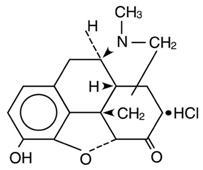
Special Risk Patients Hydromorphone Hydrochloride Tablets should be given with caution
and the initial dose should be reduced in the elderly or debilitated and those
with severe impairment of hepatic, pulmonary or renal functions; myxedema or
hypothyroidism; adrenocortical insufficiency (e.g., Addison's Disease); CNS
depression or coma; toxic psychoses; prostatic hypertrophy or urethral
stricture; gall bladder disease; acute alcoholism; delirium tremens;
kyphoscoliosis or following gastrointestinal surgery.
The administration of opioid analgesics including Hydromorphone Hydrochloride
Tablets may obscure the diagnoses or clinical course in patients with acute
abdominal conditions and may aggravate preexisting convulsions in patients with
convulsive disorders.
Reports of mild to severe seizures and myoclonus have been reported in
severely compromised patients, administered high doses of parenteral
hydromorphone, for cancer and severe pain. Opioid administration at very high
doses is associated with seizures and myoclonus in a variety of diseases where
pain control is the primary focus.
Use in Drug and Alcohol Dependent Patients
Hydromorphone Hydrochloride Tablets should be used with caution
in patients with alcoholism and other drug dependencies due to the increased
frequency of opioid tolerance, dependence, and the risk of addiction observed in
these patient populations. Abuse of Hydromorphone Hydrochloride Tablets in
combination with other CNS depressant drugs can result in serious risk to the
patient.
Hydromorphone is an opioid with no approved use in the management of
addictive disorders.
Use in Ambulatory Patients Hydromorphone Hydrochloride Tablets may impair mental and/or
physical ability required for the performance of potentially hazardous tasks
(e.g. driving, operating machinery). Patients should be cautioned accordingly.
Hydromorphone Hydrochloride Tablets may produce orthostatic hypotension in
ambulatory patients.
Use in Biliary Tract Disease Opioid analgesics, including Hydromorphone Hydrochloride Tablets,
should also be used with caution in patients about to undergo surgery of the
biliary tract since it may cause spasm of the sphincter of Oddi.
Tolerance and Physical Dependence
Tolerance is the need for increasing doses of opioids to maintain
a defined effect such as analgesia (in the absence of disease progression or
other external factors). Physical dependence is manifested by withdrawal
symptoms after abrupt discontinuation of a drug or upon administration of an
antagonist. Physical dependence and tolerance are not unusual during chronic
opioid therapy.
The opioid abstinence or withdrawal syndrome is characterized by some or all
of the following: Restlessness, lacrimation, rhinorrhea, yawning, perspiration,
chills, myalgia, mydriasis. Other symptoms also may develop, including:
Irritability, anxiety, backache, joint pain, weakness, abdominal cramps,
insomnia, nausea, anorexia, vomiting, diarrhea, or increased blood pressure,
respiratory rate, or heart rate.
In general, opioids used regularly should not be abruptly discontinued.
Information for Patients/Caregivers
Patients receiving Hydromorphone Hydrochloride Tablets or their
caregivers should be given the following information by the physician, nurse, or
pharmacist:
- Patients should be aware that Hydromorphone Hydrochloride Tablets contain
hydromorphone, which is a morphine-like substance and which could cause severe
adverse effects including respiratory depression and even death if not taken
according to the prescriber’s directions.
- Patients should be advised to report pain and adverse experiences occurring
during therapy. Individualization of dosage is essential to make optimal use of
this medication.
- Patients should be advised not to adjust the dose of Hydromorphone
Hydrochloride Tablets without consulting the prescribing professional.
- Patients should be advised that Hydromorphone Hydrochloride Tablets may
impair mental and/or physical ability required for the performance of
potentially hazardous tasks (e.g., driving, operating heavy machinery).
- Patients should not combine Hydromorphone Hydrochloride Tablets with alcohol
or other central nervous system depressants (sleep aids, tranquilizers) except
by the orders of the prescribing physician, because dangerous additive effects
may occur, resulting in serious injury or death.
- Women of childbearing potential who become, or are planning to become
pregnant should be advised to consult their physician regarding the effects of
analgesics and other drug use during pregnancy on themselves and their unborn
child.
- Patients should be advised that Hydromorphone Hydrochloride Tablets is a
potential drug of abuse. They should protect it from theft, and it should never
be given to anyone other than the individual for whom it was prescribed.
- Patients should be advised that if they have been receiving treatment with
Hydromorphone Hydrochloride Tablets for more than a few weeks and cessation of
therapy is indicated, it may be appropriate to taper the Hydromorphone
Hydrochloride Tablets dose, rather than abruptly discontinue it, due to the risk
of precipitating withdrawal symptoms. Their physician can provide a dose
schedule to accomplish a gradual discontinuation of the medication.
- Patients should be instructed to keep Hydromorphone Hydrochloride Tablets in
a secure place out of the reach of children. When Hydromorphone Hydrochloride
Tablets are no longer needed, the unused tablets should be destroyed by flushing
down the toilet.
Drug Interactions
Drug Interactions with Other CNS DepressantsThe concomitant use of other central nervous system depressants
including sedatives or hypnotics, general anesthetics, phenothiazines,
tranquilizers and alcohol may produce additive depressant effects. Respiratory
depression, hypotension and profound sedation or coma may occur. When such
combined therapy is contemplated, the dose of one or both agents should be
reduced. Hydromorphone Hydrochloride Tablets should not be taken with alcohol.
Opioid analgesics, including Hydromorphone Hydrochloride Tablets, may enhance
the action of neuromuscular blocking agents and produce an excessive degree of
respiratory depression.
Interactions with Mixed Agonist/Antagonist Opioid
AnalgesicsAgonist/antagonist analgesics (i.e., pentazocine, nalbuphine,
butorphanol, and buprenorphine) should be administered with caution to a patient
who has received or is receiving a course of therapy with a pure opioid agonist
analgesic such as hydromorphone. In this situation, mixed agonist/antagonist
analgesics may reduce the analgesic effect of hydromorphone and/or may
precipitate withdrawal symptoms in these patients.
Carcinogenesis, Mutagenesis,
Impairment of Fertility No carcinogenicity studies have been conducted in animals.
Hydromorphone was not mutagenic in the in vitro
Ames reverse mutation assay or the human lymphocyte chromosome aberration assay.
Hydromorphone was not clastogenic in the in vivo
mouse micronucleus assay.
No effects on fertility, reproductive performance, or reproductive organ
morphology were observed in male or female rats given oral doses up to 7
mg/kg/day, which is equivalent to the human dose of 2.5-10 mg every 3 to 6 hours
for oral liquid, and 3-fold higher than the human dose of 2-4 mg every 4 to 6
hours for the tablet on a body surface area basis.
Pregnancy
Pregnancy Category CNo effects on teratogenicity or embryotoxicity were observed in
female rats given oral doses up to 7 mg/kg/day, which is approximately
equivalent to the human dose of 2.5-10 mg every 3 to 6 hours for oral liquid,
and 3-fold higher than the human dose of 2-4 mg every 4 to 6 hours for the
tablet on a body surface area basis. Hydromorphone produced skull malformations
(exencephaly and cranioschisis) in Syrian hamsters given oral doses up to 20
mg/kg during the peak of organogenesis (gestation days 8-9). The skull
malformations were observed at doses approximately 2-fold higher the human dose
of 2.5-10 mg every 3 to 6 hours for oral liquid, and 7-fold higher than the
human dose of 2-4 mg every 4 to 6 hours for the tablet on a body surface area
basis. There are no adequate and well-controlled studies of Hydromorphone
Hydrochloride Tablets in pregnant women.
Hydromorphone crosses the placenta, resulting in fetal exposure.
Hydromorphone Hydrochloride Tablets should be used in pregnant women only if the
potential benefit justifies the potential risk to the fetus (see Labor and
Delivery and DRUG ABUSE AND
DEPENDENCE ).
Nonteratogenic EffectsBabies born to mothers who have been taking opioids regularly
prior to delivery will be physically dependent. The withdrawal signs include
irritability and excessive crying, tremors, hyperactive reflexes, increased
respiratory rate, increased stools, sneezing, yawning, vomiting, and fever. The
intensity of the syndrome does not always correlate with the duration of
maternal opioid use or dose. There is no consensus on the best method of
managing withdrawal. Approaches to the treatment of this syndrome have included
supportive care and, when indicated, drugs such as paregoric or
phenobarbital.
Labor and Delivery Hydromorphone Hydrochloride Tablets are contraindicated in Labor
and Delivery (see CONTRAINDICATIONS).
Nursing Mothers Low levels of opioid analgesics have been detected in human milk.
As a general rule, nursing should not be undertaken while a patient is receiving
Hydromorphone Hydrochloride Tablets since it, and other drugs in this class, may
be excreted in the milk.
Pediatric Use Safety and effectiveness in children have not been
established.
Geriatric Use Clinical studies of Hydromorphone Hydrochloride Tablets did not
include sufficient numbers of subjects aged 65 and over to determine whether
they respond differently from younger subjects. In general, dose selection for
an elderly patient should be cautious, usually starting at the low end of the
dosing range, reflecting the greater frequency of decreased hepatic, renal, or
cardiac function, and of concomitant disease or other drug therapy (see INDIVIDUALIZATION OF
DOSAGE and PRECAUTIONS).