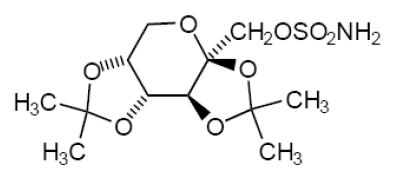
Topiramate tablets are available as debossed, coated, round tablets in the following strengths and colors:
None.
Because clinical trials are conducted under widely varying conditions, adverse reaction rates observed in the clinical trials of a drug cannot be directly compared to rates in the clinical trials of another drug and may not reflect the rates observed in practice.
The following adverse reactions are discussed in more detail in other sections of the labeling:
- Acute Myopia and Secondary Angle Closure [see Warnings and Precautions (5.1)]
- Oligohidrosis and Hyperthermia [see Warnings and Precautions (5.2)]
- Metabolic Acidosis [see Warnings and Precautions (5.3)]
- Suicidal Behavior and Ideation [see Warnings and Precautions (5.4)]
- Cognitive/Neuropsychiatric Adverse Reactions[see Warnings and Precautions (5.5)]
- Fetal Toxicity [see Warnings and Precautions (5.6) and Use in Specific Populations (8.1)]
- Withdrawal of Antiepileptic Drugs (AEDs) [see Warnings and Precautions (5.7)]
- Sudden Unexplained Death in Epilepsy (SUDEP) [see Warnings and Precautions (5.8)]
- Hyperammonemia and Encephalopathy (Without and With Concomitant Valproic Acid [VPA] Use [see Warnings and Precautions (5.9)]
- Kidney Stones [see Warnings and Precautions (5.10)]
- Hypothermia with Concomitant Valproic Acid (VPA) Use [see Warnings and Precautions (5.11)]
- Paresthesia [see Warnings and Precautions (5.12)]
The data described in the following section were obtained using topiramate tablets.
In vitro studies indicate that topiramate does not inhibit enzyme activity for CYP1A2, CYP2A6, CYP2B6, CYP2C9, CYP2D6, CYP2E1, and CYP3A4/5 isozymes. In vitro studies indicate that topiramate is a mild inhibitor of CYP2C19 and a mild inducer of CYP3A4. Drug interactions with some antiepileptic drugs, CNS depressants and oral contraceptives are described here. For other drug interactions, please refer to Clinical Pharmacology (12.5).
Special Populations
Renal Impairment
The clearance of topiramate was reduced by 42% in moderately renally impaired (creatinine clearance 30 to 69 mL/min/1.73 m2) and by 54% in severely renally impaired subjects (creatinine clearance <30 mL/min/1.73 m2) compared to normal renal function subjects (creatinine clearance >70 mL/min/1.73 m2). Since topiramate is presumed to undergo significant tubular reabsorption, it is uncertain whether this experience can be generalized to all situations of renal impairment. It is conceivable that some forms of renal disease could differentially affect glomerular filtration rate and tubular reabsorption resulting in a clearance of topiramate not predicted by creatinine clearance. In general, however, use of one-half the usual starting and maintenance dose is recommended in patients with moderate or severe renal impairment [see Dosage and Administration (2.4 ) and (2.5) and Warnings and Precautions (5.13)].
Hemodialysis
Topiramate is cleared by hemodialysis. Using a high efficiency, counterflow, single pass-dialysate hemodialysis procedure, topiramate dialysis clearance was 120 mL/min with blood flow through the dialyzer at 400 mL/min. This high clearance (compared to 20 to 30 mL/min total oral clearance in healthy adults) will remove a clinically significant amount of topiramate from the patient over the hemodialysis treatment period. Therefore, a supplemental dose may be required [see Dosage and Administration (2.6)].
Hepatic Impairment
In hepatically impaired subjects, the clearance of topiramate may be decreased; the mechanism underlying the decrease is not well understood [see Dosage and Administration (2.7)].
Age, Gender, and Race
The pharmacokinetics of topiramate in elderly subjects (65 to 85 years of age, N=16) were evaluated in a controlled clinical study. The elderly subject population had reduced renal function (creatinine clearance [-20%]) compared to young adults. Following a single oral 100 mg dose, maximum plasma concentration for elderly and young adults was achieved at approximately 1 to 2 hours. Reflecting the primary renal elimination of topiramate, topiramate plasma and renal clearance were reduced 21% and 19%, respectively, in elderly subjects, compared to young adults. Similarly, topiramate half-life was longer (13%) in the elderly. Reduced topiramate clearance resulted in slightly higher maximum plasma concentration (23%) and AUC (25%) in elderly subjects than observed in young adults. Topiramate clearance is decreased in the elderly only to the extent that renal function is reduced. As recommended for all patients, dosage adjustment may be indicated in the elderly patient when impaired renal function (creatinine clearance rate ≤70 mL/min/1.73 m2) is evident. It may be useful to monitor renal function in the elderly patient [see Dosage and Administration (2.4) and Warnings and Precautions (5.13)].
Clearance of topiramate in adults was not affected by gender or race.
Pediatric Pharmacokinetics
Pharmacokinetics of topiramate were evaluated in patients aged 2 to <16 years. Patients received either no or a combination of other antiepileptic drugs. A population pharmacokinetic model was developed on the basis of pharmacokinetic data from relevant topiramate clinical studies. This dataset contained data from 1217 subjects including 258 pediatric patients aged 2 to <16 years (95 pediatric patients <10 years of age).
Pediatric patients on adjunctive treatment exhibited a higher oral clearance (L/h) of topiramate compared to patients on monotherapy, presumably because of increased clearance from concomitant enzyme-inducing antiepileptic drugs. In comparison, topiramate clearance per kg is greater in pediatric patients than in adults and in young pediatric patients (down to 2 years) than in older pediatric patients. Consequently, the plasma drug concentration for the same mg/kg/day dose would be lower in pediatric patients compared to adults and also in younger pediatric patients compared to older pediatric patients. Clearance was independent of dose.
As in adults, hepatic enzyme-inducing antiepileptic drugs decrease the steady state plasma concentrations of topiramate.
Drug-Drug Interactions
Antiepileptic Drugs
Potential interactions between topiramate and standard AEDs were assessed in controlled clinical pharmacokinetic studies in patients with epilepsy. The effects of these interactions on mean plasma AUCs are summarized in Table 9.
In Table 9, the second column (AED concentration) describes what happens to the concentration of the AED listed in the first column when topiramate is added. The third column (topiramate concentration) describes how the coadministration of a drug listed in the first column modifies the concentration of topiramate in experimental settings when topiramate tablets were given alone.
Table 9: Summary of AED Interactions with Topiramate
AED
Co-administered
| AED
Concentration
| Topiramate
Concentration
|
Phenytoin
| NC or 25% increasea
| 48% decrease
|
Carbamazepine (CBZ)
CBZ epoxideb
| NC
NC
| 40% decrease
NE
|
Valproic acid
| 11% decrease
| 14% decrease
|
Phenobarbital
| NC
| NE
|
Primidone
| NC
| NE
|
Lamotrigine
| NC at TPM doses up
| 13% decrease
|
| to 400 mg/day
|
|
a = Plasma concentration increased 25% in some patients, generally those on a twice a day dosing regimen of phenytoin.
b = Is not administered but is an active metabolite of carbamazepine.
NC = Less than 10% change in plasma concentration.
AED = Antiepileptic drug.
NE = Not Evaluated.
TPM = Topiramate
|
In addition to the pharmacokinetic interaction described in the above table, concomitant administration of valproic acid and topiramate has been associated with hyperammonemia with and without encephalopathy and hypothermia [see Warnings and Precautions (5.9) (5.11) and Drug Interactions (7.1)].
CNS Depressants
Concomitant administration of topiramate and alcohol or other CNS depressant drugs has not been evaluated in clinical studies. Because of the potential of topiramate to cause CNS depression, as well as other cognitive and/or neuropsychiatric adverse reactions, topiramate should be used with extreme caution if used in combination with alcohol and other CNS depressants [see Drug Interactions (7.2)].
Oral Contraceptives
In a pharmacokinetic interaction study in healthy volunteers with a concomitantly administered combination oral contraceptive product containing 1 mg norethindrone (NET) plus 35 mcg ethinyl estradiol (EE), topiramate, given in the absence of other medications at doses of 50 to 200 mg/day, was not associated with statistically significant changes in mean exposure (AUC) to either component of the oral contraceptive. In another study, exposure to EE was statistically significantly decreased at doses of 200, 400, and 800 mg/day (18%, 21%, and 30%, respectively) when given as adjunctive therapy in patients taking valproic acid. In both studies, topiramate (50 mg/day to 800 mg/day) did not significantly affect exposure to NET. Although there was a dose-dependent decrease in EE exposure for doses between 200 and 800 mg/day, there was no significant dose-dependent change in EE exposure for doses of 50 to 200 mg/day. The clinical significance of the changes observed is not known. The possibility of decreased contraceptive efficacy and increased breakthrough bleeding should be considered in patients taking combination oral contraceptive products with topiramate. Patients taking estrogen-containing contraceptives should be asked to report any change in their bleeding patterns. Contraceptive efficacy can be decreased even in the absence of breakthrough bleeding [see Drug Interactions (7.3)].
Digoxin
In a single-dose study, serum digoxin AUC was decreased by 12% with concomitant topiramate administration. The clinical relevance of this observation has not been established.
Hydrochlorothiazide
A drug-drug interaction study conducted in healthy volunteers evaluated the steady-state pharmacokinetics of hydrochlorothiazide (HCTZ) (25 mg q24h) and topiramate (96 mg q12h) when administered alone and concomitantly. The results of this study indicate that topiramate Cmax increased by 27% and AUC increased by 29% when HCTZ was added to topiramate. The clinical significance of this change is unknown. The addition of HCTZ to topiramate therapy may require an adjustment of the topiramate dose. The steady-state pharmacokinetics of HCTZ were not significantly influenced by the concomitant administration of topiramate. Clinical laboratory results indicated decreases in serum potassium after topiramate or HCTZ administration, which were greater when HCTZ and topiramate were administered in combination.
Metformin
Topiramate treatment can frequently cause metabolic acidosis, a condition for which the use of metformin is contraindicated.
A drug-drug interaction study conducted in healthy volunteers evaluated the steady-state pharmacokinetics of metformin (500 mg every 12 hr) and topiramate in plasma when metformin was given alone and when metformin and topiramate (100 mg every 12 hr) were given simultaneously. The results of this study indicated that the mean metformin Cmax and AUC0-12h increased by 17% and 25%, respectively, when topiramate was added. Topiramate did not affect metformin tmax. The clinical significance of the effect of topiramate on metformin pharmacokinetics is not known. Oral plasma clearance of topiramate appears to be reduced when administered with metformin. The clinical significance of the effect of metformin on topiramate pharmacokinetics is unclear [See Drug Interactions (7.4)].
Pioglitazone
A drug-drug interaction study conducted in healthy volunteers evaluated the steady-state pharmacokinetics of topiramate and pioglitazone when administered alone and concomitantly. A 15% decrease in the AUCτ,ss of pioglitazone with no alteration in Cmax,ss was observed. This finding was not statistically significant. In addition, a 13% and 16% decrease in Cmax,ss and AUCτ,ss respectively, of the active hydroxy-metabolite was noted as well as a 60% decrease in Cmax,ss and AUCτ,ss of the active keto-metabolite. The clinical significance of these findings is not known. When topiramate is added to pioglitazone therapy or pioglitazone is added to topiramate therapy, careful attention should be given to the routine monitoring of patients for adequate control of their diabetic disease state.
Glyburide
A drug-drug interaction study conducted in patients with type 2 diabetes evaluated the steady-state pharmacokinetics of glyburide (5 mg/day) alone and concomitantly with topiramate (150 mg/day). There was a 22% decrease in Cmax and a 25% reduction in AUC24 for glyburide during topiramate administration. Systemic exposure (AUC) of the active metabolites, 4-trans-hydroxy-glyburide (M1) and 3-cis-hydroxyglyburide (M2), was also reduced by 13% and 15%, and Cmax was reduced by 18% and 25%, respectively. The steady-state pharmacokinetics of topiramate were unaffected by concomitant administration of glyburide.
Lithium
In patients, the pharmacokinetics of lithium were unaffected during treatment with topiramate at doses of 200 mg/day; however, there was an observed increase in systemic exposure of lithium (27% for Cmax and 26% for AUC) following topiramate doses up to 600 mg/day. Lithium levels should be monitored when co-administered with high-dose topiramate [See Drug Interactions (7.5)].
Haloperidol
The pharmacokinetics of a single dose of haloperidol (5 mg) were not affected following multiple dosing of topiramate (100 mg every 12 hr) in 13 healthy adults (6 males, 7 females).
Amitriptyline
There was a 12% increase in AUC and Cmax for amitriptyline (25 mg per day) in 18 normal subjects (9 males; 9 females) receiving 200 mg/day of topiramate. Some subjects may experience a large increase in amitriptyline concentration in the presence of topiramate and any adjustments in amitriptyline dose should be made according to the patient's clinical response and not on the basis of plasma levels.
Sumatriptan
Multiple dosing of topiramate (100 mg every 12 hrs) in 24 healthy volunteers (14 males, 10 females) did not affect the pharmacokinetics of single dose sumatriptan either orally (100 mg) or subcutaneously (6 mg).
Risperidone
When administered concomitantly with topiramate at escalating doses of 100, 250 and 400 mg/day, there was a reduction in risperidone (systemic exposure (16% and 33% for steady-state AUC at the 250 and 400 mg/day doses of topiramate). No alterations of 9-hydroxyrisperidone levels were observed. Coadministration of topiramate 400 mg/day with risperidone resulted in a 14% increase in Cmax and a 12% increase in AUC12 of topiramate. There were no clinically significant changes in the systemic exposure of risperidone plus 9-hydroxyrisperidone or of topiramate; therefore this interaction is not likely to be of clinical significance.
Propranolol
Multiple dosing of topiramate (200 mg/day) in 34 healthy volunteers (17 males, 17 females) did not affect the pharmacokinetics of propranolol following daily 160 mg doses. Propranolol doses of 160 mg/day in 39 volunteers (27 males, 12 females) had no effect on the exposure to topiramate, at a dose of 200 mg/day of topiramate.
Dihydroergotamine
Multiple dosing of topiramate (200 mg/day) in 24 healthy volunteers (12 males, 12 females) did not affect the pharmacokinetics of a 1 mg subcutaneous dose of dihydroergotamine. Similarly, a 1 mg subcutaneous dose of dihydroergotamine did not affect the pharmacokinetics of a 200 mg/day dose of topiramate in the same study.
Diltiazem
Co-administration of diltiazem (240 mg Cardizem CD®) with topiramate (150 mg/day) resulted in a 10% decrease in Cmax and a 25% decrease in diltiazem AUC, a 27% decrease in Cmax and an 18% decrease in des-acetyl diltiazem AUC, and no effect on N-desmethyl diltiazem. Coadministration of topiramate with diltiazem resulted in a 16% increase in Cmax and a 19% increase in AUC12 of topiramate.
Venlafaxine
Multiple dosing of topiramate (150 mg/day) in healthy volunteers did not affect the pharmacokinetics of venlafaxine or O-desmethyl venlafaxine. Multiple dosing of venlafaxine (150 mg Effexor XR®) did not affect the pharmacokinetics of topiramate.
Other Carbonic Anhydrase Inhibitors
Concomitant use of topiramate, a carbonic anhydrase inhibitor, with any other carbonic anhydrase inhibitor (e.g., zonisamide, acetazolamide, or dichlorphenamide), may increase the severity of metabolic acidosis and may also increase the risk of kidney stone formation. Therefore, if topiramate is given concomitantly with another carbonic anhydrase inhibitor, the patient should be monitored for the appearance or worsening of metabolic acidosis [see Drug Interactions (7.6)].
Drug/Laboratory Tests Interactions
There are no known interactions of topiramate with commonly used laboratory tests.
Pediatric Patients Ages 2 to 16 Years with Partial Onset Seizures
The effectiveness of topiramate as an adjunctive treatment for pediatric patients ages 2 to 16 years with partial onset seizures was established in a multicenter, randomized, double-blind, placebo-controlled trial, comparing topiramate and placebo in patients with a history of partial onset seizures, with or without secondarily generalized seizures.
Patients in this study were permitted a maximum of two antiepileptic drugs (AEDs) in addition to topiramate tablets or placebo. In this study, patients were stabilized on optimum dosages of their concomitant AEDs during an 8-week baseline phase. Patients who experienced at least six partial onset seizures, with or without secondarily generalized seizures, during the baseline phase were randomly assigned to placebo or topiramate tablets in addition to their other AEDs.
Following randomization, patients began the double-blind phase of treatment. Patients received active drug beginning at 25 or 50 mg per day; the dose was then increased by 25 mg to 150 mg/day increments every other week until the assigned dosage of 125, 175, 225, or 400 mg/day based on patients' weight to approximate a dosage of 6 mg/kg per day was reached, unless intolerance prevented increases. After titration, patients entered an 8-week stabilization period.
Patients With Primary Generalized Tonic-Clonic Seizures
The effectiveness of topiramate as an adjunctive treatment for primary generalized tonic-clonic seizures in patients 2 years old and older was established in a multicenter, randomized, double-blind, placebo-controlled trial, comparing a single dosage of topiramate and placebo.
Patients in this study were permitted a maximum of two antiepileptic drugs (AEDs) in addition to topiramate or placebo. Patients were stabilized on optimum dosages of their concomitant AEDs during an 8-week baseline phase. Patients who experienced at least three primary generalized tonic-clonic seizures during the baseline phase were randomly assigned to placebo or topiramate in addition to their other AEDs.
Following randomization, patients began the double-blind phase of treatment. Patients received active drug beginning at 50 mg/day for four weeks; the dose was then increased by 50 mg to 150 mg/day increments every other week until the assigned dose of 175, 225, or 400 mg/day based on patients' body weight to approximate a dosage of 6 mg/kg/day was reached, unless intolerance prevented increases. After titration, patients entered a 12-week stabilization period.
Patients With Lennox-Gastaut Syndrome
The effectiveness of topiramate as an adjunctive treatment for seizures associated with Lennox-Gastaut syndrome was established in a multicenter, randomized, double-blind, placebo-controlled trial comparing a single dosage of topiramate with placebo in patients 2 years of age and older.
Patients in this study were permitted a maximum of two antiepileptic drugs (AEDs) in addition to topiramate or placebo. Patients who were experiencing at least 60 seizures per month before study entry were stabilized on optimum dosages of their concomitant AEDs during a 4-week baseline phase. Following baseline, patients were randomly assigned to placebo or topiramate in addition to their other AEDs. Active drug was titrated beginning at 1 mg/kg/day for a week; the dose was then increased to 3 mg/kg/day for one week, then to 6 mg/kg/day. After titration, patients entered an 8-week stabilization period. The primary measures of effectiveness were the percent reduction in drop attacks and a parental global rating of seizure severity.
Table 10:Topiramate Dose Summary During the Stabilization Periods of Each of Six Double-Blind, Placebo-Controlled, Add-On Trials in Adults with Partial Onset Seizuresa
| Target Topiramate Dosage (mg/day)
|
Protocol
| Stabilization Dose
| Placebob
| 200
| 400
| 600
| 800
| 1,000
|
YD
| N
| 42
| 42
| 40
| 41
| --
| --
|
| Mean Dose
| 5.9
| 200
| 390
| 556
| --
| --
|
| Median Dose
| 6.0
| 200
| 400
| 600
| --
| --
|
YE
|
N
|
44
|
--
|
--
|
40
|
45
|
40
|
| Mean Dose
| 9.7
| --
| --
| 544
| 739
| 796
|
| Median Dose
| 10.0
| --
| --
| 600
| 800
| 1,000
|
Y1
|
N
|
23
|
--
|
19
|
--
|
--
|
--
|
| Mean Dose
| 3.8
| --
| 395
| --
| --
| --
|
| Median Dose
| 4.0
| --
| 400
| --
| --
| --
|
Y2
|
N
|
30
|
--
|
--
|
28
|
--
|
--
|
| Mean Dose
| 5.7
| --
| --
| 522
| --
| --
|
| Median Dose
| 6.0
| --
| --
| 600
| --
| --
|
Y3
|
N
|
28
|
--
|
--
|
--
|
25
|
--
|
| Mean Dose
| 7.9
| --
| --
| --
| 568
| --
|
| Median Dose
| 8.0
| --
| --
| --
| 600
| --
|
119
|
N
|
90
|
157
|
--
|
--
|
--
|
--
|
| Mean Dose
| 8
| 200
| --
| --
| --
| --
|
| Median Dose
| 8
| 200
| --
| --
| --
| --
|
a Placebo dosages are given as the number of tablets. Placebo target dosages were as follows: Protocol Y1, 4 tablets/day; Protocols YD and Y2, 6 tablets/day; Protocol Y3 and 119, 8 tablets/day; Protocol YE, 10 tablets/day.
b Dose-response studies were not conducted for other indications or pediatric partial onset seizures.
|
In all add-on trials, the reduction in seizure rate from baseline during the entire double-blind phase was measured. The median percent reductions in seizure rates and the responder rates (fraction of patients with at least a 50% reduction) by treatment group for each study are shown below in Table 11. As described above, a global improvement in seizure severity was also assessed in the Lennox-Gastaut trial.
Table 11: Efficacy Results in Double-Blind, Placebo-Controlled, Add-On Epilepsy Trials
| Target Topiramate Dosage (mg/day)
|
Protocol Efficacy Results
| Placebo
| 200
| 400
| 600
| 800
| 1,000
| ≈6
mg/kg/day*
|
Partial Onset Seizures
Studies in Adults
|
YD
| N
| 45
| 45
| 45
| 46
| --
| --
| --
|
| Median % Reduction
| 11.6
| 27.2a
| 47.5b
| 44.7c
| --
| --
| --
|
| % Responders
| 18
| 24
| 44d
| 46d
| --
| --
| --
|
YE
|
N
|
47
|
--
|
--
|
48
|
48
|
47
|
--
|
| Median % Reduction
| 1.7
| --
| --
| 40.8c
| 41.0c
| 36.0c
| --
|
| % Responders
| 9
| --
| --
| 40 c
| 41 c
| 36d
| --
|
Y1
|
N
|
24
|
--
|
23
|
--
|
--
|
--
|
--
|
| Median % Reduction
| 1.1
| --
| 40.7e
| --
| --
| --
| --
|
| % Responders
| 8
| --
| 35d
| --
| --
| --
| --
|
Y2
|
N
|
30
|
--
|
--
|
30
|
--
|
--
|
--
|
| Median % Reduction
| -12.2
| --
| --
| 46.4f
| --
| --
| --
|
| % Responders
| 10
| --
| --
| 47c
| --
| --
| --
|
Y3
|
N
|
28
|
--
|
--
|
--
|
28
|
--
|
--
|
| Median % Reduction
| -20.6
| --
| --
| --
| 24.3c
| --
| --
|
| % Responders
| 0
| --
| --
| --
| 43c
| --
| --
|
119
|
N
|
91
|
168
|
--
|
--
|
--
|
--
|
--
|
| Median % Reduction
| 20.0
| 44.2c
| --
| --
| --
| --
| --
|
| % Responders
| 24
| 45c
| --
| --
| --
| --
| --
|
Studies in Pediatric Patients
|
YP
| N
| 45
| --
| --
| --
| --
| --
| 41
|
| Median % Reduction
| 10.5
| --
| --
| --
| --
| --
| 33.1d
|
| % Responders
| 20
| --
| --
| --
| --
| --
| 39
|
Primary Generalized Tonic-Clonich
|
YTC
| N
| 40
| --
| --
| --
| --
| --
| 39
|
| Median % Reduction
| 9.0
| --
| --
| --
| --
| --
| 56.7 d
|
| % Responders
| 20
| --
| --
| --
| --
| --
| 56c
|
Lennox-Gastaut Syndromei
|
YL
| N
| 49
| --
| --
| --
| --
| --
| 46
|
| Median % Reduction
| -5.1
| --
| --
| --
| --
| --
| 14.8d
|
| % Responders
| 14
| --
| --
| --
| --
| --
| 28g
|
Improvement in Seizure
severityj
| 28
| --
| --
| --
| --
| --
| 52d
|
Comparisons with placebo: ap=0.080;bp≤0.010; cp≤0.001;dp≤0.050;ep=0.065;fp≤0.005;gp=0.071;
hMedian % reduction and % responders are reported for PGTC Seizures;
iMedian % reduction and % responders for drop attacks, i.e., tonic or atonic seizures;
jPercent of subjects who were minimally, much, or very much improved from baseline
* For Protocols YP and YTC, protocol-specified target dosages (<9.3 mg/kg/day) were assigned based on subject’s weight to approximate a dosage of 6 mg/kg per day; these dosages corresponded to mg/day dosages of 125, 175, 225, and 400 mg/day.
|
Subset analyses of the antiepileptic efficacy of topiramatetablets in these studies showed no differences as a function of gender, race, age, baseline seizure rate, or concomitant AED.
In clinical trials for epilepsy, daily dosages were decreased in weekly intervals by 50 to 100 mg/day in adults and over a 2- to 8- week period in children; transition was permitted to a new antiepileptic regimen when clinically indicated.
Manufactured by:
TORRENT PHARMACEUTICALS LTD., Indrad-382 721
Dist. Mehsana, INDIA.
For:
TORRENT PHARMA INC., 5380 Holiday Terrace, Suite 40, Kalamazoo, Michigan 49009.
8029987 Revised August 2011
Manufactured by:
TORRENT PHARMACEUTICALS LTD., Indrad-382 721
Dist. Mehsana, INDIA.
For:
TORRENT PHARMA INC., 5380 Holiday Terrace, Suite 40, Kalamazoo, Michigan 49009.
8029988 Revised August 2011