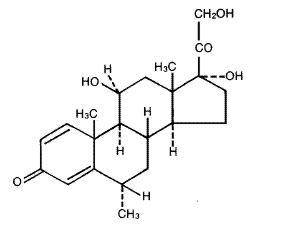
The initial dosage of MEDROL Tablets may vary from 4 mg to 48 mg
of methylprednisolone per day depending on the specific disease entity being
treated. In situations of less severity lower doses will generally suffice while
in selected patients higher initial doses may be required. The initial dosage
should be maintained or adjusted until a satisfactory response is noted. If
after a reasonable period of time there is a lack of satisfactory clinical
response, MEDROL should be discontinued and the patient transferred to other
appropriate therapy.
IT SHOULD BE EMPHASIZED THAT DOSAGE REQUIREMENTS ARE
VARIABLE AND MUST BE INDIVIDUALIZED ON THE BASIS OF THE DISEASE UNDER TREATMENT
AND THE RESPONSE OF THE PATIENT. After a favorable response is noted, the
proper maintenance dosage should be determined by decreasing the initial drug
dosage in small decrements at appropriate time intervals until the lowest dosage
which will maintain an adequate clinical response is reached. It should be kept
in mind that constant monitoring is needed in regard to drug dosage. Included in
the situations which may make dosage adjustments necessary are changes in
clinical status secondary to remissions or exacerbations in the disease process,
the patient's individual drug responsiveness, and the effect of patient exposure
to stressful situations not directly related to the disease entity under
treatment; in this latter situation it may be necessary to increase the dosage
of MEDROL for a period of time consistent with the patient's condition. If after
long-term therapy the drug is to be stopped, it is recommended that it be
withdrawn gradually rather than abruptly.
Multiple SclerosisIn treatment of acute exacerbations of multiple sclerosis daily
doses of 200 mg of prednisolone for a week followed by 80 mg every other day for
1 month have been shown to be effective (4 mg of methylprednisolone is
equivalent to 5 mg of prednisolone).
ADT® (Alternate Day
Therapy)Alternate day therapy is a corticosteroid dosing regimen in which
twice the usual daily dose of corticoid is administered every other morning. The
purpose of this mode of therapy is to provide the patient requiring long-term
pharmacologic dose treatment with the beneficial effects of corticoids while
minimizing certain undesirable effects, including pituitary-adrenal suppression,
the Cushingoid state, corticoid withdrawal symptoms, and growth suppression in
children.
The rationale for this treatment schedule is based on two major premises: (a)
the anti-inflammatory or therapeutic effect of corticoids persists longer than
their physical presence and metabolic effects and (b) administration of the
corticosteroid every other morning allows for reestablishment of more nearly
normal hypothalamic-pituitary-adrenal (HPA) activity on the off-steroid day.
A brief review of the HPA physiology may be helpful in understanding this
rationale. Acting primarily through the hypothalamus a fall in free cortisol
stimulates the pituitary gland to produce increasing amounts of corticotropin
(ACTH) while a rise in free cortisol inhibits ACTH secretion. Normally the HPA
system is characterized by diurnal (circadian) rhythm. Serum levels of ACTH rise
from a low point about 10 pm to a peak level about 6 am. Increasing levels of
ACTH stimulate adrenal cortical activity resulting in a rise in plasma cortisol
with maximal levels occurring between 2 am and 8 am. This rise in cortisol
dampens ACTH production and in turn adrenal cortical activity. There is a
gradual fall in plasma corticoids during the day with lowest levels occurring
about midnight.
The diurnal rhythm of the HPA axis is lost in Cushing's disease, a syndrome
of adrenal cortical hyperfunction characterized by obesity with centripetal fat
distribution, thinning of the skin with easy bruisability, muscle wasting with
weakness, hypertension, latent diabetes, osteoporosis, electrolyte imbalance,
etc. The same clinical findings of hyperadrenocorticism may be noted during
long-term pharmacologic dose corticoid therapy administered in conventional
daily divided doses. It would appear, then, that a disturbance in the diurnal
cycle with maintenance of elevated corticoid values during the night may play a
significant role in the development of undesirable corticoid effects. Escape
from these constantly elevated plasma levels for even short periods of time may
be instrumental in protecting against undesirable pharmacologic effects.
During conventional pharmacologic dose corticosteroid therapy, ACTH
production is inhibited with subsequent suppression of cortisol production by
the adrenal cortex. Recovery time for normal HPA activity is variable depending
upon the dose and duration of treatment. During this time the patient is
vulnerable to any stressful situation. Although it has been shown that there is
considerably less adrenal suppression following a single morning dose of
prednisolone (10 mg) as opposed to a quarter of that dose administered every six
hours, there is evidence that some suppressive effect on adrenal activity may be
carried over into the following day when pharmacologic doses are used. Further,
it has been shown that a single dose of certain corticosteroids will produce
adrenal cortical suppression for two or more days. Other corticoids, including
methylprednisolone, hydrocortisone, prednisone, and prednisolone, are considered
to be short acting (producing adrenal cortical suppression for 1¼ to 1½ days
following a single dose) and thus are recommended for alternate day therapy.
The following should be kept in mind when considering alternate day
therapy:
1)
Basic principles and indications for corticosteroid therapy should apply.
The benefits of ADT should not encourage the indiscriminate use of steroids.
2)
ADT is a therapeutic technique primarily designed for patients in whom
long-term pharmacologic corticoid therapy is anticipated.
3)
In less severe disease processes in which corticoid therapy is indicated, it
may be possible to initiate treatment with ADT. More severe disease states
usually will require daily divided high dose therapy for initial control of the
disease process. The initial suppressive dose level should be continued until
satisfactory clinical response is obtained, usually four to ten days in the case
of many allergic and collagen diseases. It is important to keep the period of
initial suppressive dose as brief as possible particularly when subsequent use
of alternate day therapy is intended.
Once control has been established, two
courses are available: (a) change to ADT and then gradually reduce the amount of
corticoid given every other day
or (b) following control
of the disease process reduce the daily dose of corticoid to the lowest
effective level as rapidly as possible and then change over to an alternate day
schedule. Theoretically, course (a) may be preferable.
4)
Because of the advantages of ADT, it may be desirable to try patients on
this form of therapy who have been on daily corticoids for long periods of time
(eg, patients with rheumatoid arthritis). Since these patients may already have
a suppressed HPA axis, establishing them on ADT may be difficult and not always
successful. However, it is recommended that regular attempts be made to change
them over. It may be helpful to triple or even quadruple the daily maintenance
dose and administer this every other day rather than just doubling the daily
dose if difficulty is encountered. Once the patient is again controlled, an
attempt should be made to reduce this dose to a minimum.
5)
As indicated above, certain corticosteroids, because of their prolonged
suppressive effect on adrenal activity, are not recommended for alternate day
therapy (eg, dexamethasone and betamethasone).
6)
The maximal activity of the adrenal cortex is between 2 am and 8 am, and it
is minimal between 4 pm and midnight. Exogenous corticosteroids suppress
adrenocortical activity the least, when given at the time of maximal activity
(am).
7)
In using ADT it is important, as in all therapeutic situations to
individualize and tailor the therapy to each patient. Complete control of
symptoms will not be possible in all patients. An explanation of the benefits of
ADT will help the patient to understand and tolerate the possible flare-up in
symptoms which may occur in the latter part of the off-steroid day. Other
symptomatic therapy may be added or increased at this time if needed.
8)
In the event of an acute flare-up of the disease process, it may be
necessary to return to a full suppressive daily divided corticoid dose for
control. Once control is again established alternate day therapy may be
reinstituted.
9)
Although many of the undesirable features of corticosteroid therapy can be
minimized by ADT, as in any therapeutic situation, the physician must carefully
weigh the benefit-risk ratio for each patient in whom corticoid therapy is being
considered.