Tadalafil Tablet, Film Coated
Product Images NDC 16714-077

12 FDA label images from Northstar Rxllc · Packaging, Regulatory Labels, and Product Appearance

Product Visual Gallery

This gallery contains 12 technical images submitted to the FDA as part of the official labeling for Tadalafil (NDC 16714-077). Unlike standard consumer photos, these assets often include clinical data figures, molecular chemical structures, and official manufacturer packaging layouts.

As provided by Northstar Rxllc, these visuals offer a comprehensive scientific overview of the product's physical and chemical identity, aiding pharmacists and researchers in product verification and study.

FDA Label Image

Spl-tadalafil-figure-1 (Spl Tadalafil Figure 1)
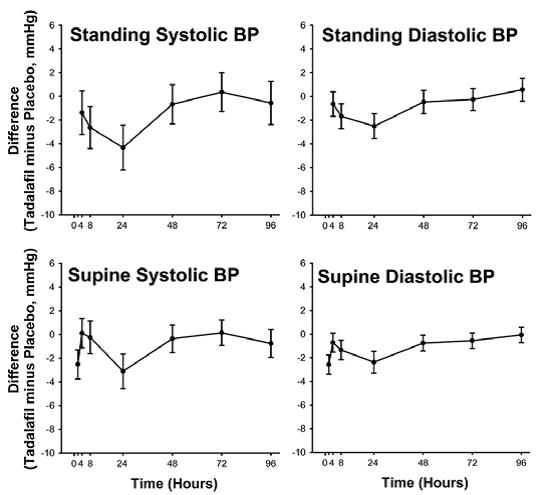
Spl-tadalafil-figure-1 (Spl Tadalafil Figure 1)
A set of four line graphs illustrating the effect of Tadalafil versus placebo on blood pressure over time. The graphs show the difference in systolic and diastolic blood pressure (BP) measured in standing and supine positions, plotted over 0 to 96 hours. The vertical axes represent BP difference in mmHg, and the horizontal axes represent time in hours.*
FDA Label Image

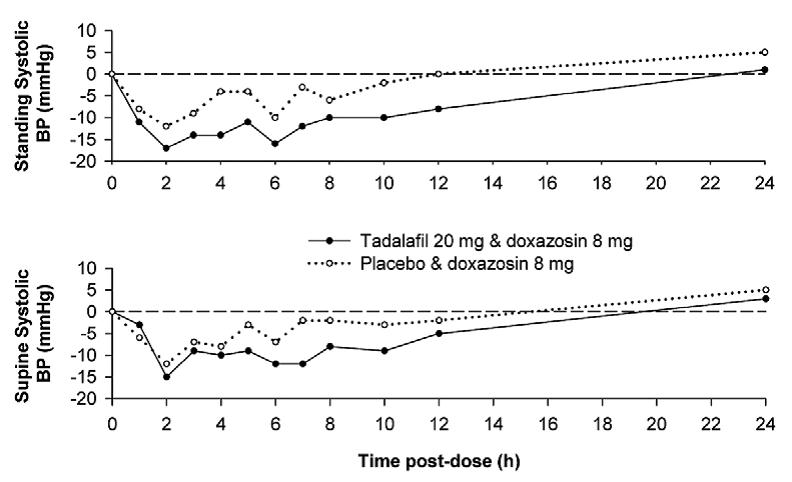
Spl-tadalafil-figure-2 (Spl Tadalafil Figure 2)

Spl-tadalafil-figure-2 (Spl Tadalafil Figure 2)
This image contains two line graphs showing the change in standing and supine systolic blood pressure (mmHg) over a 24-hour period post-dose. The upper graph tracks standing systolic BP, and the lower graph tracks supine systolic BP. Both plots compare the effects of Tadalafil 20 mg combined with doxazosin 8 mg versus a placebo combined with doxazosin 8 mg.*
FDA Label Image

Spl-tadalafil-figure-3 (Spl Tadalafil Figure 3)

Spl-tadalafil-figure-3 (Spl Tadalafil Figure 3)
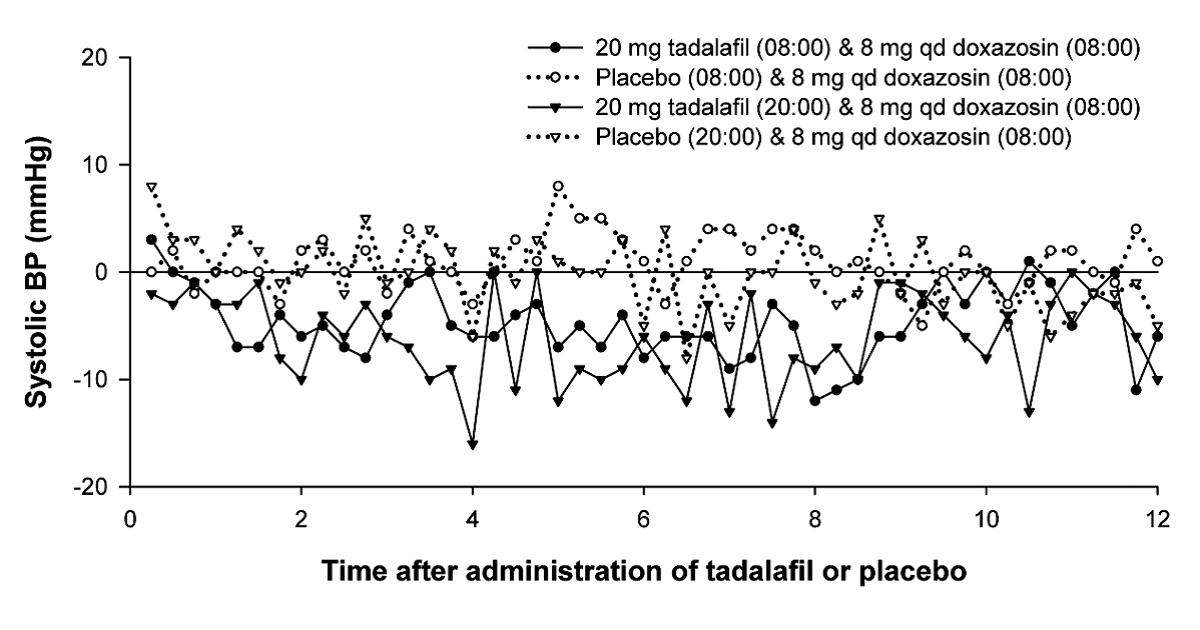
A line graph depicting systolic blood pressure (mmHg) changes over 12 hours after administration of 20 mg tadalafil or placebo, each combined with 8 mg daily doxazosin. The graph shows four data series: tadalafil at 8:00 and 20:00, placebo at 8:00 and 20:00, with blood pressure fluctuations plotted against time since dose.*
FDA Label Image

Spl-tadalafil-figure-4 (Spl Tadalafil Figure 4)

Spl-tadalafil-figure-4 (Spl Tadalafil Figure 4)
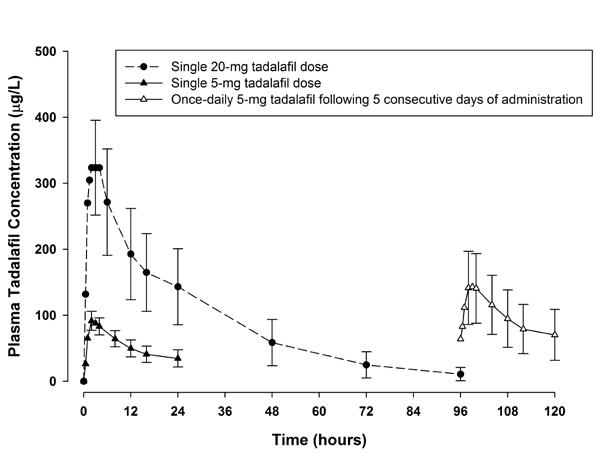
A pharmacokinetic curve showing plasma tadalafil concentration (µg/L) over time (hours). The graph compares single 20-mg and 5-mg tadalafil doses, plus once-daily 5-mg tadalafil after five consecutive days. Data points include error bars depicting variability at each time point.*
FDA Label Image

Spl-tadalafil-figure-5 (Spl Tadalafil Figure 5)

Spl-tadalafil-figure-5 (Spl Tadalafil Figure 5)
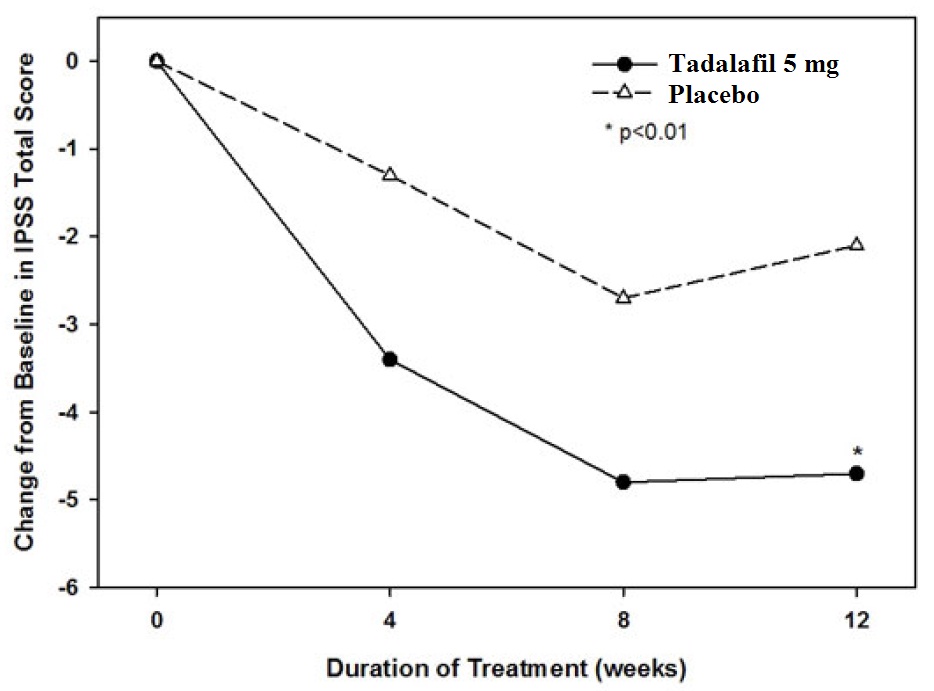
A line graph depicting the change from baseline in IPSS total score over a 12-week treatment duration comparing Tadalafil 5 mg and placebo groups. The X-axis represents treatment duration in weeks (0, 4, 8, 12), and the Y-axis shows change scores. Tadalafil 5 mg shows a greater reduction in IPSS score over time compared to placebo, with a significant difference indicated at 12 weeks (p<0.01).*
FDA Label Image

Spl-tadalafil-figure-6 (Spl Tadalafil Figure 6)

Spl-tadalafil-figure-6 (Spl Tadalafil Figure 6)
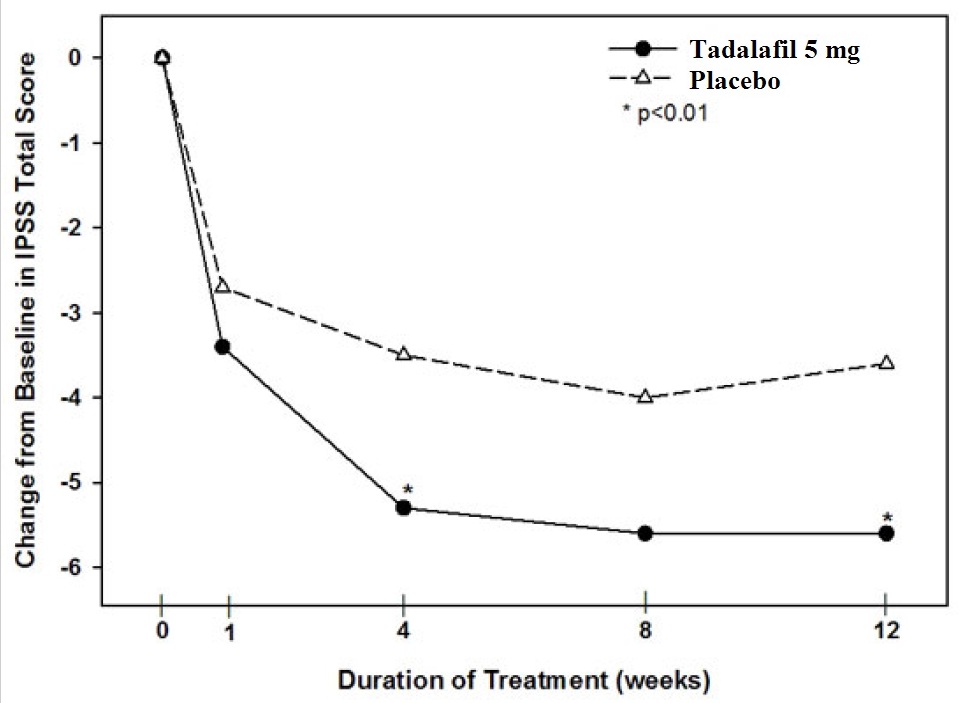
Line graph showing change from baseline in IPSS Total Score over 12 weeks of treatment comparing Tadalafil 5 mg and placebo. The X-axis represents treatment duration in weeks, and the Y-axis shows change in score. The graph indicates a greater decrease in score with Tadalafil 5 mg versus placebo, with statistical significance at weeks 4 and 12 (p<0.01).*
FDA Label Image

Spl-tadalafil-figure-8 (Spl Tadalafil Figure 8)

Spl-tadalafil-figure-8 (Spl Tadalafil Figure 8)
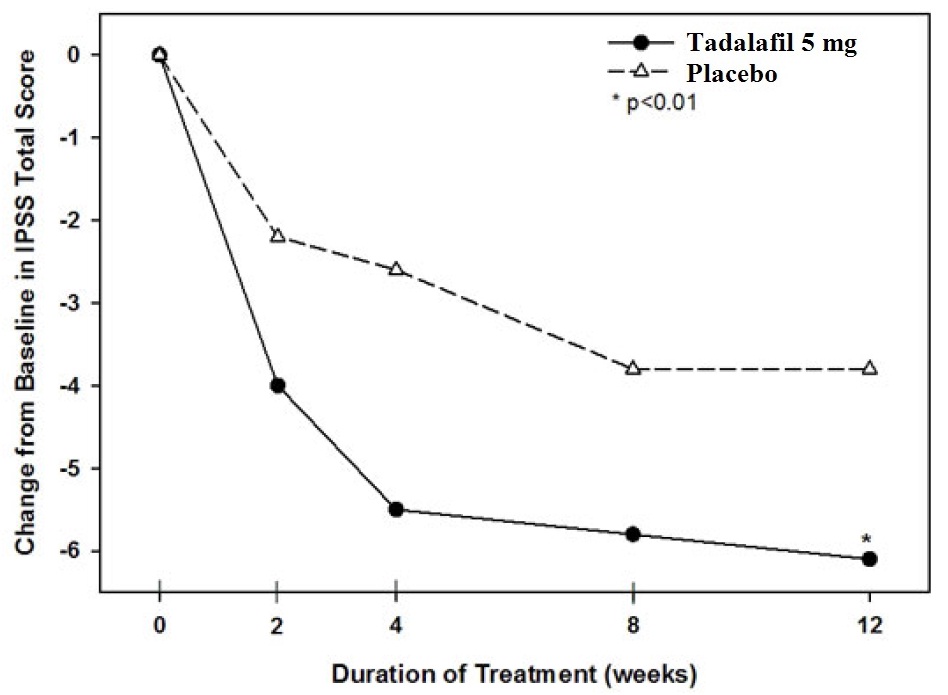
Line graph comparing the change from baseline in IPSS total score over 12 weeks of treatment for Tadalafil 5 mg tablets versus placebo. The x-axis represents duration of treatment in weeks (0, 2, 4, 8, 12), and the y-axis shows the change in score. Two lines show that Tadalafil 5 mg results in a greater decrease from baseline compared to placebo, with statistical significance indicated at 12 weeks.*
FDA Label Image

Spl-tadalafil-label-10mg (Spl Tadalafil Label 10mg)

Spl-tadalafil-label-10mg (Spl Tadalafil Label 10mg)
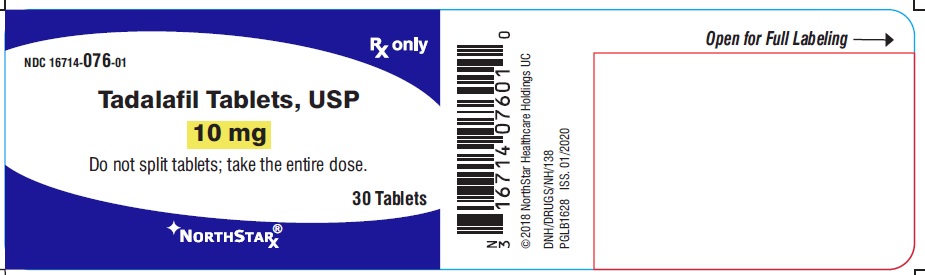
Label for Tadalafil Tablets, USP 10 mg film-coated tablets by NorthStar RxLLC. The label indicates the package contains 30 tablets and advises not to split tablets but to take the entire dose. The label displays the NDC number 16714-076-01 and includes a barcode.*
FDA Label Image

Spl-tadalafil-label-20mg (Spl Tadalafil Label 20mg)

Spl-tadalafil-label-20mg (Spl Tadalafil Label 20mg)
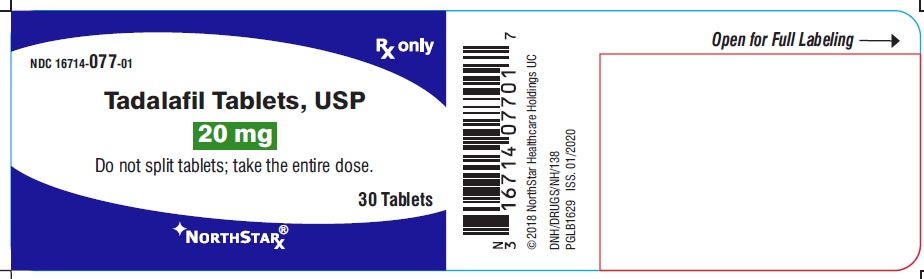
Label for Tadalafil Tablets USP, 20 mg, film-coated oral tablets, labeled for prescription use only. The container holds 30 tablets. The label includes a caution not to split tablets and to take the entire dose. NorthStar RxLLC is the labeler.*
FDA Label Image

Spl-tadalafil-label-5mg (Spl Tadalafil Label 5mg)

Spl-tadalafil-label-5mg (Spl Tadalafil Label 5mg)
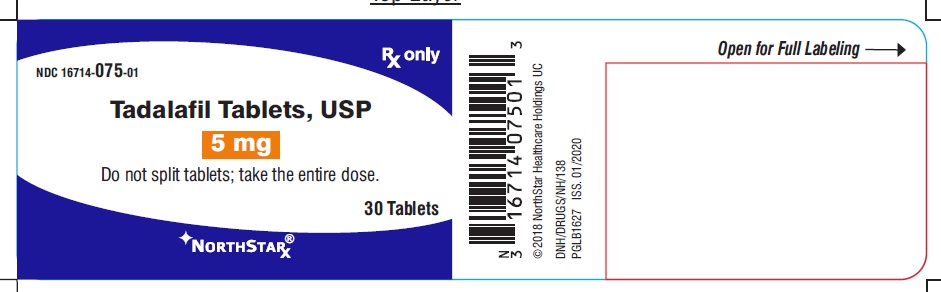
Label for Tadalafil Tablets USP, 5 mg oral film-coated tablets. The label indicates it contains 30 tablets and includes a caution not to split tablets but to take the entire dose. The product is labeled by NorthStar RxLLC and displays the NDC number 16714-075-01 with a barcode.*
FDA Label Image

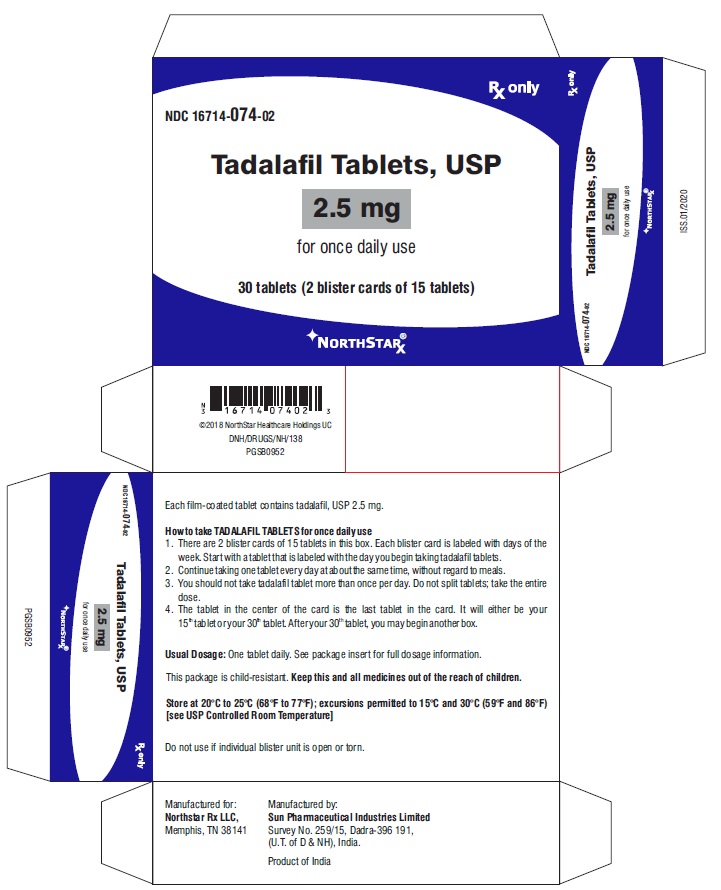
Spl-tadalafil-showbox-1 (Spl Tadalafil Showbox 1)

Spl-tadalafil-showbox-1 (Spl Tadalafil Showbox 1)
Tadalafil Tablets, USP 2.5 mg film-coated tablets packaged in a box containing 30 tablets (2 blister cards of 15 tablets each). The label states it is for once daily use and is produced by NorthStar Rx LLC and manufactured by Sun Pharmaceutical Industries Limited. The package includes storage instructions and warnings about child safety and blister unit integrity.*
FDA Label Image

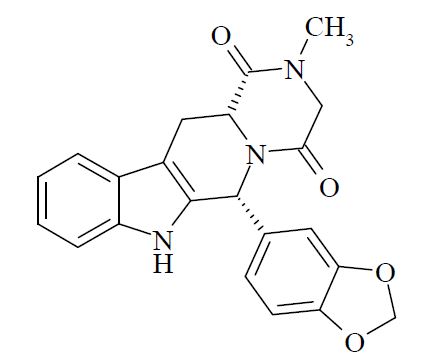
Spl-tadalafil-structure (Spl Tadalafil Structure)

Spl-tadalafil-structure (Spl Tadalafil Structure)
Chemical structure diagram of the active ingredient Tadalafil, showing its molecular framework including fused rings and heteroatoms, consistent with the compound used in Tadalafil tablets by NorthStar RxLLC.*

* About these descriptions: Image descriptions on this page are generated by automated AI analysis of the product label images from the manufacturer's FDA label submission (SPL). They are provided for reference only and may contain errors or omissions. Always rely on the printed label itself and the official FDA labeling, and consult a pharmacist or healthcare professional with any questions about this product.