Paroxetine Tablet, Film Coated
Product Images NDC 16714-182
View Photos of Packaging, Regulatory Labels, and Product Appearance
Product Visual Gallery
This gallery contains 8 technical images submitted to the FDA as part of the official labeling for Paroxetine (NDC 16714-182). Unlike standard consumer photos, these assets often include clinical data figures, molecular chemical structures, and official manufacturer packaging layouts.
As provided by Northstar Rx Llc, these visuals offer a comprehensive scientific overview of the product's physical and chemical identity, aiding pharmacists and researchers in product verification and study.
Product Images & Figures Index
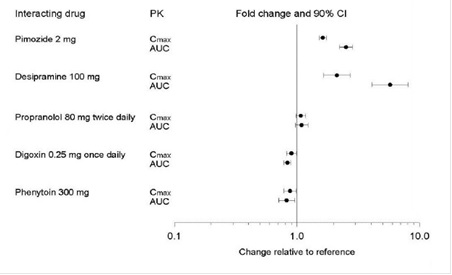
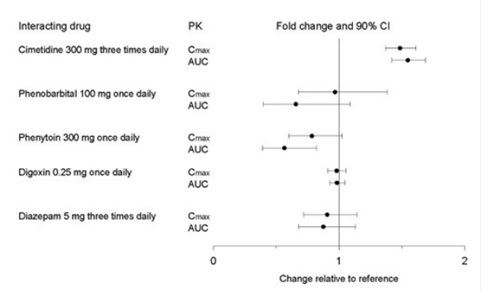
Figure 2. Impact Of Co-administered Drugs On The Pharmacokinetics Of Paroxetine (Paroxetine Fig2)
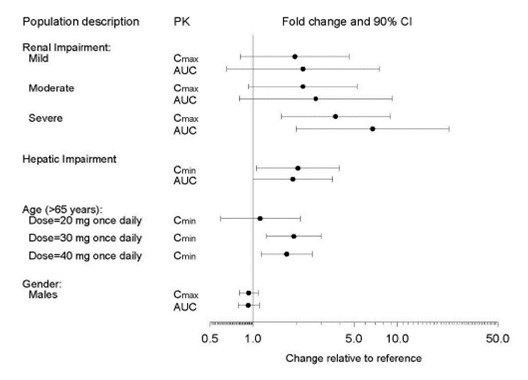
Figure 3. Impact Of Specific Population On The Pharmacokinetics Of Paroxetine (log Scale) (Paroxetine Fig3)
Package Label-principal Display Panel (10 mg (100 Tablets Bottle))
Each film-coated tablet contains 10mg Paroxetine hydrochloride USP equivalent to paroxetine. It is manufactured and distributed by Northstar Rx LLC and is stored at a temperature ranging from 20° C to 25°C (66° F to 77°F). The usual dosage should be referred from the accompanying prescribing information. The tablets are dispensed in a tight and light-resistant container with safety closures. The medication guide is provided separately and more information about the guides is available on the manufacturer's website northstaml comlproducts or through phone call. The product is from Aurobindo Pharma Limited, India. Note: Some printed text is not readable.*
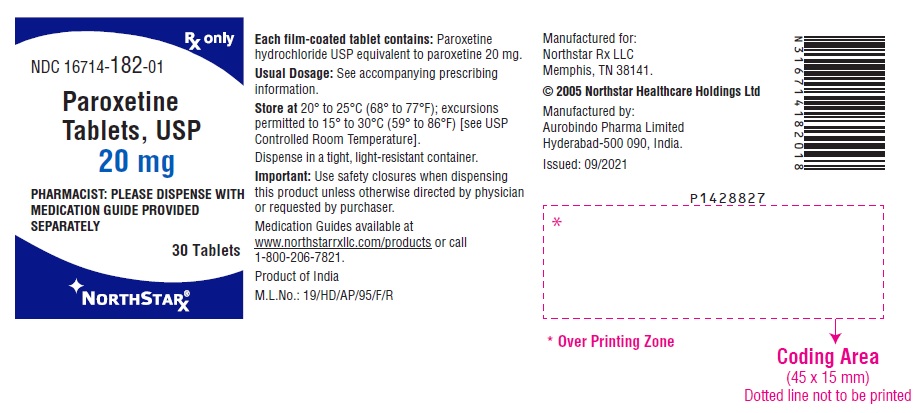
Package Label-principal Display Panel (20 mg (30 Tablets Bottle))
Each film-coated tablet contains 20mg of Paroxetine hydrochloride USP equivalent to paroxetin. The usual dosage can be found in the prescribing information. The tablets should be stored in a tight, light-resistant container, at 20° to 25°C with excursions permitted to 15° to 30°C. Safety closures should be used while dispensing the product, unless otherwise directed by the physician. The product is manufactured in India and distributed by Northstar Rx LLC in Memphis, TN. The Medication Guide is available on request or at www.northstarrxlic.com/products.*
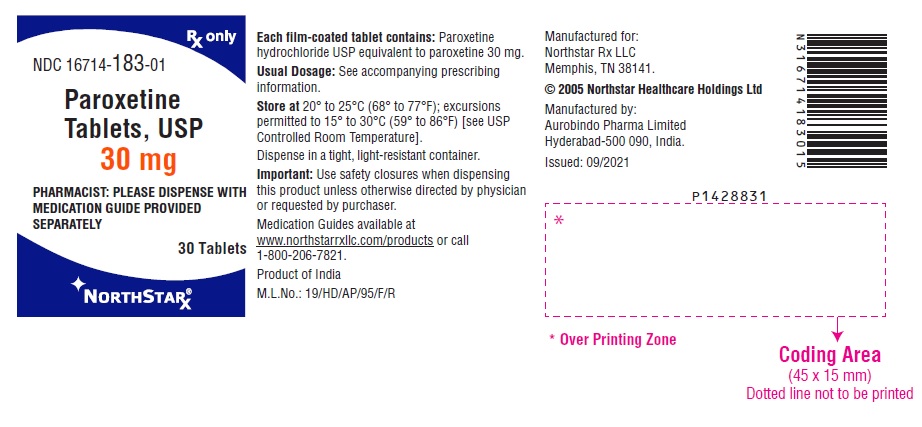
Package Label-principal Display Panel (30 mg (30 Tablets Bottle))
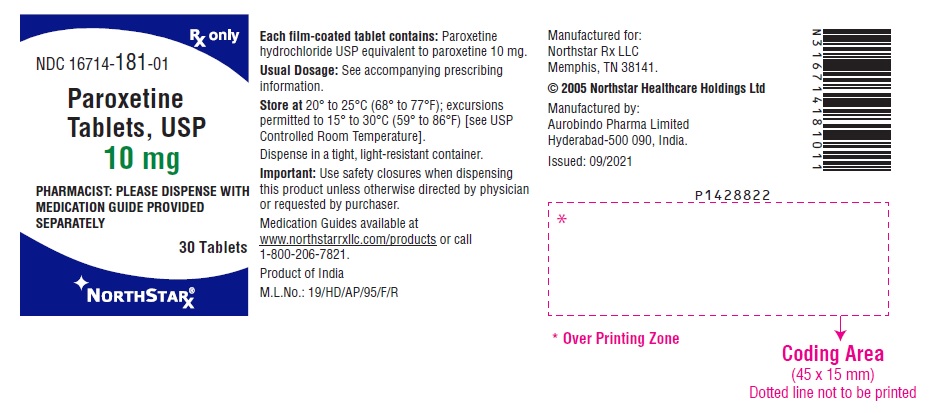
This is a product description for Paroxetine, a medication that comes in film-coated tablets with each containing 30 mg of Paroxetine hydrochloride USP. The usual dosage is to be seen on the prescribing information which accompanies the medication. It is important to store these tablets between 20°C to 25°C (68°F to 77°F), with excursions allowed between 15°C to 30°C (59°F to 86°F). The product is manufactured by Aurobindo Pharma Limited in Hyderabad, India, and should be dispensed in a tight, light-resistant container with safety closures. The pharmacist should not dispense this product unless otherwise directed by the physician or the purchaser requests a medication guide. The medication guide is provided separately, and further information on the product can be obtained on the Northstar website. The text includes a note for the dotted line not to be printed, and an overprinting zone and coding area are also mentioned, but their content is not available.*
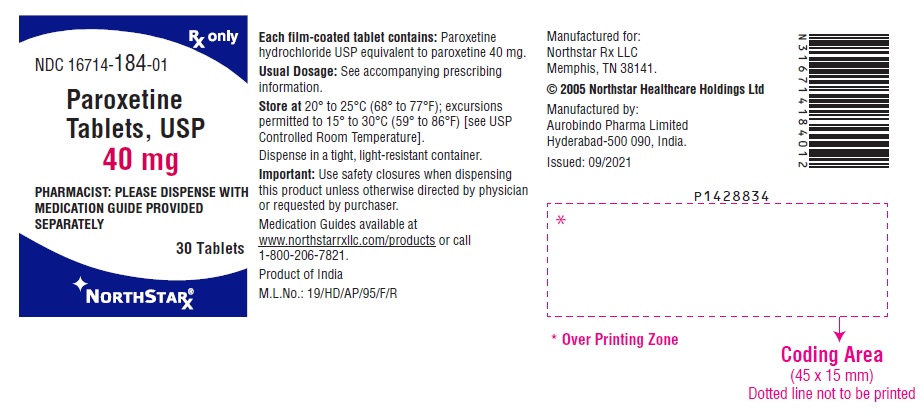
Package Label-principal Display Panel (40 mg (30 Tablets Bottle))
This is a description for Paroxetine Tablets, USP with a strength of 40mg. It contains 30 film-coated tablets, each tablet has Paroxetine hydrochloride USP equivalent to paroxetine 40mg. It is stored at 20° to 25°C (68° to 77°F) and can be allowed to fluctuate to 15° to 30°C (50° to 86°F). It is important to dispense it in a tight, light-resistant container and to use safety closures when dispensing unless directed otherwise by a physician or requested by the purchaser. A medication guide is available at vy northstarindia.com/products or by calling 1-800-206-7821. It is manufactured in Hyderabad-500 090, India by Aurobindo Pharma Limited for Northstar Rx LLC, Memphis, TN 38141.*
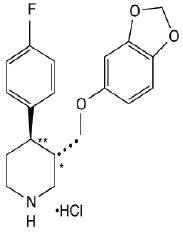
Chemical Structure (Paroxetine Str)
* These product label images have been analyzed using experimental machine learning. Please verify findings with the primary label text.