Guanfacine Tablet, Extended Release
Product Images NDC 16714-191

9 FDA label images from Northstar Rxllc · Packaging, Regulatory Labels, and Product Appearance

Product Visual Gallery

This gallery contains 9 technical images submitted to the FDA as part of the official labeling for Guanfacine (NDC 16714-191). Unlike standard consumer photos, these assets often include clinical data figures, molecular chemical structures, and official manufacturer packaging layouts.

As provided by Northstar Rxllc, these visuals offer a comprehensive scientific overview of the product's physical and chemical identity, aiding pharmacists and researchers in product verification and study.

FDA Label Image

Spl-structure (Spl Structure)
Spl-structure (Spl Structure)
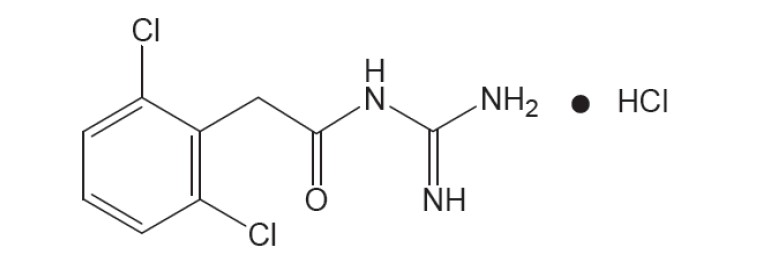
Chemical structure of Guanfacine hydrochloride (HCl), showing the dichlorobenzene ring attached to an amide and guanidine functional groups.*
FDA Label Image

Spl-fig-1 (Spl Fig 1)

Spl-fig-1 (Spl Fig 1)
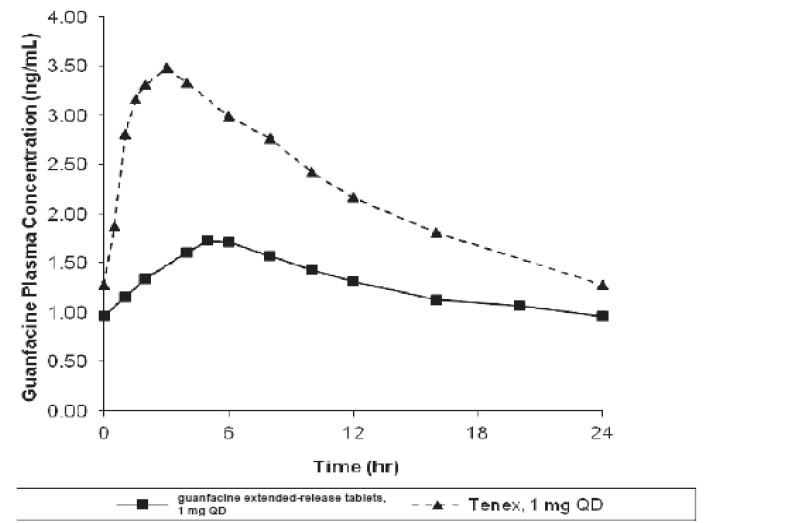
A pharmacokinetic graph showing plasma concentration of guanfacine (ng/mL) over 24 hours. It compares guanfacine extended-release tablets 1 mg once daily (solid line with squares) and a comparator labeled Tenex 1 mg once daily (dashed line with triangles).*
FDA Label Image

Spl-fig-2 (Spl Fig 2)

Spl-fig-2 (Spl Fig 2)
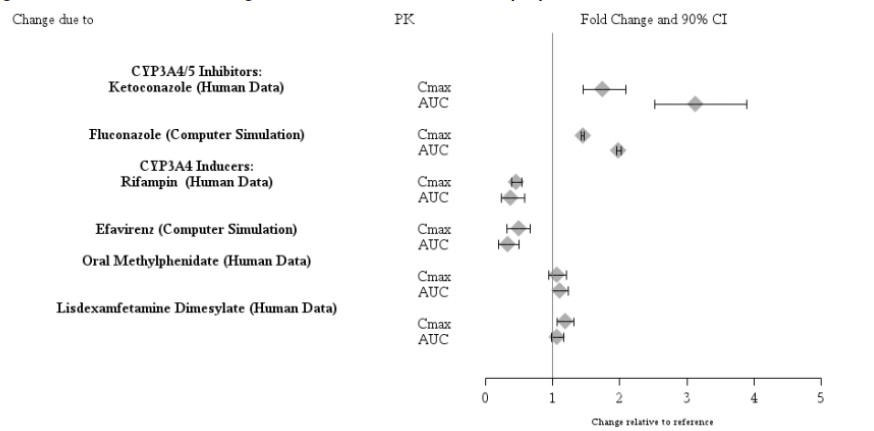
A pharmacokinetic interaction graph showing fold changes and 90% confidence intervals for various CYP3A4/5 inhibitors and inducers, and other drugs, on Guanfacine exposure. It compares Cmax and AUC values relative to reference, including human data and computer simulations for drugs like Ketoconazole, Fluconazole, Rifampin, Efavirenz, Oral Methylphenidate, and Lisdexamfetamine Dimesylate.*
FDA Label Image

Spl-fig-3 (Spl Fig 3)

Spl-fig-3 (Spl Fig 3)
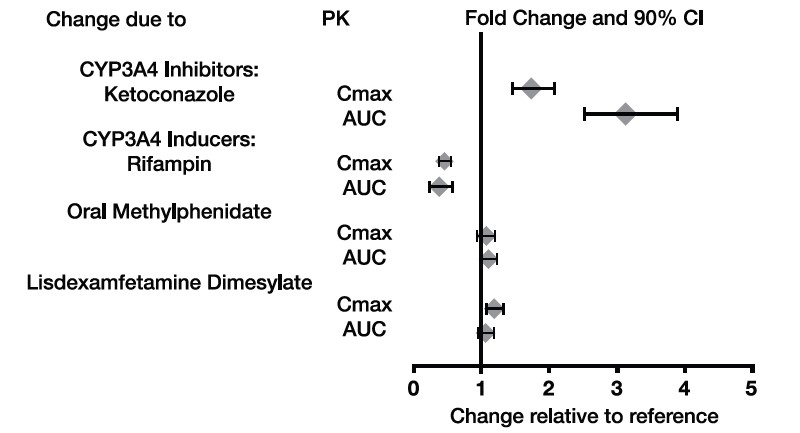
A pharmacokinetic fold change chart illustrating the impact of various substances on Cmax and AUC of a drug. It shows fold changes with 90% confidence intervals for CYP3A4 inhibitors (Ketoconazole), CYP3A4 inducers (Rifampin), oral methylphenidate, and lisdexamfetamine dimesylate relative to a reference baseline, with values plotted on the x-axis from 0 to 5.*
FDA Label Image

Spl-fig-4 (Spl Fig 4)

Spl-fig-4 (Spl Fig 4)
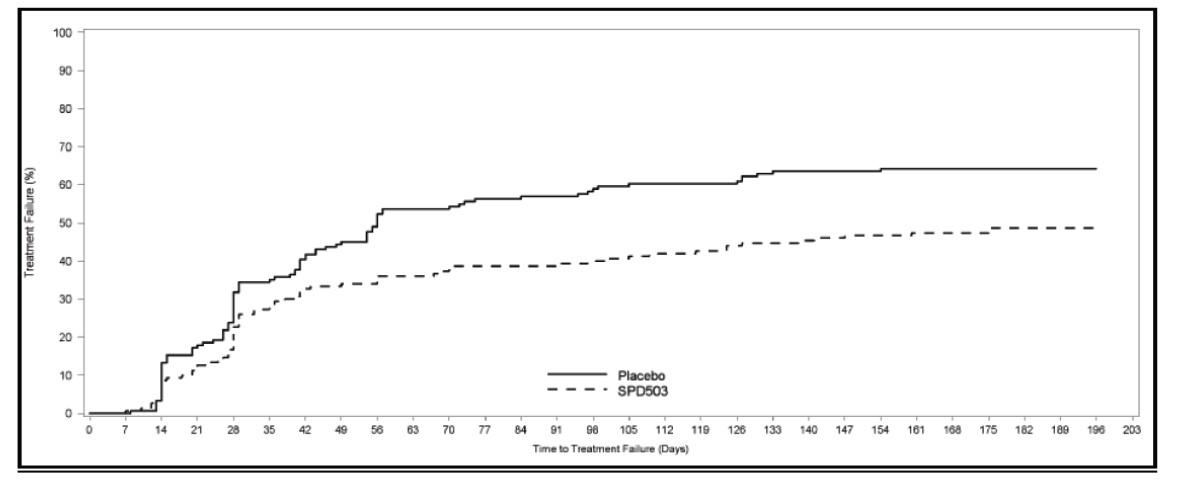
A Kaplan-Meier plot showing treatment failure over time in days for two groups: Placebo (solid line) and SPD503 (dashed line). The y-axis represents percent treatment failure, rising to about 65% for Placebo and about 48% for SPD503 by 203 days. The x-axis spans from 0 to over 200 days, indicating time to treatment failure.*
FDA Label Image

Label-1-100 (Label 1 100)

Label-1-100 (Label 1 100)
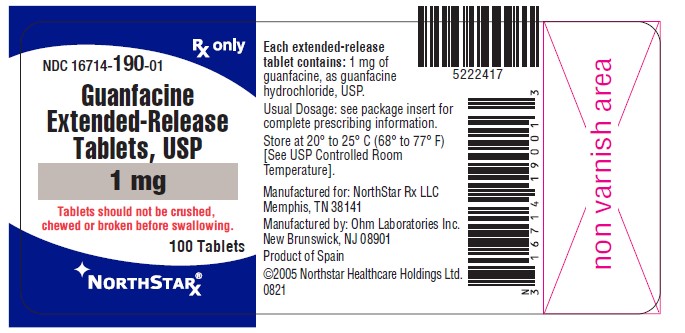
Label for Guanfacine Extended-Release Tablets, USP 1 mg oral tablets by NorthStar Rx LLC. The label states that tablets should not be crushed, chewed, or broken before swallowing. The package contains 100 tablets. Manufacturer and storage information, barcode, and a designated non-varnish area are also shown.*
FDA Label Image

Label-2-100 (Label 2 100)

Label-2-100 (Label 2 100)
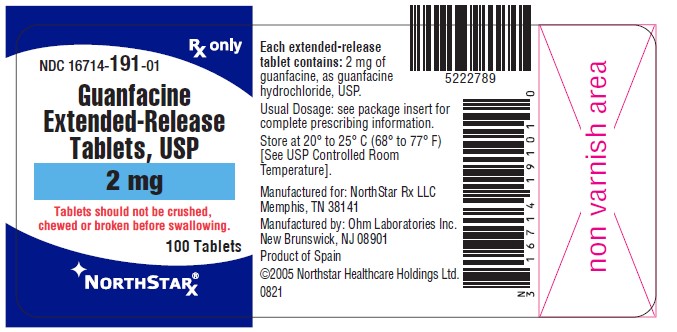
Label for Guanfacine Extended-Release Tablets, USP 2 mg oral tablets, manufactured by NorthStar Rx LLC. The package contains 100 tablets. The label includes storage instructions and cautions against crushing, chewing, or breaking the tablets before swallowing. It also lists the manufacturers and product origin information.*
FDA Label Image

Label-3-100 (Label 3 100)

Label-3-100 (Label 3 100)
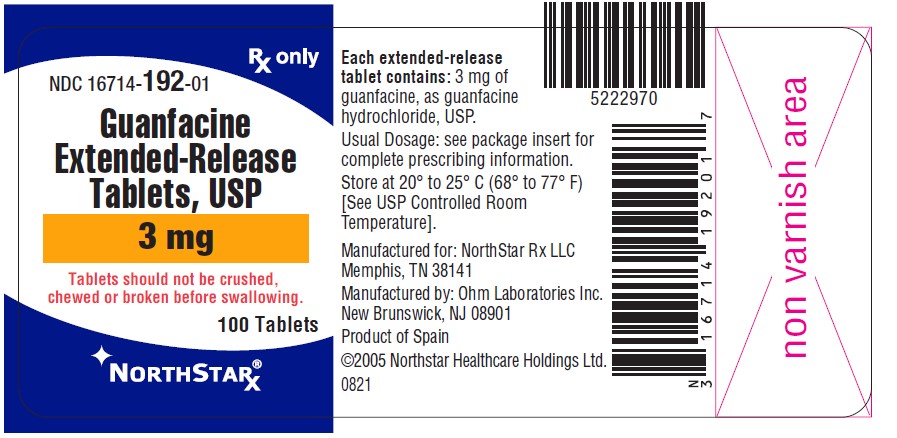
Label for Guanfacine Extended-Release Tablets, USP 3 mg, oral tablets in a 100 count package. The label states that the tablets should not be crushed, chewed, or broken before swallowing. Manufactured for NorthStar Rx LLC and by Ohm Laboratories Inc. The label includes storage instructions and barcodes.*
FDA Label Image

Label-4-100 (Label 4 100)

Label-4-100 (Label 4 100)
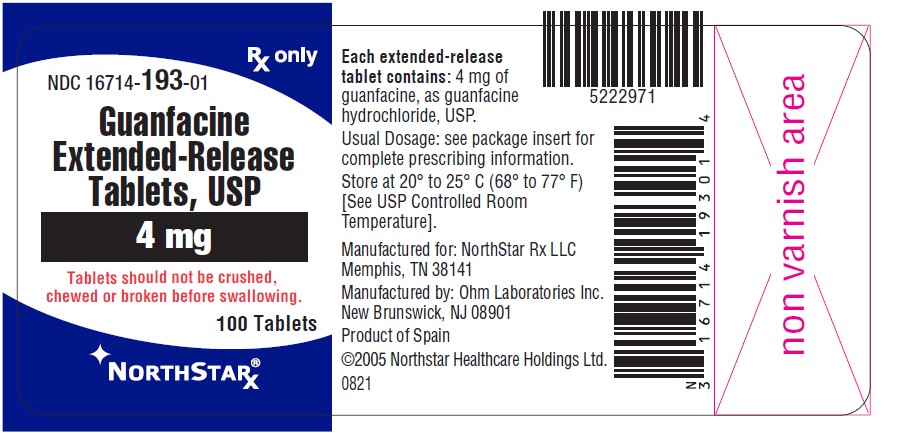
Label for Guanfacine Extended-Release Tablets, USP 4 mg, by NorthStar Rx LLC. The label includes a 100-tablet count, warnings not to crush, chew, or break tablets before swallowing, and storage instructions. Manufactured by Ohm Laboratories Inc., New Brunswick, NJ. The product is labeled as Rx only.*

* About these descriptions: Image descriptions on this page are generated by automated AI analysis of the product label images from the manufacturer's FDA label submission (SPL). They are provided for reference only and may contain errors or omissions. Always rely on the printed label itself and the official FDA labeling, and consult a pharmacist or healthcare professional with any questions about this product.