1) Prepare chromatography tubes (Identify the solvent in each cylinder).
System 1 - 100 mL cylinder containing a 1 cm depth of fresh MEK.
System 2 - 100 mL cylinder containing a 1 cm depth of 0.9% sodium chloride.
System 3 - 1 chromatography tube containing 0.2-0.3 mL of 50% acetonitrile, respectively.
2) Prepare 2 SA ITLC strips and 1 Whatman No. 1 paper strip.
Mark the SA ITLC strips 2.5 cm from the bottom as the point of origin.
Mark both the SA ITLC strips at 14 cm above the origin (solvent front).
Mark the Whatman strip 1 cm from the bottom as the point of origin.
3) Apply at least 5 microliter samples of freshly prepared Tc 99m exametazime solution to the origin of the 3 strips (within 2 minutes of reconstitution). Do not allow to dry.
4) Immediately place 1 SA ITLC strip into the MEK tank (System 1), the second SA ITLC strip into the saline tank (System 2), and the Whatman No. 1 paper strip into the 50% acetonitrile tube (System 3).
5) The SA ITLC MEK strip takes approximately 15 minutes to run. When the eluate has reached the solvent front remove the strip from the tube with forceps and immediately cut 1 cm above the origin.
6) The SA ITLC saline strip takes approximately 15 minutes to run. When the eluate has reached the solvent front remove the strip from the tube with forceps and immediately cut 2.5 cm above the origin.
7) The Whatman No. 1 paper CH3CN strip takes approximately 100 seconds to run. When the eluate has reached the solvent front mark remove the strip from the tube with forceps and immediately cut 0.5 cm above the origin.
9) Count the separate sections of each strip to determine the activity distribution. Calculate:
- % origin of saline strip (system 2)
- % origin of MEK strip (system 1)
- % solvent front of saline strip (= % Tc 99m pertechnetate)
- % origin of Whatman No. 1 paper strip (= % reduced-hydrolyzed Tc 99m)
10) Calculate Radiochemical Purity
% lipophilic Tc 99m exametazime complex = % origin of saline strip (system 2) – % origin of MEK strip (system 1)
11) Do not use if the radiochemical purity of the lipophilic Tc 99m exametazime complex is less than 80%.
Tc 99m Exametazime labeled leukocytes for leukocyte labeled scintigraphy
Radiation absorbed dose per unit activity (microGy/MBq) administered to average-size adults (70 kg) and pediatric patients from an intravenous injection of Tc 99m Exametazime labeled leukocytes is estimated in Table 1.
Table 1: Estimated Radiation Absorbed Dose for Tc 99m exametazime labeled white blood cells (leukocytes)| Organ | Absorbed dose per unit activity administered (microGy / MBq) |
|---|
| Adult | 15 years | 10 years | 5 years | 1 year |
|---|
| *International Commission on Radiological Protection, Radiation Dose to Patients from Radiopharmaceuticals: A Compendium of Current Information Related to Frequently Used Substances, Ann ICRP 2015)., ICRP Publication 128, Ann ICRP 2015). |
| Adrenals | 12 | 12 | 18 | 26 | 43 |
| Bone surfaces | 16 | 21 | 34 | 61 | 150 |
| Brain | 2.3 | 2.9 | 4.4 | 7 | 13 |
| Breast | 2.4 | 2.9 | 4.9 | 7.6 | 13 |
| Gallbladder wall | 8.4 | 10 | 16 | 25 | 36 |
| Gastrointestinal tract | |
| 3.5 | 4.2 | 5.8 | 8.6 | 15 |
| 8.1 | 9.6 | 14 | 20 | 32 |
| 4.6 | 5.7 | 8.7 | 13 | 21 |
| 4.3 | 5.4 | 8.4 | 12 | 21 |
- Upper large intestine wall
| 4.7 | 5.9 | 9.3 | 14 | 23 |
- Lower large intestine wall
| 3.7 | 4.8 | 7.3 | 10 | 18 |
| Heart wall | 9.4 | 12 | 17 | 25 | 44 |
| Kidneys | 12 | 14 | 22 | 32 | 54 |
| Liver | 20 | 26 | 38 | 54 | 97 |
| Lungs | 7.8 | 9.9 | 15 | 23 | 41 |
| Muscles | 3.3 | 4.1 | 6 | 8.9 | 16 |
| Ovaries | 3.9 | 5 | 7.2 | 11 | 18 |
| Pancreas | 13 | 16 | 23 | 34 | 53 |
| Red marrow | 23 | 25 | 40 | 71 | 140 |
| Skin | 1.8 | 2.1 | 3.4 | 5.5 | 10 |
| Spleen | 150 | 210 | 310 | 480 | 850 |
| Testes | 1.6 | 2.1 | 3.2 | 5.1 | 9.2 |
| Thymus | 3.5 | 4.2 | 5.8 | 8.6 | 15 |
| Thyroid | 2.9 | 3.7 | 5.8 | 9.3 | 17 |
| Urinary bladder wall | 2.6 | 3.5 | 5.2 | 7.8 | 14 |
| Uterus | 3.4 | 4.3 | 6.5 | 9.7 | 16 |
| Remaining organs | 3.4 | 4.2 | 6.3 | 9.5 | 16 |
| Effective dose per unit activity | 11 microSv/MBq | 14 microSv/MBq | 22 microSv/MBq | 34 microSv/MBq | 62 microSv/MBq |
Tc 99m Exametazime Injection for Cerebral Scintigraphy
Based on human data, the radiation absorbed doses to average sized adults (70kg) and pediatric patients from an intravenous injection of Tc 99m exametazime injection are estimated in Table 2.
Table 2: Estimated Radiation Absorbed Dose for Tc 99m Exametazime Injection| Organ | Absorbed dose per unit activity administered (microGy / MBq) |
|---|
| Adult | 15 years | 10 years | 5 years | 1 year |
|---|
| *International Commission on Radiological Protection, Radiation Dose to Patients from Radiopharmaceuticals: A Compendium of Current Information Related to Frequently Used Substances, Ann ICRP 2015)., ICRP Publication 128, Ann ICRP 2015). |
| Adrenals | 5.3 | 6.7 | 9.9 | 14 | 24 |
| Bone surfaces | 5.1 | 6.4 | 9.4 | 14 | 24 |
| Brain | 6.8 | 11 | 16 | 21 | 37 |
| Breast | 2 | 2.4 | 3.7 | 5.6 | 9.5 |
| Gallbladder wall | 18 | 21 | 28 | 48 | 140 |
| Gastrointestinal tract | |
| 2.6 | 3.3 | 4.7 | 6.9 | 11 |
| 6.4 | 8.5 | 12 | 19 | 36 |
| 12 | 15 | 24 | 36 | 65 |
| 17 | 22 | 35 | 55 | 100 |
- Upper large intestine wall
| 18 | 24 | 38 | 60 | 110 |
- Lower large intestine wall
| 15 | 19 | 31 | 48 | 90 |
| Heart wall | 3.7 | 4.7 | 6.7 | 9.7 | 16 |
| Kidneys | 34 | 41 | 57 | 81 | 140 |
| Liver | 8.6 | 11 | 16 | 23 | 40 |
| Lungs | 11 | 16 | 22 | 34 | 63 |
| Muscles | 2.8 | 3.5 | 5 | 7.3 | 13 |
| Ovaries | 6.6 | 8.3 | 12 | 17 | 27 |
| Pancreas | 5.1 | 6.5 | 9.7 | 14 | 23 |
| Red marrow | 3.4 | 4.1 | 5.9 | 8 | 14 |
| Skin | 1.6 | 1.9 | 2.9 | 4.5 | 8.3 |
| Spleen | 4.3 | 5.4 | 8.2 | 12 | 20 |
| Testes | 2.4 | 3 | 4.4 | 6.1 | 11 |
| Thymus | 2.6 | 3.3 | 4.7 | 6.9 | 11 |
| Thyroid | 26 | 42 | 63 | 140 | 260 |
| Urinary bladder wall | 23 | 28 | 33 | 33 | 56 |
| Uterus | 6.6 | 8.1 | 12 | 15 | 25 |
| Remaining organs | 3.2 | 4 | 6 | 9.2 | 17 |
| Effective dose per unit activity | 9.3 microSv/MBq | 11 microSv/MBq | 17 microSv/MBq | 27 microSv/MBq | 49 microSv/MBq |
The effective dose resulting from the administration of a (maximal recommended) activity of 1110 MBq for an adult weighing 70 kg is about 10.3 mSv. For an administered activity of 740 MBq the typical radiation dose to the target organ (brain) is 5 mGy and the typical radiation dose to the critical organ (kidneys) is 25 mGy.
Risk Summary
Limited available data with technetium Tc 99m exametazime use in pregnant women are insufficient to inform any drug associated risks for major birth defects and miscarriage. Technetium Tc 99m exametazime is transferred across the placenta [see Data]. Animal reproduction studies with technetium Tc 99m exametazime have not been conducted. However, all radiopharmaceuticals have the potential to cause fetal harm depending on the fetal stage of development and the magnitude of the radiation dose. If considering technetium Tc 99m exametazime administration to a pregnant woman, inform the patient about the potential for adverse pregnancy outcomes based on the radiation dose from technetium Tc 99m exametazime and the gestational timing of exposure.
The estimated background risk of major birth defects and miscarriage for the indicated population is unknown. All pregnancies have a background risk of birth defect, loss, or other adverse outcomes. In the U.S. general population, the estimated background risk of major birth defects and miscarriage in clinically recognized pregnancies is 2-4% and 15-20%, respectively.
Data
Human Data
Limited published literature describes Tc 99m exametazime crossing the placental barrier and visualization of radioactivity in the fetal liver. No adverse fetal effects or radiation-related risks have been identified for diagnostic procedures involving less than 50 mGy, which represents less than 10 mGy fetal doses.
Risk Summary
There are limited data available in the scientific literature on the presence of technetium Tc 99m exametazime in human milk. There are no data available regarding the effects of technetium Tc 99m exametazime on the breastfed infant or on milk production. Exposure of technetium Tc 99m exametazime to a breast fed infant can be minimized by temporary discontinuation of breastfeeding [see Clinical Considerations]. The developmental and health benefits of breastfeeding should be considered along with the mother's clinical need for Ceretec and any potential adverse effects on the breastfed child from Ceretec or from the underlying maternal condition.
Clinical Considerations
To decrease radiation exposure to the breastfed infant, advise a lactating woman to pump and discard breast milk after the administration of technetium Tc 99m exametazime injection or technetium Tc 99m exametazime-labeled leukocytes for 12 to 24 hours, where the duration corresponds to the typical range of administered activity, 259 MBq to 925 MBq (7 mCi to 25 mCi).
General
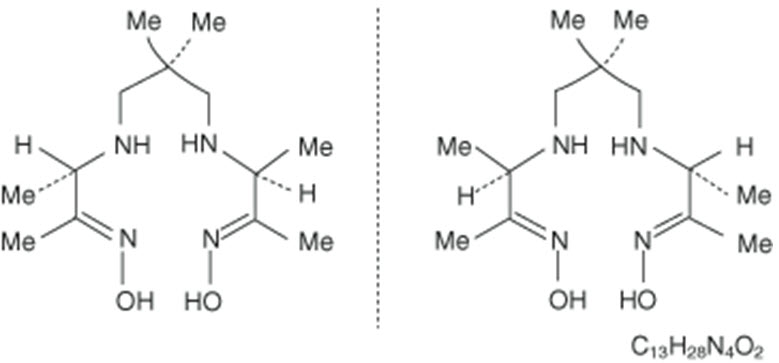
When technetium Tc 99m pertechnetate is added to exametazime in the presence of stannous reductant, a lipophilic technetium Tc 99m complex is formed. This lipophilic complex is the active moiety and is able to cross the blood-brain barrier as well as penetrate cell membranes to label leukocytes. It converts to a polar hydrophilic species at approximately 12% per hour. The polar hydrophilic species is unable to cross the blood-brain barrier or cell membranes.
Mechanism for Labeling Leukocytes
When incubated with leukocytes, which have been isolated from whole blood, the technetium Tc 99m exametazime complex, being lipid-soluble, penetrates the cell membrane of the leukocytes by passive diffusion. The lipophilic complex is then converted to a polar hydrophilic species, in a process possibly involving intracellular glutathione, thus trapping the technetium Tc 99m label within the cells.
Mechanism for Brain Uptake
The agent localizes in the brain as a function of regional cerebral perfusion. Technetium Tc 99m exametazime is primarily extracted and trapped by cerebral gray matter and the basal ganglia during the first pass through the brain. It has been proposed that the retention in the brain of technetium Tc 99m exametazime results from in vivo conversion of the primary complex to a less lipophilic complex, which is unable to cross the blood-brain barrier.
Distribution
Leukocytes Labeled with Tc 99m Exametazime
During the first hour following injection of Tc 99m labeled leukocytes, activity is seen in the lungs, liver, spleen, blood pool, bone marrow, kidneys, gall bladder, and urinary bladder. At 4 hours following injection, lung radioactivity was decreased and bone marrow radioactivity was increased.
The lipophilic Tc 99m exametazime complex (that is not stabilized by cobalt chloride) is taken up by leukocytes and selectively retained in neutrophils. Label elution rate is up to 10% in the first hour.
Tc 99m Exametazime Injection
Studies in normal volunteers have shown that the technetium Tc 99m exametazime is rapidly cleared from the blood after intravenous injection. Uptake in the brain reaches a maximum of 3.5 to 7% of the injected dose within one minute of injection. Up to 15% of the activity is eliminated from the brain by 2 minutes post injection, after which little activity is lost for the following 24 hours except by physical decay of technetium Tc 99m.
Elimination
Excretion
Leukocytes Labeled with Tc 99m Exametazime
Following injection of Tc 99m labeled leukocytes, over the first 1 to 6 hours, the Tc 99m is visualized in the bowel. At 24 hours post-injection substantial colonic activity is seen, implying that excretion of radioactivity takes place through bowel.
Tc 99m Exametazime Injection
About 30% of the injected dose is found in the gastrointestinal tract immediately after injection and about 50% of this is excreted through the intestinal tract over 48 hours. About 40% of the injected dose is excreted through the kidneys and urine over the 48 hours after injection.
The use of cobalt stabilizer solution for stabilization prior to injection does not appear to affect the pharmacokinetic handling or distribution of Tc 99m exametazime.
Ceretec without cobalt stabilizer solution
Long term animal studies have not been performed to evaluate carcinogenic potential or whether exametazime affects fertility in males or females. When evaluated in the Ames test, exametazime increased the apparent rate of gene mutation in the TA100 strain of S. typhimurium. Exametazime did not cause chromosomal aberrations in vitro (Chinese Hamster Ovary cells) or in vivo (rat bone marrow).
Ceretec with cobalt stabilizer solution
In-vitro mutagenicity studies indicate that the stabilized formulation of technetium-99m exametazime is weakly mutagenic in the Ames (bacterial mutation) test, human lymphocyte chromosome aberration assay and mouse lymphoma thymidine kinase assay.
The stabilized formulation is not mutagenic in two in-vivo assays (rat bone marrow micronucleus and rat liver micronucleus).
Administration Instructions
Instruct patients to remain hydrated and void frequently following administration to decrease radiation exposure [see Dosage and Administration (2.3)].
Lactation
Advise a lactating woman to pump and discard breast milk for 12-24 hours (based on injection dose) after administration to minimize radiation exposure to the breastfed infant [see Use in Specific Populations (8.2)].
Distributed by:
GE Healthcare
Medi-Physics, Inc.
Arlington Heights, IL 60004
Manufactured by:
GE Healthcare AS
Oslo, Norway
Product of Norwegian Origin.
Ceretec is a trademark of GE Healthcare.
GE and the GE Monogram are trademarks of General Electric Company.
© 2018 General Electric Company - All rights reserved.
Patent No. 4,789,736