Omcazio Capsule
FDA Label NDC 17201-012

58 label sections · Submitted to the FDA by Handa Pharma · Indications, Dosage, Usage, and Precautions

Structured Product Label

The following Structured Product Label (SPL) was submitted to the FDA by Handa Pharma for the product Omcazio (NDC 17201-012). This document serves as the official prescribing information, containing essential scientific data and clinical materials required for healthcare providers and patients.

This specific version of the label includes detailed information regarding warning: risk of serious adverse reactions or reduced effectiveness due to medication errors, 1.1 renal cell carcinoma, 1.2 hepatocellular carcinoma, 1.3 extra-pancreatic neuroendocrine tumors, 2.1 important dosage information, 2.2 recommended dosage, 2.3 conversion instructions, 2.4 dosage modifications for adverse reactions, and other regulatory disclosures. Use the navigation below to review specific sections of the FDA submission.

Label Section Quick Index

Warning: Risk Of Serious Adverse Reactions Or Reduced Effectiveness Due To Medication Errors

OMCAZIO is not substitutable on a mg-to-mg basis with other cabozantinib products. Inappropriate substitution or incorrect conversion of OMCAZIO capsules for another cabozantinib product can increase the risk of serious adverse reactions. Confirm that the intended cabozantinib product at the intended dosage and strength is being prescribed and dispensed. ( 2.1, 2.3, 5.1)

1.1 Renal Cell Carcinoma

OMCAZIO is indicated for the treatment of adult patients with advanced renal cell carcinoma (RCC).

OMCAZIO, in combination with nivolumab, is indicated for the first-line treatment of adult patients with advanced RCC.

1.2 Hepatocellular Carcinoma

OMCAZIO is indicated for the treatment of adult patients with hepatocellular carcinoma (HCC) who have been previously treated with sorafenib.

1.3 Extra-Pancreatic Neuroendocrine Tumors

OMCAZIO is indicated for the treatment of adult and pediatric patients 12 years of age and older with previously treated, unresectable, locally advanced or metastatic, well-differentiated extra-pancreatic neuroendocrine tumors (epNET).

2.1 Important Dosage Information

  • OMCAZIO may be taken with or without food [see Clinical Pharmacology (12.3)] .
  • Swallow OMCAZIO capsules whole. Do not crush, chew, or open OMCAZIO capsules.
  • If a dose of OMCAZIO is missed, take the missed dose as soon as possible. If a dose is missed by more than 12 hours, skip the missed dose and take the next dose at the scheduled time. Do not take 2 doses at the same time to make up for the missed dose.
  • Stop OMCAZIO at least 3 weeks prior to scheduled surgery, including dental surgery to reduce the risk of hemorrhage. Do not administer OMCAZIO for at least 2 weeks after major surgery and until adequate wound healing [see Warnings and Precautions (5.2, 5.12, 5.13)].
  • The recommended dosages of OMCAZIO are presented in Table 1.

    Table 1. Recommended Dosage for OMCAZIO
    IndicationRecommended DosageDuration
    Renal Cell CarcinomaSingle Agent

    34.5 mg orally once daily
    Until disease progression or unacceptable toxicity
    Combination Therapy

    23 mg orally once daily in combination with nivolumab or nivolumab and hyaluronidase-nvhy

    Refer to the Prescribing Information for nivolumab or nivolumab and hyaluronidase-nvhy for the recommended dosage information.

    Until disease progression or unacceptable toxicity
    Hepatocellular Carcinoma34.5 mg orally once dailyUntil disease progression or unacceptable toxicity
    Extra-pancreatic Neuroendocrine TumorsAdult Patients and Pediatric Patients 12 years of age and older with bodyweight greater than or equal to 40 kg
    34.5 mg orally once daily
    Pediatric patients 12 years of age and older with bodyweight less than 40 kg
    23 mg orally once daily
    Until disease progression or unacceptable toxicity

2.3 Conversion Instructions

If converting from CABOMETYX, discontinue CABOMETYX, and use Table 2 to determine OMCAZIO dosage based on dosage equivalence.

Table 2. Recommendations for Conversion Between OMCAZIO and CABOMETYX
CABOMETYX tablets dosageOMCAZIO capsules dosage
60 mg once daily34.5 mg once daily
40 mg once daily23 mg once daily
20 mg once daily11.5 mg once daily

2.4 Dosage Modifications For Adverse Reactions

Withhold OMCAZIO for:

  • Intolerable Grade 2 adverse reactions
  • Grade 3 or 4 adverse reactions
  • Osteonecrosis of the jaw
  • Upon resolution/improvement (i.e., return to baseline or resolution to Grade 1) of an adverse reaction, reduce the dose as follows:

    The recommended dosage reduction levels for OMCAZIO for adverse reactions are listed in Table 3.

    Table 3. Recommended Dosage Reductions for OMCAZIO for Adverse Reactions
    Recommended DosageFirst Dosage Reduction ToSecond Dosage Reduction To
    OMCAZIO 34.5 mg daily in adult and pediatric patients 12 years of age and older with bodyweight greater than or equal to 40 kg23 mg daily11.5 mg daily

    If previously receiving lowest dose, resume at same dose. If lowest dose not tolerated, permanently discontinue OMCAZIO.

    OMCAZIO 23 mg daily in pediatric patients 12 years of age and older with bodyweight less than 40 kg11.5 mg daily11.5 mg every other day
    OMCAZIO 23 mg daily in combination with nivolumab or nivolumab and hyaluronidase-nvhy11.5 mg daily11.5 mg every other day

    The recommended dosage modifications for adverse reactions for OMCAZIO and for OMCAZIO administered in combination with nivolumab are described in Tables 4 and 5, respectively.

    Table 4. Recommended Dosage Modifications for OMCAZIO Adverse Reactions
    Adverse ReactionSeverity

    Graded according to National Cancer Institute Common Terminology Criteria for Adverse Events (NCI CTCAE version 5.0)

    OMCAZIO Dosage Modification
    Hemorrhage [see Warnings and Precautions (5.2)] Grade 3 or 4
    • Permanently discontinue OMCAZIO
    Perforations and Fistulas [see Warnings and Precautions (5.3)] Any grade gastrointestinal perforation or
    • Permanently discontinue OMCAZIO
    Grade 4 fistula
    Thromboembolic Events [see Warnings and Precautions (5.4)] Any grade acute myocardial infarction or
    • Permanently discontinue OMCAZIO
    Grade 2 or higher cerebral infarction or
    Grade 3 or 4 arterial thromboembolic events or
    Grade 4 venous thromboembolic events
    Hypertension and Hypertensive Crisis [see Warnings and Precautions (5.5)] Grade 3
    • Withhold OMCAZIO until hypertension is adequately controlled to ≤Grade 2
    • Resume at reduced dose
    • Permanently discontinue OMCAZIO for hypertension that cannot be controlled
    Grade 4
    • Permanently discontinue OMCAZIO
    Diarrhea [see Warnings and Precautions (5.7)] Grade 2, Grade 3, or Grade 4
    • Withhold OMCAZIO until ≤Grade 1
    • Resume at reduced dose
    Palmar-Plantar Erythrodysesthesia [see Warnings and Precautions (5.8)] Intolerable Grade 2 or Grade 3
    • Withhold OMCAZIO until ≤Grade 1
    • Resume at reduced dose
    Proteinuria [see Warnings and Precautions (5.11)] Grade 2 or 3
    • Withhold OMCAZIO until improvement to ≤Grade 1 proteinuria
    • Resume at a reduced dose
    • Permanently discontinue OMCAZIO for nephrotic syndrome
    Osteonecrosis of the jaw (ONJ) [see Warnings and Precautions (5.12)] Any grade
    • Withhold OMCAZIO for development of ONJ until complete resolution
    • Resume at reduced dose
    Reversible Posterior Leukoencephalopathy Syndrome [see Warnings and Precautions (5.14)] Any grade
    • Permanently discontinue OMCAZIO
    Other Adverse Reactions [see Adverse Reactions (6.1)] Intolerable Grade 2,
    or Grade 3,
    or Grade 4
    • Withhold OMCAZIO until improvement to baseline or ≤Grade 1
    • Resume at reduced dose
    Table 5. Recommended Specific Dosage Modifications for Hepatic Adverse Reactions for OMCAZIO in Combination with Nivolumab or Nivolumab and Hyaluronidase-nvhy

    When administering OMCAZIO in combination with nivolumab or nivolumab and hyaluronidase-nvhy for the treatment of advanced RCC, refer to their respective Prescribing Information for dosage modifications for adverse reactions.

    Adverse ReactionSeverityDosage Modification
    Hepatotoxicity
    [see Warnings and Precautions (5.9)]
    ALT or AST >3 times ULN but
    ≤10 times ULN with concurrent total bilirubin <2 times ULN
    Withhold

    Consider corticosteroid therapy for hepatic adverse reactions if OMCAZIO is withheld or discontinued when administered in combination with nivolumab or nivolumab and hyaluronidase-nvhy

    both OMCAZIO and nivolumab or nivolumab and hyaluronidase-nvhy until adverse reactions recover

    After recovery, rechallenge with one or both of OMCAZIO and nivolumab or nivolumab and hyaluronidase-nvhy may be considered. If rechallenging with nivolumab or nivolumab and hyaluronidase-nvhy with or without OMCAZIO, refer to their respective Prescribing Information.

    to Grades 0 or 1
    ALT or AST >10 times ULN or
    >3 times ULN with concurrent total bilirubin ≥2 times ULN
    Permanently discontinue both OMCAZIO and nivolumab or nivolumab and hyaluronidase-nvhy

2.5 Dosage Modifications For Drug Interactions

Strong CYP3A Inhibitors

Avoid coadministration of strong CYP3A inhibitors with OMCAZIO. If coadministration of a strong CYP3A inhibitor cannot be avoided, reduce the OMCAZIO dose as recommended in Table 6. After the inhibitor has been discontinued for 3 to 5 elimination half-lives, resume OMCAZIO at the dosage taken prior to initiating the CYP3A inhibitor [see Drug Interactions (7.1)] .

Table 6. Recommended OMCAZIO Dose Modification for Coadministration of Strong CYP3A Inhibitors
Current OMCAZIO DosageOMCAZIO Dosage Modification
34.5 mg daily23 mg daily
23 mg daily11.5 mg daily
11.5 mg daily11.5 mg every other day

Strong and Moderate CYP3A Inducers

Avoid coadministration of strong and moderate CYP3A inducers with OMCAZIO. If coadministration of a strong or moderate CYP3A inducer cannot be avoided, increase the OMCAZIO dose as recommended in Table 7. After the inducer has been discontinued for 2 to 3 days, resume OMCAZIO at the dosage taken prior to initiating the CYP3A inducer [see Drug Interactions (7.1)] . Do not exceed a dosage of 46 mg daily.

Table 7. Recommended OMCAZIO Dosage Modification for Coadministration of Strong and Moderate CYP3A Inducers
Current OMCAZIO DosageOMCAZIO Dosage Modification
34.5 mg daily46 mg daily
23 mg daily34.5 mg daily
11.5 mg daily23 mg daily

2.6 Dosage Modifications For Patients With Moderate Hepatic Impairment

The recommended dosage of OMCAZIO for patients with moderate hepatic impairment (Child-Pugh B) is 23 mg daily as a single agent in adults and pediatric patients 12 years of age and older with bodyweight greater than or equal to 40 kg or 11.5 mg daily in combination with nivolumab or as a single agent in pediatric patients 12 years of age and older with bodyweight less than 40 kg [see Use in Specific Populations (8.6), Clinical Pharmacology (12.3)].

3 Dosage Forms And Strengths

Capsules:

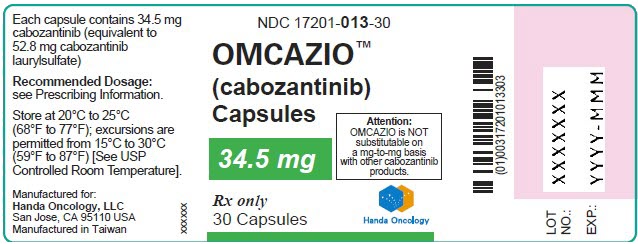
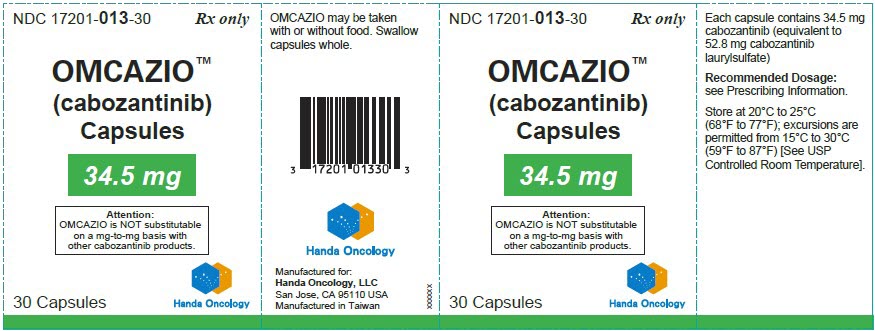
  • 34.5 mg: Opaque white hard gelatin capsules with black imprint "HP 34.5" on capsule body.
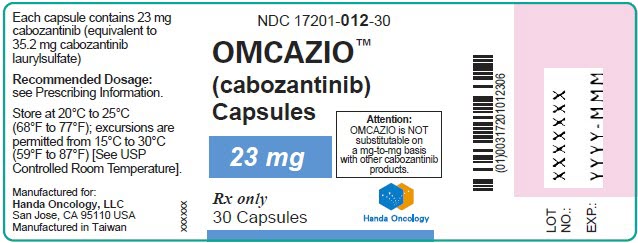
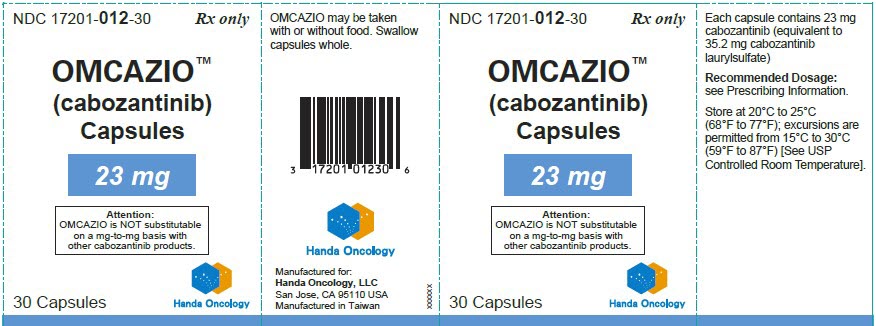
  • 23 mg: Opaque blue cap and opaque white body, hard gelatin capsules with a black imprint "HP 23" on capsule body.
  • 11.5 mg: Opaque blue hard gelatin capsules with a black imprint "HP 11.5" on capsule body.

4 Contraindications

None.

5.1 Risk Of Serious Adverse Reactions Or Reduced Effectiveness Due To Medication Errors

Cabozantinib is available in multiple dosage forms and strengths. The recommended dosage depends on the specific cabozantinib product prescribed. OMCAZIO is not substitutable on a mg-to-mg basis with other cabozantinib products [see Dosage and Administration (2.1, 2.2, 2.3)] . Inappropriate substitution or incorrect conversion of OMCAZIO capsules for another cabozantinib product can:

  • Increase the risk of serious adverse reactions OR
  • Reduce its effectiveness.
  • Confirm that the intended cabozantinib product at the intended dosage and strength is being prescribed and dispensed.

5.2 Hemorrhage

OMCAZIO can cause severe and fatal hemorrhages.

Do not administer OMCAZIO to patients who have a recent history of hemorrhage, including hemoptysis, hematemesis, or melena.

The incidence of Grade 3 to 5 hemorrhagic events was 5% in cabozantinib-treated patients in RCC and HCC studies [see Adverse Reactions (6.1)] .

Withhold OMCAZIO for 3 weeks prior to scheduled surgery, including dental surgery to reduce the risk of hemorrhage. Permanently discontinue OMCAZIO for Grade 3 or 4 hemorrhage and prior to surgery as recommended [see Dosage and Administration (2.4), Warnings and Precautions (5.12, 5.13)] .

5.3 Perforations And Fistulas

OMCAZIO can cause gastrointestinal (GI) perforations and fistulas.

Fistulas, including fatal cases, occurred in 1% of cabozantinib-treated patients [see Adverse Reactions (6.1)] . GI perforations, including fatal cases, occurred in 1% of cabozantinib-treated patients.

Monitor patients for signs and symptoms of fistulas and perforations, including abscess and sepsis. Permanently discontinue OMCAZIO in patients who experience a Grade 4 fistula or a GI perforation [see Dosage and Administration (2.4)] .

5.4 Thromboembolic Events

OMCAZIO can cause arterial or venous thromboembolic events.

Venous thromboembolism occurred in 7% (including 4% pulmonary embolism) and arterial thromboembolism occurred in 2% of cabozantinib-treated patients. Fatal thromboembolic events occurred in cabozantinib-treated patients [see Adverse Reactions (6.1)] .

Permanently discontinue OMCAZIO in patients who develop an acute myocardial infarction or serious arterial or venous thromboembolic events that require medical intervention [see Dosage and Administration (2.4)] .

5.5 Hypertension And Hypertensive Crisis

OMCAZIO can cause hypertension, including hypertensive crisis [see Adverse Reactions (6.1)] .

Hypertension was reported in 37% (16% Grade 3 and <1% Grade 4) of cabozantinib-treated patients. In patients with epNET in CABINET (n=132) [see Clinical Studies (14.3)] , hypertension was reported in 64% (27% Grade 3-4) of cabozantinib-treated patients.

Do not initiate OMCAZIO in patients with uncontrolled hypertension. Monitor blood pressure regularly during OMCAZIO treatment. Withhold OMCAZIO for hypertension that is not adequately controlled with medical management; when controlled, resume OMCAZIO at a reduced dose. Permanently discontinue OMCAZIO for severe hypertension that cannot be controlled with anti-hypertensive therapy or for hypertensive crisis [see Dosage and Administration (2.4)] .

5.6 Cardiac Failure

OMCAZIO can cause severe and fatal cardiac failure [see Adverse Reactions (6.1)].

Cardiac failure occurred in 0.5% of patients treated with cabozantinib as a single agent, including fatal cardiac failure in 0.1% of patients. Median time to onset of cardiac failure was 73 days (range: 44 days to 159 days).

Consider baseline and periodic evaluations of left ventricular ejection fraction. Monitor for signs and symptoms of cardiovascular events. Withhold and resume at a reduced dose upon recovery or permanently discontinue OMCAZIO depending on the severity [see Dosage and Administration (2.4)].

5.7 Diarrhea

OMCAZIO can cause diarrhea.

Diarrhea occurred in 62% of patients treated with cabozantinib. Grade 3 diarrhea occurred in 10% of patients treated with cabozantinib [see Adverse Reactions (6.1)] .

Monitor and manage patients using antidiarrheals as indicated. Withhold OMCAZIO until improvement to ≤Grade 1, resume OMCAZIO at a reduced dose [see Dosage and Administration (2.4)] .

5.8 Palmar-Plantar Erythrodysesthesia

OMCAZIO can cause palmar-plantar erythrodysesthesia (PPE).

PPE occurred in 45% of patients treated with cabozantinib [see Adverse Reactions (6.1)] . Grade 3 PPE occurred in 13% of patients treated with cabozantinib.

Withhold OMCAZIO until improvement to Grade 1 and resume OMCAZIO at a reduced dose for intolerable Grade 2 PPE or Grade 3 PPE [see Dosage and Administration (2.4)] .

5.9 Hepatotoxicity

OMCAZIO in combination with nivolumab can cause hepatic toxicity with higher frequencies of Grades 3 and 4 ALT and AST elevations compared to cabozantinib alone.

Monitor liver enzymes before initiation of and periodically throughout treatment. Consider more frequent monitoring of liver enzymes as compared to when the drugs are administered as single agents. For elevated liver enzymes, interrupt OMCAZIO and nivolumab and consider administering corticosteroids [see Dosage and Administration (2.4)] .

With the combination of cabozantinib and nivolumab, Grades 3 and 4 increased ALT or AST were seen in 11% of patients [see Adverse Reactions (6.1)]. ALT or AST >3 times ULN (Grade ≥2) was reported in 83 patients, of whom 23 (28%) received systemic corticosteroids; ALT or AST resolved to Grades 0-1 in 74 (89%). Among the 44 patients with Grade ≥2 increased ALT or AST who were rechallenged with either cabozantinib (n=9) or nivolumab (n=11) as a single agent or with both (n=24), recurrence of Grade ≥2 increased ALT or AST was observed in 2 patients receiving cabozantinib, 2 patients receiving nivolumab, and 7 patients receiving both cabozantinib and nivolumab.

Withhold and then resume OMCAZIO at a reduced dose based on severity [see Dosage and Administration (2.4)].

5.10 Adrenal Insufficiency

OMCAZIO in combination with nivolumab can cause primary or secondary adrenal insufficiency.

Adrenal insufficiency occurred in 4.7% (15/320) of patients treated with the combination of cabozantinib and nivolumab including Grade 3 (2.2%), and Grade 2 (1.9%) adverse reactions [see Adverse Reactions (6.1)] . Adrenal insufficiency led to permanent discontinuation of cabozantinib and nivolumab in 0.9% and withholding of cabozantinib and nivolumab in 2.8% of patients with renal cell carcinoma.

Approximately 80% (12/15) of patients with adrenal insufficiency received hormone replacement therapy, including systemic corticosteroids. Adrenal insufficiency resolved in 27% (n=4) of the 15 patients. Of the 9 patients in whom cabozantinib with nivolumab was withheld for adrenal insufficiency, 6 reinstated treatment after symptom improvement; of these, all (n=6) received hormone replacement therapy and 2 had recurrence of adrenal insufficiency.

For Grade 2 or higher adrenal insufficiency, initiate symptomatic treatment, including hormone replacement as clinically indicated. Withhold OMCAZIO and/or nivolumab and resume OMCAZIO at a reduced dose depending on severity [see Dosage and Administration (2.4)].

5.11 Proteinuria

OMCAZIO can cause proteinuria.

Proteinuria was observed in 8% of patients receiving cabozantinib [see Adverse Reactions (6.1)] .

Monitor urine protein regularly during OMCAZIO treatment. For Grade 2 or 3 proteinuria, withhold OMCAZIO until improvement to ≤Grade 1 proteinuria, resume OMCAZIO at a reduced dose. Permanently discontinue OMCAZIO in patients who develop nephrotic syndrome [see Dosage and Administration (2.4)] .

5.12 Osteonecrosis Of The Jaw

OMCAZIO can cause osteonecrosis of the jaw (ONJ).

ONJ occurred in <1% of patients treated with cabozantinib [see Adverse Reactions (6.1)] .

ONJ can manifest as jaw pain, osteomyelitis, osteitis, bone erosion, tooth or periodontal infection, toothache, gingival ulceration or erosion, persistent jaw pain or slow healing of the mouth or jaw after dental surgery. Perform an oral examination prior to initiation of OMCAZIO and periodically during treatment with OMCAZIO. Advise patients regarding good oral hygiene practices. Withhold OMCAZIO for at least 3 weeks prior to scheduled dental surgery or invasive dental procedures, if possible. Withhold OMCAZIO for development of ONJ until complete resolution, resume at a reduced dose [see Dosage and Administration (2.4)] .

5.13 Impaired Wound Healing

OMCAZIO can cause impaired wound healing [see Adverse Reactions (6.1)] .

Withhold OMCAZIO for at least 3 weeks prior to elective surgery [see Dosage and Administration (2.2)] . Do not administer OMCAZIO for at least 2 weeks after major surgery and until adequate wound healing. The safety of resumption of OMCAZIO after resolution of wound healing complications has not been established [see Dosage and Administration (2.2, 2.4)] .

5.14 Reversible Posterior Leukoencephalopathy Syndrome

OMCAZIO can cause reversible Posterior Leukoencephalopathy Syndrome (RPLS), a syndrome of subcortical vasogenic edema diagnosed by characteristic finding on MRI.

Perform an evaluation for RPLS in any patient presenting with seizures, headache, visual disturbances, confusion or altered mental function. Permanently discontinue OMCAZIO in patients who develop RPLS [see Dosage and Administration (2.4)] .

5.15 Thyroid Dysfunction

OMCAZIO can cause thyroid dysfunction, primarily hypothyroidism.

Thyroid dysfunction occurred in 19% of patients treated with cabozantinib, including Grade 3 in 0.4% of patients [see Adverse Reactions (6.1)].

Assess patients for signs of thyroid dysfunction prior to the initiation of OMCAZIO and monitor for signs and symptoms of thyroid dysfunction during OMCAZIO treatment.

Perform thyroid function testing and management of dysfunction as clinically indicated [see Dosage and Administration (2.4)] .

5.16 Embryo-Fetal Toxicity

Based on data from animal studies and its mechanism of action, cabozantinib can cause fetal harm when administered to a pregnant woman. Cabozantinib administration to pregnant animals during organogenesis resulted in embryolethality at exposures below those occurring clinically at the recommended dose, and in increased incidences of skeletal variations in rats and visceral variations and malformations in rabbits.

Advise pregnant women of the potential risk to a fetus. Advise females of reproductive potential to use effective contraception during treatment with OMCAZIO and for 4 months after the last dose [see Use in Specific Populations (8.1, 8.3), Clinical Pharmacology (12.1)].

6 Adverse Reactions

The following clinically significant adverse reactions are discussed elsewhere in the labeling:

6.1 Clinical Trial Experience

Because clinical trials are conducted under widely varying conditions, adverse reaction rates observed in the clinical trials of a drug cannot be directly compared to rates in the clinical trials of another drug and may not reflect the rates observed in practice.

The safety of OMCAZIO (cabozantinib) capsules has been established from adequate and well-controlled studies of CABOMETYX ®(cabozantinib) tablets, which has different recommended dosages than OMCAZIO.

The data described in the WARNINGS AND PRECAUTIONS section and below reflect the adverse reactions of CABOMETYX ®(cabozantinib) tablets in these adequate and well-controlled studies. These data reflect exposure to CABOMETYX ®(cabozantinib) tablets as a single agent at 60 mg orally once daily until disease progression or unacceptable toxicity in 409 patients with renal cell carcinoma (RCC) enrolled in a randomized, active-controlled trial (CABOSUN, METEOR), 467 patients with hepatocellular carcinoma (HCC) enrolled in a randomized, placebo- controlled trial (CELESTIAL), 132 patients with extra-pancreatic neuroendocrine tumors (epNET) enrolled in a randomized, placebo-controlled trial (CABINET), and at 40 mg CABOMETYX ®(cabozantinib) tablets in combination with nivolumab 240 mg/m 2every 2 weeks, in 320 patients with RCC enrolled in a randomized, active-controlled trial (CHECKMATE-9ER).

Renal Cell Carcinoma

METEOR

The safety of cabozantinib was evaluated in METEOR, a randomized, open-label trial in which 331 patients with advanced renal cell carcinoma received cabozantinib tablets 60 mg once daily (equivalent to OMCAZIO 34.5 mg) and 322 patients received everolimus 10 mg once daily until disease progression or unacceptable toxicity. Patients on both arms who had disease progression could continue treatment at the discretion of the investigator [see Clinical Studies (14.1)] . The median duration of treatment was 7.6 months (range 0.3 – 20.5) for patients receiving cabozantinib and 4.4 months (range 0.21 – 18.9) for patients receiving everolimus.

Adverse reactions which occurred in ≥25% of cabozantinib-treated patients, in order of decreasing frequency, were: diarrhea, fatigue, nausea, decreased appetite, palmar-plantar erythrodysesthesia (PPE), hypertension, vomiting, weight decreased, and constipation. Grade 3-4 adverse reactions and laboratory abnormalities which occurred in ≥5% of patients were hypertension, diarrhea, fatigue, PPE, hyponatremia, hypophosphatemia, hypomagnesemia, lymphopenia, anemia, hypokalemia, and increased GGT.

The dose was reduced in 60% of patients receiving cabozantinib and in 24% of patients receiving everolimus. Twenty percent (20%) of patients received cabozantinib tablets 20 mg once daily (equivalent to OMCAZIO 11.5 mg) as their lowest dose. The most frequent adverse reactions leading to dose reduction in patients treated with cabozantinib were: diarrhea, PPE, fatigue, and hypertension. Adverse reactions leading to dose interruption occurred in 70% patients receiving cabozantinib and in 59% patients receiving everolimus. Adverse reactions led to study treatment discontinuation in 10% of patients receiving cabozantinib and in 10% of patients receiving everolimus. The most frequent adverse reactions leading to permanent discontinuation in patients treated with cabozantinib were decreased appetite (2%) and fatigue (1%).

Table 8. Adverse Reactions Occurring in ≥10% Patients Who Received Cabozantinib in METEOR
Adverse ReactionCabozantinib
(n=331)

One subject randomized to everolimus received cabozantinib.

Everolimus
(n=322)
All Grades

National Cancer Institute (NCI) Common Terminology Criteria for Adverse Events (CTCAE) Version 4.0

Grade 3-4All Grades Grade 3-4
Percentage (%) of Patients
Gastrointestinal
  Diarrhea7411282
  Nausea50428<1
  Vomiting32214<1
  Stomatitis222242
  Constipation25<119<1
  Abdominal pain

Includes the following terms: abdominal pain, abdominal pain upper, and abdominal pain lower

234132
  Dyspepsia12<150
General
  Fatigue569477
  Mucosal inflammation19<1233
  Asthenia194162
Metabolism and Nutrition
  Decreased appetite46334<1
Skin and Subcutaneous Tissue
  Palmar-plantar erythrodysesthesia4286<1
  Rash

Includes the following terms: rash, rash erythematous, rash follicular, rash macular, rash papular, rash pustular, rash vesicular, genital rash, intermittent leg rash, rash on scrotum and penis, rash maculo-papular, rash pruritic, contact dermatitis, dermatitis acneiform

23<143<1
  Dry skin110100
Vascular
  Hypertension

Includes the following terms: hypertension, blood pressure increased, hypertensive crisis, blood pressure fluctuation

391683
Investigations
  Weight decreased312120
Nervous System
  Dysgeusia24090
  Headache11<112<1
  Dizziness11070
Endocrine
  Hypothyroidism210<1<1
Respiratory, Thoracic, and Mediastinal
  Dysphonia20<140
  Dyspnea193294
  Cough18<133<1
Blood and Lymphatic
  Anemia1753816
Musculoskeletal and Connective Tissue
  Pain in extremity1418<1
  Muscle spasms13050
  Arthralgia11<1141
Renal and Urinary
  Proteinuria1229<1

Other clinically relevant adverse reactions (all grades) that were reported in <10% of patients treated with cabozantinib included: wound complications (2%), cardiac failure (<1%), convulsion (<1%), pancreatitis (<1%), osteonecrosis of the jaw (<1%), and hepatitis cholestatic (<1%).

Table 9. Laboratory Abnormalities Occurring in ≥25% Patients Who Received Cabozantinib in METEOR
Laboratory AbnormalityCabozantinib
(n=331)
Everolimus
(n=322)
All GradesGrade 3-4All GradesGrade 3-4
Percentage (%) of Patients
ALP, alkaline phosphatase; ALT, alanine aminotransferase; AST, aspartate aminotransferase; GGT, gamma glutamyl transferase.
NCI CTCAE, Version 4.0
Chemistry
  Increased AST74340<1
  Increased ALT68332<1
  Increased creatinine58<1710
  Increased triglycerides5347313
  Hypophosphatemia488365
  Hyperglycemia372598
  Hypoalbuminemia36228<1
  Increased ALP352291
  Hypomagnesemia3174<1
  Hyponatremia308266
  Increased GGT275439
Hematology
  Leukopenia35<131<1
  Neutropenia31217<1
  Anemia

Based on laboratory abnormalities

3147117
  Lymphopenia2573912
  Thrombocytopenia25<127<1

CABOSUN

The safety of cabozantinib was evaluated in CABOSUN, a randomized, open-label trial in patients with advanced renal cell carcinoma, in which 78 patients received cabozantinib tablets 60 mg once daily (equivalent to OMCAZIO 34.5 mg) and 72 patients received sunitinib 50 mg once daily (4 weeks on treatment followed by 2 weeks off), until disease progression or unacceptable toxicity [see Clinical Studies (14.1)] . The median duration of treatment was 6.5 months (range 0.2 – 28.7) for patients receiving cabozantinib and 3.1 months (range 0.2 – 25.5) for patients receiving sunitinib.

Within 30 days of treatment, there were 4 deaths in patients treated with cabozantinib and 6 deaths in patients treated with sunitinib. Of the 4 patients treated with cabozantinib, 2 patients died due to gastrointestinal perforation, 1 patient had acute renal failure, and 1 patient died due to clinical deterioration. All Grade 3-4 adverse reactions were collected in the entire safety population. The most frequent Grade 3-4 adverse reactions (≥5%) in patients treated with cabozantinib were hypertension, diarrhea, hyponatremia, hypophosphatemia, PPE, fatigue, increased ALT, decreased appetite, stomatitis, pain, hypotension, and syncope.

The median average daily dose was 50.3 mg for cabozantinib and 44.7 mg for sunitinib (excluding scheduled sunitinib non-dosing days). The dose was reduced in 46% of patients receiving cabozantinib and in 35% of patients receiving sunitinib. The dose was held in 73% of patients receiving cabozantinib and in 71% of patients receiving sunitinib. Based on patient disposition, 21% of patients receiving cabozantinib and 22% of patients receiving sunitinib discontinued due to an adverse reaction.

Table 10. Grade 3-4 Adverse Reactions Occurring in ≥1% Patients Who Received Cabozantinib in CABOSUN
Adverse ReactionCabozantinib
(n = 78)
Sunitinib
(n = 72)
Grade 3-4

NCI CTCAE Version 4.0

Grade 3-4
Percentage (%) of Patients
ALT, alanine aminotransferase; AST, aspartate aminotransferase
Patients with any Grade 3-4 Adverse Reaction6865
      
Gastrointestinal
  Diarrhea1011
  Stomatitis56
  Nausea34
  Vomiting13
  Constipation10
General
  Fatigue617
  Pain50
Metabolism and Nutrition
  Hyponatremia

Laboratory abnormalities are reported as adverse reactions and not based on shifts in laboratory values

98
  Hypophosphatemia 97
  Decreased appetite51
  Dehydration41
  Hypocalcemia 30
  Hypomagnesemia 30
  Hyperkalemia 13
Skin and Subcutaneous Tissue
  Palmar-plantar erythrodysesthesia84
  Skin ulcer30
Vascular
  Hypertension

Includes the following term: hypertension

2821
  Hypotension51
  Angiopathy11
Investigations
  Increased ALT 50
  Weight decreased40
  Increased AST 33
  Increased blood creatinine 33
  Lymphopenia 16
  Thrombocytopenia 111
Nervous System
  Syncope50
Respiratory, Thoracic, and Mediastinal
  Dyspnea16
  Dysphonia10
Blood and Lymphatic
  Anemia13
Psychiatric
  Depression40
  Confusional state11
Infections
  Lung infection40
Musculoskeletal and Connective Tissue
  Back pain40
  Bone pain31
  Pain in extremity30
  Arthralgia10
Renal and Urinary
  Renal failure acute41
  Proteinuria31

CHECKMATE-9ER

The safety of cabozantinib with nivolumab was evaluated in CHECKMATE-9ER, a randomized, open-label study in patients with previously untreated advanced RCC [see Clinical Studies (14.1)] . Patients received cabozantinib tablets 40 mg orally once daily (equivalent to OMCAZIO 23 mg) with nivolumab 240 mg over 30 minutes every 2 weeks (n=320) or sunitinib 50 mg daily, administered orally for 4 weeks on treatment followed by 2 weeks off (n=320) [see Clinical Studies (14.1)] .

Cabozantinib tablets could be interrupted or reduced to 20 mg daily or 20 mg every other day (equivalent to OMCAZIO 11.5 mg). The median duration of treatment was 14 months (range: 0.2 to 27 months) in cabozantinib and nivolumab-treated patients. In this trial, 82% of patients in the cabozantinib and nivolumab arm were exposed to treatment for >6 months and 60% of patients were exposed to treatment for >1 year.

Serious adverse reactions occurred in 48% of patients receiving cabozantinib and nivolumab. The most frequent (≥2%) serious adverse reactions were diarrhea, pneumonia, pneumonitis, pulmonary embolism, urinary tract infection, and hyponatremia. Fatal intestinal perforations occurred in 3 (0.9%) patients.

Adverse reactions leading to discontinuation of either cabozantinib or nivolumab occurred in 20% of patients: 8% cabozantinib only, 7% nivolumab only, and 6% both drugs due to the same adverse reaction at the same time. Adverse reactions leading to dose interruption or reduction of either cabozantinib or nivolumab occurred in 83% of patients: 46% cabozantinib only, 3% nivolumab only, and 21% both drugs due to the same adverse reaction at the same time, and 6% both drugs sequentially.

The most common adverse reactions reported in ≥20% of patients treated with cabozantinib and nivolumab were diarrhea, fatigue, hepatotoxicity, PPE, stomatitis, rash, hypertension, hypothyroidism, musculoskeletal pain, decreased appetite, nausea, dysgeusia, abdominal pain, cough, and upper respiratory tract infection.

Table 11. Adverse Reactions in >15% of Patients Receiving Cabozantinib and Nivolumab - CHECKMATE-9ER
Adverse ReactionCabozantinib and Nivolumab
(n=320)
Sunitinib
(n=320)
Grades 1-4Grades 3-4Grades 1-4Grades 3-4
Percentage (%) of Patients
Toxicity was graded per NCI CTCAE v4.
Gastrointestinal
  Diarrhea647474.4
  Nausea270.6310.3
  Abdominal pain

Includes abdominal discomfort, abdominal pain lower, abdominal pain upper.

221.9150.3
  Vomiting171.9210.3
  Dyspepsia

Includes gastroesophageal reflux disease.

150220.3
General
  Fatigue

Includes asthenia.

518508
Hepatobiliary
  Hepatotoxicity

Includes hepatotoxicity, ALT increased, AST increased, blood alkaline phosphatase increased, gamma-glutamyl transferase increased, autoimmune hepatitis, blood bilirubin increased, drug induced liver injury, hepatic enzyme increased, hepatitis, hyperbilirubinemia, liver function test increased, liver function test abnormal, transaminases increased, hepatic failure.

4411265
Skin and Subcutaneous Tissue
  Palmar-plantar erythrodysesthesia408418
  Stomatitis

Includes mucosal inflammation, aphthous ulcer, mouth ulceration.

373.4464.4
  Rash

Includes dermatitis, dermatitis acneiform, dermatitis bullous, exfoliative rash, rash erythematous, rash follicular, rash macular, rash maculo-papular, rash papular, rash pruritic.

363.1140
  Pruritus190.34.40
Vascular
  Hypertension

Includes blood pressure increased, blood pressure systolic increased.

36133914
Endocrine
  Hypothyroidism

Includes primary hypothyroidism.

340.3300.3
Musculoskeletal and Connective Tissue
  Musculoskeletal pain

Includes back pain, bone pain, musculoskeletal chest pain, musculoskeletal discomfort, myalgia, neck pain, pain in extremity, spinal pain.

333.8293.1
  Arthralgia180.390.3
Metabolism and Nutrition
  Decreased appetite281.9201.3
Nervous System Disorders
  Dysgeusia240220
  Headache160120.6
Respiratory, Thoracic and Mediastinal
  Cough

Includes productive cough.

200.3170
  Dysphonia170.33.40
Infections and Infestations
  Upper respiratory tract infection

Includes nasopharyngitis, pharyngitis, rhinitis.

200.380.3
Table 12. Laboratory Values Worsening from Baseline

Each test incidence is based on the number of patients who had both baseline and at least one on-study laboratory measurement available: cabozantinib and nivolumab group (range: 170 to 317 patients) and sunitinib group (range: 173 to 311 patients).

Occurring in >20% of Patients Receiving Cabozantinib and Nivolumab - CHECKMATE-9ER
Laboratory AbnormalityCabozantinib and NivolumabSunitinib
Grades 1-4Grades 3-4Grades 1-4Grades 3-4
Percentage (%) of Patients
Chemistry
  Increased ALT799.8393.5
  Increased AST777.9572.6
  Hypophosphatemia69284810
  Hypocalcemia541.9240.6
  Hypomagnesemia471.3250.3
  Hyperglycemia443.5441.7
  Hyponatremia43113612
  Increased lipase41143813
  Increased amylase4110286
  Increased alkaline phosphatase412.8371.6
  Increased creatinine391.3420.6
  Hyperkalemia354.7271
  Hypoglycemia260.8140.4
Hematology
  Lymphopenia426.64510
  Thrombocytopenia410.3709.7
  Anemia372.5614.8
  Leukopenia370.3665.1
  Neutropenia353.26712

Hepatocellular Carcinoma

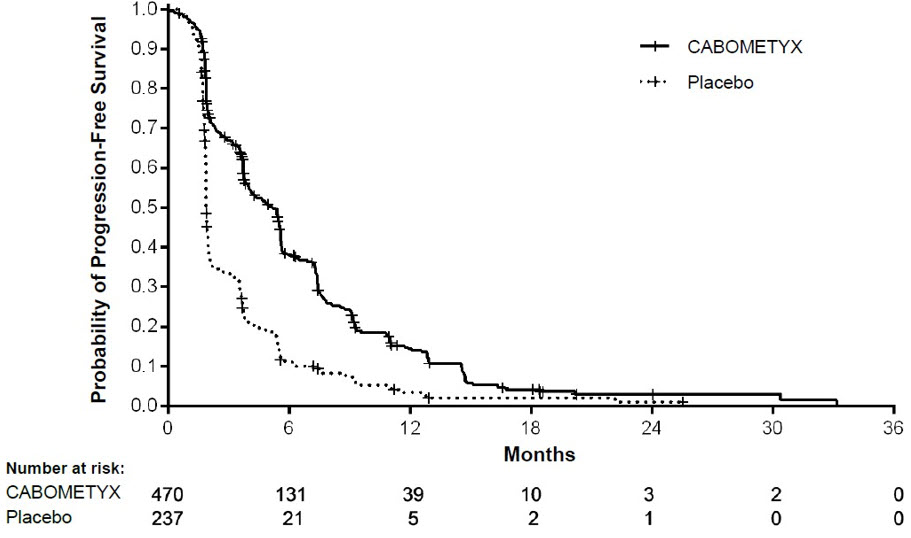
The safety of cabozantinib was evaluated in CELESTIAL, a randomized, double-blind, placebo-controlled trial in which 704 patients with advanced hepatocellular carcinoma were randomized to receive cabozantinib tablets 60 mg orally once daily (equivalent to OMCAZIO 34.5 mg) (n=467) or placebo (n=237) until disease progression or unacceptable toxicity [see Clinical Studies (14.2)] . The median duration of treatment was 3.8 months (range 0.1 – 37.3) for patients receiving cabozantinib and 2.0 months (range 0.0 – 27.2) for patients receiving placebo. The population exposed to cabozantinib was 81% male, 56% White, and had a median age of 64 years.

Adverse reactions occurring in ≥25% of cabozantinib-treated patients, in order of decreasing frequency were: diarrhea, decreased appetite, PPE, fatigue, nausea, hypertension, and vomiting. Grade 3-4 adverse reactions which occurred in ≥5% of patients were PPE, hypertension, fatigue, diarrhea, asthenia, and decreased appetite. There were 6 adverse reactions leading to death in patients receiving cabozantinib (hepatic failure, hepatorenal syndrome, esophagobronchial fistula, portal vein thrombosis, pulmonary embolism, upper gastrointestinal hemorrhage).

The median average daily dose was 35.8 mg for cabozantinib. The dose was reduced in 62% of patients receiving cabozantinib; 33% of patients required a reduction to 20 mg daily (equivalent to OMCAZIO 11.5 mg). The most frequent adverse reactions or laboratory abnormalities leading to dose reduction of cabozantinib were: PPE, diarrhea, fatigue, hypertension, and increased AST. Adverse reactions leading to dose interruption occurred in 84% patients receiving cabozantinib. Adverse reactions leading to permanent discontinuation of cabozantinib occurred in 16% of patients. The most frequent adverse reactions leading to permanent discontinuation of cabozantinib were PPE (2%), fatigue (2%), decreased appetite (1%), diarrhea (1%), and nausea (1%).

Table 13. Adverse Reactions Occurring in ≥5% of Cabozantinib-Treated Patients in CELESTIAL

Includes terms with a between-arm difference of ≥5% (all grades) or ≥2% (Grade 3-4)

Adverse ReactionCabozantinib
(n = 467)
Placebo
(n = 237)
All Grades

NCI CTCAE Version 4.0

Grade 3-4All Grades Grade 3-4
Percentage (%) of Patients
Gastrointestinal
  Diarrhea5410192
  Nausea312182
  Vomiting26<1123
  Stomatitis13220
  Dyspepsia10030
General
  Fatigue4510304
  Asthenia22782
  Mucosal inflammation1422<1
Metabolism and Nutrition
  Decreased appetite48618<1
Skin and Subcutaneous Tissue
  Palmar-plantar erythrodysesthesia461750
  Rash

Includes the following terms: rash, rash erythematous, rash generalized, rash macular, rash maculo- papular, rash papular, rash pruritic, rash pustular, rash vesicular, dermatitis, dermatitis acneiform, dermatitis contact, dermatitis diaper, dermatitis exfoliative, dermatitis infected

2129<1
Vascular
  Hypertension

Includes the following terms: hypertension, blood pressure diastolic increased, blood pressure increased

301662
Investigations
  Weight decreased17160
Nervous System
  Dysgeusia12020
Endocrine
  Hypothyroidism8<1<10
Respiratory, Thoracic, and Mediastinal
  Dysphonia19120
  Dyspnea12310<1
Musculoskeletal and Connective Tissue
  Pain in extremity9<141
  Muscle spasms8<120
Table 14. Laboratory Abnormalities Occurring in ≥5% of Cabozantinib-Treated Patients in CELESTIAL

Includes laboratory abnormalities with a between-arm difference of ≥5% (all grades) or ≥2% (Grade 3-4)

Laboratory AbnormalityCabozantinib
(n=467)
Placebo
(n=237)
All GradesGrade 3-4All GradesGrade 3-4
Percentage of Patients
ALP, alkaline phosphatase; ALT, alanine aminotransferase; AST, aspartate aminotransferase; LDH, blood lactate dehydrogenase
Chemistry
  Increased LDH849292
  Increased ALT7312376
  Increased AST73244619
  Hypoalbuminemia511321
  Increased ALP438386
  Hypophosphatemia25984
  Hypokalemia23661
  Hypomagnesemia22330
  Increased amylase16292
  Hypocalcemia8200
Hematology
  Decreased platelets5410161
  Neutropenia43781
  Increased hemoglobin8010

Extra-pancreatic Neuroendocrine Tumors

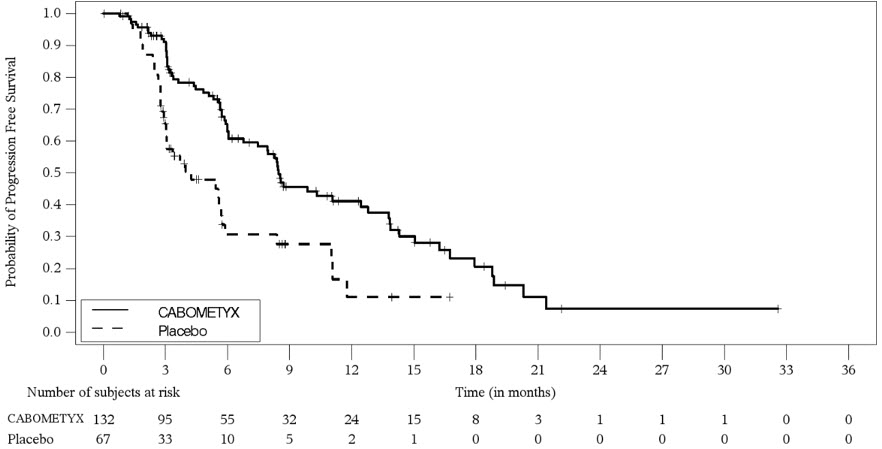
The safety of cabozantinib was evaluated in adult patients with unresectable, locally advanced or metastatic, well-differentiated neuroendocrine tumors in the CABINET trial [see Clinical Studies (14.3)]. Patients received cabozantinib tablets 60 mg (equivalent to OMCAZIO 34.5 mg) (n=132) or placebo (n=67) orally once daily until disease progression or unacceptable toxicity. Patients with epNET were required to have disease progression after prior treatment with at least one FDA approved therapy (everolimus or lutetium Lu 177 dotatate), other than somatostatin analogs. The median duration of treatment was 5.4 months (range 0.1 to 32.4) for patients receiving cabozantinib and 2.8 months (range 0.5 to 22.8) for patients receiving placebo.

The median age was 66 years (range 28 to 86), 55% were female, 86% were White, 7% were Black, 2.3% were Asian, 5% had unknown race or race not reported, and 6% were Hispanic or Latino.

Serious adverse reactions occurred in 44% of patients who received cabozantinib. Serious adverse reactions in ≥2% included hypertension (6%), abdominal pain (5%), musculoskeletal pain (5%), diarrhea (3.0%), vomiting (3.0%), blood bilirubin increased (3.0%), thromboembolic events (3.0%), nausea (2.3%), hemoglobin decreased (2.3%), muscular weakness (2.3%), fatigue (2.3%), sepsis (2.3%), and syncope (2.3%). Fatal adverse reactions occurred in 4.5% of patients who received cabozantinib, including hepatic failure, multi-organ dysfunction, gastrointestinal hemorrhage, cardiac arrest, ruptured ascending aortic aneurysm, and sudden death not otherwise specified, occurring in one patient each.

Permanent discontinuation of cabozantinib due to an adverse reaction occurred in 28% of patients receiving cabozantinib. Adverse reactions which resulted in permanent discontinuation of cabozantinib included diarrhea, fatigue, increased AST, increased ALT, blood bilirubin increased, rash, thromboembolic events, hypertension, increased ALP, nausea, and stomatitis.

The median average daily dose was 42.9 mg for cabozantinib tablets. Dosage interruptions of cabozantinib due to an adverse reaction occurred in 81% of patients. Adverse reactions which required dosage interruption in ≥5% of patients included diarrhea, fatigue, rash, hypertension, nausea, stomatitis, abdominal pain, increased AST, vomiting, and musculoskeletal pain.

Dose reductions of cabozantinib due to an adverse reaction occurred in 38% of patients. Adverse reactions which required dose reductions in ≥5% of patients included rash, fatigue, diarrhea, and hypertension.

The most common adverse reactions occurring in ≥20% of cabozantinib-treated patients were fatigue, increased AST, diarrhea, hypertension, increased ALT, platelet count decreased, rash, stomatitis, nausea, white blood cell count decreased, neutrophil count decreased, musculoskeletal pain, dysgeusia, hypothyroidism, decreased appetite, hemoglobin decreased, hyperglycemia, abdominal pain, increased ALP, lymphocyte count decreased, weight decreased, blood creatinine increased, hypoalbuminemia, blood bilirubin increased, hypocalcemia, hypokalemia, and hypomagnesemia.

Table 15 summarizes the adverse reactions in patients with epNET in CABINET.

Table 15. Adverse Reactions (≥15%) in Patients with epNET Who Received Cabozantinib in CABINET
Adverse ReactionCabozantinib
(n=132)
Placebo
(n=67)
All Grades

NCI CTCAE Version 5.0

Grade 3-4All Grades Grade 3-4
Percentage (%) of Patients
General
  Fatigue

Includes fatigue, asthenia

7314589
  Edema

Includes edema, edema peripheral, generalized edema, localized edema, periorbital edema, face edema, eye edema

161.5100
Gastrointestinal
  Diarrhea

Includes diarrhea, colitis

6511424.5
  Stomatitis

Includes stomatitis, aphthous ulcer, mucosal inflammation, cheilitis, glossitis

403.8100
  Nausea392.3210
  Abdominal pain

Includes abdominal pain, abdominal pain lower, abdominal pain upper, gastrointestinal pain, abdominal discomfort, hepatic pain

299438
  Vomiting172.3101.5
Vascular
  Hypertension

Includes hypertension, blood pressure increased, blood pressure systolic increased, systolic hypertension

6427376
Skin and Subcutaneous Tissue
  Rash

Includes rash, palmar-plantar erythrodysesthesia syndrome, dermatitis acneiform, skin exfoliation, rash macular, rash pustular, dermatitis bullous, dermatitis, erythema multiforme, rash maculo-papular, dermatitis contact, erythema, dermatitis psoriasiform

503.0100
Musculoskeletal and Connective Tissue Disorders
  Musculoskeletal pain

Includes musculoskeletal pain, non-cardiac chest pain, back pain, arthralgia, pain in extremity, myalgia, bone pain, arthritis, neck pain, musculoskeletal chest pain, musculoskeletal stiffness, chest discomfort

368331.5
Endocrine System
  Hypothyroidism

Includes hypothyroidism, blood thyroid stimulating hormone increased

3404.50
Metabolism and Nutrition
  Decreased appetite331.5151.5
Nervous System
  Dysgeusia

Includes dysgeusia, taste disorder, ageusia, anosmia

3501.50
  Dizziness

Includes dizziness, vertigo

17060
Investigations
  Weight decreased274.580
Respiratory, Thoracic, and Mediastinal
  Cough

Includes cough, upper-airway cough syndrome, productive cough

170100

Clinically relevant adverse reactions in <15% of patients who received cabozantinib included cardiac arrhythmia, hemorrhage, thromboembolic events, kidney injury, proteinuria, hypotension, peripheral neuropathy, reversible posterior leukoencephalopathy syndrome, alopecia, hair color changes, and cardiac failure.

Table 16 summarizes the laboratory abnormalities in patients with epNET in CABINET.

Table 16. Select Laboratory Abnormalities (≥10%) Reported as Adverse Reactions in Patients with epNET Who Received Cabozantinib in CABINET
Laboratory AbnormalityCabozantinib
(n=132)
Placebo
(n=67)
All Grades

NCI CTCAE Version 5.0


(%)
Grade 3 or 4
(%)
All Grades
(%)
Grade 3 or 4
(%)
Chemistry
  Increased AST703.8211.5
  Increased ALT630.8181.5
  Hyperglycemia

Includes hyperglycemia, blood glucose increased

300.8391.5
  Increased ALP

Includes blood alkaline phosphatase, blood alkaline phosphatase increased

294.5306
  Blood creatinine increased230121.5
  Blood bilirubin increased

Includes blood bilirubin increased, hyperbilirubinemia

203106
  Hypoalbuminemia

Includes hypoalbuminemia, blood albumin decreased

200.890
  Hypocalcemia

Includes hypocalcemia, blood calcium decreased, adjusted calcium decreased

2004.50
  Hypokalemia

Includes hypokalemia, blood potassium decreased

202.3101.5
  Hypomagnesemia

Includes hypomagnesemia, blood magnesium decreased

200.84.50
  Hypophosphatemia

Includes hypophosphatemia, blood phosphorus decreased

190.84.50
  Hyponatremia

Includes hyponatremia, blood sodium decreased

162.371.5
Hematology
  Platelet count decreased

Includes platelet count decreased, thrombocytopenia

551.5131.5
  White blood cell count decreased

Includes white blood cell count decreased, leukopenia

3734.50
  Neutrophil count decreased

Includes neutrophil count decreased, neutropenia

36360
  Hemoglobin decreased

Includes hemoglobin decreased, anemia

302.3190
  Lymphocyte count decreased

Includes lymphocyte count decreased, lymphopenia

289181.5

6.2 Postmarketing Experience

The following adverse reactions have been identified during post-approval use of cabozantinib. Because these reactions are reported voluntarily from a population of uncertain size, it is not always possible to reliably estimate their frequency or establish a causal relationship to drug exposure.

Vascular Disorders:Arterial (including aortic) aneurysms, dissections, and rupture

7.1 Effects Of Other Drugs On Omcazio

Strong CYP3A Inhibitors

Avoid coadministration of OMCAZIO with strong CYP3A inhibitors. If coadministration cannot be avoided, reduce the dosage of OMCAZIO [see Dosage and Administration (2.5)] .

Cabozantinib is a CYP3A substrate. Coadministration with a strong CYP3A inhibitor increases cabozantinib exposure [see Clinical Pharmacology (12.3)] , which may increase the risk of OMCAZIO-associated adverse reactions.

Strong or Moderate CYP3A Inducers

Avoid coadministration of OMCAZIO with strong or moderate CYP3A inducers. If coadministration cannot be avoided, increase the dosage of OMCAZIO [see Dosage and Administration (2.5)] .

Cabozantinib is a CYP3A substrate. Coadministration with a strong CYP3A inducer decreases cabozantinib exposure, which may reduce effectiveness of OMCAZIO [see Clinical Pharmacology (12.3)] .

8.1 Pregnancy

Risk Summary

Based on findings from animal studies and its mechanism of action [see Clinical Pharmacology (12.1)] , OMCAZIO can cause fetal harm when administered to a pregnant woman. There are no available data in pregnant women to inform the drug-associated risk. In animal developmental and reproductive toxicology studies, administration of cabozantinib to pregnant rats and rabbits during organogenesis resulted in embryofetal lethality and structural anomalies at exposures that were below those occurring clinically at the recommended dose (see Data) . Advise pregnant women of the potential risk to a fetus.

In the U.S. general population, the estimated background risk of major birth defects and miscarriage in clinically recognized pregnancies is 2-4% and 15-20%, respectively.

Data

Animal Data

In an embryo-fetal development study in pregnant rats, daily oral administration of cabozantinib throughout organogenesis caused increased embryo-fetal lethality compared to controls at a dose of 0.03 mg/kg (approximately 0.12-fold of human area under the curve [AUC] at the recommended dose). Findings included delayed ossification and skeletal variations at a dose of 0.01 mg/kg/day (approximately 0.04-fold of human AUC at the recommended dose).

In pregnant rabbits, daily oral administration of cabozantinib throughout organogenesis resulted in findings of visceral malformations and variations including reduced spleen size and missing lung lobe at 3 mg/kg (approximately 1.1-fold of the human AUC at the recommended dose).

In a pre- and postnatal study in rats, cabozantinib was administered orally from gestation day 10 through postnatal day 20. Cabozantinib did not produce adverse maternal toxicity or affect pregnancy, parturition or lactation of female rats, and did not affect the survival, growth or postnatal development of the offspring at doses up to 0.3 mg/kg/day (0.05-fold of the maximum recommended clinical dose).

8.2 Lactation

Risk Summary

There is no information regarding the presence of cabozantinib or its metabolites in human milk, or their effects on the breastfed child or milk production. Because of the potential for serious adverse reactions in breastfed children, advise women not to breastfeed during treatment with OMCAZIO and for 4 months after the final dose.

8.3 Females And Males Of Reproductive Potential

OMCAZIO can cause fetal harm when administered to a pregnant woman [see Use in Specific Populations (8.1)] .

Pregnancy Testing

Verify the pregnancy status of females of reproductive potential prior to initiating OMCAZIO [see Use in Specific Populations (8.1)] .

Contraception

Females

Advise females of reproductive potential to use effective contraception during treatment with OMCAZIO and for 4 months after the final dose.

Infertility

Females and Males

Based on findings in animals, OMCAZIO may impair fertility in females and males of reproductive potential [see Nonclinical Toxicology (13.1)].

8.4 Pediatric Use

The safety and effectiveness of OMCAZIO for the treatment of previously treated, unresectable, locally advanced or metastatic, well-differentiated extra-pancreatic neuroendocrine tumors (epNET) have been established in pediatric patients aged 12 years and older.

Use of OMCAZIO in pediatric patients aged 12 years and older for epNET is supported by evidence from adequate and well-controlled studies of cabozantinib tablets in adults with additional population pharmacokinetic data demonstrating that cabozantinib exposure is within the same range between adults and pediatric patients aged 12 years and older at the recommended dosages [see Dosage and Administration (2.2), Adverse Reactions (6.1), Clinical Pharmacology (12.3)and Clinical Studies (14.3)] .

Physeal widening has been observed in pediatric patients with open growth plates who received cabozantinib. Based on the limited available data of the effects of cabozantinib on longitudinal growth, physeal and longitudinal growth monitoring is recommended in children with open growth plates.

The safety and effectiveness of OMCAZIO for the treatment of epNET in pediatric patients less than 12 years of age have not been established.

The safety and effectiveness of OMCAZIO have not been established in pediatric patients with RCC and HCC [see Indications and Usage (1)] .

Juvenile Animal Toxicity Data

Juvenile rats were administered cabozantinib at doses of 1 or 2 mg/kg/day from Postnatal Day 12 (comparable to less than 2 years in humans) through Postnatal Day 35 or 70. Mortalities occurred at doses ≥1 mg/kg/day (approximately 0.16 times the clinical dose of 60 mg/day based on body surface area). Hypoactivity was observed at both doses tested on Postnatal Day 22. Targets were generally similar to those seen in adult animals, occurred at both doses, and included the kidney (nephropathy, glomerulonephritis), reproductive organs, gastrointestinal tract (cystic dilatation and hyperplasia in Brunner's gland and inflammation of duodenum; and epithelial hyperplasia of colon and cecum), bone marrow (hypocellularity and lymphoid depletion), and liver. Tooth abnormalities and whitening as well as effects on bones including reduced bone mineral content and density, physeal hypertrophy, and decreased cortical bone also occurred at all dose levels. Recovery was not assessed at a dose of 2 mg/kg (approximately 0.32 times the clinical dose of 60 mg based on body surface area) due to high levels of mortality. At the low dose level, effects on bone parameters were partially resolved but effects on the kidney and epididymis/testis persisted after treatment ceased.

8.5 Geriatric Use

In CABOSUN and METEOR, 41% of 409 patients treated with cabozantinib were age 65 years and older, and 8% were 75 years and older. In CELESTIAL, 49% of 467 patients treated with cabozantinib were age 65 years and older, and 15% were 75 years and older. In CABINET, 55% of 132 patients treated with cabozantinib were age 65 years and older, and 13% were 75 years and older in the epNET cohort [see Clinical Studies (14)] .

No overall differences in safety or effectiveness were observed between these patients and younger patients.

Of the 320 patients with RCC treated with cabozantinib in combination with nivolumab in CHECKMATE-9ER, 41% were 65 years or older and 9% were 75 years or older [see Clinical Studies (14.1)].

No overall difference in safety was reported between older and younger patients receiving both cabozantinib and nivolumab.

8.6 Hepatic Impairment

Increased exposure to cabozantinib has been observed in patients with moderate (Child-Pugh B) hepatic impairment. Reduce the OMCAZIO dose in patients with moderate hepatic impairment.

Avoid OMCAZIO in patients with severe hepatic impairment (Child-Pugh C), since it has not been studied in this population [see Dosage and Administration (2.2, 2.6), Clinical Pharmacology (12.3)] .

10 Overdosage

One case of overdosage was reported following administration of another formulation of cabozantinib; a patient inadvertently took twice the intended dose for 9 days. The patient suffered Grade 3 memory impairment, Grade 3 mental status changes, Grade 3 cognitive disturbance, Grade 2 weight loss, and Grade 1 increase in BUN. The extent of recovery was not documented.

Closely monitor patients suspected of receiving an overdose, including signs and symptoms of adverse reactions, and administer appropriate supportive treatment.

Consider contacting the Poison Help line (1-800-222-1222) or a medical toxicologist for additional overdose management recommendations.

11 Description

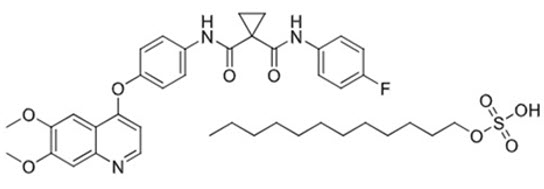
OMCAZIO is the laurylsulfate salt of cabozantinib, a kinase inhibitor. Cabozantinib laurylsulfate is described chemically as N-(4-(6,7-dimethoxyquinolin-4-yloxy)phenyl)-N'-(4-fluorophenyl)cyclopropane-1,1-dicarboxamide, Laurylsulfate. The molecular formula is C 40H 50FN 3O 9S and the molecular weight is 767.9 Daltons as laurylsulfate salt. The chemical structure of cabozantinib laurylsulfate salt is:

Chemical Structure (Cabozantinib 01)

Chemical Structure (Cabozantinib 01)

Cabozantinib laurylsulfate salt is a white to off-white solid that is practically insoluble in aqueous media.

OMCAZIO (cabozantinib) capsules for oral use are supplied as hard gelatin capsules containing 11.5 mg, 23 mg, or 34.5 mg of cabozantinib, which is equivalent to 17.6 mg, 35.2 mg, or 52.8 mg of cabozantinib laurylsulfate, respectively.

OMCAZIO also contains the following inactive ingredient: ammonia solution, ascorbic palmitate, black iron oxide, FD&C Blue #1, gelatin, polyoxyl 32 stearate, potassium hydroxide, propylene glycol, shellac, titanium dioxide, and tocopherol.

12.1 Mechanism Of Action

In vitro biochemical and/or cellular assays have shown that cabozantinib inhibits the tyrosine kinase activity of MET, VEGFR-1, -2 and -3, AXL, RET, ROS1, TYRO3, MER, KIT, TRKB, FLT-3, and TIE-2. These receptor tyrosine kinases are involved in both normal cellular function and pathologic processes such as oncogenesis, metastasis, tumor angiogenesis, drug resistance, and maintenance of the tumor microenvironment.

12.2 Pharmacodynamics

Cabozantinib exposure-response relationships and time course of pharmacodynamic response are not fully characterized.

Cardiac Electrophysiology

The mean increase in QTcF interval is 10 to 15 ms after administration of a different cabozantinib capsule formulation for 4 weeks.

Changes in cardiac wave form morphology or new rhythms were not observed. No patients in this study had a confirmed QTcF >500 ms nor did any patients in METEOR, CABOSUN, CELESTIAL, CHECKMATE-9ER, or CABINET .

12.3 Pharmacokinetics

Cabozantinib pharmacokinetics were observed after a single dose in healthy subjects and are presented as mean (CV%) unless otherwise specified. Cabozantinib maximum concentration (C max) is 394 (22%) ng/mL and systemic exposure (AUC) is 10290 (25%) ng*hr/mL.

Cabozantinib accumulation is 4- to 5-fold (based on AUC) following administration of a different cabozantinib capsule formulation. Cabozantinib steady state is reached by Day 15.

Absorption

Cabozantinib median (min, max) time to maximum plasma concentration (Tmax) is 3.3 (1.5, 5) hours.

Food Effect

No clinically significant differences in cabozantinib exposure were observed following administration of OMCAZIO with a high-fat meal (approximately 926 calories, 57% fat).

Distribution

Cabozantinib apparent (oral) volume of distribution is approximately 319 L in patients. Cabozantinib plasma protein binding is ≥ 99.7%.

Elimination

Cabozantinib predicted terminal half-life is approximately 3.7 days and the apparent (oral) clearance at steady state is estimated to be 2.2 L/hr in patients.

Metabolism

Cabozantinib is primarily metabolized by CYP3A.

Excretion

After a single dose of radiolabeled 14C-cabozantinib to healthy participants, approximately 81% of the total administered radioactivity was recovered within 1.6 months. Approximately 54% (43% unchanged) was recovered in feces and 27% in urine. Unchanged cabozantinib was not detectable in urine following a 72-hour collection.

Specific Populations

No clinically significant differences in the pharmacokinetics of cabozantinib were observed based on age (32 to 86 years), sex, race (White and non-White), or eGFR ≥ 30 mL/min/1.73m 2(as estimated by MDRD). The pharmacokinetics of cabozantinib is unknown in patients with eGFR < 30 mL/min/1.73m 2or in those requiring dialysis.

Pediatric Patients

The systemic exposures to cabozantinib in pediatric patients 12 years and older at the recommended dosages are expected to be comparable to the exposure in adults at the dose of OMCAZIO 34.5 mg once daily.

Patients with Hepatic Impairment

No clinically significant differences in the mean cabozantinib exposure were observed in subjects with mild hepatic impairment (Child-Pugh A). Cabozantinib exposure (AUC) increased 1.6-fold in patients with moderate hepatic impairment (Child-Pugh B). The effect of severe hepatic impairment (Child-Pugh C) on cabozantinib pharmacokinetics is unknown .

Drug Interaction Studies

Clinical Studies

Strong CYP3A4 Inhibitors: Single-dose cabozantinib exposure (AUC) increased 1.4-fold following concomitant administration of ketoconazole 400 mg daily for 27 days (strong CYP3A inhibitor) with a different cabozantinib capsule formulation.

Strong CYP3A4 Inducers: Single-dose cabozantinib exposure (AUC) decreased by 77% following concomitant administration of rifampin 600 mg daily for 31 days (strong CYP3A inducer) with a different cabozantinib capsule formulation.

Other Drugs: No clinically significant differences in the pharmacokinetics of the following drugs were observed when used concomitantly with a different cabozantinib capsule formulation: rosiglitazone (a CYP2C8 substrate).

In Vitro Studies

CYP Enzymes: Cabozantinib inhibits CYP2C9, CYP2C19, and CYP3A. Cabozantinib does not inhibit CYP1A2 and CYP2D6.

Cabozantinib induces CYP1A1. Cabozantinib does not induce CYP1A2, CYP2B6, CYP2C9, CYP2C19, or CYP3A.

Transporters: Cabozantinib is an inhibitor, but not a substrate, of P-gp. Cabozantinib is a substrate of MRP2.

13.1 Carcinogenesis, Mutagenesis, Impairment Of Fertility

Carcinogenesis

The carcinogenic potential of cabozantinib has been evaluated in two species: rasH2 transgenic mice and Sprague-Dawley rats. In the 2-year rat carcinogenicity study, once daily oral administration of cabozantinib resulted in a statistically significant increase in the incidence of malignant/complex malignant pheochromocytoma in combination with benign pheochromocytoma or in benign pheochromocytoma alone in male rats at a dose of 1 mg/kg (approximately 5 times the human exposure by AUC at the recommended 60 mg dose). Cabozantinib was not carcinogenic in a 26-week carcinogenicity study in rasH2 transgenic mice at a slightly higher exposure than the intended human therapeutic exposure.

Mutagenesis

Cabozantinib was not mutagenic in vitro in the bacterial reverse mutation (Ames) assay and was not clastogenic in both the in vitro cytogenetic assay using human lymphocytes or in the in vivomouse micronucleus assay.

Impairment of Fertility

Based on nonclinical findings, male and female fertility may be impaired by treatment with OMCAZIO. In a fertility study in which cabozantinib was administered to male and female rats at doses of 1, 2.5, and 5 mg/kg/day, male fertility was significantly compromised at doses equal to or greater than 2.5 mg/kg/day (approximately 13-fold of human AUC at the recommended dose), with a decrease in sperm counts and reproductive organ weights. In females, fertility was significantly reduced at doses equal to or greater than 1 mg/kg/day (5-fold of human AUC at the recommended dose) with a significant decrease in the number of live embryos and a significant increase in pre- and post-implantation losses.

Observations of effects on reproductive tract tissues in general toxicology studies were supportive of effects noted in the dedicated fertility study and included hypospermia and absence of corpora lutea in male and female dogs in a 6-month repeat dose study at plasma exposures (AUC) approximately 0.5-fold (males) and <0.1-fold (females) of those expected in humans at the recommended dose. In addition, female rats administered 5 mg/kg/day for 14 days (approximately 9-fold of human AUC at the recommended dose) exhibited ovarian necrosis.

14.1 Renal Cell Carcinoma

The effectiveness of 34.5 mg once daily of OMCAZIO (cabozantinib) capsules for the treatment of renal cell carcinoma has been established from an adequate and well-controlled study of CABOMETYX ®(cabozantinib) tablets, which has a different recommended dosage than OMCAZIO. Below is a display of the results of CABOMETYX ®(cabozantinib) tablets in this adequate and well-controlled study.

Previously Treated with Anti-angiogenic Therapy

The efficacy of cabozantinib was evaluated in METEOR (NCT01865747), a randomized (1:1), open-label, multicenter trial of cabozantinib versus everolimus conducted in patients with advanced RCC who had received at least 1 prior anti-angiogenic therapy. Patients had to have a Karnofsky Performance Score (KPS) ≥70%. Patients were stratified by the number of prior VEGFR tyrosine kinase inhibitors (TKIs) and Memorial Sloan Kettering Cancer Center (MSKCC) Risk Group.

Patients were randomized to receive cabozantinib tablets (N=330) 60 mg orally once daily (equivalent to OMCAZIO 34.5 mg) or everolimus (N=328) 10 mg orally once daily. The majority of the patients were male (75%), with a median age of 62 years. Sixty-nine percent (69%) received only one prior anti-angiogenic therapy. Patient distribution by MSKCC risk groups was 46% favorable (0 risk factors), 42% intermediate (1 risk factor), and 13% poor (2 or 3 risk factors). Fifty-four percent (54%) of patients had 3 or more organs with metastatic disease, including lung (63%), lymph nodes (62%), liver (29%), and bone (22%).

The main efficacy outcome measure was progression-free survival (PFS) assessed by a blinded independent radiology review committee among the first 375 subjects randomized. Other efficacy endpoints were objective response rate (ORR) and overall survival (OS) in the Intent-to- Treat (ITT) population. Tumor assessments were conducted every 8 weeks for the first 12 months, then every 12 weeks thereafter. Patients received treatment until disease progression or experiencing unacceptable toxicity. Patients on both arms who had disease progression could continue treatment at the discretion of the investigator.

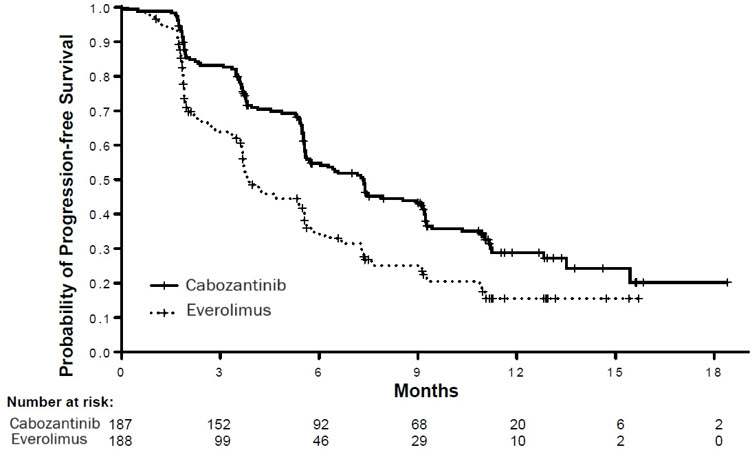
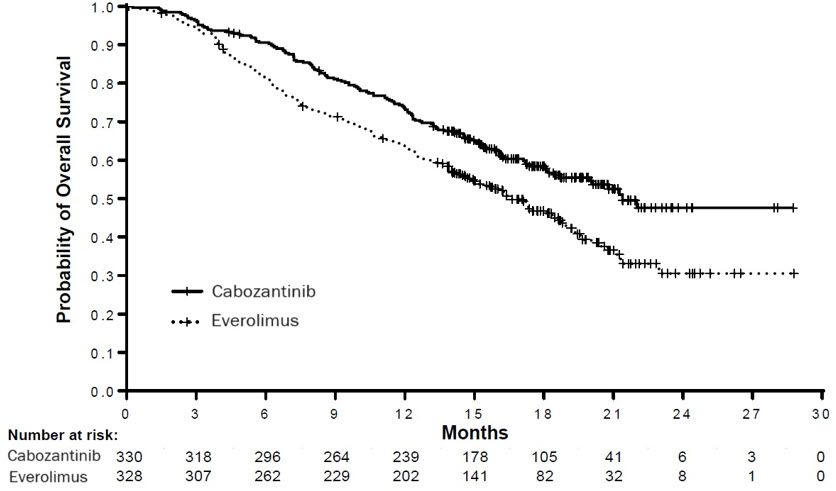
Statistically significant improvements in PFS, OS, and ORR were demonstrated for cabozantinib compared to everolimus. Efficacy results are presented in Tables 17 and 18 and Figures 1 and 2.

Table 17. Efficacy Results in METEOR (First 375 Randomized)
EndpointCabozantinib
(n = 187)
Everolimus
(n = 188)
Median PFS (95% CI), months7.4 (5.6, 9.1)3.8 (3.7, 5.4)
HR (95% CI), p-value

stratified log-rank test with prior VEGFR-targeting TKI therapy (1 vs 2 or more) and MSKCC prognostic criteria for previously treated patients with RCC (0 vs 1 vs 2 or 3) as stratification factors (per IVRS data)

0.58 (0.45, 0.74), p<0.0001
Figure 1. Kaplan-Meier Curves of Progression-Free Survival in METEOR (First 375 Randomized)
Figure 1 (Cabozantinib 02)

Figure 1 (Cabozantinib 02)

Table 18. Efficacy Results in METEOR (ITT)
EndpointCabozantinib
(n = 330)
Everolimus
(n = 328)
Median OS (95% CI), months21.4 (18.7, NE)16.5 (14.7, 18.8)
HR (95% CI), p-value

stratified log-rank test with prior VEGFR-targeting TKI therapy (1 vs 2 or more) and MSKCC prognostic criteria for previously treated patients with RCC (0 vs 1 vs 2 or 3) as stratification factors (per IVRS data)

0.66 (0.53, 0.83), p=0.0003
Confirmed ORR (partial responses only) (95% CI)17% (13%, 22%)3% (2%, 6%)
p-value

chi-squared test

p<0.0001
Figure 2. Kaplan-Meier Curve of Overall Survival in METEOR (ITT)
Figure 2 (Cabozantinib 03)

Figure 2 (Cabozantinib 03)

First-line Treatment

CABOSUN

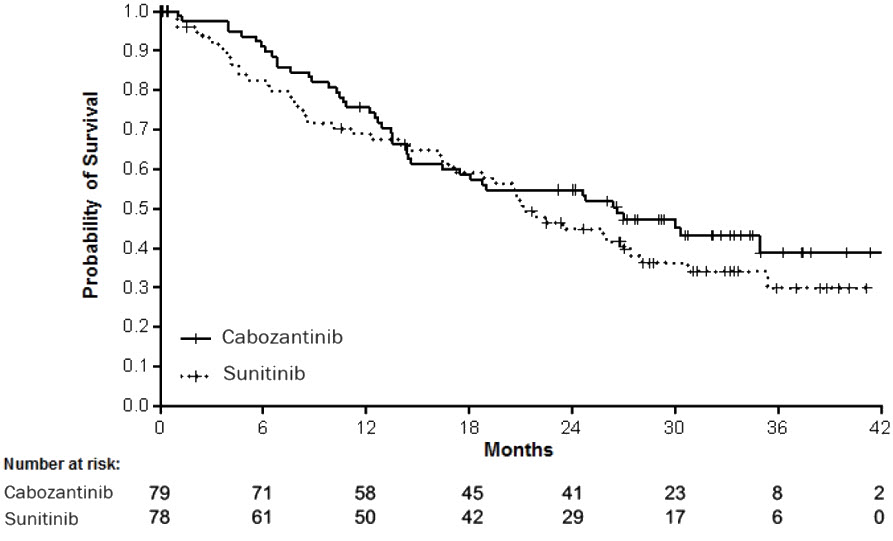
The efficacy of cabozantinib was evaluated in CABOSUN (NCT01835158), a randomized (1:1), open-label, multicenter trial of cabozantinib versus sunitinib conducted in patients with advanced RCC who had not received prior therapy. Patients were randomized to receive cabozantinib tablets (N=79) 60 mg orally once daily (equivalent to OMCAZIO 34.5 mg) or sunitinib (N=78) 50 mg orally once daily (4 weeks on treatment followed by 2 weeks off) until disease progression or unacceptable toxicity. All patients were required to have intermediate or poor risk disease as defined by the International Metastatic RCC Database Consortium (IMDC) risk group categories. Patients were stratified by IMDC risk group and presence of bone metastases (yes/no).

The majority of patients were male (78%), with a median age of 63 years. Patient distribution by IMDC risk groups was 81% intermediate (1-2 risk factors) and 19% poor (≥3 risk factors).

Thirty-six percent (36%) patients had bone metastases. Forty-six percent (46%) of patients were ECOG 0, 41% ECOG 1, and 13% ECOG 2.

The major efficacy outcome measure was progression-free survival (PFS) by a retrospective blinded independent radiology review committee (BIRC).

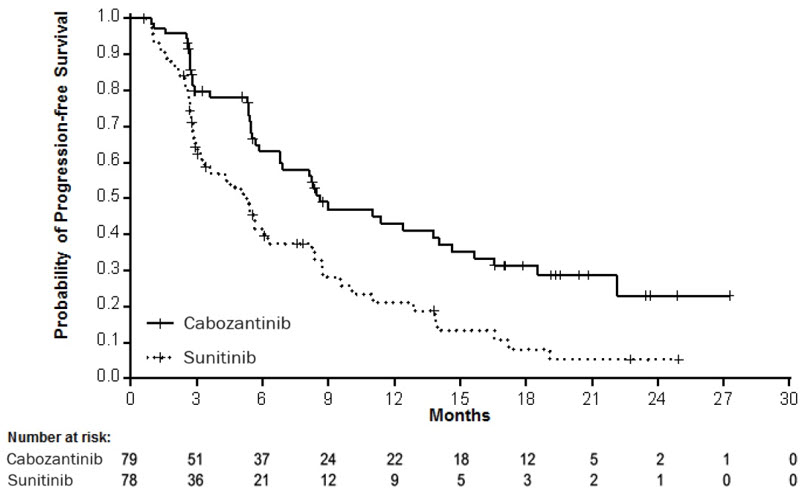
A statistically significant improvement in PFS, as assessed by a blinded independent radiology review committee, was demonstrated for cabozantinib compared to sunitinib. Efficacy results are presented in Table 19, Figure 3, and Figure 4.

Table 19. Efficacy Results in CABOSUN
EndpointCabozantinib
(n = 79)
Sunitinib
(n = 78)
Progression-Free Survival

as assessed by a retrospective blinded independent radiology review committee (BIRC)

Events, n(%)43 (54)49 (63)
Median PFS (95% CI), months 8.6 (6.8, 14.0)5.3 (3.0, 8.2)
Hazard Ratio

estimated from stratified Cox proportional hazards model with stratification factors IMDC risk group and presence of bone metastases and treatment as covariate

(95% CI), p-value

two-sided stratified log-rank test with stratification factors IMDC risk group and presence of bone metastases

0.48 (0.31, 0.74), p=0.0008
Overall Survival
Events, n(%)43 (54)47 (60)
Hazard Ratio ,

no multiplicity adjustments were made for overall survival or ORR

(95% CI)
0.80 (0.53, 1.21)
Confirmed ORR, partial responses only (95% CI) ,20% (12.0, 30.8)9% (3.7, 17.6)
Figure 3. Kaplan-Meier Curve of Progression-Free Survival in CABOSUN
Figure 3 (Cabozantinib 04)

Figure 3 (Cabozantinib 04)

Figure 4. Kaplan-Meier Curve of Overall Survival in CABOSUN
Figure 4 (Cabozantinib 05)

Figure 4 (Cabozantinib 05)

CHECKMATE-9ER

CHECKMATE-9ER (NCT03141177) was a randomized, open-label study of cabozantinib combined with nivolumab versus sunitinib in patients with previously untreated advanced RCC. CHECKMATE-9ER excluded patients with autoimmune disease or other medical conditions requiring systemic immunosuppression. Patients were stratified by IMDC prognostic score (favorable vs. intermediate vs. poor), PD-L1 tumor expression (≥1% vs. <1% or indeterminate), and region (US/Canada/Western Europe/Northern Europe vs. Rest of World).

Patients were randomized to cabozantinib tablets 40 mg orally daily (equivalent to OMCAZIO 23 mg) and nivolumab 240 mg intravenously every 2 weeks (n=323), or sunitinib 50 mg orally daily for the first 4 weeks of a 6-week cycle (4 weeks on treatment followed by 2 weeks off) (n=328). Treatment continued until disease progression per RECIST v1.1 or unacceptable toxicity. Treatment beyond RECIST- defined disease progression was permitted if the patient was clinically stable and considered to be deriving clinical benefit by the investigator. Tumor assessments were performed at baseline, after randomization at Week 12, then every 6 weeks until Week 60, and then every 12 weeks thereafter.

The trial population characteristics were: median age 61 years (range: 28 to 90) with 38% ≥65 years of age and 10% ≥75 years of age. The majority of patients were male (74%) and White (82%) and 23% and 77% of patients had a baseline KPS of 70% to 80% and 90% to 100%, respectively. Patient distribution by IMDC risk categories was 22% favorable, 58% intermediate, and 20% poor.

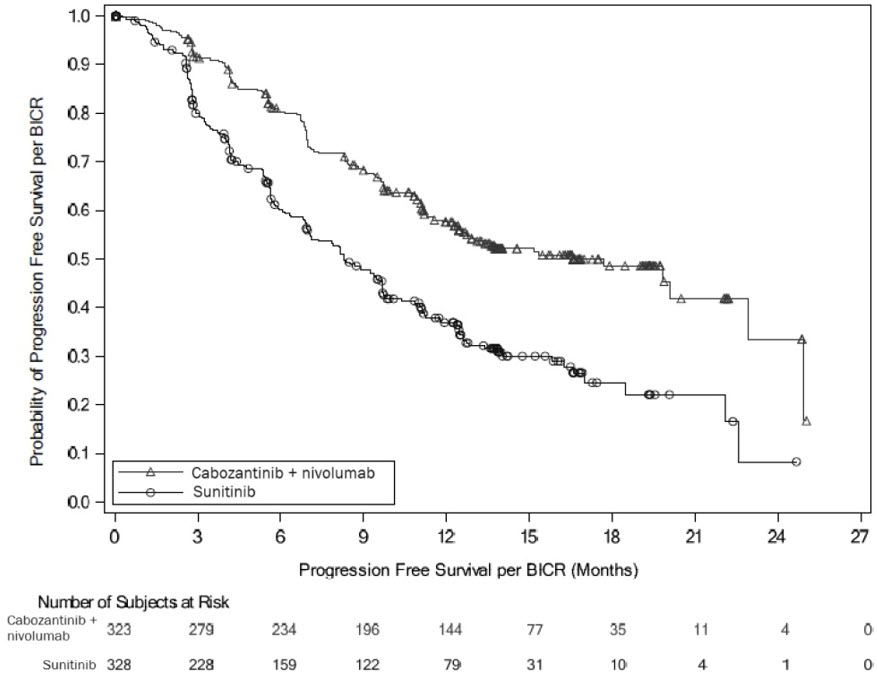
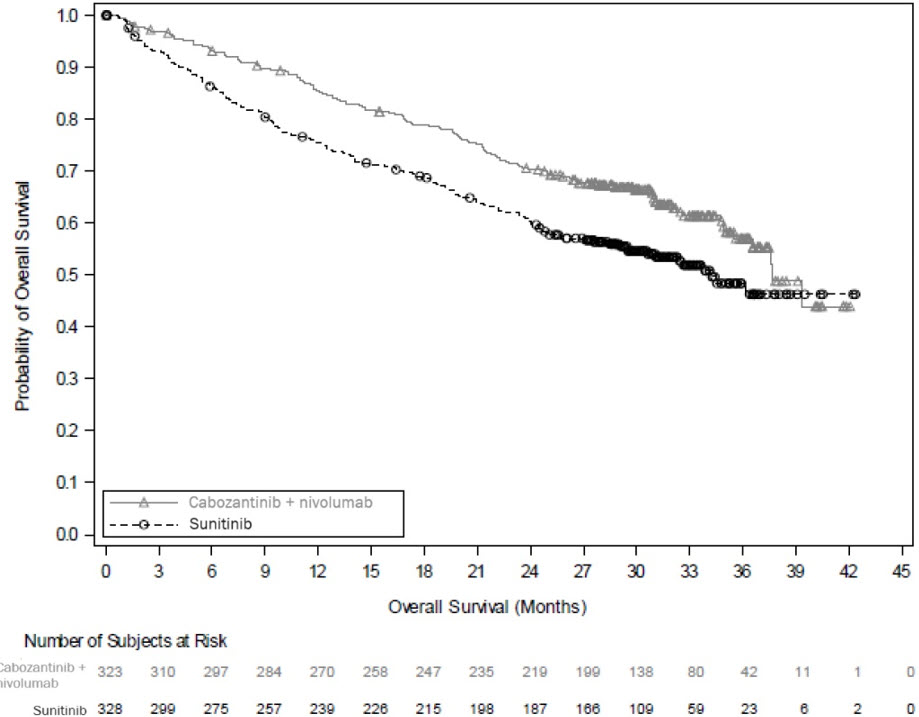
The major efficacy outcome measure was PFS (BICR assessed). Additional efficacy outcome measures were OS and ORR (BICR assessed). The trial demonstrated a statistically significant improvement in PFS, OS, and ORR for patients randomized to cabozantinib and nivolumab compared with sunitinib. Consistent results for PFS were observed across pre-specified subgroups of IMDC risk categories and PD-L1 tumor expression status. An updated efficacy analysis was conducted when 271 deaths were observed based on the pre-specified number of deaths for the pre-planned final analysis of OS. Efficacy results are shown in Table 20 and Figures 5 and 6.

Table 20. Efficacy Results in CHECKMATE-9ER
Cabozantinib and Nivolumab
(n=323)
Sunitinib
(n=328)
Progression-free Survival
  Disease progression or deaths (%)144 (45)191 (58)
  Median PFS (months)

Based on Kaplan-Meier estimates.

(95% CI)
16.6 (12.5, 24.9)8.3 (7.0, 9.7)
  Hazard ratio (95% CI)

Stratified Cox proportional hazards model.

0.51 (0.41, 0.64)
  p-value

Based on stratified log-rank test.

,

2-sided p-values from stratified log-rank test.

<0.0001
Overall Survival
  Deaths (%)67 (21)99 (30)
  Median OS (months) (95% CI) NR

Not Reached.

NR (22.6, NR )
  Hazard ratio (98.89% CI) 0.60 (0.40, 0.89)
  p-value ,,

p-value is compared with the allocated alpha of 0.0111 for this interim analysis.

0.0010
Updated Overall Survival
  Deaths (%)121 (37)150 (46)
  Median OS (months) (95% CI) 37.7 (35.5, NR ) 34.3 (29.0, NR )
  Hazard ratio (95% CI) 0.70 (0.55, 0.90)
Confirmed Objective Response Rate (95% CI)

CI based on the Clopper and Pearson method.

55.7% (50.1, 61.2)27.1% (22.4, 32.3)
  p-value

2-sided p-value from Cochran-Mantel-Haenszel test.

<0.0001
  Complete Response (CR)26 (8%)15 (4.6%)
  Partial Response (PR)154 (48%)74 (23%)
  Median duration of response in months (95% CI) 20.2 (17.3, NR ) 11.5 (8.3, 18.4)
Figure 5. Kaplan-Meier Curve of Progression-Free Survival in CHECKMATE-9ER
Figure 5 (Cabozantinib 06)

Figure 5 (Cabozantinib 06)

Figure 6. Kaplan-Meier Curve of Updated Overall Survival in CHECKMATE-9ER
Figure 6 (Cabozantinib 07)

Figure 6 (Cabozantinib 07)

In an exploratory analysis, the updated analysis of OS in patients with IMDC favorable, intermediate, intermediate/poor, and poor risk demonstrated a HR (95% CI) of 1.03 (0.55, 1.92), 0.74 (0.54, 1.01), 0.65 (0.50, 0.85), and 0.49 (0.31, 0.79), respectively.

14.2 Hepatocellular Carcinoma

The effectiveness of 34.5 mg once daily of OMCAZIO (cabozantinib) capsules for the treatment of hepatocellular carcinoma has been established from an adequate and well-controlled study of CABOMETYX ®(cabozantinib) tablets, which has a different recommended dosage than OMCAZIO. Below is a display of the results of CABOMETYX ®(cabozantinib) tablets in this adequate and well-controlled study.

The efficacy of cabozantinib was evaluated in CELESTIAL (NCT01908426), a randomized (2:1), double-blind, placebo-controlled, multicenter trial in patients with hepatocellular carcinoma (HCC) who had previously received sorafenib and had Child Pugh Class A liver impairment. Patients were randomized to receive cabozantinib tablets 60 mg orally once daily (equivalent to OMCAZIO 34.5 mg) or placebo until disease progression or unacceptable toxicity. Randomization was stratified by etiology of disease (hepatitis B virus [HBV] with or without hepatitis C virus [HCV] vs. HCV [without HBV] vs. other [without HBV and HCV]), geographic region (Asia vs. other regions), and presence of extrahepatic spread of disease and/or macrovascular invasion (yes vs. no). The primary efficacy outcome measure was overall survival (OS). Additional outcome measures were progression-free survival (PFS) and objective response rate (ORR), as assessed by investigators per RECIST 1.1. Tumor assessments were conducted every 8 weeks.

In CELESTIAL, a total of 707 patients were randomized, 470 to cabozantinib and 237 to placebo. The median age was 64 years (range 22 to 86 years), 82% were male, 56% were White and 34% were Asian. Baseline ECOG performance status was 0 (53%) or 1 (47%). The etiology of HCC was attributed to HBV in 38% of patients and HCV in 21%; etiology was attributed to causes other than HBV or HCV in 40%. Macroscopic vascular invasion or extra-hepatic tumor spread was present in 78% of patients and 41% had alpha-fetoprotein (AFP) levels ≥400 mcg/L. All patients received prior sorafenib and 27% received two prior systemic therapy regimens.

Efficacy results are summarized in Table 21, Figure 7, and Figure 8.

Table 21. Efficacy Results from CELESTIAL
EndpointCabozantinib
(n = 470)
Placebo
(n = 237)
Overall Survival
CI, confidence interval
Number of Deaths, (%)317 (67)167 (70)
Median OS in Months (95% CI)10.2 (9.1, 12.0)8.0 (6.8, 9.4)
Hazard Ratio (95% CI)

estimated using the Cox proportional-hazard model

0.76 (0.63, 0.92)
p-value

log-rank test stratified by etiology of disease (HBV [with or without HCV], HCV [without HBV], or Other), geographic region (Asia, Other Regions), and presence of extrahepatic spread of disease and/or macrovascular invasion (Yes, No) as stratification factors (per IVRS data)

p=0.0049

significance level = 0.021 for 78% information (484 deaths) based on O'Brien-Fleming method

Progression-Free Survival
Number of Events, (%)349 (74)205 (86)
Progressive Disease284 (60)186 (78)
Death65 (14)19 (8)
Median PFS in Months (95% CI)5.2 (4.0, 5.5)1.9 (1.9, 1.9)
Hazard Ratio (95% CI) 0.44 (0.36, 0.52)
p-value p<0.0001
Overall Response Rate (ORR)
Confirmed ORR (partial responses only) (95% CI) 4% (2.3, 6.0)0.4% (0.0, 2.3)
p-value

Fisher's exact test

p=0.0086
Figure 7. Kaplan-Meier Curve of Overall Survival in CELESTIAL
Figure 7 (Cabozantinib 08)

Figure 7 (Cabozantinib 08)

Figure 8. Kaplan-Meier Curve of Progression-Free Survival in CELESTIAL
Figure 8 (Cabozantinib 09)

Figure 8 (Cabozantinib 09)

14.3 Extra-Pancreatic Neuroendocrine Tumors

The effectiveness of 34.5 mg once daily of OMCAZIO (cabozantinib) capsules for the treatment of extra-pancreatic neuroendocrine tumors has been established from an adequate and well-controlled study of CABOMETYX ®(cabozantinib) tablets, which has a different recommended dosage than OMCAZIO. Below is a display of the results of CABOMETYX ®(cabozantinib) tablets in this adequate and well-controlled study.

The efficacy of cabozantinib for the treatment of extra-pancreatic neuroendocrine tumors (epNET) was evaluated in CABINET (NCT03375320), a randomized, double-blind, placebo- controlled, multicenter study in patients with unresectable, locally advanced or metastatic epNET that had progressed on prior therapy. Eligible patients were required to have been previously treated with at least one FDA approved therapy (everolimus or lutetium Lu 177 dotatate), other than somatostatin analogs. Patients with active brain metastases or cranial epidural disease, and those who had prior treatment with cabozantinib were excluded. The study also excluded patients with clinically significant gastrointestinal (GI) bleeding, GI abnormalities, and tumor with invasion into the GI tract that may increase the risk for GI bleeding or perforation, and patients with tumor invading or encasing major blood vessels. Patients were randomized (2:1) to receive treatment with cabozantinib tablets 60 mg orally once daily (equivalent to OMCAZIO 34.5 mg) or placebo until disease progression or unacceptable toxicity. Randomization was stratified by concurrent somatostatin analog (SSA) use (yes/no) and primary site (midgut GI/unknown vs non-midgut GI/lung/other). Tumor assessments were performed every 12 weeks. The study included patients with functional and non-functional tumors, and use of somatostatin analogs at a stable dose was permitted for symptom control. Eligible patients randomized to the placebo arm were allowed to crossover to cabozantinib upon confirmation of progressive disease by blinded real time central review.

The major efficacy outcome measure was progression-free survival (PFS) assessed by blinded independent radiology review committee (BIRC) per RECIST 1.1. Additional efficacy outcome measures included overall response rate (ORR), duration of response (DOR) and overall survival (OS).

A total of 199 epNET patients were randomized (2:1) to receive cabozantinib tablets 60 mg orally once daily (n=132) or placebo (n=67). The median age was 66 years (range: 28 to 86), 51% were female; 84% were White; 8% were Black or African American; 2.0% were Asian; 6% had race unknown or race not reported; and 8% were Hispanic or Latino. The primary sites of tumor were small bowel (34%) including duodenum, jejunum & ileum; lung (20%); thymus (5%); rectum (6%); cecum (2.0%); stomach (3.0%); non-cecum colon (1.0%); appendix (0.5%); others (18%); and unknown (12%). In the 199 patients with epNET, 46% had received one prior systemic therapy, 29% had received two prior systemic therapies and 25% had received three or more prior systemic therapies.

The trial demonstrated a statistically significant improvement in PFS as assessed by BIRC, for cabozantinib compared to placebo. An updated OS analysis was conducted when 123 deaths were observed. OS data were not mature with 83 (63%) deaths in cabozantinib arm and 40 (60%) deaths in placebo arm (OS HR=1.05 [95% CI: 0.71, 1.54]). Thirty-seven percent of placebo arm patients crossed over to open label cabozantinib, which may impact the OS endpoint.

Efficacy results are summarized in Table 22 and Figure 9.

Table 22. Efficacy Results in Patients with epNET in CABINET
Cabozantinib
(n=132)
Placebo
(n=67)
Progression-Free Survival (PFS)
CI, confidence interval; NE, not evaluable
Number of Events (%)68 (52)39 (58)
Median (95% CI)

Kaplan-Meier method

, in months
8.5 (6.8, 12.5)4.2 (3.0, 5.7)
Hazard Ratio (95% CI)

Stratified Cox proportional hazards model stratified by concurrent somatostatin analog (SSA) use (yes/no) and primary site (midgut GI/unknown vs non-midgut GI/lung/other)

0.40 (0.26, 0.61)
p-value

Stratified log-rank test stratified by concurrent somatostatin analog (SSA) use (yes/no) and primary site (midgut GI/unknown vs non-midgut GI/lung/other) (compared to one-sided alpha=0.001)

<0.0001
Overall Response Rate (ORR)
ORR (95% CI)

Clopper-Pearson method

, %
5 (2.2, 11)0 (0, 5)
Duration of Response (DOR)
Median (95% CI) , in months 8.3 (4.5, NE)NE
Figure 9. Kaplan-Meier Curve of Progression-Free Survival in Patients with epNET in CABINET
Figure 9 (Cabozantinib 10)

Figure 9 (Cabozantinib 10)

16 How Supplied/Storage And Handling

OMCAZIO capsules are supplied in 30-count bottles in a carton as follows:

Strength (mg)DescriptionNDC
34.5 mgopaque white hard gelatin capsules with black imprint "HP 34.5" on capsule bodyNDC 17201-013-30
23 mgopaque blue cap and opaque white body, hard gelatin capsules with a black imprint "HP 23" on capsule bodyNDC 17201-012-30
11.5 mgopaque blue hard gelatin capsules with a black imprint "HP 11.5" on capsule bodyNDC 17201-011-30

Storage And Handling

Store OMCAZIO at 20°C to 25°C (68°F to 77°F); excursions are permitted from 15°C to 30°C (59°F to 86°F) [see USP Controlled Room Temperature].

17 Patient Counseling Information

Advise the patient to read the FDA-approved patient labeling (Patient Information).

  • Risk of Medication Errors and Important Administration Information: Advise patients that OMCAZIO is not substitutable with other cabozantinib products on a mg-to-mg basis. Advise patients to take OMCAZIO exactly as prescribed [see Warnings and Precautions (5.1)] . Advise patients to swallow the capsules whole with water and not to crush, chew, or open the capsules. Advise patients to take OMCAZIO with or without food [see Dosage and Administration (2.2)] .
  • Hemorrhage: Instruct patients to contact their healthcare provider to seek immediate medical attention for signs or symptoms of unusual severe bleeding or hemorrhage [see Warnings and Precautions (5.2)] .
  • Perforations and fistulas: Advise patients that gastrointestinal disorders such as diarrhea, nausea, vomiting, and constipation may develop during OMCAZIO treatment and to seek immediate medical attention if they experience persistent or severe abdominal pain [see Warnings and Precautions (5.3)] .
  • Thromboembolic events: Inform patients of the risk of arterial and venous thromboembolic events. Advise patients to immediately contact their health care provider for signs and symptoms suggestive of a blood clot such as dyspnea, chest pain, or localized limb edema [see Warnings and Precautions (5.4)] .
  • Hypertension and hypertensive crisis: Inform patients of the signs and symptoms of hypertension. Advise patients to undergo routine blood pressure monitoring and to contact their health care provider if blood pressure is elevated or if they experience signs or symptoms of hypertension [see Warnings and Precautions (5.5)] .
  • Cardiac Failure: Advise patients that OMCAZIO can cause cardiac failure. Advise patients to immediately contact their healthcare provider for signs or symptoms of cardiac failure [see Warnings and Precautions (5.6)].
  • Diarrhea: Advise patients to notify their healthcare provider at the first signs of poorly formed or loose stool or an increased frequency of bowel movements [see Warnings and Precautions (5.7)] .
  • Palmar-plantar erythrodysesthesia: Advise patients to contact their healthcare provider for progressive or intolerable rash [see Warnings and Precautions (5.8)] .
  • Hepatotoxicity: Advise patients to contact their healthcare provider immediately for jaundice, severe nausea or vomiting, or easy bruising or bleeding [see Warnings and Precautions (5.9)].
  • Adrenal insufficiency: Advise patients receiving OMCAZIO in combination with nivolumab to contact their healthcare provider immediately for signs or symptoms of adrenal insufficiency [see Warnings and Precautions (5.10)].
  • Proteinuria: Advise patients to contact their healthcare provider for signs or symptoms of proteinuria [see Warnings and Precautions (5.11)].
  • Osteonecrosis of the jaw: Advise patients regarding good oral hygiene practices. Advise patients to immediately contact their healthcare provider for signs or symptoms associated with osteonecrosis of the jaw [see Warnings and Precautions (5.12)] .
  • Impaired wound healing: Advise patients that OMCAZIO can impair wound healing. Advise patients to inform their healthcare provider of any planned surgical procedure [see Dosage and Administration (2.2), Warnings and Precautions (5.13)] .
  • Reversible posterior leukoencephalopathy syndrome: Advise patients to immediately contact their health care provider for new onset or worsening neurological function [see Warnings and Precautions (5.14)] .
  • Thyroid dysfunction: Advise patients that OMCAZIO can cause thyroid dysfunction and that their thyroid function should be monitored regularly during treatment. Advise patients to immediately contact their healthcare provider for signs or symptoms of thyroid dysfunction [see Warnings and Precautions (5.15)] .
  • Embryo-fetal toxicity:
    Advise females of reproductive potential of the potential risk to a fetus. Advise females to inform their healthcare provider of a known or suspected pregnancy [see Warnings and Precautions (5.16), Use in Specific Populations (8.1)] .
    Advise females of reproductive potential to use effective contraception during treatment with OMCAZIO and for 4 months after the final dose [see Use in Specific Populations (8.3)] .
  • Lactation: Advise women not to breastfeed during treatment with OMCAZIO and for 4 months following the last dose [see Use in Specific Populations (8.2)] .
  • Drug interactions: Advise patients to inform their healthcare provider of all prescription or nonprescription medications, vitamins or herbal products. Inform patients to avoid grapefruit, grapefruit juice, and St. John's wort [see Drug Interactions (7.1)] .

Other

CABOMETYX ®is a registered trademark of Exelixis, Inc.

OMCAZIO™ is a trademark of Handa Oncology, LLC

Manufactured for:
Handa Oncology, LLC. San Jose, CA 95110

Spl Patient Package Insert

PATIENT INFORMATION
OMCAZIO™ (om-KAW-zee-oh)
cabozantinib
capsules, for oral use
This Patient Information has been approved by the U.S. Food and Drug Administration.Issued: 09/2026
If your healthcare provider prescribes OMCAZIO in combination with nivolumab, also read the Medication Guide that comes with nivolumab.
What is OMCAZIO?
OMCAZIO is a prescription medicine used to treat:
  • adults with kidney cancer (renal cell carcinoma). OMCAZIO may be used:
    • alone to treat people with renal cell carcinoma (RCC) that has spread (advanced RCC).
    • in combination with nivolumab when your cancer has spread (advanced RCC), and you have not had treatment for your advanced RCC.
    • adults with liver cancer (hepatocellular carcinoma) who have been previously treated with the medicine sorafenib.
    • adults and children 12 years of age and older who have a type of cancer called extra-pancreatic neuroendocrine tumors (epNET) that has been previously treated, cannot be treated by surgery, and has spread (locally advanced or metastatic).
    • It is not known if OMCAZIO for the treatment of epNET is safe and effective in children younger than 12 years of age.
      It is not known if OMCAZIO is safe and effective in children with renal cell carcinoma or hepatocellular carcinoma.
Before you take OMCAZIO, tell your healthcare provider about all of your medical conditions, including if you:
  • have had a liver problem other than liver cancer
  • have a recent history of bleeding, including coughing up or vomiting blood, or black tarry stools.
  • have an open or healing wound
  • have high blood pressure
  • have heart problems
  • plan to have any surgery, dental procedure, or have had a recent surgery. You should stop taking OMCAZIO at least 3 weeks before any planned surgery. See " What are the possible side effects of OMCAZIO?"
  • are pregnant, or plan to become pregnant. OMCAZIO can harm your unborn baby. For females who are able to become pregnant:
    • Your healthcare provider will check your pregnancy status before you start treatment with OMCAZIO
    • Use effective birth control (contraception) during treatment and for 4 months after your last dose of OMCAZIO.
    • Talk to your healthcare provider about birth control methods that may be right for you.
    • Tell your healthcare provider right away if you become pregnant or think that you are pregnant during treatment with OMCAZIO.
    • are breastfeeding or plan to breastfeed. It is not known if OMCAZIO passes into your breast milk. Do not breastfeed during treatment and for 4 months after your last dose of OMCAZIO.
    • Tell your healthcare provider about all the medicines you take,including prescription or over-the- counter medicines, vitamins, and herbal supplements. OMCAZIO and certain other medicines may affect each other causing side effects.
How should I take OMCAZIO?
  • Do not switch from OMCAZIO to other medicines that contain cabozantinib without talking to your healthcare provider. The amount of cabozantinib in a dose of OMCAZIO may not be the same as the amount in other medicines that contain cabozantinib.
  • Make sure you receive the correct dosage form each time you or your child's prescription is filled to avoid using the wrong medicine.
  • Take OMCAZIO exactly as your healthcare provider tells you to take it.
  • Take OMCAZIO with or without food.
  • Swallow OMCAZIO capsules whole with water.
  • Do notcrush, chew or open OMCAZIO capsules.
  • If you miss a dose of OMCAZIO, take the missed dose as soon as possible. If a dose is missed by more than 12 hours, skip the missed dose and take your next dose at the normal time. Do nottake 2 doses at the same time to make up for the missed dose.
  • If you take too much OMCAZIO, call your healthcare provider or the Poison Help line at 1-800-222-1222 or go to the nearest hospital emergency room right away.
What should I avoid while taking OMCAZIO?
Avoid drinking grapefruit juice, eating grapefruit or taking supplements that contain grapefruit and taking St. John's wort during treatment with OMCAZIO.
What are the possible side effects of OMCAZIO?
OMCAZIO can cause serious side effects, including:
  • bleeding (hemorrhage).OMCAZIO can cause severe bleeding that may lead to death. Tell your healthcare provider right away if you get any signs of bleeding during treatment with OMCAZIO, including:
    • coughing up blood or blood clots
    • vomiting blood or if your vomit looks like coffee-grounds
    • red or black (looks like tar) stools
    • menstrual bleeding that is heavier than normal
    • any unusual or heavy bleeding
    • a tear in your stomach or intestinal wall (perforation) or an abnormal connection between 2 parts of your body (fistula).Tell your healthcare provider right away if you get tenderness or pain in your stomach-area (abdomen) that is severe or that does not go away.
    • blood clots, stroke, heart attack, and chest pain.Get emergency help right away if you get:
      • swelling or pain in your arms or legs
      • shortness of breath
      • feel lightheaded or faint
      • sweating more than usual
      • numbness or weakness of your face, arm or leg, especially on one side of your body
      • sudden confusion, trouble speaking or understanding
      • sudden trouble seeing in one or both eyes
      • sudden trouble walking
      • dizziness, loss of balance or coordination
      • a sudden severe headache
      • high blood pressure (hypertension).Hypertension is common with OMCAZIO and sometimes can be severe. Your healthcare provider will check your blood pressure before starting OMCAZIO and regularly during treatment with OMCAZIO. If needed, your healthcare provider may prescribe medicine to treat your high blood pressure. Tell your healthcare provider if you develop severe headaches, nose bleeds, tiredness or confusion, vision changes, chest pain, trouble breathing, irregular heartbeat, or blood in your urine.
      • heart problems.OMCAZIO can cause heart failure that may lead to death. Your healthcare provider may check your heart function before and during treatment with OMCAZIO. Tell your healthcare provider right away if you get any of the following signs and symptoms:
        • feeling like your heart is pounding, racing, or beating irregularly
        • shortness of breath
        • swelling of your ankles or feet
        • feeling lightheaded
        • tiredness
        • diarrhea.Diarrhea is common with OMCAZIO and can be severe. If needed, your healthcare provider may prescribe medicine to treat your diarrhea. Tell your healthcare provider right away if you have frequent loose, watery bowel movements.
        • a skin problem called hand-foot skin reaction.Hand-foot skin reactions are common with OMCAZIO and can be severe. Tell your healthcare provider right away if you have rashes, redness, pain, swelling, or blisters on the palms of your hands or soles of your feet.
        • liver problems.Liver problems may happen during treatment with OMCAZIO. When OMCAZIO is taken in combination with nivolumab, severe changes in liver function tests may happen more often than if you take OMCAZIO alone. Your healthcare provider will do blood tests to check your liver function before and during treatment with OMCAZIO. Tell your healthcare provider right away if you develop symptoms of liver problems including: yellowing of your skin or the whites of your eyes, severe nausea or vomiting, pain on the right side of your stomach-area (abdomen), dark urine, bleeding or bruising more easily than normal.
        • adrenal gland problems.Your healthcare provider will monitor you for this problem. Your healthcare provider may prescribe hormone replacement therapy or corticosteroid medicines if needed. Tell your healthcare provider right away if you develop any of the following signs or symptoms: extreme tiredness, dizziness or fainting, weakness, nausea, or vomiting.
        • protein in your urine and possible kidney problems.Symptoms may include swelling in your hands, arms, legs, or feet. Your healthcare provider will check you for this problem during treatment with OMCAZIO.
        • severe jaw bone problems (osteonecrosis).Your healthcare provider should examine your mouth before you start and during treatment with OMCAZIO. Tell your dentist that you are taking OMCAZIO. It is important for you to practice good mouth care during treatment with OMCAZIO. Tell your healthcare provider right away if you develop any symptoms of jaw problems, including: jaw pain, toothache, or sores on your gums.
        • wound healing problems.Wound healing problems have happened in people who take OMCAZIO. Tell your healthcare provider if you plan to have any surgery before or during treatment with OMCAZIO.
          • You should stop taking OMCAZIO at least 3 weeks before any planned surgery.
          • Your healthcare provider should tell you when you may start taking OMCAZIO again after surgery.
          • Reversible Posterior Leukoencephalopathy Syndrome (RPLS).A condition called reversible posterior leukoencephalopathy syndrome can happen during treatment with OMCAZIO. Tell your healthcare provider right away if you have new or worsening headaches, seizures, confusion, changes in vision, or problems thinking.
          • change in thyroid function.OMCAZIO can cause changes in your thyroid function, including changes to thyroid hormone levels in your blood. Your healthcare provider will do blood tests to check your thyroid function before and during treatment with OMCAZIO.
          • Your healthcare provider may change your dose, temporarily stop, or permanently stop treatment with OMCAZIO if you have certain side effects.
            The most common side effects of OMCAZIO include:
            • tiredness
            • nausea and vomiting
            • decreased appetite
            • weight decreased
            • constipation
            • The most common side effects of OMCAZIO when used in combination with nivolumab include:
              • tiredness
              • mouth sores
              • rash
              • low thyroid hormone levels (hypothyroidism)
              • pain in muscles, bones, and joints
              • decreased appetite
              • nausea
              • changes in the way things taste
              • stomach-area (abdominal) pain
              • cough
              • upper respiratory tract infection
              • OMCAZIO may cause fertility problems in females and males, which may affect your ability to have children. Talk to your healthcare provider if you have concerns about fertility.
                These are not all of the possible side effects of OMCAZIO. Call your doctor for medical advice about side effects. You may report side effects to FDA at 1-800-FDA-1088.
How should I store OMCAZIO?
  • Store OMCAZIO at room temperature between 68°F to 77°F (20°C to 25°C).
  • Keep OMCAZIO and all medicines out of the reach of children.
General information about the safe and effective use of OMCAZIO.
Medicines are sometimes prescribed for purposes other than those listed in a Patient Information leaflet. Do not use OMCAZIO for a condition for which it was not prescribed. Do not give OMCAZIO to other people, even if they have the same symptoms you have. It may harm them.
You can ask your pharmacist or healthcare provider for information about OMCAZIO that is written for health professionals.
What are the ingredients in OMCAZIO?
Active ingredient:cabozantinib
Inactive ingredients:ammonia solution, ascorbic palmitate, black iron oxide, FD&C Blue #1, gelatin, polyoxyl 32 stearate, potassium hydroxide, propylene glycol, shellac, titanium dioxide, and tocopherol.
Manufactured for Handa Oncology LLC, Inc. San Jose, CA 95110
For more information, go to www.OMCAZIO.com or call 1-844-204-8384.

Principal Display Panel - 11.5 Mg Bottle Label

NDC 17201-011-30

OMCAZIO™

(cabozantinib)
Capsules

11.5 mg

Attention:
OMCAZIO is NOT
substitutable on
a mg-to-mg basis
with other cabozantinib
products.

Rx only

30 Capsules

Handa Oncology

Principal Display Panel (11.5 mg Bottle Label)

Principal Display Panel (11.5 mg Bottle Label)

Principal Display Panel - 11.5 Mg Bottle Carton

NDC 17201-011-30

Rx only

OMCAZIO™

(cabozantinib)
Capsules

11.5 mg

Attention:
OMCAZIO is NOT substitutable
on a mg-to-mg basis with
other cabozantinib products.

30 Capsules

Handa Oncology

Principal Display Panel (11.5 mg Bottle Carton)

Principal Display Panel (11.5 mg Bottle Carton)

Principal Display Panel - 23 Mg Bottle Label

NDC 17201-012-30

OMCAZIO™

(cabozantinib)
Capsules

23 mg

Attention:
OMCAZIO is NOT
substitutable on
a mg-to-mg basis
with other cabozantinib
products.

Rx only

30 Capsules

Handa Oncology

Principal Display Panel (23 mg Bottle Label)

Principal Display Panel (23 mg Bottle Label)

Principal Display Panel - 23 Mg Bottle Carton

NDC 17201-012-30

Rx only

OMCAZIO™

(cabozantinib)
Capsules

23 mg

Attention:
OMCAZIO is NOT substitutable
on a mg-to-mg basis with
other cabozantinib products.

30 Capsules

Handa Oncology

Principal Display Panel (23 mg Bottle Carton)

Principal Display Panel (23 mg Bottle Carton)

Principal Display Panel - 34.5 Mg Bottle Label

NDC 17201-013-30

OMCAZIO™

(cabozantinib)
Capsules

34.5 mg

Attention:
OMCAZIO is NOT
substitutable on
a mg-to-mg basis
with other cabozantinib
products.

Rx only

30 Capsules

Handa Oncology

Principal Display Panel (34.5 mg Bottle Label)

Principal Display Panel (34.5 mg Bottle Label)

Principal Display Panel - 34.5 Mg Bottle Carton

NDC 17201-013-30

Rx only

OMCAZIO™

(cabozantinib)
Capsules

34.5 mg

Attention:
OMCAZIO is NOT substitutable
on a mg-to-mg basis with
other cabozantinib products.

30 Capsules

Handa Oncology

Principal Display Panel (34.5 mg Bottle Carton)

Principal Display Panel (34.5 mg Bottle Carton)

* Please review the disclaimer below.