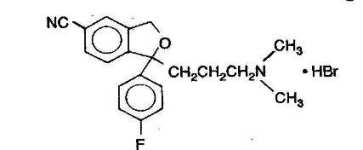
The premarketing development program for citalopram included citalopram exposures in patients and/or normal subjects from 3 different groups of studies: 429 normal subjects in clinical pharmacology/pharmacokinetic studies; 4422 exposures from patients in controlled and uncontrolled clinical trials, corresponding to approximately 1370 patient-exposure years. There were, in addition, over 19,000 exposures from mostly open-label, European postmarketing studies. The conditions and duration of treatment with citalopram varied greatly and included (in overlapping categories) open-label and double-blind studies, inpatient and outpatient studies, fixed-dose and dose-titration studies, and short-term and long-term exposure. Adverse reactions were assessed by collecting adverse events, results of physical examinations, vital signs, weights, laboratory analyses, ECGs, and results of ophthalmologic examinations.
Adverse events during exposure were obtained primarily by general inquiry and recorded by clinical investigators using terminology of their own choosing. Consequently, it is not possible to provide a meaningful estimate of the proportion of individuals experiencing adverse events without first grouping similar types of events into a smaller number of standardized event categories. In the tables and tabulations that follow, standard World Health Organization (WHO) terminology has been used to classify reported adverse events. The stated frequencies of adverse events represent the proportion of individuals who experienced, at least once, a treatment-emergent adverse event of the type listed. An event was considered treatment-emergent if it occurred for the first time or worsened while receiving therapy following baseline evaluation.
Adverse Findings Observed in Short-Term, Placebo-Controlled Trials
Among 1063 depressed patients who received citalopram at doses ranging from 10 to 80 mg/day in placebo-controlled trials of up to 6 weeks in duration, 16% discontinued treatment due to an adverse event, as compared to 8% of 446 patients receiving placebo. The adverse events associated with discontinuation and considered drug-related (i.e., associated with discontinuation in at least 1% of citalopram-treated patients at a rate at least twice that of placebo) are shown in TABLE 2. It should be noted that one patient can report more than one reason for discontinuation and be counted more than once in this table.
Adverse Events Associated with Discontinuation of Treatment
TABLE 2 Adverse Events Associated with Discontinuation of Treatment in Short-Term, Placebo-Controlled, Depression Trials
|
|
|
|
| Body System/Adverse Event |
| Percentage of Patients Discontinuing Due to Adverse Event
|
|
| (N=1063)
Citalopram
|
| (N=446)
Placebo
|
| General |
|
|
|
Asthenia
| 1% |
| <1%
|
| Gastrointestinal Disorders |
|
|
|
Nausea
| 4% |
| 0%
|
Dry Mouth
| 1% |
| <1% |
Vomiting
| 1% |
| 0%
|
Central and Peripheral Nervous System Disorders
|
|
|
|
Dizziness
| 2% |
| <1% |
| Psychiatric Disorders |
|
|
|
Insomnia
| 3% |
| 1%
|
Somnolence
| 2% |
| 1%
|
Agitation
| 1% |
| <1% |
Adverse Events Occurring at an incidence of 2% or More Among Citalopram - Treated PatientsTABLE
3 enumerates the incidence, rounded to the nearest percent, of
treatment-emergent adverse events that occurred among 1063 depressed
patients who received citalopram at doses ranging from 10
to 80 mg/day in placebo-controlled trials of up to 6 weeks in duration.
Events included are those occurring in 2% or more of patients treated
with citalopram and for which the incidence in patients
treated with citalopram was greater than the incidence in
placebo-treated patients. The prescriber should be aware that
these figures cannot be used to predict the incidence of adverse
events in the course of usual medical practice where patient
characteristics and other factors differ from those which prevailed in
the clinical trials. Similarly, the cited frequencies cannot be
compared with figures obtained from other clinical investigations
involving different treatments, uses, and investigators. The cited
figures, however, do provide the prescribing physician with some basis
for estimating the relative contribution of drug and non-drug factors
to the adverse event incidence rate in the population studied. The only
commonly observed adverse event that occurred in citalopram
patients with an incidence of 5% or greater and at least
twice the incidence in placebo patients was ejaculation disorder
(primarily ejaculatory delay) in male patients (see TABLE 3)
TABLE 3 Treatment-Emergent Adverse Events: Incidence in Placebo-Controlled Clinical Trials*
|
| (Percentage of Patients Reporting Event)
|
|
| Body System/Adverse Event | Citalopram HBr(N=1063)
|
| Placebo (N=446)
|
| Autonomic Nervous System Disorders |
|
|
|
Dry Mouth
| 20%
|
| 14%
|
Sweating Increased
| 11%
|
| 9%
|
| Central & peripheral nervous system Disorders |
|
|
|
Tremor
| 8%
|
| 6%
|
| Gastrointestinal Disorders |
|
|
|
Nausea
| 21%
|
| 14% |
Diarrhea
| 8%
|
| 5% |
Dyspepsia
| 5%
|
| 4% |
Vomiting
| 4%
|
| 3% |
Abdominal Pain
| 3%
|
| 2% |
| General |
|
|
|
Fatigue
| 5%
|
| 3% |
Fever
| 2%
|
| < 1% |
| Musculoskeletal System Disorders |
|
|
|
Arthralgia
| 2%
|
| 1%
|
Myalgia
| 2%
|
| 1%
|
| Psychiatric Disorders |
|
|
|
Somnolence
| 18%
|
| 10%
|
Insomnia
| 15%
|
| 14%
|
Anxiety
| 4%
|
| 3%
|
Anorexia
| 4%
|
| 2%
|
Agitation
| 3%
|
| 1%
|
Dysmenorrhea
1
| 3%
|
| 2%
|
Libido Decreased
| 2%
|
| < 1%
|
Yawning
| 2%
|
| < 1%
|
| Respiratory System Disorders |
|
|
|
Upper Respiratory Tract Infection
| 5%
|
| 4%
|
Rhinitis
| 5%
|
| 3%
|
Sinusitis
| 3%
|
| < 1%
|
| Urogenital |
|
|
|
Ejaculation Disorder
2,3
| 6%
|
| 1%
|
Impotence
3
| 3%
|
| <1% |
Events reported by at least 2% of patients treated with
citalopram are reported, except for the following events which had an incidence
on placebo ≥ citalopram: headache, asthenia, dizziness, constipation,
palpitation, vision abnormal, sleep disorder, nervousness, pharyngitis,
micturition disorder, back pain. Denominator used
was for females only (N=638 citalopram; N=252 placebo). Primarily ejaculatory delay. Denominator used
was for males only (N=425 citalopram; N=194 placebo).
*
1
2
3
The
potential relationship between the dose of citalopram administered and the incidence of adverse events was examined in a
fixed dose study in depressed patients receiving placebo or citalopram
10, 20, 40, and 60 mg. Jonckheere's trend test revealed a
positive dose response (p < 0.05) for the following adverse
events: fatigue, impotence, insomnia, sweating increased, somnolence,
and yawning.
Dose Dependency of Adverse Events
Although
changes in sexual desire, sexual performance and sexual satisfaction
often occur as manifestations of a psychiatric disorder, they may also
be a consequence of pharmacologic treatment. In particular, some
evidence suggests that SSRIs can cause such untoward sexual experiences. Reliable
estimates of the incidence and severity of untoward experiences
involving sexual desire, performance and satisfaction are difficult to
obtain, however, in part because patients and physicians may be
reluctant to discuss them. Accordingly, estimates of the incidence of
untoward sexual experience and performance cited in product labeling
are likely to underestimate their actual incidence. The table
below displays the incidence of sexual side effects reported by at
least 2% of patients taking citalopram in a pool of
placebo-controlled clinical trials in patients with depression.
Male and Female Sexual Dysfunction with SSRIs
| Treatment | (425 males)
Citalopram
| (194 males)
Placebo
|
Abnormal Ejaculation (mostly ejaculatory delay)
| 6.1% (males only)
| 1% (males only)
|
Libido Decreased
| 3.8% (males only)
| <1% (males only)
|
Impotence
| 2.8% (males only)
| <1% (males only)
|
In
female depressed patients receiving citalopram, the
reported incidence of decreased libido and anorgasmia was 1.3% (n=638
females) and 1.1% (n=252 females), respectively. There are no adequately designed studies examining sexual dysfunction with citalopram treatment. Priapism has been reported with all SSRIs. While
it is difficult to know the precise risk of sexual dysfunction
associated with the use of SSRIs, physicians should routinely inquire
about such possible side effects. Citalopram and placebo groups were compared with respect
to (1) mean change from baseline in vital signs (pulse, systolic blood
pressure, and diastolic blood pressure) and (2) the incidence of
patients meeting criteria for potentially clinically significant
changes from baseline in these variables. These analyses did not reveal
any clinically important changes in vital signs associated with
citalopram treatment. In addition, a comparison of supine
and standing vital sign measures for citalopram and
placebo treatments indicated that citalopram treatment is
not associated with orthostatic changes. Patients
treated with citalopram in controlled trials experienced a
weight loss of about 0.5 kg compared to no change for placebo patients. Citalopram
and placebo groups were compared with respect to (1) mean
change from baseline in various serum chemistry, hematology, and
urinalysis variables, and (2) the incidence of patients meeting
criteria for potentially clinically significant changes from baseline
in these variables. These analyses revealed no clinically important
changes in laboratory test parameters associated with citalopram
treatment. In a thorough QT study, Citalopram was found to be associated with a dose-dependent increase in the QTc interval (see ). Electrocardiograms from citalopram (N=802) and placebo (N=241) groups were compared with respect to outliers defined as subjects with QTc changes over 60 msec from baseline or absolute values over 500 msec post-dose, and subjects with heart rate increases to over 100 bpm or decreases to less than 50 bpm with a 25% change from baseline (tachycardic or bradycardic outliers, respectively). In the citalopram group 1.9% of the patients had a change from baseline in QTcF >60 msec compared to 1.2% of the patients in the placebo group. None of the patients in the placebo group had a post-dose QTcF >500 msec compared to 0.5% of the patients in the citalopram group. The incidence of tachycardic outliers was 0.5% in the citalopram group and 0.4% in the placebo group. The incidence of bradycardic outliers was 0.9% in the citalopram group and 0.4% in the placebo group. Following
is a list of WHO terms that reflect treatment-emergent adverse events,
as defined in the introduction to the ADVERSE REACTIONS section,
reported by patients treated with citalopram at multiple
doses in a range of 10 to 80 mg/day during any phase of a trial within
the premarketing database of 4422 patients. All reported events are
included except those already listed in TABLE 3 or elsewhere in
labeling, those events for which a drug cause was remote, those event
terms which were so general as to be uninformative, and those occurring
in only one patient. It is important to emphasize that, although the
events reported occurred during treatment with citalopram,
they were not necessarily caused by it. Events are further categorized by body system and listed in order of decreasing frequency according to the following definitions: frequent adverse events are those occurring on one or more occasions in at least 1/100 patients; infrequent adverse events are those occurring in less than 1/100 patients but at least 1/1000 patients; rare events are those occurring in fewer than 1/1000 patients. - Frequent:
tachycardia, postural hypotension, hypotension. Infrequent:
hypertension, bradycardia, edema (extremities), angina pectoris,
extrasystoles, cardiac failure, flushing, myocardial infarction,
cerebrovascular accident, myocardial ischemia. Rare: transient ischemic
attack, phlebitis, atrial fibrillation, cardiac arrest, bundle branch
block. – Frequent: paresthesia, migraine. Infrequent: hyperkinesia, vertigo,
hypertonia, extrapyramidal disorder, leg cramps, involuntary muscle
contractions, hypokinesia, neuralgia, dystonia, abnormal gait,
hypesthesia, ataxia. Rare: abnormal coordination, hyperesthesia,
ptosis, stupor. - Rare: hypothyroidism, goiter, gynecomastia. – Frequent: saliva increased, flatulence. Infrequent: gastritis,
gastroenteritis, stomatitis, eructation, hemorrhoids, dysphagia, teeth
grinding, gingivitis, esophagitis. Rare: colitis, gastric ulcer,
cholecystitis, cholelithiasis, duodenal ulcer, gastroesophageal reflux,
glossitis, jaundice, diverticulitis, rectal hemorrhage, hiccups. – Infrequent: hot flushes, rigors, alcohol intolerance, syncope, influenza-like symptoms. Rare: hay fever. – Infrequent: purpura, anemia, epistaxis, leukocytosis, leucopenia,
lymphadenopathy. Rare: pulmonary embolism, granulocytopenia,
lymphocytosis, lymphopenia, hypochromic anemia, coagulation disorder,
gingival bleeding. – Frequent: decreased weight, increased weight. Infrequent: increased
hepatic enzymes, thirst, dry eyes, increased alkaline phosphatase,
abnormal glucose tolerance. Rare: bilirubinemia, hypokalemia, obesity,
hypoglycemia, hepatitis, dehydration. –Infrequent: arthritis, muscle weakness, skeletal pain. Rare: bursitis, osteoporosis. –Frequent: impaired concentration, amnesia, apathy, depression,
increased appetite, aggravated depression, suicide attempt, confusion.
Infrequent: increased libido, aggressive reaction, paroniria, drug
dependence, depersonalization, hallucination, euphoria, psychotic
depression, delusion, paranoid reaction, emotional lability, panic
reaction, psychosis. Rare: catatonic reaction, melancholia. - Frequent: amenorrhea. Infrequent: galactorrhea, breast pain, breast enlargement, vaginal hemorrhage. * % based on female subjects only: 2955 – Frequent: coughing. Infrequent: bronchitis, dyspnea, pneumonia. Rare:
asthma, laryngitis, bronchospasm, pneumonitis, sputum increased. –Frequent: rash, pruritus. Infrequent: photosensitivity reaction,
urticaria, acne, skin discoloration, eczema, alopecia, dermatitis, skin
dry, psoriasis. Rare: hypertrichosis, decreased sweating, melanosis,
keratitis, cellulitis, pruritus ani. – Frequent: accommodation abnormal, taste perversion. Infrequent:
tinnitus, conjunctivitis, eye pain. Rare: mydriasis, photophobia,
diplopia, abnormal lacrimation, cataract, taste loss. – Frequent: polyuria. Infrequent: micturition frequency, urinary
incontinence, urinary retention, dysuria. Rare: facial edema,
hematuria, oliguria, pyelonephritis, renal calculus, renal pain. It is estimated that over 30 million patients have been treated with citalopram since market introduction. Although no causal relationship to citalopram treatment has been found, the following adverse events have been reported to be temporally associated with citalopram treatment, and have not been described elsewhere in labeling: acute renal failure, akathisia, allergic reaction, anaphylaxis, angioedema, choreoathetosis, chest pain, delirium, dyskinesia, ecchymosis, epidermal necrolysis, erythema multiforme, gastrointestinal hemorrhage, glaucoma, grand mal convulsions, hemolytic anemia, hepatic necrosis, myoclonus, nystagmus, pancreatitis, priapism, prolactinemia, prothrombin decreased, QT prolonged, rhabdomyolysis, spontaneous abortion, thrombocytopenia, thrombosis, ventricular arrhythmia, torsades de pointes, and withdrawal syndrome.
Vital Sign Changes
Weight Changes
Laboratory Changes
ECG Changes
WARNINGS - QT-Prolongation and Torsade de Pointes
Other Events Observed During the Premarketing Evaluation of Citalopram Hydrobromide
Cardiovascular
Central and Peripheral Nervous System Disorders
Endocrine Disorders
Gastrointestinal Disorders
General
Hemic and Lymphatic Disorders
Metabolic and Nutritional Disorders
Musculoskeletal System Disorders
Psychiatric Disorders
Reproductive Disorders/Female*
Respiratory System Disorders
Skin and Appendages Disorders
Special Senses
Urinary System Disorders
Other Events Observed During the Postmarketing Evaluation of Citalopram Hydrobromide