Abuse
Addiction, Abuse, and Misuse
Promethazine with Codeine Oral Solution exposes patients and other users to the risks of opioid addiction, abuse, and misuse, which can lead to overdose and death. Reserve Promethazine with Codeine Oral Solution for use in adult patients for whom the benefits of cough suppression are expected to outweigh the risks, and in whom an adequate assessment of the etiology of the cough has been made. Assess each patient's risk prior to prescribing Promethazine with Codeine Oral Solution, prescribe Promethazine with Codeine Oral Solution for the shortest duration that is consistent with individual patient treatment goals, monitor all patients regularly for the development of addition or abuse, and refill only after reevaluation of the need for continued treatment. [see Warnings and Precautions (5.1)]
Life-Threatening Respiratory Depression
Serious, life-threatening, or fatal respiratory depression may occur with use of Promethazine with Codeine Oral Solution. Monitor for respiratory depression, especially during initiation of Promethazine with Codeine Oral Solution therapy or when used in patients at higher risk [see Warnings and Precautions (5.2)].
Accidental Ingestion
Accidental ingestion of even one dose of Promethazine with Codeine Oral Solution, especially by children, can result in a fatal overdose of codeine [see Warnings and Precautions (5.2)].
Ultra-Rapid Metabolism of Codeine and Other Risk Factors for Life-Threatening Respiratory Depression in Children
Life-threatening respiratory depression and death have occurred in children who received codeine. Most of the reported cases occurred following tonsillectomy and/or adenoidectomy, and many of the children had evidence of being an ultra-rapid metabolizer of codeine due to a CYP2D6 polymorphism [see Warnings and Precautions (5.3)]. Promethazine with Codeine Oral Solution is contraindicated in children younger than 12 years of age and in children younger than 18 years of age following tonsillectomy and/or adenoidectomy [see Contraindications (4)]. Avoid the use of Promethazine with Codeine Oral Solution in adolescents 12 to 18 years of age who have other risk factors that may increase their sensitivity to the respiratory depressant effects of codeine.
Promethazine and Respiratory Depression in Children
Postmarketing cases of respiratory depression, including fatalities have been reported with use of promethazine in pediatric patients. Children may be particularly sensitive to the additive respiratory depressant effects when promethazine is combined with other respiratory depressants, including codeine. [see Warnings and Precautions (5.4)].
Risk of Medication Errors
Ensure accuracy when prescribing, dispensing, and administering Promethazine with Codeine Oral Solution.Dosing errors can result in accidental overdose and death. Always use an accurate milliliter measuring device when measuring and administering Promethazine with Codeine Oral Solution [see Dosage and Administration (2.1), Warnings and Precautions (5.7)].
Interactions with Drugs Affecting Cytochrome P450 Isoenzymes
The effects of concomitant use or discontinuation of cytochrome P450 3A4 inducers, 3A4 inhibitors, or 2D6 inhibitors with codeine are complex, requiring careful consideration of the effects on the parent drug, codeine, and the active metabolite, morphine. Avoid the use of Promethazine with Codeine Oral Solution in patients who are taking a CYP3A4 inhibitor, CYP3A4 inducer, or 2D6 inhibitor [see Warnings and Precautions (5.9), Drug Interactions (7.1, 7.2, 7.3)].
Risks from Concomitant Use with Benzodiazepines or Other CNS Depressants
Concomitant use of opioids with benzodiazepines or other central nervous system (CNS) depressants, including alcohol, may result in profound sedation, respiratory depression, coma, and death. Avoid the use of Promethazine with Codeine Oral Solution in patients taking benzodiazepines, other CNS depressants, or alcohol. [see Warnings and Precautions (5.10), Drug Interactions (7.4)].
Neonatal Opioid Withdrawal Syndrome
Promethazine with Codeine Oral Solution is not recommended for use in pregnant women [see Use in Specific Populations (8.1)]. Prolonged use of Promethazine with Codeine Oral Solution during pregnancy can result in neonatal opioid withdrawal syndrome, which may be life-threatening if not recognized and treated, and requires management according to protocols developed by neonatology experts. If Promethazine with Codeine Oral Solution is used for a prolonged period in a pregnant woman, advise the patient of the risk of neonatal opioid withdrawal syndrome and ensure that appropriate treatment will be available [see Warnings and Precautions (5.20)].
Promethazine with Codeine Oral Solution is indicated for the temporary relief of coughs and upper respiratory symptoms associated with allergy or the common cold in patients 18 years of age and older.
Important Limitations of Use
- Not indicated for pediatric patients under 18 years of age [see Use in Specific Populations (8.4) ].
- Contraindicated in pediatric patients under 12 years of age [see Contraindications (4), Use in Specific Populations (8.4) ].
- Contraindicated in pediatric patients 12 to 18 years of age after tonsillectomy or adenoidectomy [see Contraindications (4), Use in Specific Populations (8.4) ].
- Because of the risks of addiction, abuse, and misuse with opioids, even at recommended doses [see Warnings and Precautions (5.1) ], reserve Promethazine with Codeine Oral Solution for use in adult patients for whom the benefits of cough suppression are expected to outweigh the risks, and in whom an adequate assessment of the etiology of the cough has been made.
- Promethazine with Codeine Oral Solution is contraindicated for:
- All children younger than 12 years of age [see Warnings and Precautions (5.2, 5.3, 5.5), Use in Specific Populations (8.4) ].
- Postoperative pain management in children younger than 18 years of age following tonsillectomy and/or adenoidectomy [see Warnings and Precautions (5.2, 5.3) ].
- Promethazine with Codeine Oral Solution is also contraindicated in patients with:
- Significant respiratory depression [see Warnings and Precautions (5.2) ].
- Acute or severe bronchial asthma in an unmonitored setting or in the absence of resuscitative equipment [see Warnings and Precautions (5.6) ].
- Known or suspected gastrointestinal obstruction, including paralytic ileus [see Warnings and Precautions (5.11) ].
- A history of an idiosyncratic reaction to promethazine or to other phenothiazines [see Warnings and Precautions (5.14) ].
- Concurrent use of monoamine oxidase inhibitors (MAOIs) or use of MAOIs within 14 days [see Warnings and Precautions (5.16), Drug Interactions (7.6) ].
- Hypersensitivity to codeine, promethazine, or any of the inactive ingredients in Promethazine with Codeine Oral Solution [see Adverse Reactions (6) ]. Persons known to be hypersensitive to certain other opioids may exhibit cross-reactivity to codeine.
- Addiction, abuse, and misuse [see Warnings and Precautions (5.1), Drug Abuse and Dependence (9.3) ]
- Life-threatening respiratory depression [see Warnings and Precautions (5.2, 5.3, 5.4, 5.5, 5.6), Overdosage (10) ]
- Ultra-rapid metabolism of codeine and other risk factors for life-threatening respiratory depression in children [see Warnings and Precautions (5.3) ]
- Accidental overdose and death due to medication errors [see Warnings and Precautions (5.7) ]
- Decreased mental alertness with impaired mental and/or physical abilities [see Warnings and Precautions (5.8) ]
- Interactions with benzodiazepines and other CNS depressants [see Warnings and Precautions (5.10) ]
- Paralytic ileus, gastrointestinal adverse reactions [see Warnings and Precautions (5.11) ]
- Increased intracranial pressure [see Warnings and Precautions (5.12) ]
- Obscured clinical course in patients with head injuries [see Warnings and Precautions (5.12) ]
- Neuroleptic Malignant Syndrome [see Warnings and Precautions (5.13) ]
- Paradoxical reactions, including dystonias [see Warnings and Precautions (5.14) ]
- Seizures [see Warnings and Precautions (5.15) ]
- Interactions with MAOI [see Warnings and Precautions (5.16) ]
- Bone marrow suppression [see Warnings and Precautions (5.17) ]
- Severe hypotension [see Warnings and Precautions (5.18) ]
- Neonatal Opioid Withdrawal Syndrome [see Warnings and Precautions (5.19) ]
- Adrenal insufficiency [see Warnings and Precautions (5.20) ]
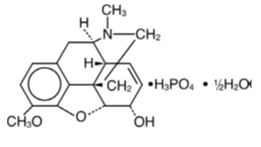
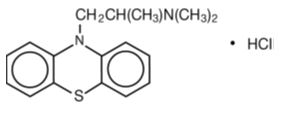
Oral solution: Each 5 mL contains codeine phosphate, 10 mg and promethazine hydrochloride 6.25 mg, in a flavored syrup base [see Description (11)].
The following serious adverse reactions are described, or described in greater detail, in other sections:
The following adverse reactions have been identified during clinical studies, in the literature, or during post-approval use of codeine and/or promethazine. Because these reactions may be reported voluntarily from a population of uncertain size, it is not always possible to reliably estimate their frequency or establish a causal relationship to drug exposure.
The most common adverse reactions to Promethazine with Codeine Oral Solution include: Sedation (somnolence, mental clouding, lethargy), impaired mental and physical performance, lightheadedness, dizziness, headache, dry mouth, nausea, vomiting, constipation, shortness of breath, sweating.
Other reactions include:
Anaphylaxis: Anaphylaxis has been reported with codeine, one of the ingredients in Promethazine with Codeine Oral Solution.
Body as a whole: Coma, death, fatigue, falling injuries, lethargy.
Cardiovascular: Peripheral edema, increased blood pressure, decreased blood pressure, tachycardia, chest pain, palpitation, syncope, orthostatic hypotension, prolonged QT interval, hot flush.
Central Nervous System: Ataxia, diplopia, facial dyskinesia, insomnia, migraine, increased intracranial pressure, seizure, tinnitus, tremor, vertigo.
Dermatologic: Flushing, hyperhidrosis, photosensitivity, pruritus, rash, urticaria.
Endocrine/Metabolic: Cases of serotonin syndrome, a potentially life-threatening condition, have been reported during concomitant use of opioids with serotonergic drugs. Cases of adrenal insufficiency have been reported with opioid use, more often following greater than one month of use. Cases of androgen deficiency have occurred with chronic use of opioids [see Clinical Pharmacology (12.2)].
Gastrointestinal: Abdominal pain, bowel obstruction, decreased appetite, diarrhea, difficulty swallowing, dry mouth, GERD, indigestion, jaundice, pancreatitis, paralytic ileus, biliary tract spasm (spasm of the sphincter of Oddi).
Genitourinary: Urinary tract infection, ureteral spasm, spasm of vesicle sphincters, urinary retention.
Hematologic: Bone marrow suppression, agranulocytosis, aplastic anemia, and thrombocytopenia have been reported.
Laboratory: Increases in serum amylase.
Musculoskeletal: Arthralgia, backache, muscle spasm.
Ophthalmic: Blurred vision, miosis (constricted pupils), visual disturbances.
Paradoxical Reactions: Dystonias, torticollis, tongue protrusion, hyperexcitability, and abnormal movements have been reported following a single administration of promethazine.
Psychiatric: Agitation, anxiety, confusion, fear, dysphoria, depression, hallucinations.
Reproductive: Hypogonadism, infertility.
Respiratory: Apnea, bronchitis, cough, dry nose, dry throat, dyspnea, nasal congestion, nasopharyngitis, respiratory depression, sinusitis, thickening of bronchial secretions, tightness of chest and wheezing, upper respiratory tract infection.
Other: Drug abuse, drug dependence, Neuroleptic Malignant Syndrome, opioid withdrawal syndrome.
No specific drug interaction studies have been conducted with Promethazine with Codeine Oral Solution.