Description
Acyclovir, USP is a synthetic nucleoside analogue active against herpes viruses. Acyclovir Oral Suspension, USP is a formulation for oral administration.
Each teaspoonful (5 mL) of acyclovir oral suspension, USP contains 200 mg of acyclovir, USP and the inactive ingredients carboxy methyl cellulose sodium, glycerin, methylparaben, microcrystalline cellulose, propylparaben, purified water, sorbitol solution and banana flavor (propylene glycol, Nat & Art flavor).
Acyclovir, USP is a white or almost white crystalline powder with the molecular formula C
8H
11N
5O
3and a molecular weight of 225.20. Acyclovir, USP is soluble in water, freely soluble in alkaline water, very slightly soluble in ethanol and most organic solvents. The pka’s of acyclovir are 2.16 and 9.04.
The chemical name of acyclovir, USP is 2-amino-1,9-dihydro-9-((2-hydroxyethoxy)methyl)-6H-purin-6-one; it has the following structural formula:
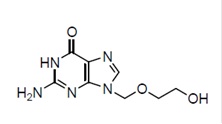
Acyclo-os-structure.jpg (Acyclo Os Structure)
VIROLOGY
Mechanism of Antiviral Action
Acyclovir is a synthetic purine nucleoside analogue with
in vitroand
in vivoinhibitory activity against herpes simplex virus types 1 (HSV-1), 2 (HSV-2), and varicella-zoster virus (VZV).
The inhibitory activity of acyclovir is highly selective due to its affinity for the enzyme thymidine kinase (TK) encoded by HSV and VZV. This viral enzyme converts acyclovir into acyclovir monophosphate, a nucleotide analogue. The monophosphate is further converted into diphosphate by cellular guanylate kinase and into triphosphate by a number of cellular enzymes.
In vitro, acyclovir triphosphate stops replication of herpes viral DNA. This is accomplished in 3 ways: 1) competitive inhibition of viral DNA polymerase, 2) incorporation into and termination of the growing viral DNA chain, and 3) inactivation of the viral DNA polymerase. The greater antiviral activity of acyclovir against HSV compared to VZV is due to its more efficient phosphorylation by the viral TK.
Antiviral Activities
The quantitative relationship between the
in vitrosusceptibility of herpes viruses to antivirals and the clinical response to therapy has not been established in humans, and virus sensitivity testing has not been standardized. Sensitivity testing results, expressed as the concentration of drug required to inhibit by 50% the growth of virus in cell culture (IC
50), vary greatly depending upon a number of factors. Using plaque-reduction assays, the IC
50against herpes simplex virus isolates ranges from 0.02 to 13.5 mcg/mL for HSV-1 and from 0.01 to 9.9 mcg/mL for HSV-2. The IC
50for acyclovir against most laboratory strains and clinical isolates of VZV ranges from 0.12 to 10.8 mcg/mL. Acyclovir also demonstrates activity against the Oka vaccine strain of VZV with a mean IC
50of 1.35 mcg/mL.
Drug Resistance
Resistance of HSV and VZV to acyclovir can result from qualitative and quantitative changes in the viral TK and/or DNA polymerase. Clinical isolates of HSV and VZV with reduced susceptibility to acyclovir have been recovered from immunocompromised patients, especially with advanced HIV infection. While most of the acyclovir-resistant mutants isolated thus far from immunocompromised patients have been found to be TK-deficient mutants, other mutants involving the viral TK gene (TK partial and TK altered) and DNA polymerase have been isolated. TK-negative mutants may cause severe disease in infants and immunocompromised adults. The possibility of viral resistance to acyclovir should be considered in patients who show poor clinical response during therapy.
