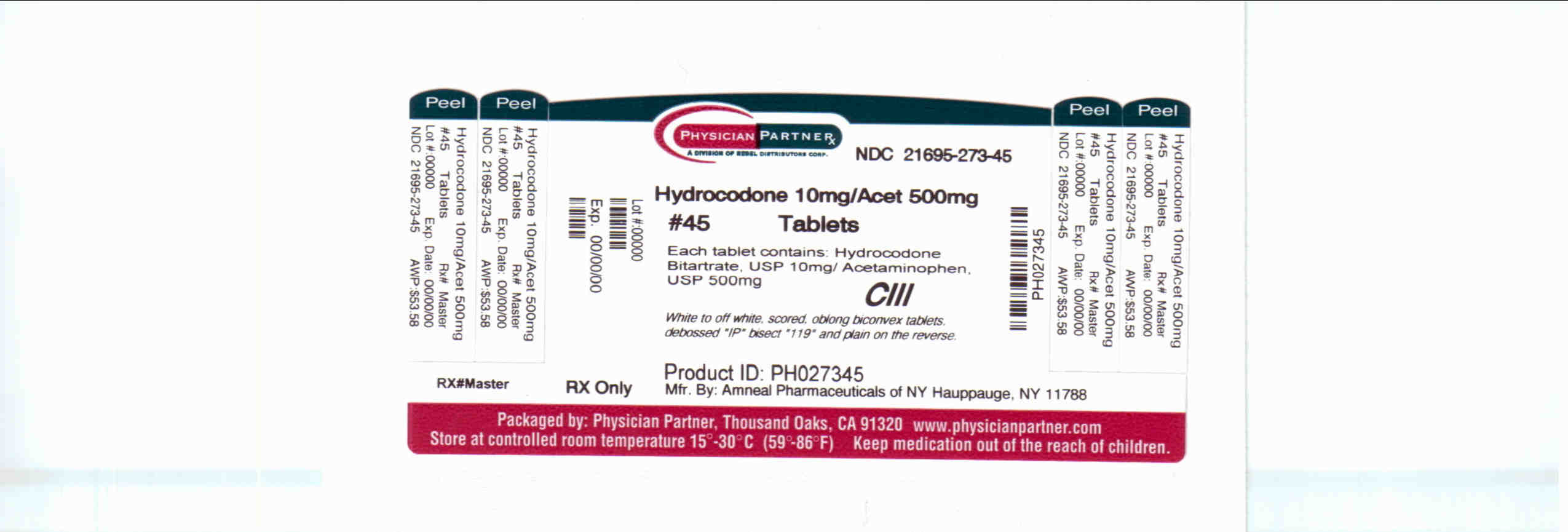
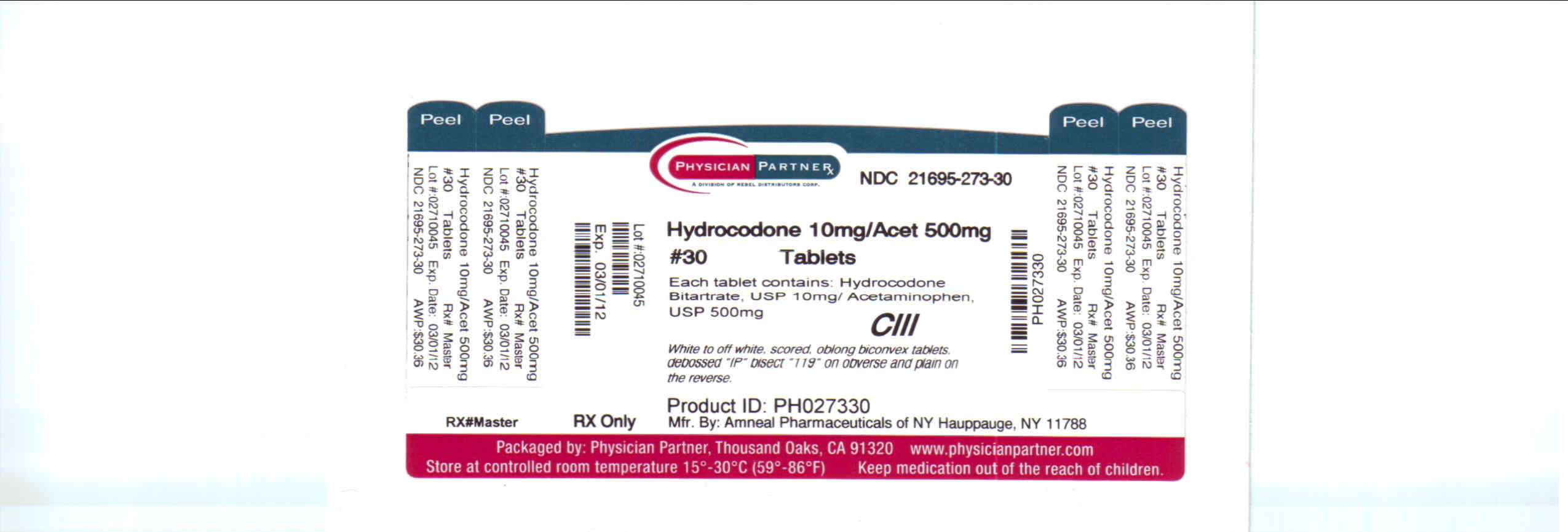
Controlled SubstanceHydrocodone bitartrate and Acetaminophen Tablets are classified as a Schedule lll controlled substance.Abuse and DependencePsychic dependence, physical dependence, and tolerance may develop upon repeated administration of narcotics; therefore, thisproduct should be prescribed and administered with caution. However, psychic dependence is unlikely to develop when hydrocodonebitartrate and acetaminophen tablets are used for a short time for the treatment of pain.Physical dependence, the condition in which continued administration of the drug is required to prevent the appearance of awithdrawal syndrome, assumes clinically significant proportions only after several weeks of continued narcotic use, although somemild degree of physical dependence may develop after a few days of narcotic therapy. Tolerance, in which increasingly large dosesare required in order to produce the same degree of analgesia, is manifested initially by a shortened duration of analgesic effect, andsubsequently by decreases in the intensity of analgesia. The rate of development of tolerance varies among patients.OVERDOSAGEFollowing an acute overdosage, toxicity may result from hydrocodone or acetaminophen.Signs and Symptoms:Hydrocodone: Serious overdose with hydrocodone is characterized by respiratory depression (a decrease in respiratory rate and/or tidal volume,Cheyne-Stokes respiration, cyanosis), extreme somnolence progressing to stupor or coma, skeletal muscle flaccidity, cold and clammyskin, and sometimes bradycardia and hypotension. In severe overdosage, apnea, circulatory collapse, cardiac arrest and death mayoccur.Acetaminophen: In acetaminophen overdosage: dose-dependent, potentially fatal hepatic necrosis is the most serious adverse effect. Renal tubularnecrosis, hypoglycemic coma, and thrombocytopenia may also occur.Early symptoms following a potentially hepatotoxic overdose may include: nausea, vomiting, diaphoresis and general malaise.Clinical and laboratory evidence of hepatic toxicity may not be apparent until 48 to 72 hours post-ingestion.In adults, hepatic toxicity has rarely been reported with acute overdoses of less than 10 grams, or fatalities with less than 15 grams.Treatment:A single or multiple overdose with hydrocodone and acetaminophen is a potentially lethal polydrug overdose, and consultation with aregional poison control center is recommended.Immediate treatment includes support of cardiorespiratory function and measures to reduce drug absorption. Vomiting should beinduced mechanically, or with syrup of ipecac, if the patient is alert (adequate pharyngeal and laryngeal reflexes). Oral activatedcharcoal (1 g/kg) should follow gastric emptying. The first dose should be accompanied by an appropriate cathartic. If repeated dosesare used, the cathartic might be included with alternate doses as required. Hypotension is usually hypovolemic and should respond to page 5 of 7 fluids. Vasopressors and other supportive measures should be employed as indicated. A cuffed endotracheal tube should be insertedbefore gastric lavage of the unconscious patient and, when necessary, to provide assisted respiration.Meticulous attention should be given to maintaining adequate pulmonary ventilation. In severe cases of intoxication, peritonealdialysis, or preferably hemodialysis may be considered. If hypoprothrombinemia occurs due to acetaminophen overdose, vitamin Kshould be administered intravenously.Naloxone, a narcotic antagonist, can reverse respiratory depression and coma associated with opioid overdose. Naloxonehydrochloride 0.4 mg to 2 mg is given parenterally. Since the duration of action of hydrocodone may exceed that of the naloxone,the patient should be kept under continuous surveillance and repeated doses of the antagonist should be administered as needed tomaintain adequate respiration. A narcotic antagonist should not be administered in the absence of clinically significant respiratory orcardiovascular depression.If the dose of acetaminophen may have exceeded 140 mg/kg, acetylcysteine should be administered as early as possible. Serumacetaminophen levels should be obtained, since levels four or more hours following ingestion help predict acetaminophen toxicity. Donot await acetaminophen assay results before initiating treatment. Hepatic enzymes should be obtained initially, and repeated at 24-hour intervals.Methemoglobinemia over 30% should be treated with methylene blue by slow intravenous administration.The toxic dose for adults for acetaminophen is 10 g.DOSAGE AND ADMINISTRATIONDosage should be adjusted according to the severity of the pain and the response of the patient. However, it should be kept in mindthat tolerance to hydrocodone can develop with continued use and that the incidence of untoward effects is dose related. 2.5 mg/500 mg5 mg/500 mg The usual adult dosage is one or two tablets every four to six hours as needed for pain. The totaldaily dosage should not exceed 8 tablets 7.5 mg/325 mg7.5 mg/500 mg7.5 mg/650 mg The usual adult dosage is one tablet every four to six hours as needed for pain. The total dailydosage should not exceed 6 tablets. 7.5 mg/750 mg The usual adult dosage is one tablet every four to six hours as needed for pain. The total dailydosage should not exceed 5 tablets. 10 mg/325 mg10 mg/500 mg10 mg/650 mg10 mg/660 mg The usual adult dosage is one tablet every four to six hours as needed for pain. The total dailydosage should not exceed 6 tablets. 10 mg/750 mg The usual adult dosage is one tablet every four to six hours as needed for pain. The total dailydosage should not exceed 5 tablets.