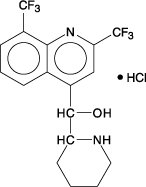
Postmarketing surveillance indicates that the same kind of adverse experiences are reported during prophylaxis, as well as acute treatment. Because these experiences are reported voluntarily from a population of uncertain size, it is not always possible to reliably estimate their frequency or establish a causal relationship to Mefloquine Hydrochloride Tablets exposure.
The most frequently reported adverse events are nausea, vomiting, loose stools or diarrhea, abdominal pain, dizziness or vertigo, loss of balance, and neuropsychiatric events such as headache, somnolence, and sleep disorders (insomnia, abnormal dreams). These are usually mild and may decrease despite continued use. In a small number of patients it has been reported that dizziness or vertigo and loss of balance may continue for months after discontinuation of the drug.
Occasionally, more severe neuropsychiatric disorders have been reported such as: sensory and motor neuropathies (including paresthesia, tremor and ataxia), convulsions, agitation or restlessness, anxiety, depression, mood swings, panic attacks, memory impairment, confusion, hallucinations, aggression, psychotic or paranoid reactions and encephalopathy. Rare cases of suicidal ideation and suicide have been reported though no relationship to drug administration has been confirmed.
Other less frequently reported adverse events include:
Cardiovascular Disorders: circulatory disturbances (hypotension, hypertension, flushing, syncope), chest pain, tachycardia or palpitation, bradycardia, irregular heart rate, extrasystoles, A-V block, and other transient cardiac conduction alterations
Skin Disorders: rash, exanthema, erythema, urticaria, pruritus, edema, hair loss, erythema multiforme, and Stevens-Johnson syndrome
Musculoskeletal Disorders: muscle weakness, muscle cramps, myalgia, and arthralgia
Respiratory Disorders: dyspnea, pneumonitis of possible allergic etiology
Hepatobiliary Disorders: drug-related hepatic disorders from asymptomatic transient transaminase elevations to hepatic failure drug-related hepatic disorders from asymptomatic transient transaminase elevations to hepatic failure
Blood and Lymphatic System Disorders: agranulocytosis, aplastic anemia agranulocytosis, aplastic anemia
Other Symptoms: visual disturbances, vestibular disorders including tinnitus and hearing impairment, asthenia, malaise, fatigue, fever, hyperhidrosis, chills, dyspepsia and loss of appetite
To report SUSPECTED ADVERSE REACTIONS, contact West-ward Pharmaceutical Corp. at 1-877-233- 2001, and the FDA at 1-800-FDA-1088 or www.fda.gov/medwatch.