Hydrocodone Bitartrate And Homatropine Methylbromide
FDA Label NDC 21695-869

Full FDA labeling including Indications, Dosage, Usage, and Precautions

Structured Product Label

The following Structured Product Label (SPL) was submitted to the FDA by Rebel Distributors Corp for the product Hydrocodone Bitartrate And Homatropine Methylbromide (NDC 21695-869). This document serves as the official prescribing information, containing essential scientific data and clinical materials required for healthcare providers and patients.

This specific version of the label includes detailed information regarding description, clinical pharmacology, indications and usage, contraindications, warnings, respiratory depression, head injury and increased intracranial pressure, acute abdominal conditions, and other regulatory disclosures. Use the navigation below to review specific sections of the FDA submission.

Description

This product contains hydrocodone (dihydrocodeinone) bitartrate, a semisynthetic centrally-acting narcotic antitussive. Homatropine methylbromide is included in a subtherapeutic amount to discourage deliberate overdosage.

Each teaspoonful (5 mL) for oral administration contains:

Hydrocodone Bitartrate, USP 5 mg

WARNING: May be habit forming.

Homatropine Methylbromide, USP 1.5 mg

Hydrocodone Bitartrate and Homatropine Methylbromide Syrup also contains: Caramel color, cherry flavor, citric acid, FD&C Red #40, methylparaben, propylparaben, purified water, sorbitol solution and sucrose syrup. Citric acid and/or sodium citrate may be added to adjust pH.

The hydrocodone component is a 4,5α- epoxy-3-methoxy-17-methylmorphinan- 6-one tartrate (1:1) hydrate (2:5), a fine white crystal or crystalline powder, which is derived from the opium alkaloid, thebaine, has a molecular weight of (494.50) and may be represented by the following structural formula:
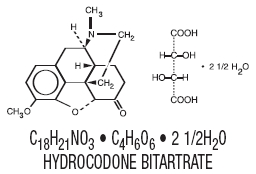
Hydrocodone Bitartrate Structural Formula (95828fad 323e 4510 Acbf 6d354b25b887 01)
Hydrocodone Bitartrate Structural Formula (95828fad 323e 4510 Acbf 6d354b25b887 01)

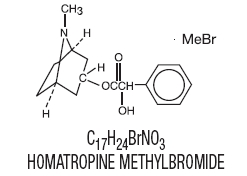
Homatropine Methylbromide Structural Formula (95828fad 323e 4510 Acbf 6d354b25b887 02)

Homatropine Methylbromide Structural Formula (95828fad 323e 4510 Acbf 6d354b25b887 02)

Homatropine methylbromide is 8- Azoniabicyclo [3.2.1]octane,3-[(hydroxyphenylacetyl) oxy]-8,8-dimethyl-,bromide, endo-; a white crystal or fine white crystalline powder, with a molecular weight of (370.29).

Clinical Pharmacology

Hydrocodone is a semisynthetic narcotic antitussive and analgesic with multiple actions qualitatively similar to those of codeine. The precise mechanism of action of hydrocodone and other opiates is not known; however, hydrocodone is believed to act directly on the cough center. In excessive doses, hydrocodone, like other opium derivatives, will depress respiration. The effects of hydrocodone in therapeutic doses on the cardiovascular system are insignificant. Hydrocodone can produce miosis, euphoria, physical and physiological dependence.

Following a 10 mg oral dose of hydrocodone administered to five adult male subjects, the mean peak concentration was 23.6 ± 5.2 ng/mL. Maximum serum levels were achieved at 1.3 ± 0.3 hours and the half-life was determined to be 3.8 ± 0.3 hours. Hydrocodone exhibits a complex pattern of metabolism including O-demethylation, N-demethylation and 6-keto reduction to the corresponding 6-α-and 6-β-hydroxymetabolites.

Indications And Usage

Hydrocodone bitartrate and homatropine methylbromide syrup is indicated for the symptomatic relief of cough.

Contraindications

Hydrocodone bitartrate and homatropine methylbromide syrup should not be administered to patients who are hypersensitive to hydrocodone or homatropine methylbromide.

Warnings

May be habit forming. Hydrocodone can produce drug dependence of the morphine type and, therefore, has the potential for being abused. Psychic dependence, physical dependence and tolerance may develop upon repeated administration of hydrocodone bitartrate and homatropine methylbromide and it should be prescribed and administered with the same degree of caution appropriate to the use of other narcotic drugs (see DRUG ABUSE AND DEPENDENCE).

Respiratory Depression

Hydrocodone bitartrate and homatropine methylbromide produces dose-related respiratory depression by directly acting on brain stem respiratory centers. If respiratory depression occurs, it may be antagonized by the use of naloxone hydrochloride and other supportive measures when indicated.

Head Injury And Increased Intracranial Pressure

The respiratory depression properties of narcotics and their capacity to elevate cerebrospinal fluid pressure may be markedly exaggerated in the presence of head injury, other intracranial lesions or a pre-existing increase in intracranial pressure. Furthermore, narcotics produce adverse reactions which may obscure the clinical course of patients with head injuries.

Acute Abdominal Conditions

The administration of hydrocodone bitartrate and homatropine methylbromide or other narcotics may obscure the diagnosis or clinical course of patients with acute abdominal conditions.

Pediatric Use

In young pediatric patients, as well as adults, the respiratory center is sensitive to the depressant action of narcotic cough suppressants in a dose-dependent manner. Benefit to risk ratio should be carefully considered especially in the pediatric population with respiratory embarrassment (e.g., croup).

Safety and effectiveness of hydrocodone bitartrate and homatropine methylbromide in pediatric patients under six have not been established.

General

Before prescribing medication to suppress or modify cough, it is important to ascertain that the underlying cause of cough is identified, that modification of cough does not increase the risk of clinical or physiological complications, and that appropriate therapy for the primary disease is provided.

Special Risk Patients

Hydrocodone bitartrate and homatropine methylbromide should be given with caution to certain patients such as the elderly or debilitated, and those with severe impairment of hepatic or renal functions, hypothyroidism, Addison’s disease, prostatic hypertrophy or urethral stricture, asthma, and narrow-angle glaucoma.

Information For Patients

Hydrocodone may impair the mental and/or physical abilities required for the performance of potentially hazardous tasks such as driving a car or operating machinery. The patient using hydrocodone bitartrate and homatropine methylbromide should be cautioned accordingly.

Drug Interactions

Patients receiving narcotics, antihistamines, antipsychotics, antianxiety agents or other CNS depressants (including alcohol) concomitantly with hydrocodone bitartrate and homatropine methylbromide may exhibit an additive CNS depression. When combined therapy is contemplated, the dose of one or both agents should be reduced. The use of MAO inhibitors or tricyclic antidepressants with hydrocodone preparations may increase the effect of either the antidepressant or hydrocodone.

Carcinogenesis, Mutagenesis, Impairment Of Fertility

Studies of hydrocodone bitartrate and homatropine methylbromide in animals to evaluate the carcinogenic and mutagenic potential and the effect on fertility have not been conducted.

Teratogenic Effects

Pregnancy Category C: Animal reproduction studies have not been conducted with hydrocodone bitartrate and homatropine methylbromide. It is also not known whether hydrocodone bitartrate and homatropine methylbromide can cause fetal harm when administered to a pregnant woman or can affect reproduction capacity. Hydrocodone bitartrate and homatropine methylbromide should be given to a pregnant woman only if clearly needed.

Nonteratogenic Effects

Babies born to mothers who have been taking opioids regularly prior to delivery will be physically dependent. The withdrawal signs include irritability and excessive crying, tremors, hyperactive reflexes, increased respiratory rate, increased stools, sneezing, yawning, vomiting and fever. The intensity of the syndrome does not always correlate with the duration of maternal opioid use or dose.

Labor And Delivery

As with all narcotics, administration of hydrocodone bitartrate and homatropine methylbromide to the mother shortly before delivery may result in some degree of respiratory depression in the newborn, especially if higher doses are used.

Nursing Mothers

It is not known whether this drug is excreted in human milk. Because many drugs are excreted in human milk and because of the potential for serious adverse reactions in nursing infants from hydrocodone bitartrate and homatropine methylbromide, a decision should be made whether to discontinue nursing or to discontinue the drug, taking into account the importance of the drug to the mother.

Adverse Reactions

To report SUSPECTED ADVERSE REACTIONS, contact Hi-Tech Pharmacal Co., Inc. at 1-800-262-9010 or FDA at 1-800-FDA- 1088 or www.fda.gov/medwatch.

Central Nervous System

Sedation, drowsiness, mental clouding, lethargy, impairment of mental and physical performance, anxiety, fear, dysphoria, dizziness, psychic dependence, mood changes.

Gastrointestinal System

Nausea and vomiting may occur; they are more frequent in ambulatory than in recumbent patients. Prolonged administration of hydrocodone bitartrate and homatropine methylbromide may produce constipation.

Genitourinary System

Ureteral spasm, spasm of vesicle sphincters and urinary retention have been reported with opiates.

Respiratory System

Hydrocodone bitartrate and homatropine methylbromide may produce dose-related respiratory depression by acting directly on brain stem respiratory centers (see OVERDOSAGE).

Dermatological

Skin rash, pruritus.

Drug Abuse And Dependence

Hydrocodone bitartrate and homatropine methylbromide syrup is a Schedule III narcotic. Psychic dependence, physical dependence and tolerance may develop upon repeated administration of narcotics; therefore, hydrocodone bitartrate and homatropine methylbromide should be prescribed and administered with caution. However, psychic dependence is unlikely to develop when hydrocodone bitartrate and homatropine methylbromide is used for a short time for the treatment of cough. Physical dependence, the condition in which continued administration of the drug is required to prevent the appearance of a withdrawal syndrome, assumes clinically significant proportions only after several weeks of continued oral narcotic use, although some mild degree of physical dependence may develop after a few days of narcotic therapy.

Signs And Symptoms

Serious overdosage with hydrocodone is characterized by respiratory depression (a decrease in respiratory rate and/or tidal volume, Cheyne-Stokes respiration, cyanosis), extreme somnolence progressing to stupor or coma, skeletal muscle flaccidity, cold and clammy skin, and sometimes bradycardia and hypotension. In severe overdosage, apnea, circulatory collapse, cardiac arrest and death may occur. The ingestion of very large amounts of hydrocodone bitartrate and homatropine methylbromide may, in addition, result in acute homatropine intoxication.

Treatment

Primary attention should be given to the reestablishment of adequate respiratory exchange through provision of a patent airway and the institution of assisted or controlled ventilation. The narcotic antagonist naloxone hydrochloride is a specific antidote for respiratory depression which may result from overdosage or unusual sensitivity to narcotics including hydrocodone. Therefore, an appropriate dose of naloxone hydrochloride should be administered, preferably by the intravenous route, simultaneously with efforts at respiratory resuscitation. For further information, see full prescribing information for naloxone hydrochloride. An antagonist should not be administered in the absence of clinically significant respiratory depression. Oxygen, intravenous fluids, vasopressors and other supportive measures should be employed as indicated. Gastric emptying may be useful in removing unabsorbed drug.

Adults

One (1) teaspoonful (5 mL) of the syrup every 4 to 6 hours as needed; do not exceed six (6) teaspoonfuls in 24 hours.

Children 6 To 12 Years Of Age

One-half (1/2) teaspoonful (2.5 mL) of the syrup every 4 to 6 hours as needed; do not exceed three (3) teaspoonfuls in 24 hours.

How Supplied

Hydrocodone Bitartrate and Homatropine Methylbromide Syrup NDC 21695-869-16 is available as a clear red colored, cherry flavored syrup in:

Bottles of 16 fl. oz. (one pint)

Store at 20°-25°C (68°-77°F) [See USP Controlled Room Temperature].

Dispense in a tight, light-resistant container, as defined in the USP.

Oral prescription where permitted by state law.


Manufactured By:

Hi-Tech Pharmacal Co., Inc.

Amityville, NY 11701


Rev. 043:00 3/09

MG #21271

Repackaged by:

Rebel Distributors Corp

Thousand Oaks, CA 91320


* Please review the disclaimer below.