Tacrolimus Ointment
Product Images NDC 21922-011

View Photos of Packaging, Regulatory Labels, and Product Appearance

Product Visual Gallery

This gallery contains 11 technical images submitted to the FDA as part of the official labeling for Tacrolimus (NDC 21922-011). Unlike standard consumer photos, these assets often include clinical data figures, molecular chemical structures, and official manufacturer packaging layouts.

As provided by Encube Ethicals, Inc., these visuals offer a comprehensive scientific overview of the product's physical and chemical identity, aiding pharmacists and researchers in product verification and study.

FDA Label Image

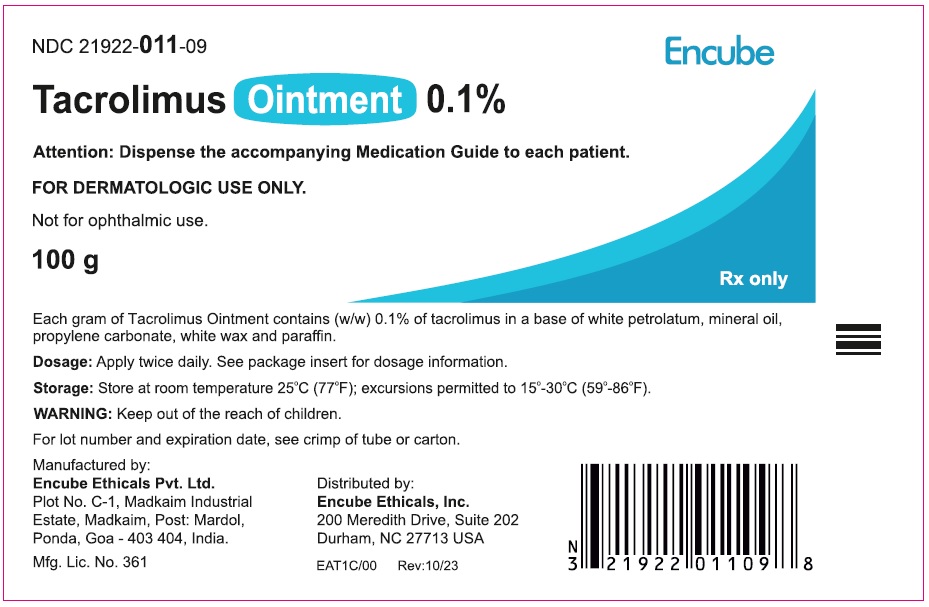
100g-carton (100g Carton)

100g-carton (100g   Carton)
This text appears to be a description of a medication called Tacrolimus (NDC 21922-011-09) for dermatologic use only. The medication comes in a 100g tube and contains 0.1% Tacrolimus. It is important to dispense the accompanying Medication Guide to each patient. The medication is not for ophthalmic use. The manufacturer is Encube Ethicals Pvt. Ltd. located in Goa, India. It is distributed by Encube Ethicals, Inc. located in Durham, NC, USA. Each gram of the Tacrolimus ointment contains 0.1% of Tacrolimus in a base of white petrolatum, mineral oil, propylene carbonate, white wax, and paraffin. The dosage is to apply twice daily. The medication should be stored at room temperature, with excursions permitted to 15°-30°C. It is important to keep the medication out of the reach of children. The lot number and expiration date can be found on the crimp of the tube or carton.*
FDA Label Image

100g-label (100g Label)

100g-label (100g   Label)
This text is a description of a medication called Tacrolimus Ointment. It is intended for dermatologic use only and should not be used for ophthalmic purposes. Each gram of the ointment contains 0.1% of tacrolimus. The ointment is applied twice daily. The medication should be stored at room temperature. It is important to keep the medication out of reach of children. The manufacturer of the medication is Encube Ethicals Pvt. Ltd. and it is distributed by Encube Ethicals, Inc. in the USA. The product is manufactured in Goa, India. Unfortunately, the lot number and expiration date are not available in the text.*
FDA Label Image

30g-carton (30g Carton)

FDA Label Image

30g-label (30g Label)

30g-label (30g   Label)
Description: This is a description for a medication called Tacrolimus Ointment. It is indicated for dermatologic use only and should not be used for ophthalmic purposes. Each gram of the ointment contains 0.1% of tacrolimus and is formulated with ingredients such as white petrolatum, mineral oil, propylene carbonate, white wax, and paraffin. The recommended dosage is to apply the ointment twice daily, and the specific dosage information can be found in the package insert. The ointment should be stored at room temperature with excursions permitted between 15°C to 30°C. It is important to keep this medication out of the reach of children. The manufacturer is Encube Ethicals Pvt. Ltd., located in Goa, India and it is distributed by Encube Ethicals, Inc. in Durham, North Carolina, USA.*
FDA Label Image

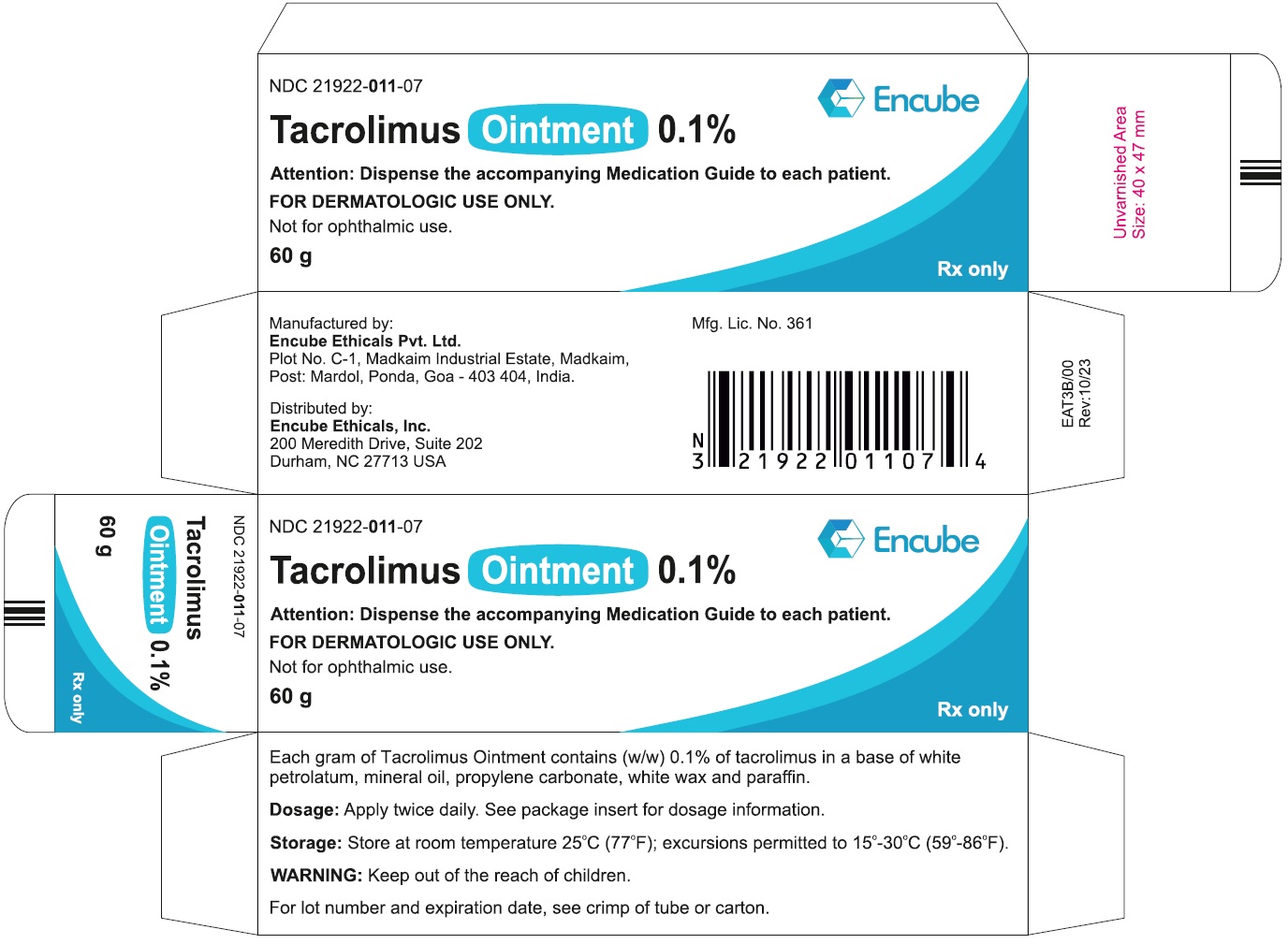
60g-carton (60g Carton)

60g-carton (60g   Carton)
This is a description of a medication called Tacrolimus. It is a dermatologic ointment made by Encube Ethicals Pvt. Ltd. The ointment is for dermatologic use only and should not be used for ophthalmic purposes. Each gram of the ointment contains 0.1% of tacrolimus. The recommended dosage is to apply it twice daily, and the package insert provides more detailed dosage information. The ointment should be stored at room temperature, and it is important to keep it out of the reach of children. The lot number and expiration date can be found on the crimp of the tube or carton.*
FDA Label Image

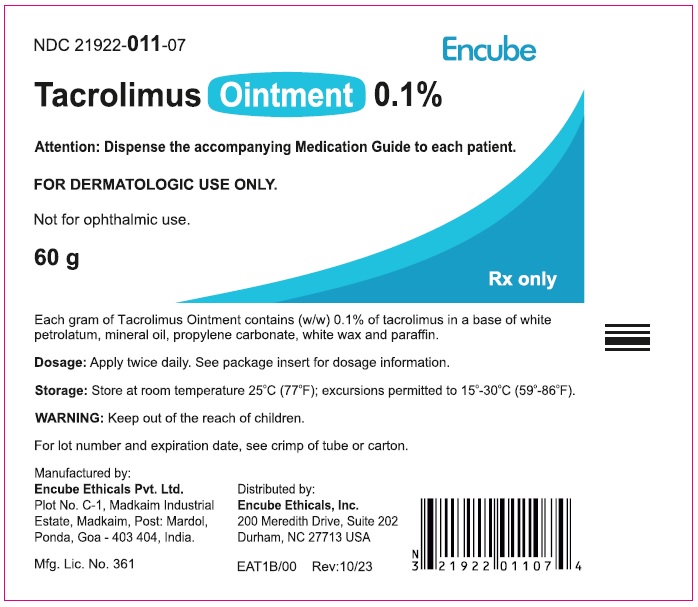
60g-label (60g Label)

FDA Label Image

Fig-02 (Fig 02)

FDA Label Image

Fig-03 (Fig 03)

FDA Label Image

Fig-04 (Fig 04)

FDA Label Image

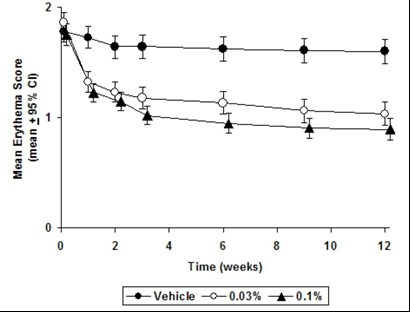
Fig-01 (Fig 1)

FDA Label Image

Structute Tacrolimus (Structure Tacro)

* These product label images have been analyzed using experimental machine learning. Please verify findings with the primary label text.