Terazosin Capsule
Product Images NDC 23155-736

View Photos of Packaging, Regulatory Labels, and Product Appearance

Product Visual Gallery

This gallery contains 16 technical images submitted to the FDA as part of the official labeling for Terazosin (NDC 23155-736). Unlike standard consumer photos, these assets often include clinical data figures, molecular chemical structures, and official manufacturer packaging layouts.

As provided by Heritage Pharmaceuticals Inc. D/b/a Avet Pharmaceuticals Inc., these visuals offer a comprehensive scientific overview of the product's physical and chemical identity, aiding pharmacists and researchers in product verification and study.

FDA Label Image

Image (98351704 9ff8 4c54 A2c2 E2841873d658 01)

Image (98351704 9ff8 4c54 A2c2 E2841873d658 01)
This appears to be the chemical formula and molecular weight of hydrochloric acid (HCl) mixed with water (H2O), written in shorthand notation commonly used in chemistry. The formula mentions CH0 and CHy0, which may be abbreviations for specific chemical compounds, but without further context it is difficult to determine their meaning.*
FDA Label Image

Image (98351704 9ff8 4c54 A2c2 E2841873d658 02)

Image (98351704 9ff8 4c54 A2c2 E2841873d658 02)
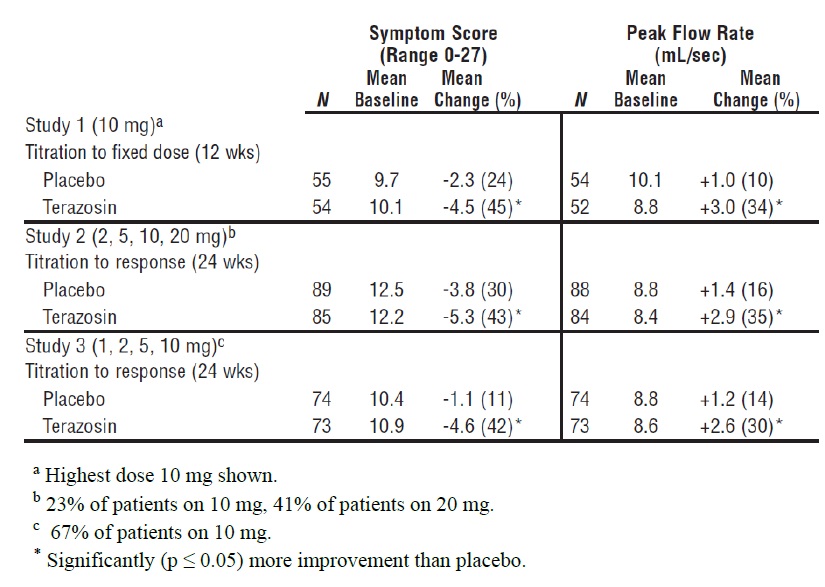
This text provides numerical data for the Symptom Score and Peak Flow Rate for three separate studies evaluating the effectiveness of terazosin at various doses. In each study, terazosin was compared to a placebo group. The data suggests that terazosin was more effective at reducing symptoms and improving peak flow rate compared to the placebo group, with the highest dose of 10mg showing the most improvement.*
FDA Label Image

Image (98351704 9ff8 4c54 A2c2 E2841873d658 03)

Image (98351704 9ff8 4c54 A2c2 E2841873d658 03)
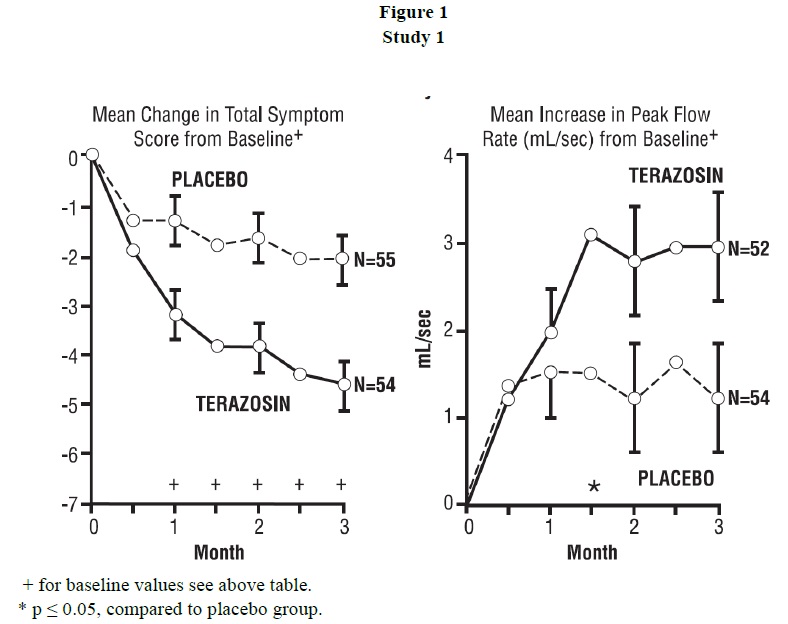
The text describes a study shown in Figure 1 that compares the effectiveness of a placebo and terazosin in reducing symptoms and increasing peak flow rate in a group of individuals. The data shows the mean change in total symptom score and mean increase in peak flow rate over three months, with statistical significance noted when compared to the placebo group. However, specific numerical values for the changes are not provided, and the size of the study groups is only mentioned in passing.*
FDA Label Image

Image (98351704 9ff8 4c54 A2c2 E2841873d658 04)

Image (98351704 9ff8 4c54 A2c2 E2841873d658 04)
This is a graph labeled as "Figure 2" that shows the Mean Change in Total Symptom Score from Baseline in a Long-Term, Open-Label, Non-Placebo Controlled Study involving 494 subjects. The horizontal axis has the time in months (from 0 to 30), and the vertical axis shows the Mean Change from Baseline in Symptom Score. There is a note on the graph indicating that *p<0.05 vs. baseline mean baseline = 10.7.*
FDA Label Image

Image (98351704 9ff8 4c54 A2c2 E2841873d658 05)

Image (98351704 9ff8 4c54 A2c2 E2841873d658 05)
The text is a graph displaying the mean change in peak flow rate from baseline in a long-term, open-label, non-placebo controlled study. The study had a total of 494 participants. The graph shows the mean change from baseline in mL/sec over the course of 30 months. There is a statement that there was a significant difference between the results at baseline and those obtained during the study (p<0.05).*
FDA Label Image

Image (98351704 9ff8 4c54 A2c2 E2841873d658 06)

Image (98351704 9ff8 4c54 A2c2 E2841873d658 06)
This appears to be a table showing the mean changes in blood pressure of normotensive and hypertensive patients from baseline to final visit in double-blind placebo-controlled studies. The data shows the number of patients in each group, the mean change in systolic blood pressure (SBP) and diastolic blood pressure (DBP). Placebo is used as a control group and compared with the group taking the drug Terazosin. The asterisk (*) indicates that there was a significant difference (p<0.05) between the Terazosin group and the placebo group.*
FDA Label Image

Image (98351704 9ff8 4c54 A2c2 E2841873d658 07)

Image (98351704 9ff8 4c54 A2c2 E2841873d658 07)
This is a table showing the adverse reactions reported during placebo-controlled trials for benign prostatic hyperplasia using terazosin and placebo. The table displays the adverse reactions experienced in different body systems such as body as a whole, cardiovascular system, digestive system, metabolic and nutritional disorders, nervous system, respiratory system, special senses, and urogenital system. The adverse reactions reported include asthenia, flu syndrome, headache, hypotension, palpitations, postural hypotension, syncope, nausea, peripheral edema, weight gain, dizziness, somnolence, vertigo, dyspnea, nasal congestion/rhinitis, blurred vision/amblyopia, impotence, and urinary tract infections.*
FDA Label Image

Image (98351704 9ff8 4c54 A2c2 E2841873d658 08)

Image (98351704 9ff8 4c54 A2c2 E2841873d658 08)
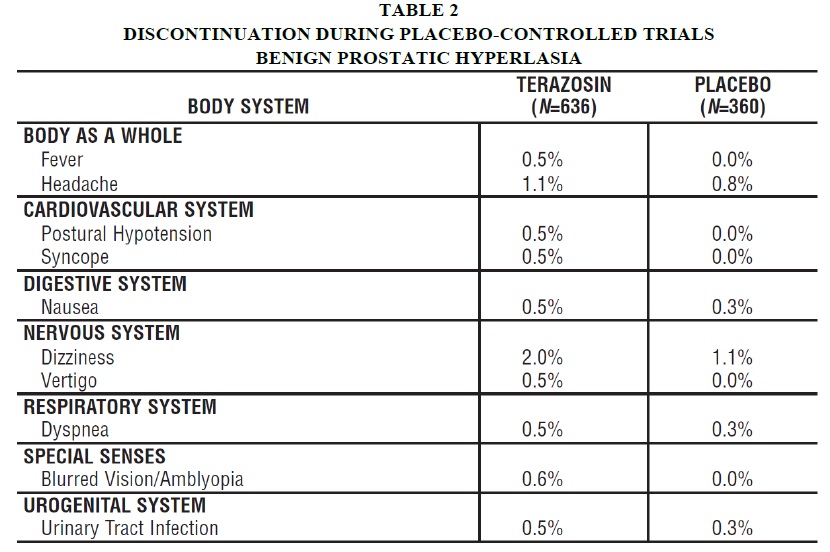
This table shows the percentages of patients who discontinued trial medication due to adverse effects during a placebo-controlled trial for Benign Prostatic Hyperplasia. The trial compared the effects of the drug Terazosin to a placebo. The adverse effects are divided into body systems, and the percentages are broken down for each effect under Terazosin and Placebo treatment. Common adverse effects included headache and dizziness, while more severe events such as syncope and dyspnea had very low occurrence rates.*
FDA Label Image

Image (98351704 9ff8 4c54 A2c2 E2841873d658 09)

Image (98351704 9ff8 4c54 A2c2 E2841873d658 09)
The given text represents Table 3 displaying adverse reactions observed during placebo-controlled trials for the drug Terazosin, categorized by body system. The adverse reactions are compared for Terazosin and placebo groups. The adverse reactions reported include asthenia, back pain, headache, palpitations, postural hypotension, tachycardia, nausea, edema, peripheral edema, weight gain, pain-extremities, depression, dizziness, libido decreased, nervousness, paresthesia, somnolence, dyspnea, nasal congestion, sinusitis, blurred vision, and impotence. The percentage of patients who reported each adverse reaction is provided for both groups, and the statistically significant reactions are marked.*
FDA Label Image

Image (98351704 9ff8 4c54 A2c2 E2841873d658 10)

Image (98351704 9ff8 4c54 A2c2 E2841873d658 10)
This table displays the percentage of discontinuation during placebo-controlled trials for hypertension medication Terazosin compared to placebo. The table lists the different body systems and associated symptoms, along with the percentage of patients who experienced them for both treatment groups. Symptoms include headache, palpitations, dizziness, blurred vision, among others.*
FDA Label Image

Image (98351704 9ff8 4c54 A2c2 E2841873d658 11)

FDA Label Image

Image (98351704 9ff8 4c54 A2c2 E2841873d658 12)

FDA Label Image

1 mg (98351704 9ff8 4c54 A2c2 E2841873d658 13)

FDA Label Image

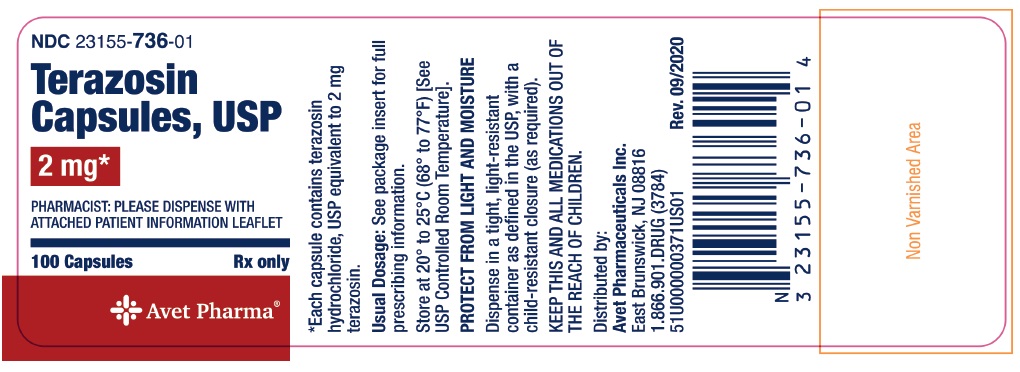
2 mg (98351704 9ff8 4c54 A2c2 E2841873d658 14)

FDA Label Image

5 mg (98351704 9ff8 4c54 A2c2 E2841873d658 15)

FDA Label Image

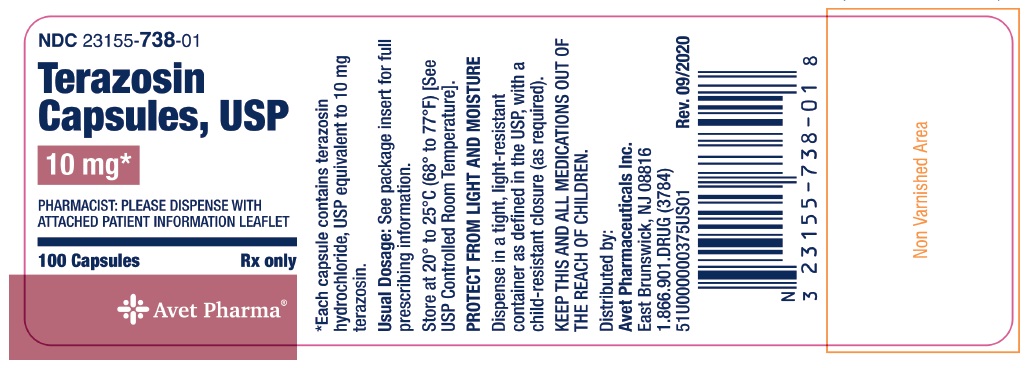
10 mg (98351704 9ff8 4c54 A2c2 E2841873d658 16)

* These product label images have been analyzed using experimental machine learning. Please verify findings with the primary label text.