Doxepin Hydrochloride Capsule
Product Images NDC 23155-795
View Photos of Packaging, Regulatory Labels, and Product Appearance
Product Visual Gallery
This gallery contains 9 technical images submitted to the FDA as part of the official labeling for Doxepin Hydrochloride (NDC 23155-795). Unlike standard consumer photos, these assets often include clinical data figures, molecular chemical structures, and official manufacturer packaging layouts.
As provided by Heritage Pharmaceuticals Inc. D/b/a Avet Pharmaceuticals Inc., these visuals offer a comprehensive scientific overview of the product's physical and chemical identity, aiding pharmacists and researchers in product verification and study.
Product Images & Figures Index
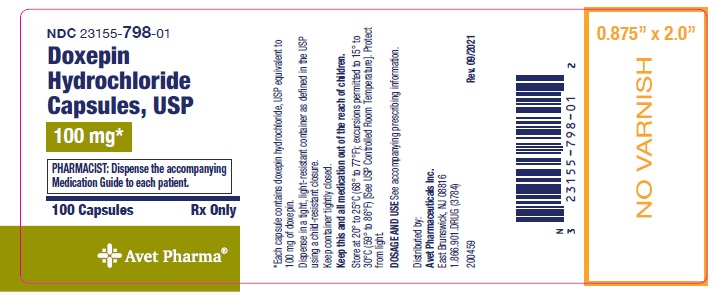
Doxepin-spl-100mg100scount (Doxepin Spl 100mg100scount)
Doxepin-spl-10mg100scount (Doxepin Spl 10mg100scount)
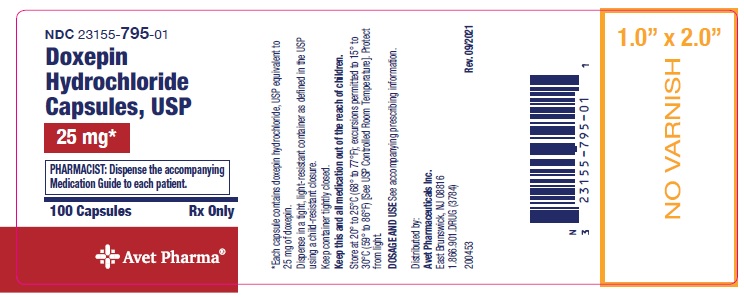
Doxepin-spl-25mg100scount (Doxepin Spl 25mg100scount)
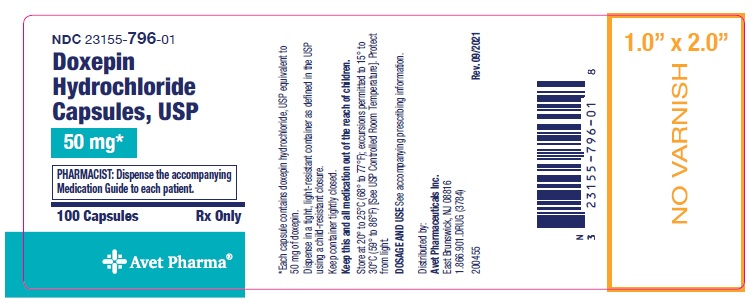
Doxepin-spl-50mg100scount (Doxepin Spl 50mg100scount)
This is a product description. Avet Pharma® produces a capsule medication with the active ingredient Hydrochloride Doxepin. The product comes in a pack of 100 capsules and the NDC code is 23155-796-01. Pharmacists are advised to provide a medication guide to patients for proper use. The location and other details of the manufacturer cannot be identified from the given text.*
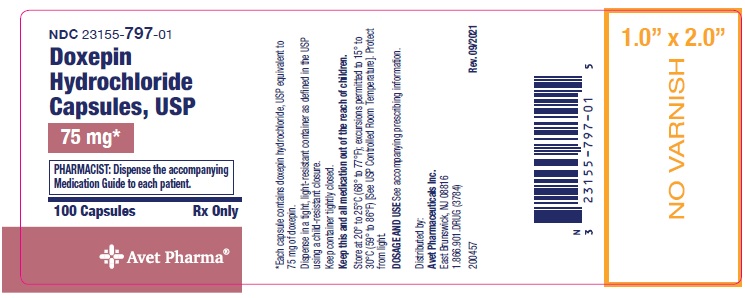
Doxepin-spl-75mg100scount (Doxepin Spl 75mg100scount)
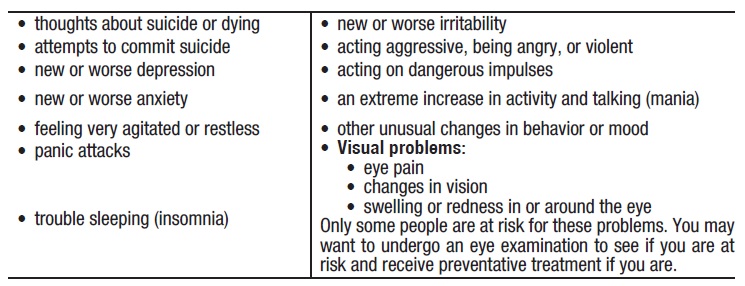
Doxepin-spl-mgtable (Doxepin Spl mgtable)
This text describes warning signs of suicidal behavior, changes in mood and behavior such as increased irritability or anxiety, and physical symptoms such as eye pain or changes in vision. It suggests that some individuals may be at risk for these problems and may benefit from an eye examination to receive preventative treatment.*
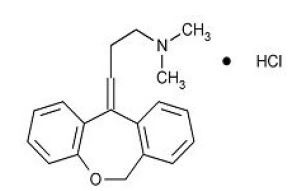
Doxepin-spl-structure (Doxepin Spl Structure)
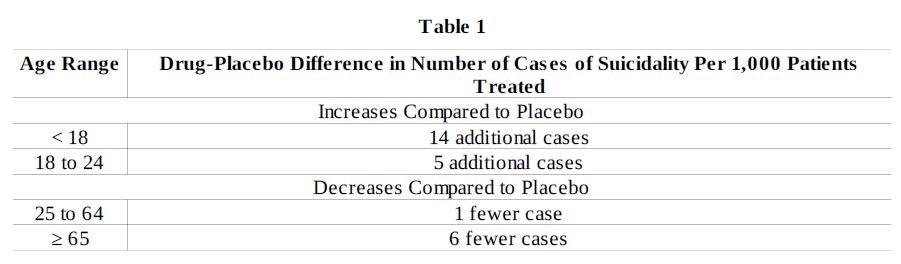
Doxepin-spl-table-1 (Doxepin Spl Table1)
The text describes a table indicating the number of cases of suicidality for patients in different age ranges and drug treatments. The age range is divided into two groups: under 18 and 18 to 24. The table is divided into three columns indicating increases or decreases in the number of cases of suicidality compared to placebo. The first group had 14 additional cases, and the second group had five additional cases when compared to the placebo treatment. The third column indicates that there was a decrease of one or six cases of suicidality for the respective drug treatments.*
* These product label images have been analyzed using experimental machine learning. Please verify findings with the primary label text.