Handle and dispose of valrubicin intravesical solution in a manner consistent with other cytotoxic drugs.
1 The use of goggles, gloves, and protective gowns is recommended during preparation and administration of the drug.
Valrubicin intravesical solution contains polyoxyl castor oil, which has been known to cause leaching of di(2-ethylhexyl) phthalate (DEHP) a hepatotoxic plasticizer, from polyvinyl chloride (PVC) bags and intravenous tubing. Valrubicin intravesical solution should be prepared and stored in glass, polypropylene, or polyolefin containers and tubing. It is recommended that non-DEHP containing administration sets, such as those that are polyethylene-lined, be used.
Valrubicin intravesical solution is a sterile, clear red solution. Visually inspect for particulate matter and discoloration prior to administration. At temperatures below 4°C (39°F), polyoxyl castor oil may begin to form a waxy precipitate. If this happens, the vial should be warmed in the hand until the solution is clear. If particulate matter is still seen, do not administer valrubicin intravesical solution.
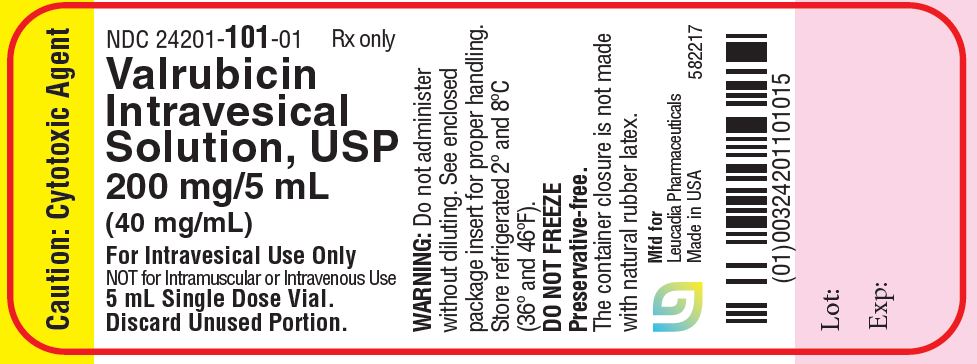
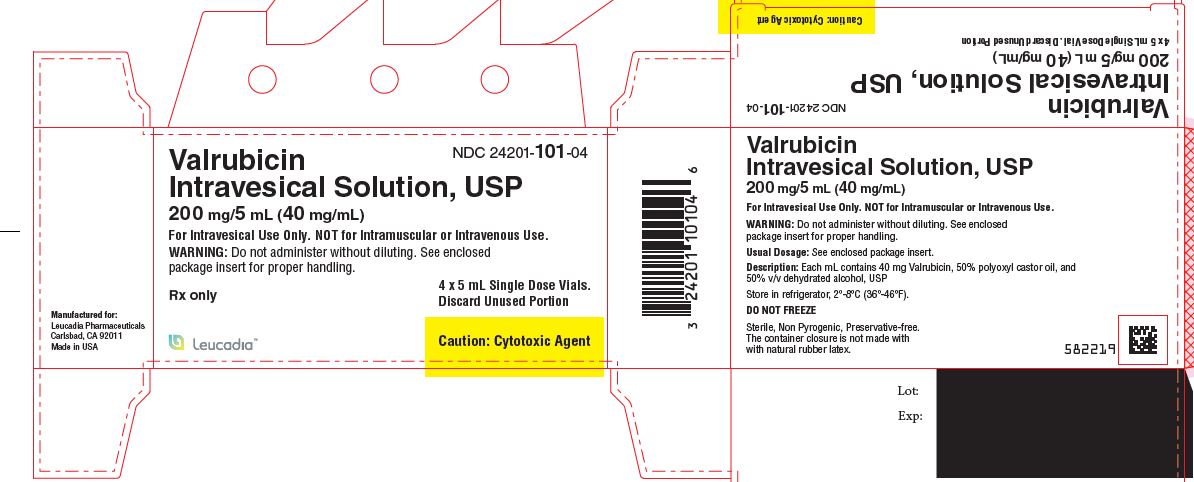
For each instillation, slowly allow four 5 mL vials (200 mg valrubicin/5 mL vial) to warm to room temperature, but do not heat. Withdraw 20 mL of valrubicin intravesical solution from the four vials and dilute with 55 mL of 0.9% Sodium Chloride Injection, USP to provide 75 mL of a diluted valrubicin intravesical solution. Valrubicin intravesical solution diluted in 0.9% Sodium Chloride Injection, USP for administration is stable for 12 hours at temperatures up to 25°C (77°F). Since compatibility data are not available, do not mix valrubicin intravesical solution with other drugs.
Insert a urethral catheter into the patient's bladder under aseptic conditions, drain the bladder, and instill the diluted 75 mL valrubicin intravesical solution slowly via gravity flow over a period of several minutes. Withdraw the catheter and retain valrubicin intravesical solution in the bladder for two hours before voiding. At the end of two hours, all patients should void. Some patients may be unable to retain the drug for the full two hours. Instruct patients to maintain adequate hydration following valrubicin intravesical solution treatment
[see Patient Counseling Information (
17)]
.