Dihydroergotamine Mesylate Spray
Product Images NDC 24201-463
View Photos of Packaging, Regulatory Labels, and Product Appearance
Product Visual Gallery
This gallery contains 5 technical images submitted to the FDA as part of the official labeling for Dihydroergotamine Mesylate (NDC 24201-463). Unlike standard consumer photos, these assets often include clinical data figures, molecular chemical structures, and official manufacturer packaging layouts.
As provided by Hikma Pharmaceuticals Usa Inc., these visuals offer a comprehensive scientific overview of the product's physical and chemical identity, aiding pharmacists and researchers in product verification and study.
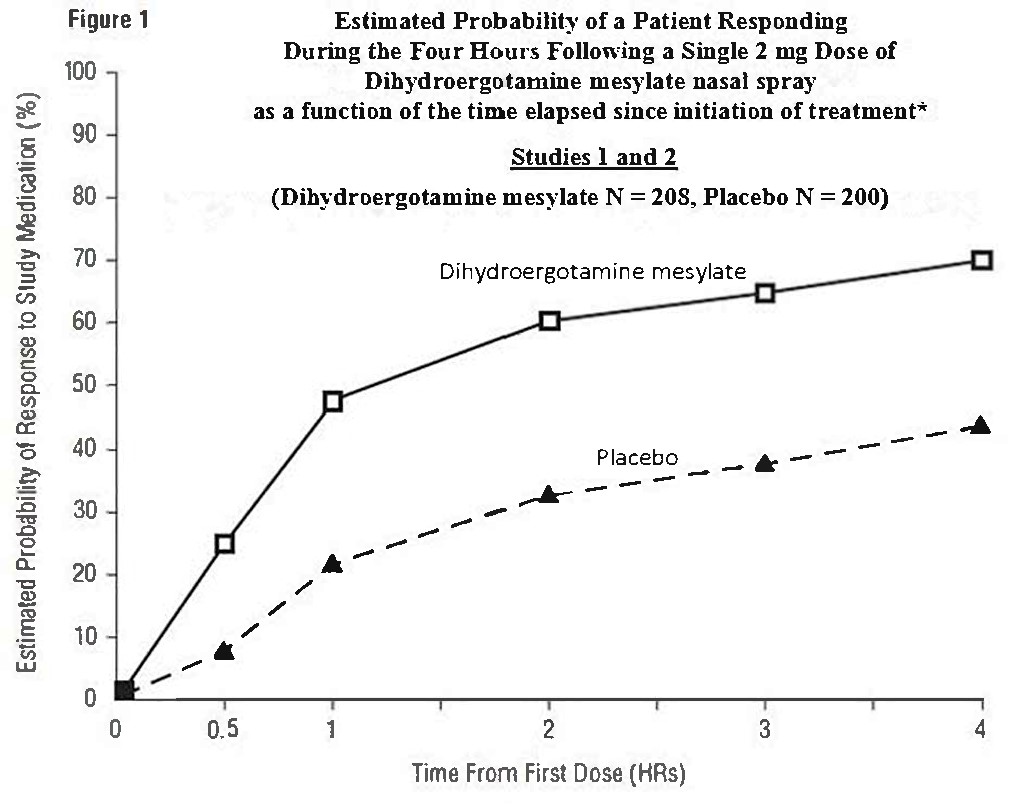
Figure1.jpg (Figure1 Updated)
The text describes a figure (Figure 1) that shows the estimated probability of a patient responding to a study medication (Dihydroergotamine mesylate nasal spray) as a function of time elapsed since the start of treatment. The study was conducted in two groups (Dihydroergotamine mesylate N=208, Placebo N=200) and the response was measured during the four hours following a single 2 mg dose of the medication. The figure shows a graph with the estimated probability of response to the medication over time. No information is provided on what kind of study was conducted or what the medication is intended to treat.*
Figure2.jpg (Figure2 Update)
This is a graph labeled "Figure 2" that shows the estimated probability of a patient responding to Dihydroergotamine mesylate nasal spray during the four hours following dosing. The x-axis indicates time measured in hours since the first dose, and the y-axis shows the probability of response as a percentage. The graph displays four curves representing response rates for Studies 3 and 4 of Dihydroergotamine mesylate (N=97) and placebo (N=100). The data suggest that Dihydroergotamine mesylate may improve patient response over placebo within the four hours following dosing.*
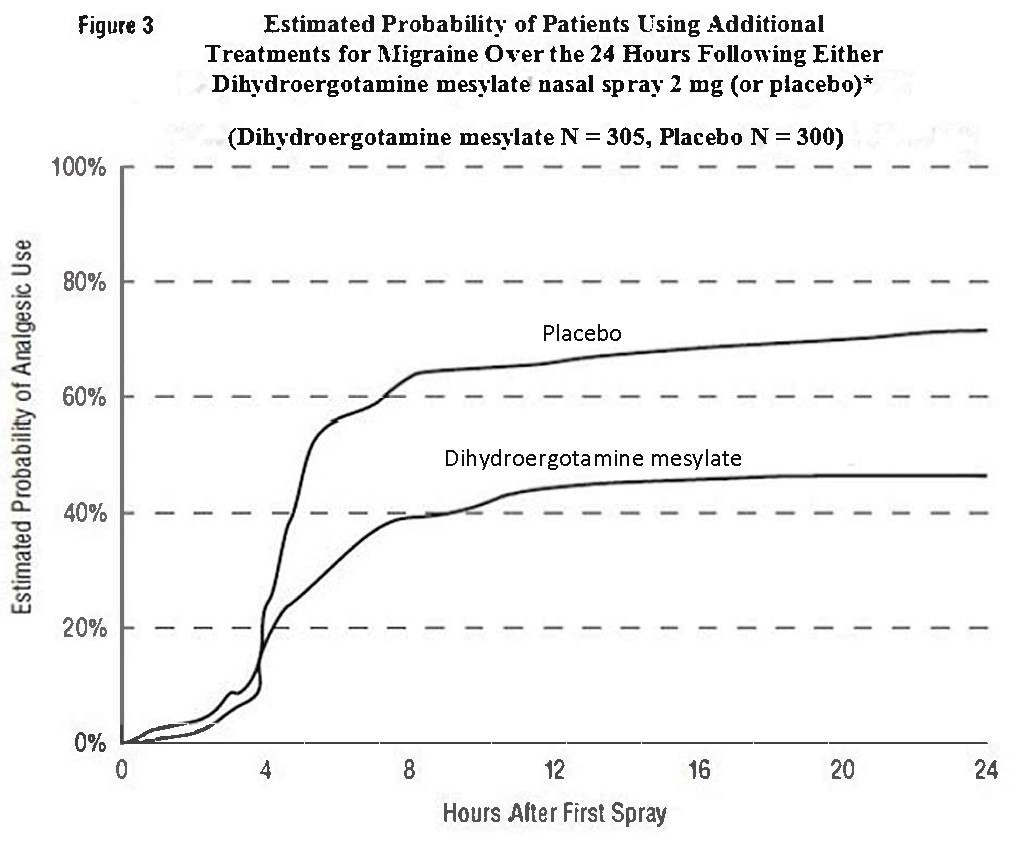
Figure3.jpg (Figure3 Update)
This is a graph depicting the estimated probability of patients using additional treatments for migraine after 24 hours. The study looks at patients who received either dihydroergotamine mesylate nasal spray 2 mg or a placebo and measures the probability of analgesic use. The x-axis denotes the hours after the first spray, while the y-axis represents the probability percentage. The graph has different colored lines, and each has a unique pattern. The labels indicate the placebo's probability of use (represented by a dotted line) and those who received dihydroergotamine mesylate nasal spray (represented by a solid line).*
4mg-ml-carton.jpg (Multi Pack Carton)
* These product label images have been analyzed using experimental machine learning. Please verify findings with the primary label text.