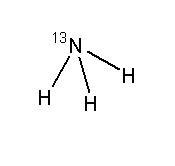
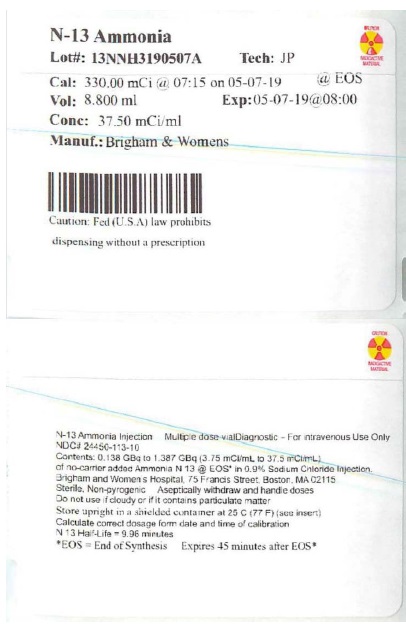
Following intravenous injection, Ammonia N 13 Injection is cleared from the blood with a biologic half-life of about 2.84 minutes (effective half-life of about 2.21 minutes). In the myocardium, its biologic half-life has been estimated to be less than 2 minutes (effective half-life less than 1.67 minutes).
The mass dose of Ammonia N 13 Injection is very small as compared to the normal range of ammonia in the blood (0.72-3.30 mg) in a healthy adult man [see Description(11.1)].
Plasma protein binding of ammonia N 13 or its N 13 metabolites has not been studied.
Ammonia N 13 undergoes a five-enzyme step metabolism in the liver to yield urea N 13 (the main circulating metabolite). It is also metabolized to glutamine N 13 (the main metabolite in tissues) by glutamine synthesis in the skeletal muscles, liver, brain, myocardium, and other organs. Other metabolites of ammonia N 13 include small amounts of N 13 amino acid anions (acidic amino acids) in the forms of glutamate N 13 or aspartate N 13.
Ammonia N 13 is eliminated from the body by urinary excretion mainly as urea N 13.
The pharmacokinetics of Ammonia N 13 Injection have not been studied in renally impaired, hepatically impaired, or pediatric patients.