Rosuvastatin Calcium Tablet
Product Images NDC 24658-261

View Photos of Packaging, Regulatory Labels, and Product Appearance

Product Visual Gallery

This gallery contains 19 technical images submitted to the FDA as part of the official labeling for Rosuvastatin Calcium (NDC 24658-261). Unlike standard consumer photos, these assets often include clinical data figures, molecular chemical structures, and official manufacturer packaging layouts.

As provided by Puracap Laboratories Llc Dba Blu Pharmaceuticals, these visuals offer a comprehensive scientific overview of the product's physical and chemical identity, aiding pharmacists and researchers in product verification and study.

FDA Label Image

10mg-90ct.jpg (10mg 90ct)
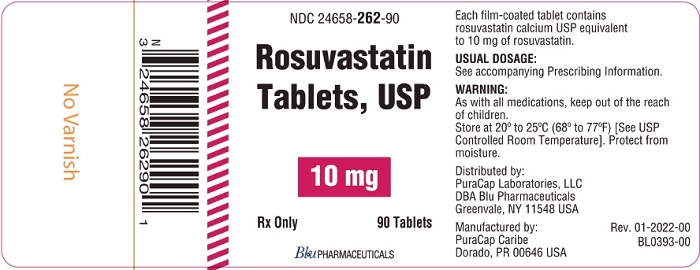
10mg-90ct.jpg (10mg 90ct)
Label for Rosuvastatin Tablets USP 10 mg oral tablets, packaged as 90 tablets. The label includes dosing information, storage instructions, and warnings, distributed by PuraCap Laboratories LLC DBA Blu Pharmaceuticals and manufactured by PuraCap Caribe in Dorado, Puerto Rico.*
FDA Label Image

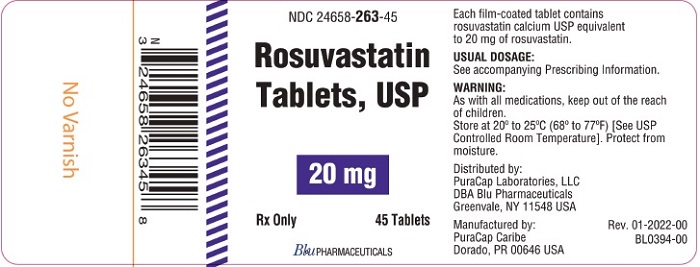
20mg-45ct.jpg (20mg 45ct)

20mg-45ct.jpg (20mg 45ct)
Label for Rosuvastatin Tablets, USP 20 mg oral tablets. The label indicates a package containing 45 tablets. It includes storage instructions, dosage advisory, and distributor information for PuraCap Laboratories LLC DBA Blu Pharmaceuticals. The label is primarily white with black and purple text.*
FDA Label Image

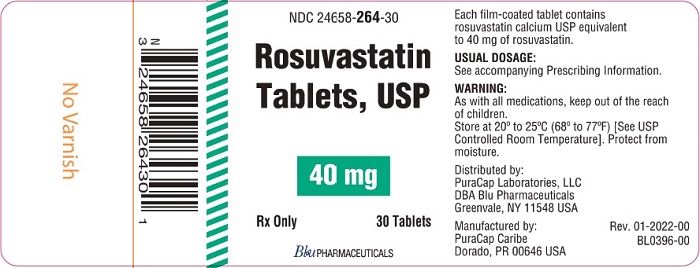
40mg-30ct.jpg (40mg 30ct)

40mg-30ct.jpg (40mg 30ct)
Label for Rosuvastatin Tablets USP 40 mg, film-coated oral tablets. The package contains 30 tablets and is labeled for prescription use only. Distributed by PuraCap Laboratories LLC DBA Blu Pharmaceuticals, Greenvale, NY, and manufactured by PuraCap Caribe, Dorado, PR. The label includes storage instructions and a dosage note referring to the prescribing information.*
FDA Label Image

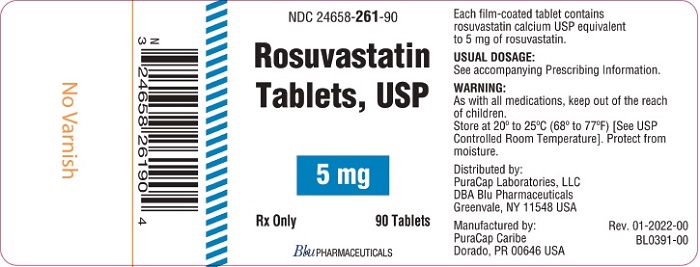
5mg-90ct.jpg (5mg 90ct)

5mg-90ct.jpg (5mg 90ct)
Label for Rosuvastatin Tablets, USP 5 mg oral tablets. The package contains 90 tablets for prescription use only. The label shows the NDC 24658-261-90 and lists PuraCap Laboratories LLC DBA Blu Pharmaceuticals as the distributor, with manufacturing by PuraCap Caribe. Storage instructions and warnings to keep out of children's reach are included.*
FDA Label Image

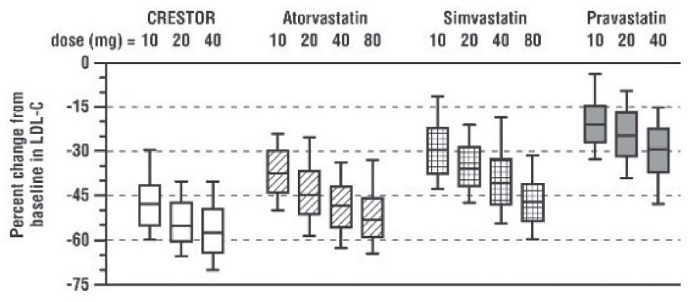
Figure1.jpg (Figure1)

Figure1.jpg (Figure1)
Box plot chart showing percent change from baseline in LDL-C levels for different doses of four statin drugs: CRESTOR (rosuvastatin) at 10, 20, and 40 mg; Atorvastatin at 10, 20, 40, and 80 mg; Simvastatin at 10, 20, 40, and 80 mg; and Pravastatin at 10, 20, and 40 mg. The y-axis measures percent change, ranging from 0 to -75%.*
FDA Label Image

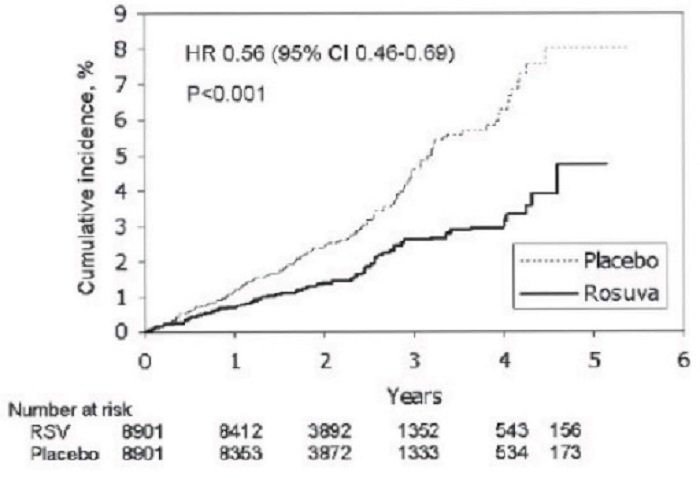
Figure2.jpg (Figure2)

Figure2.jpg (Figure2)
A cumulative incidence line graph comparing Rosuvastatin Calcium (Rosuva) and placebo over a period of 5 years. The x-axis represents years, and the y-axis shows cumulative incidence in percent. The solid line for Rosuvastatin shows a lower cumulative incidence than the dashed placebo line. The graph includes hazard ratio (HR 0.56) with 95% confidence interval (0.46-0.69) and a significance level (P<0.001). Below the graph, a table lists the number at risk for RSV and placebo groups at multiple time points.*
FDA Label Image

Figure3.jpg (Figure3)

Figure3.jpg (Figure3)
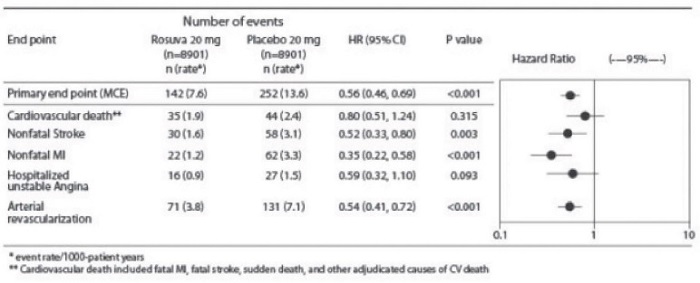
A forest plot chart showing hazard ratios comparing the effects of Rosuvastatin 20 mg versus placebo 20 mg on various cardiovascular endpoints, including major cardiovascular events (MCE), cardiovascular death, nonfatal stroke, nonfatal myocardial infarction (MI), hospitalized unstable angina, and arterial revascularization. The graph displays hazard ratios with 95% confidence intervals and p-values for each endpoint, illustrating the relative risk reduction or difference between the two groups.*
FDA Label Image

Structure-formula.jpg (Structure Formula)

Structure-formula.jpg (Structure Formula)
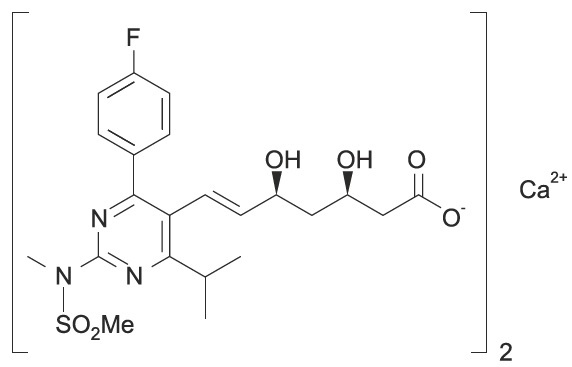
Chemical structure diagram of rosuvastatin calcium, showing its molecular components including fluorophenyl, sulfonamide, hydroxyl groups, and calcium ion complexation.*
FDA Label Image

Table1.jpg (Table1)

Table1.jpg (Table1)
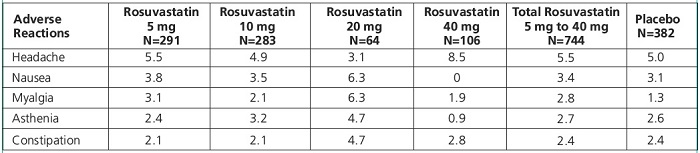
A table presenting adverse reaction rates for Rosuvastatin Calcium tablets at 5 mg, 10 mg, 20 mg, and 40 mg strengths compared to placebo. It lists the percentage of patients experiencing headache, nausea, myalgia, asthenia, and constipation across different dosages and total usage.*
FDA Label Image

Table10.jpg (Table10)

Table10.jpg (Table10)
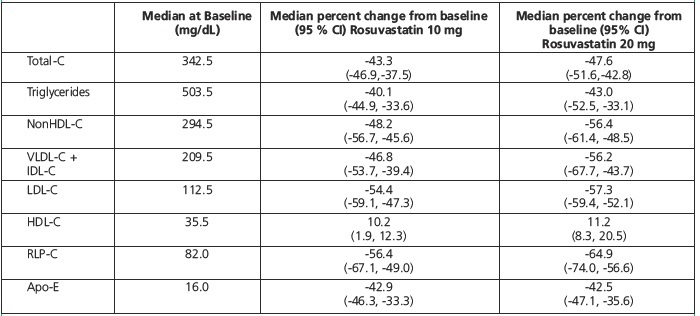
A data table showing median baseline values and median percent change from baseline for various lipid parameters. It compares these changes for Rosuvastatin 10 mg and 20 mg doses, including Total-C, Triglycerides, NonHDL-C, VLDL-C + IDL-C, LDL-C, HDL-C, RLP-C, and Apo-E, with 95% confidence intervals provided for the percent changes.*
FDA Label Image

Table12.jpg (Table12)

Table12.jpg (Table12)
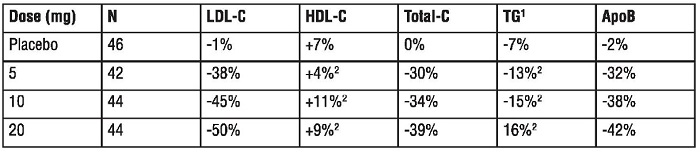
A data table showing dose-dependent changes in lipid parameters including LDL-C, HDL-C, Total-C, TG, and ApoB for placebo and rosuvastatin doses of 5 mg, 10 mg, and 20 mg. The table presents percentages for each parameter across doses, reflecting lipid profile effects.*
FDA Label Image

Table2.jpg (Table2)

Table2.jpg (Table2)
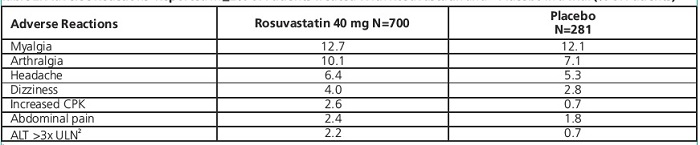
Data table comparing adverse reactions for Rosuvastatin 40 mg versus placebo in a study with 700 and 281 participants, respectively. It lists the percentage incidence of several adverse reactions including myalgia, arthralgia, headache, dizziness, increased CPK, abdominal pain, and elevated ALT levels.*
FDA Label Image

Table3.jpg (Table3)

Table3.jpg (Table3)
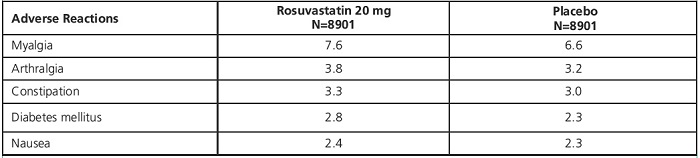
A data table comparing adverse reactions between Rosuvastatin 20 mg and placebo groups, listing the incidence percentages for myalgia, arthralgia, constipation, diabetes mellitus, and nausea.*
FDA Label Image

Table4.jpg (Table4)

Table4.jpg (Table4)
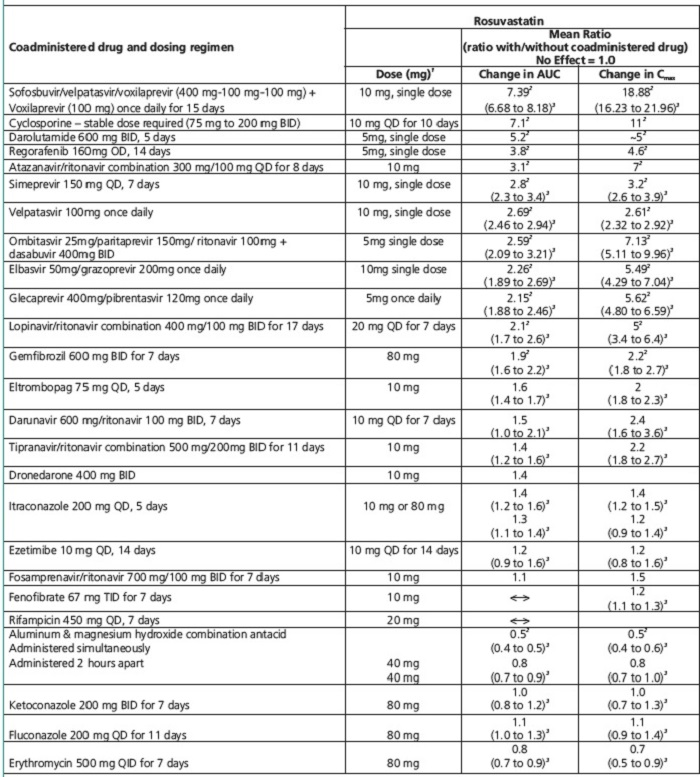
A data table listing various coadministered drugs and dosing regimens with Rosuvastatin. The table presents the Rosuvastatin dose (mg) and the mean ratio changes in AUC and Cmax when combined with these drugs, indicating interactions such as increases, decreases, or no effect. The coadministered drugs include antiviral agents, immunosuppressants, antifungals, and other medications, with dosing frequencies and duration specified.*
FDA Label Image

Table5.jpg (Table5)

Table5.jpg (Table5)
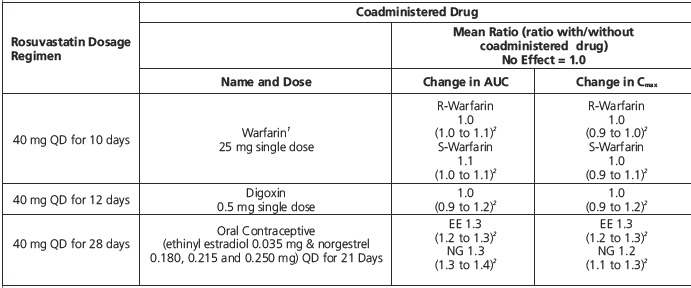
A data table showing the effect of coadministered drugs on rosuvastatin pharmacokinetics. It lists rosuvastatin dosage regimens of 40 mg daily for 10, 12, or 28 days, alongside coadministered drugs Warfarin, Digoxin, and Oral Contraceptive, with corresponding mean ratios for changes in AUC and Cmax values.*
FDA Label Image

Table6.jpg (Table6)

Table6.jpg (Table6)
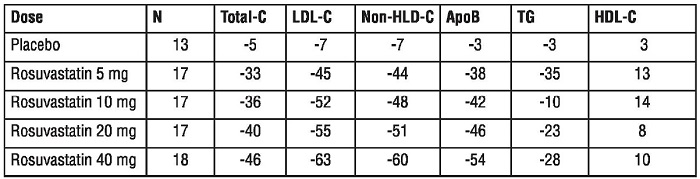
A data table showing the effects of various doses of Rosuvastatin (5 mg, 10 mg, 20 mg, 40 mg) compared to placebo on lipid profile parameters including Total Cholesterol (Total-C), LDL Cholesterol (LDL-C), Non-HDL Cholesterol (Non-HLD-C), Apolipoprotein B (ApoB), Triglycerides (TG), and HDL Cholesterol (HDL-C). The table lists the number of subjects (N) per dose group and the respective changes in lipid levels.*
FDA Label Image

Table7.jpg (Table7)

Table7.jpg (Table7)
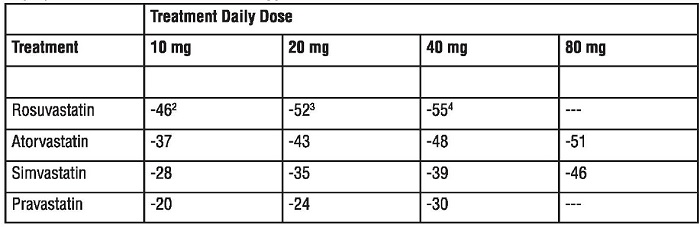
A data table presenting treatment daily doses for four statin drugs: Rosuvastatin, Atorvastatin, Simvastatin, and Pravastatin across four dose levels: 10 mg, 20 mg, 40 mg, and 80 mg. The table shows numerical values for each drug at the respective dosages, with some missing entries indicated by dashes.*
FDA Label Image

Table8.jpg (Table8)

Table8.jpg (Table8)
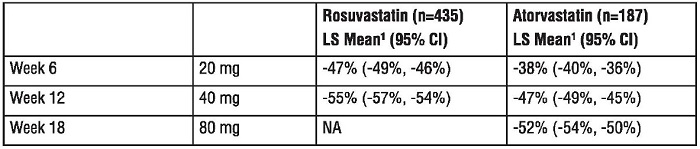
A data table comparing the least squares mean percent changes and 95% confidence intervals for Rosuvastatin and Atorvastatin at different weeks and dosages. It shows results at Week 6 (20 mg), Week 12 (40 mg), and Week 18 (80 mg, only for Atorvastatin).*
FDA Label Image

Table9.jpg (Table9)

Table9.jpg (Table9)
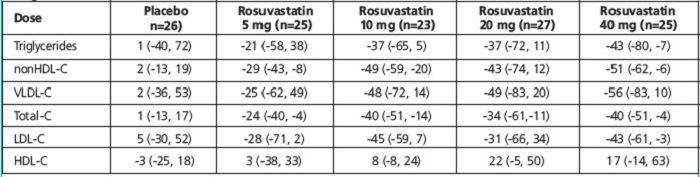
A data table comparing lipid profile changes including Triglycerides, non-HDL-C, VLDL-C, Total-C, LDL-C, and HDL-C across different doses of Rosuvastatin (5 mg, 10 mg, 20 mg, 40 mg) versus placebo. Values indicate changes and ranges for each parameter and dose group.*

* About these descriptions: Image descriptions on this page are generated by automated AI analysis of the product label images from the manufacturer's FDA label submission (SPL). They are provided for reference only and may contain errors or omissions. Always rely on the printed label itself and the official FDA labeling, and consult a pharmacist or healthcare professional with any questions about this product.