Other
(Patient Information Included)
SAGENT®
Rx only
First-Line Data: The safety and efficacy of paclitaxel followed by cisplatin in patients with advanced ovarian cancer and no prior chemotherapy were evaluated in 2, Phase 3 multicenter, randomized, controlled trials. In an Intergroup study led by the European Organization for Research and Treatment of Cancer involving the Scandinavian Group NOCOVA, the National Cancer Institute of Canada, and the Scottish Group, 680 patients with Stage IIB-C, III, or IV disease (optimally or non-optimally debulked) received either paclitaxel 175 mg/m2 infused over 3 hours followed by cisplatin 75 mg/m2 (Tc) or cyclophosphamide 750 mg/m2 followed by cisplatin 75 mg/m2 (Cc) for a median of 6 courses. Although the protocol allowed further therapy, only 15% received both drugs for 9 or more courses. In a study conducted by the Gynecological Oncology Group (GOG), 410 patients with Stage III or IV disease (>1 cm residual disease after staging laparotomy or distant metastases) received either paclitaxel 135 mg/m2 infused over 24 hours followed by cisplatin 75 mg/m2 or cyclophosphamide 750 mg/m2 followed by cisplatin 75 mg/m2 for 6 courses.
In both studies, patients treated with paclitaxel in combination with cisplatin had significantly higher response rate, longer time to progression, and longer survival time compared with standard therapy. These differences were also significant for the subset of patients in the intergroup study with non-optimally debulked disease, although the study was not fully powered for subset analyses (Tables 2A and 2B). Kaplan-Meier survival curves for each study are shown in Figures 1 and 2.
| Intergroup (non-optimally debulked subset) | GOG-111 | |||||
|---|---|---|---|---|---|---|
| T175/3a c75 (n=218) | C750a c75 (n=227) | T135/24a
c75 (n=196) | C750a c75 (n=214) | |||
a Paclitaxel dose in mg /m2/infusion duration in hours; cyclophosphamide and cisplatin doses in mg/m2. | ||||||
b Among patients with measurable disease only. | ||||||
c Unstratified for the Intergroup Study, Stratified for Study GOG-111. | ||||||
| • Clinical Responseb - rate (percent) - p-valuec | (n=153) 58 | 0.016 | (n=153) 43 | (n=113) 62 | 0.04 | (n=127) 48 |
| • Time to Progression - median (months) - p-valuec - hazard ratio (HR)c - 95% CIc | 13.2 | 0.0060 0.76 0.62 to 0.92 | 9.9 | 16.6 | 0.0008 0.70 0.56 to 0.86 | 13.0 |
| • Survival - median (months) - p-valuec - hazard ratio (HR)c - 95% CIc | 29.5 | 0.0057 73 0.58 to 0.91 | 21.9 | 35.5 | 0.0002 0.64 0.50 to 0.81 | 24.2 |
a Paclitaxel dose in mg/m2/infusion duration in hours; cyclophosphamide and cisplatin doses in mg/m2. | |||
b Among patients with measurable disease only. | |||
c Unstratified. | |||
| T175/3a c75 (n=342) | C750a c75 (n=338) | ||
| • Clinical Responseb - rate (percent) - p-valuec | (n=162) 59 | 0.014 | (n=161) 45 |
| • Time to Progression - median (months) - p-valuec - hazard ratio (HR)c - 95% CIc | 15.3 | 0.0005 0.74 0.63 to 0.88 | 11.5 |
| • Survival - median (months) - p-valuec - hazard ratio (HR)c - 95% CIc | 35.6 | 0.0016 0.73 0.60 to 0.89 | 25.9 |
Figure 1. Survival: Cc Versus Tc (Intergroup)
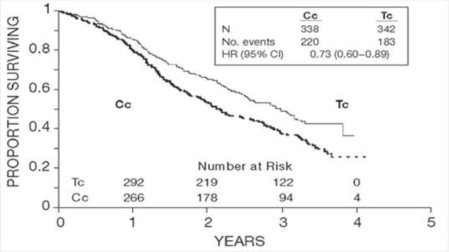
Figure 1 (Pac0j 0000 02)
Figure 2. Survival: Cc Versus Tc (GOG-111)

Figure 2 (Pac0j 0000 03)
The adverse event profile for patients receiving paclitaxel in combination with cisplatin in these studies was qualitatively consistent with that seen for the pooled analysis of data from 812 patients treated with single-agent paclitaxel in 10 clinical studies. These adverse events and adverse events from the Phase 3 first-line ovarian carcinoma studies are described in the ADVERSE REACTIONS section in tabular (Tables 10 and 11) and narrative form.
Second-Line Data: Data from five Phase 1 & 2 clinical studies (189 patients), a multicenter randomized Phase 3 study (407 patients), as well as an interim analysis of data from more than 300 patients enrolled in a treatment referral center program were used in support of the use of paclitaxel in patients who have failed initial or subsequent chemotherapy for metastatic carcinoma of the ovary. Two of the Phase 2 studies (92 patients) utilized an initial dose of 135 to 170 mg/m2 in most patients (>90%) administered over 24 hours by continuous infusion. Response rates in these two studies were 22% (95% CI: 11% to 37%) and 30% (95% CI: 18% to 46%) with a total of 6 complete and 18 partial responses in 92 patients. The median duration of overall response in these two studies measured from the first day of treatment was 7.2 months (range: 3.5 to 15.8 months) and 7.5 months (range: 5.3 to 17.4 months), respectively. The median survival was 8.1 months (range: 0.2 to 36.7 months) and 15.9 months (range: 1.8 to 34.5+ months).
The Phase 3 study had a bifactorial design and compared the efficacy and safety of paclitaxel, administered at two different doses (135 or 175 mg/m2 and schedules (3- or 24-hour infusion). The overall response rate for the 407 patients was 16.2% (95% CI: 12.8% to 20.2%), with 6 complete and 60 partial responses. Duration of response, measured from the first day of treatment was 8.3 months (range: 3.2 to 21.6 months). Median time to progression was 3.7 months (range: 0.1+ to 25.1+ months). Median survival was 11.5 months (range: 0.2 to 26.3+ months).
Response rates, median survival, and median time to progression for the 4 arms are given in the following table.
| 175/3 (n=96) | 175/24 (n=106) | 135/3 (n=99) | 135/24 (n=106) | |
| • Response - rate (percent) - 95% Confidence Interval | 14.6 (8.5 to 23.6) | 21.7 (14.5 to 31.0) | 15.2 (9.0 to 24.1) | 13.2 (7.7 to 21.5) |
| • Time to Progression - median (months) - 95% Confidence Interval | 4.4 (3.0 to 5.6) | 4.2 (3.5 to 5.1) | 3.4 (2.8 to 4.2) | 2.8 (1.9 to 4.0) |
| • Survival - median (months) - 95% Confidence Interval | 11.5 (8.4 to 14.4) | 11.8 (8.9 to 14.6) | 13.1 (9.1 to 14.6) | 10.7 (8.1 to 13.6) |
Analyses were performed as planned by the bifactorial study design described in the protocol, by comparing the two doses (135 or 175 mg/m2) irrespective of the schedule (3 or 24 hours) and the two schedules irrespective of dose. Patients receiving the 175 mg/m2 dose had a response rate similar to that for those receiving the 135 mg/m2 dose: 18% vs. 14% (p=0.28). No difference in response rate was detected when comparing the 3-hour with the 24-hour infusion: 15% vs. 17% (p=0.50). Patients receiving the 175 mg/m2 dose of paclitaxel had a longer time to progression than those receiving the 135 mg/m2 dose: median 4.2 vs. 3.1 months (p=0.03). The median time to progression for patients receiving the 3-hour vs. the 24-hour infusion was 4.0 months vs. 3.7 months, respectively. Median survival was 11.6 months in patients receiving the 175 mg/m2 dose of paclitaxel and 11.0 months in patients receiving the 135 mg/m2 dose (p=0.92). Median survival was 11.7 months for patients receiving the 3-hour infusion of paclitaxel and 11.2 months for patients receiving the 24-hour infusion (p=0.91). These statistical analyses should be viewed with caution because of the multiple comparisons made.
Paclitaxel remained active in patients who had developed resistance to platinum-containing therapy (defined as tumor progression while on, or tumor relapse within 6 months from completion of, a platinum-containing regimen) with response rates of 14% in the Phase 3 study and 31% in the Phase 1 & 2 clinical studies.
The adverse event profile in this Phase 3 study was consistent with that seen for the pooled analysis of data from 812 patients treated in 10 clinical studies. These adverse events and adverse events from the Phase 3 second-line ovarian carcinoma study are described in the ADVERSE REACTIONS section in tabular (Tables 10 and 12) and narrative form.
The results of this randomized study support the use of Paclitaxel Injection, USP at doses of 135 to 175 mg/m2, administered by a 3-hour intravenous infusion. The same doses administered by 24-hour infusion were more toxic. However, the study had insufficient power to determine whether a particular dose and schedule produced superior efficacy.
After Failure of Initial Chemotherapy: Data from 83 patients accrued in three Phase 2 open label studies and from 471 patients enrolled in a Phase 3 randomized study were available to support the use of paclitaxel in patients with metastatic breast carcinoma.
Phase 2 Open Label Studies: Two studies were conducted in 53 patients previously treated with a maximum of one prior chemotherapeutic regimen. Paclitaxel was administered in these two trials as a 24-hour infusion at initial doses of 250 mg/m2 (with G-CSF support) or 200 mg/m2. The response rates were 57% (95% CI: 37% to 75%) and 52% (95% CI: 32% to 72%), respectively. The third Phase 2 study was conducted in extensively pretreated patients who had failed anthracycline therapy and who had received a minimum of two chemotherapy regimens for the treatment of metastatic disease. The dose of paclitaxel was 200 mg/m2 as a 24-hour infusion with G-CSF support. Nine of 30 patients achieved a partial response, for a response rate of 30% (95% CI: 15% to 50%).
Phase 3 Randomized Study: This multicenter trial was conducted in patients previously treated with one or two regimens of chemotherapy. Patients were randomized to receive paclitaxel at a dose of either 175 mg/m2 or 135 mg/m2 given as a 3-hour infusion. In the 471 patients enrolled, 60% had symptomatic disease with impaired performance status at study entry, and 73% had visceral metastases. These patients had failed prior chemotherapy either in the adjuvant setting (30%), the metastatic setting (39%), or both (31%). Sixty-seven percent of the patients had been previously exposed to anthracyclines and 23% of them had disease considered resistant to this class of agents.
The overall response rate for the 454 evaluable patients was 26% (95% CI: 22% to 30%), with 17 complete and 99 partial responses. The median duration of response, measured from the first day of treatment, was 8.1 months (range: 3.4 to 18.1+ months). Overall for the 471 patients, the median time to progression was 3.5 months (range: 0.03 to 17.1 months). Median survival was 11.7 months (range: 0 to 18.9 months).
Response rates, median survival and median time to progression for the 2 arms are given in the following table.
| 175/3 (n=235) | 135/3 (n=236) | ||
| • Response - rate (percent) - p-value | 28 | 0.135 | 22 |
| • Time to Progression - median (months) - p-value | 4.2 | 0.027 | 3.0 |
| • Survival - median (months) - p-value | 11.7 | 0.321 | 10.5 |
The adverse event profile of the patients who received single-agent Paclitaxel Injection, USP, in the Phase 3 study was consistent with that seen for the pooled analysis of data from 812 patients treated in 10 clinical studies. These adverse events and adverse events from the Phase 3 breast carcinoma study are described in the ADVERSE REACTIONS section in tabular (Tables 10 and 14) and narrative form.
Efficacy: The efficacy of paclitaxel was evaluated by assessing cutaneous tumor response according to the amended ACTG criteria and by seeking evidence of clinical benefit in patients in 6 domains of symptoms and/or conditions that are commonly related to AIDS-related Kaposi's sarcoma.
Cutaneous Tumor Response (Amended ACTG Criteria): The objective response rate was 59% (95% CI, 46% to 72%) (35 of 59 patients) in patients with prior systemic therapy. Cutaneous responses were primarily defined as flattening of more than 50% of previously raised lesions.
| Prior Systemic Therapy (n=59) | |
| Complete response | 3 |
| Partial response | 56 |
| Stable disease | 29 |
| Progression | 8 |
| Early death/toxicity | 3 |
The median time to response was 8.1 weeks and the median duration of response measured from the first day of treatment was 10.4 months (95% CI, 7.0 to 11.0 months) for the patients who had previously received systemic therapy. The median time to progression was 6.2 months (95% CI, 4.6 to 8.7 months).
Additional Clinical Benefit: Most data on patient benefit were assessed retrospectively (plans for such analyses were not included in the study protocols). Nonetheless, clinical descriptions and photographs indicated clear benefit in some patients, including instances of improved pulmonary function in patients with pulmonary involvement, improved ambulation, resolution of ulcers, and decreased analgesic requirements in patients with Kaposi's sarcoma (KS) involving the feet and resolution of facial lesions and edema in patients with KS involving the face, extremities, and genitalia.
Safety: The adverse event profile of paclitaxel administered to patients with advanced HIV disease and poor-risk AIDS-related Kaposi's sarcoma was generally similar to that seen in the pooled analysis of data from 812 patients with solid tumors. These adverse events and adverse events from the Phase 2 second-line Kaposi's sarcoma studies are described in the ADVERSE REACTIONS section in tabular (Tables 10 and 16) and narrative form. In this immunosuppressed patient population, however, a lower dose intensity of paclitaxel and supportive therapy including hematopoietic growth factors in patients with severe neutropenia are recommended. Patients with AIDS-related Kaposi's sarcoma may have more severe hematologic toxicities than patients with solid tumors.
Pregnancy: Paclitaxel can cause fetal harm when administered to a pregnant woman. Administration of paclitaxel during the period of organogenesis to rabbits at doses of 3.0 mg/kg/day (about 0.2 the daily maximum recommended human dose on a mg/m2 basis) caused embryo- and fetotoxicity, as indicated by intrauterine mortality, increased resorptions, and increased fetal deaths. Maternal toxicity was also observed at this dose. No teratogenic effects were observed at 1.0 mg/kg/day (about 1/15 the daily maximum recommended human dose on a mg/m2 basis); teratogenic potential could not be assessed at higher doses due to extensive fetal mortality.
There are no adequate and well-controlled studies in pregnant women. If paclitaxel is used during pregnancy, or if the patient becomes pregnant while receiving this drug, the patient should be apprised of the potential hazard to the fetus. Women of childbearing potential should be advised to avoid becoming pregnant.
Hematology: Paclitaxel therapy should not be administered to patients with baseline neutrophil counts of less than 1,500 cells/mm3. In order to monitor the occurrence of myelotoxicity, it is recommended that frequent peripheral blood cell counts be performed on all patients receiving paclitaxel. Patients should not be retreated with subsequent cycles of paclitaxel until neutrophils recover to a level >1,500 cells/mm3 and platelets recover to a level >100,000 cells/mm3. In the case of severe neutropenia (<500 cells/mm3 for seven days or more) during a course of paclitaxel therapy, a 20% reduction in dose for subsequent courses of therapy is recommended.
For patients with advanced HIV disease and poor-risk AIDS-related Kaposi's sarcoma, paclitaxel, at the recommended dose for this disease, can be initiated and repeated if the neutrophil count is at least 1,000 cells/mm3.
Hypersensitivity Reactions: Patients with a history of severe hypersensitivity reactions to products containing Polyoxyl 35 Castor Oil, NF (e.g., cyclosporin for injection concentrate and teniposide for injection concentrate) should not be treated with paclitaxel. In order to avoid the occurrence of severe hypersensitivity reactions, all patients treated with paclitaxel should be premedicated with corticosteroids (such as dexamethasone), diphenhydramine and H2 antagonists (such as cimetidine or ranitidine). Minor symptoms such as flushing, skin reactions, dyspnea, hypotension, or tachycardia do not require interruption of therapy. However, severe reactions, such as hypotension requiring treatment, dyspnea requiring bronchodilators, angioedema, or generalized urticaria require immediate discontinuation of paclitaxel and aggressive symptomatic therapy. Patients who have developed severe hypersensitivity reactions should not be rechallenged with paclitaxel.
Cardiovascular: Hypotension, bradycardia, and hypertension have been observed during administration of Paclitaxel Injection, USP, but generally do not require treatment. Occasionally paclitaxel infusions must be interrupted or discontinued because of initial or recurrent hypertension. Frequent vital sign monitoring, particularly during the first hour of paclitaxel infusion, is recommended. Continuous cardiac monitoring is not required except for patients with serious conduction abnormalities. (See WARNINGS section.) When paclitaxel is used in combination with doxorubicin for treatment of metastatic breast cancer, monitoring of cardiac function is recommended. (See ADVERSE REACTIONS.)
Nervous System: Although the occurrence of peripheral neuropathy is frequent, the development of severe symptomatology is unusual and requires a dose reduction of 20% for all subsequent courses of paclitaxel.
Paclitaxel contains Dehydrated Alcohol USP, 396 mg/mL; consideration should be given to possible CNS and other effects of alcohol. (See PRECAUTIONS: Pediatric Use section.)
Hepatic: There is limited evidence that the myelotoxicity of Paclitaxel may be exacerbated in patients with serum total bilirubin >2 times ULN (See CLINICAL PHARMACOLOGY). Extreme caution should be exercised when administering Paclitaxel to such patients, with dose reduction as recommended in DOSAGE AND ADMINISTRATION, TABLE 17.
Injection Site Reaction: Injection site reactions, including reactions secondary to extravasation, were usually mild and consisted of erythema, tenderness, skin discoloration, or swelling at the injection site. These reactions have been observed more frequently with the 24-hour infusion than with the 3-hour infusion. Recurrence of skin reactions at a site of previous extravasation following administration of paclitaxel at a different site, i.e., “recall”, has been reported.
More severe events such as phlebitis, cellulitis, induration, skin exfoliation, necrosis, and fibrosis have been reported. In some cases the onset of the injection site reaction either occurred during a prolonged infusion or was delayed by a week to ten days.
A specific treatment for extravasation reactions is unknown at this time. Given the possibility of extravasation, it is advisable to closely monitor the infusion site for possible infiltration during drug administration.
First-Line Ovary in Combination: For the 1084 patients who were evaluable for safety in the Phase 3 first-line ovary combination therapy studies, Table 11 shows the incidence of important adverse events. For both studies, the analysis of safety was based on all courses of therapy (6 courses for the GOG-111 study and up to 9 courses for the Intergroup study).
a Based on worst course analysis. | |||||
b Paclitaxel (T) dose in mg/m2/infusion duration in hours. | |||||
c Cyclophosphamide (C) or cisplatin (c) dose in mg/m2. | |||||
d p<0.05 by Fisher exact test. | |||||
e <130,000/mm3 in the Intergroup study. | |||||
f <12 g/dL in the Intergroup study. | |||||
g All patients received premedication. | |||||
h In the GOG-111 study, neurotoxicity was collected as peripheral neuropathy and in the Intergroup study, neurotoxicity was collected as either neuromotor or neurosensory symptoms. | |||||
† Severe events are defined as at least Grade III toxicity. | |||||
NC Not Collected | |||||
| Percent of Patients | |||||
| Intergroup | GOG-111 | ||||
| T175/3b
c75c (n=339) | C750c
c75c
(n=336) | T135/24b
c75c (n=196) | C750c c75c (n=213) | ||
| • Bone Marrow | |||||
| - Neutropenia | <2,000/mm3 | 91d | 95d | 96 | 92 |
| <500/mm3 | 33d | 43d | 81d | 58d | |
| - Thrombocytopenia | <100,000/mm3e | 21d | 33d | 26 | 30 |
| <50,000/mm3 | 3d | 7d | 10 | 9 | |
| - Anemia | <11 g/dLf | 96 | 97 | 88 | 86 |
| <8 g/dL | 3d | 8d | 13 | 9 | |
| - Infections | 25 | 27 | 21 | 15 | |
| - Febrile Neutropenia | 4 | 7 | 15d | 4d | |
| • Hypersensitivity Reaction - All - Severe† | 11d 1 | 6d 1 | 8d,g 3d,g | 1d,g –d,g | |
| • Neurotoxicityh - Any symptoms - Severe symptoms† | 87d 21d | 52d 2d | 25 3d | 20 –d | |
| • Nausea and Vomiting - Any symptoms - Severe symptoms† | 88 18 | 93 24 | 65 10 | 69 11 | |
| • Myalgia/Arthralgia - Any symptoms - Severe symptoms† | 60d 6d | 27d 1d | 9d 1 | 2d – | |
| • Diarrhea - Any symptoms - Severe symptoms† | 37d 2 | 29d 3 | 16d 4 | 8d 1 | |
| • Asthenia - Any symptoms - Severe symptoms† | NC NC | NC NC | 17d 1 | 10d 1 | |
| • Alopecia - Any symptoms - Severe symptoms† | 96d 51d | 89d 21d | 55d 6 | 37d 8 | |
Second-Line Ovary: For the 403 patients who received single-agent Paclitaxel Injection, USP in the Phase 3 second-line ovarian carcinoma study, the following table shows the incidence of important adverse events.
a Based on worst course analysis. | |||||
b Paclitaxel dose in mg/m2/infusion duration in hours | |||||
c All patients received premedication. | |||||
† Severe events are defined as at least Grade III toxicity. | |||||
| Percent of Patients | |||||
| 175/3b (n=95) | 175/24b (n=105) | 135/3b (n=98) | 135/24b (n=105) | ||
| • Bone Marrow | |||||
| - Neutropenia | <2,000/mm3 | 78 | 98 | 78 | 98 |
| <500/mm3 | 27 | 75 | 14 | 67 | |
| - Thrombocytopenia | <100,000/mm3 | 4 | 18 | 8 | 6 |
| <50,000/mm3 | 1 | 7 | 2 | 1 | |
| - Anemia | <11 g/dL | 84 | 90 | 68 | 88 |
| <8 g/dL | 11 | 12 | 6 | 10 | |
| - Infections | 26 | 29 | 20 | 18 | |
| • Hypersensitivity Reactionc - All - Severe† | 41 2 | 45 0 | 38 2 | 45 1 | |
| • Peripheral Neuropathy - Any symptoms - Severe symptoms† | 63 1 | 60 2 | 55 0 | 42 0 | |
| • Mucositis - Any symptoms - Severe symptoms† | 17 0 | 35 3 | 21 0 | 25 2 | |
Myelosuppression was dose and schedule related, with the schedule effect being more prominent. The development of severe hypersensitivity reactions (HSRs) was rare; 1% of the patients and 0.2% of the courses overall. There was no apparent dose or schedule effect seen for the HSRs. Peripheral neuropathy was clearly dose-related, but schedule did not appear to affect the incidence.
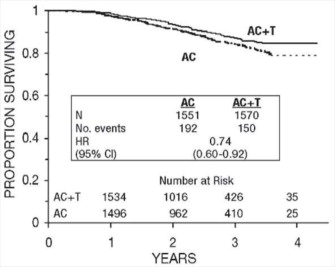
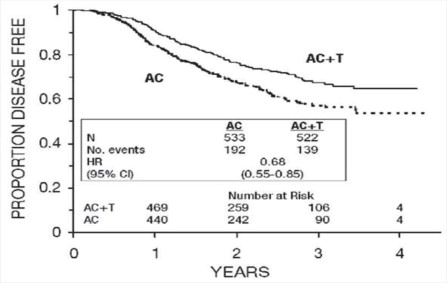
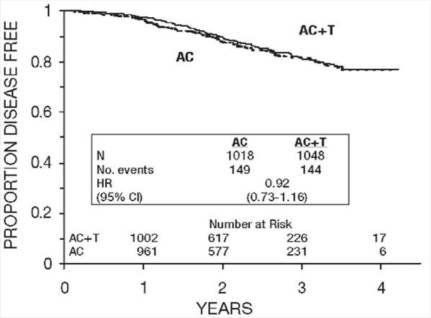
Adjuvant Breast: For the Phase 3 adjuvant breast carcinoma study, the following table shows the incidence of important severe adverse events for the 3121 patients (total population) who were evaluable for safety as well as for a group of 325 patients (early population) who, per the study protocol, were monitored more intensively than other patients.
a Based on worst course analysis. | |||||
b Severe events are defined as at least Grade III toxicity. | |||||
c Patients received 600 mg /m2 cyclophosphamide and doxorubicin (AC) at doses of either | |||||
60 mg/m2, 75 mg/m2, or 90 mg/m2 (with prophylactic G-CSF support and ciprofloxacin), | |||||
every 3 weeks for 4 courses. | |||||
d Paclitaxel (T) following 4 courses of AC at a dose of 175 mg/m2/3 hours every 3 weeks | |||||
for 4 courses. | |||||
e The incidence of febrile neutropenia was not reported in this study. | |||||
f All patients were to receive premedication. | |||||
| Percent of Patients | |||||
| Early Population | Total Population | ||||
ACc (n=166) | ACc followed by Td (n=159) | ACc (n=1551) | ACc followed by Td (n=1570) | ||
| • Bone Marrowe | |||||
| - Neutropenia | <500/mm3 | 79 | 76 | 48 | 50 |
| - Thrombocytopenia | <50,000/mm3 | 27 | 25 | 11 | 11 |
| - Anemia | <8 g/dL | 17 | 21 | 8 | 8 |
| - Infections | 6 | 14 | 5 | 6 | |
| - Fever Without Infection | – | 3 | <1 | 1 | |
| • Hypersensitivity Reactionf | 1 | 4 | 1 | 2 | |
| • Cardiovascular Events | 1 | 2 | 1 | 2 | |
| • Neuromotor Toxicity | 1 | 1 | <1 | 1 | |
| • Neurosensory Toxicity | – | 3 | <1 | 3 | |
| • Myalgia/Arthralgia | – | 2 | <1 | 2 | |
| • Nausea/Vomiting | 13 | 18 | 8 | 9 | |
| • Mucositis | 13 | 4 | 6 | 5 | |
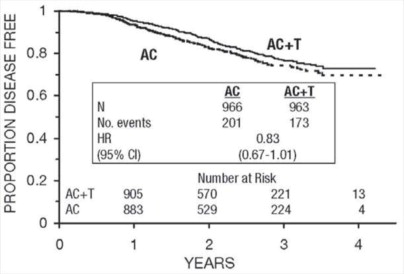
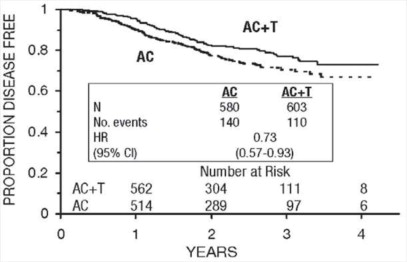
The incidence of an adverse event for the total population likely represents an underestimation of the actual incidence given that safety data were collected differently based on enrollment cohort. However, since safety data were collected consistently across regimens, the safety of the sequential addition of paclitaxel following AC therapy may be compared with AC therapy alone. Compared to patients who received AC alone, patients who received AC followed by paclitaxel experienced more Grade III/IV neurosensory toxicity, more Grade III/IV myalgia/arthralgia, more Grade III/IV neurologic pain (5% vs 1%), more Grade III/IV flu-like symptoms (5% vs 3%), and more Grade III/IV hyperglycemia (3% vs 1%). During the additional 4 courses of treatment with paclitaxel, 2 deaths (0.1%) were attributed to treatment. During paclitaxel treatment, Grade IV neutropenia was reported for 15% of patients, Grade II/III neurosensory toxicity for 15%, Grade II/III myalgias for 23%, and alopecia for 46%.
The incidences of severe hematologic toxicities, infections, mucositis, and cardiovascular events increased with higher doses of doxorubicin.
Breast Cancer After Failure of Initial Chemotherapy: For the 458 patients who received single-agent paclitaxel in the Phase 3 breast carcinoma study, the following table shows the incidence of important adverse events by treatment arm (each arm was administered by a 3-hour infusion).
a Based on worst course analysis. | |||
b Paclitaxel dose in mg/m2/infusion duration in hours. | |||
c All patients received premedication. | |||
† Severe events are defined as at least Grade III Toxicity. | |||
| Percent of Patients | |||
| 175/3b (n=229) | 135/3b (n=229) | ||
| • Bone Marrow | |||
| - Neutropenia | <2,000/mm3 | 90 | 81 |
| <500/mm3 | 28 | 19 | |
| - Thrombocytopenia | <100,000/mm3 | 11 | 7 |
| <50,000/mm3 | 3 | 2 | |
| - Anemia | <11 g/dL | 55 | 47 |
| <8 g/dL | 4 | 2 | |
| - Infections | 23 | 15 | |
| - Febrile Neutropenia | 2 | 2 | |
| • Hypersensitivity Reactionc - All - Severe† | 36 0 | 31 <1 | |
| • Peripheral Neuropathy - Any symptoms - Severe symptoms† | 70 7 | 46 3 | |
| • Mucositis - Any symptoms - Severe symptoms† | 23 3 | 17 <1 | |
Myelosuppression and peripheral neuropathy were dose related. There was one severe hypersensitivity reaction (HSR) observed at the dose of 135 mg/m2.
First-Line NSCLC in Combination: In the study conducted by the Eastern Cooperative Oncology Group (ECOG), patients were randomized to either paclitaxel (T) 135 mg/m2 as a 24-hour infusion in combination with cisplatin (c) 75 mg/m2, paclitaxel (T) 250 mg/m2 as a 24-hour infusion in combination with cisplatin (c) 75 mg/m2 with G-CSF support, or cisplatin (c) 75 mg/m2 on day 1, followed by etoposide (VP) 100 mg/m2 on days 1, 2, and 3 (control).
The following table shows the incidence of important adverse events.
| Percent of Patients | ||||
|---|---|---|---|---|
| T135/24b c75 (n=195) | T250/24c c75 (n=197) | VP100d
c75 (n=196) | ||
a Based on worst course analysis. | ||||
b Paclitaxel (T) dose in mg/m2/infusion duration in hours; cisplatin (c) dose in mg/m2. | ||||
c Paclitaxel dose in mg/m2/infusion duration in hours with G-CSF support; cisplatin dose in mg/m2. | ||||
d Etoposide (VP) dose in mg/m2 was administered IV on days 1, 2, and 3; cisplatin dose in mg/m2. | ||||
e p<0.05. | ||||
f All patients received premedication. | ||||
† Severe events are defined as at least Grade III Toxicity. | ||||
| • Bone Marrow | ||||
| - Neutropenia | <2,000/mm3 | 89 | 86 | 84 |
| <500/mm3 | 74e | 65 | 55 | |
| - Thrombocytopenia | <normal | 48 | 68 | 62 |
| <50,000/mm3 | 6 | 12 | 16 | |
| - Anemia | <normal | 94 | 96 | 95 |
| <8 g/dL | 22 | 19 | 28 | |
| - Infections | 38 | 31 | 35 | |
| • Hypersensitivity Reactionf - All - Severe† | 16 1 | 27 4e | 13 1 | |
| • Arthralgia/Myalgia - Any symptoms - Severe symptoms† | 21e 3 | 42e 11 | 9 1 | |
| • Nausea/Vomiting - Any symptoms - Severe symptoms† | 85 27 | 87 29 | 81 22 | |
| • Mucositis - Any symptoms - Severe symptoms† | 18 1 | 28 4 | 16 2 | |
| • Neuromotor Toxicity - Any symptoms - Severe symptoms† | 37 6 | 47 12 | 44 7 | |
| • Neurosensory Toxicity - Any symptoms - Severe symptoms† | 48 13 | 61 28e | 25 8 | |
| • Cardiovascular Events - Any symptoms - Severe symptoms† | 33 13 | 39 12 | 24 8 | |
Toxicity was generally more severe in the high-dose paclitaxel treatment arm (T250/c75) than in the low-dose paclitaxel arm (T135/c75). Compared to the cisplatin/etoposide arm, patients in the low-dose paclitaxel arm experienced more arthralgia/myalgia of any grade and more severe neutropenia. The incidence of febrile neutropenia was not reported in this study.
Kaposi's Sarcoma: The following table shows the frequency of important adverse events in the 85 patients with KS treated with 2 different single-agent paclitaxel regimens.
a Based on worst course analysis. | |||
b Paclitaxel dose in mg/m2/infusion duration in hours. | |||
c All patients received premedication. | |||
† Severe events are defined as at least Grade III toxicity. | |||
| Percent of Patients | |||
| Study CA139-174 Paclitaxel 135/3b q 3 wk (n=29) | Study CA139-281 Paclitaxel 100/3b q 2 wk (n=56) | ||
| • Bone Marrow | |||
| - Neutropenia | <2,000/mm3 | 100 | 95 |
| <500/mm3 | 76 | 35 | |
| - Thrombocytopenia | <100,000/mm3 | 52 | 27 |
| <50,000/mm3 | 17 | 5 | |
| - Anemia | <11 g/dL | 86 | 73 |
| <8 g/dL | 34 | 25 | |
| - Febrile Neutropenia | 55 | 9 | |
| • Opportunistic Infection - Any - Cytomegalovirus - Herpes Simplex - Pneumocystis carinii - M. avinum intracellulare - Candidiasis, esophageal - Cryptosporidiosis - Cryptococcal meningitis - Leukoencephalopathy | 76 45 38 14 24 7 7 3 - | 54 27 11 21 4 9 7 2 2 | |
| • Hypersensitivity Reactionc - All | 14 | 9 | |
| • Cardiovascular - Hypotension - Bradycardia | 17 3 | 9 – | |
| • Peripheral Neuropathy - Any - Severe† | 79 10 | 46 2 | |
| • Myalgia/Arthralgia - Any - Severe† | 93 14 | 48 16 | |
| • Gastrointestinal - Nausea and Vomiting - Diarrhea - Mucositis | 69 90 45 | 70 73 20 | |
| • Renal (creatinine elevation) - Any - Severe† | 34 7 | 18 5 | |
| Discontinuation for drug toxicity | 7 | 16 | |
As demonstrated in this table, toxicity was more pronounced in the study utilizing paclitaxel at a dose of 135 mg/m2 every 3 weeks than in the study utilizing paclitaxel at a dose of 100 mg/m2 every 2 weeks. Notably, severe neutropenia (76% vs 35%), febrile neutropenia (55% vs 9%), and opportunistic infections (76% vs 54%) were more common with the former dose and schedule. The differences between the 2 studies with respect to dose escalation and use of hematopoietic growth factors, as described above, should be taken into account. (See CLINICAL STUDIES: AIDS-Related Kaposi's Sarcoma.) Note also that only 26% of the 85 patients in these studies received concomitant treatment with protease inhibitors, whose effect on paclitaxel metabolism has not yet been studied.
Hematologic: Bone marrow suppression was the major dose-limiting toxicity of paclitaxel. Neutropenia, the most important hematologic toxicity, was dose and schedule dependent and was generally rapidly reversible. Among patients treated in the Phase 3 second line ovarian study with a 3-hour infusion, neutrophil counts declined below 500 cells/mm3 in 14% of the patients treated with a dose of 135 mg/m2 compared to 27% at a dose of 175 mg/m2 (p=0.05). In the same study, severe neutropenia (<500 cells/mm3) was more frequent with the 24-hour than with the 3-hour infusion; infusion duration had a greater impact on myelosuppression than dose. Neutropenia did not appear to increase with cumulative exposure and did not appear to be more frequent nor more severe for patients previously treated with radiation therapy.
In the study where paclitaxel was administered to patients with ovarian carcinoma at a dose of 135 mg/m2/24 hours in combination with cisplatin versus the control arm of cyclophosphamide plus cisplatin, the incidences of grade IV neutropenia and of febrile neutropenia were significantly greater in the paclitaxel plus cisplatin arm than in the control arm. Grade IV neutropenia occurred in 81% on the paclitaxel plus cisplatin arm versus 58% on the cyclophosphamide plus cisplatin arm, and febrile neutropenia occurred in 15% and 4% respectively. On the paclitaxel/cisplatin arm, there were 35/1074 (3%) courses with fever in which Grade IV neutropenia was reported at some time during the course. When paclitaxel followed by cisplatin was administered to patients with advanced NSCLC in the ECOG study, the incidences of Grade IV neutropenia were 74% (paclitaxel 135 mg/m2/24 hours followed by cisplatin) and 65% (paclitaxel 250 mg/m2/24 hours followed by cisplatin and G-CSF) compared with 55% in patients who received cisplatin/etoposide.
Fever was frequent (12% of all treatment courses). Infectious episodes occurred in 30% of all patients and 9% of all courses; these episodes were fatal in 1% of all patients, and included sepsis, pneumonia and peritonitis. In the Phase 3 second-line ovarian study, infectious episodes were reported in 20% and 26% of the patients treated with a dose of 135 mg/m2 or 175 mg/m2 given as a 3-hour infusion respectively. Urinary tract infections and upper respiratory tract infections were the most frequently reported infectious complications. In the immunosuppressed patient population with advanced HIV disease and poor-risk AIDS-related Kaposi's sarcoma, 61% of the patients reported at least one opportunistic infection. (See CLINICAL STUDIES: AIDS-Related Kaposi's Sarcoma.) The use of supportive therapy, including G-CSF, is recommended for patients who have experienced severe neutropenia. (See DOSAGE AND ADMINISTRATION.)
Thrombocytopenia was reported. Twenty percent of the patients experienced a drop in their platelet count below 100,000 cells/mm3 at least once while on treatment; 7% had a platelet count <50,000 cells/mm3 at the time of their worst nadir. Bleeding episodes were reported in 4% of all courses and by 14% of all patients but most of the hemorrhagic episodes were localized and the frequency of these events was unrelated to the Paclitaxel Injection, USP dose and schedule. In the Phase 3 second-line ovarian study, bleeding episodes were reported in 10% of the patients; no patients treated with the 3-hour infusion received platelet transfusions. In the adjuvant breast carcinoma trial, the incidence of severe thrombocytopenia and platelet transfusions increased with higher doses of doxorubicin.
Anemia (Hb <11 g/dL) was observed in 78% of all patients and was severe (Hb <8 g/dL) in 16% of the cases. No consistent relationship between dose or schedule and the frequency of anemia was observed. Among all patients with normal baseline hemoglobin, 69% became anemic on study but only 7% had severe anemia. Red cell transfusions were required in 25% of all patients and in 12% of those with normal baseline hemoglobin levels.
Hypersensitivity Reactions (HSRs): All patients received premedication prior to paclitaxel (see WARNINGS and PRECAUTIONS: Hypersensitivity Reactions sections). The frequency and severity of HSRs were not affected by the dose or schedule of paclitaxel administration. In the Phase 3 second-line ovarian study, the 3-hour infusion was not associated with a greater increase in HSRs when compared to the 24-hour infusion. Hypersensitivity reactions were observed in 20% of all courses and in 41% of all patients. These reactions were severe in less than 2% of the patients and 1% of the courses. No severe reactions were observed after course 3 and severe symptoms occurred generally within the first hour of paclitaxel infusion. The most frequent symptoms observed during these severe reactions were dyspnea, flushing, chest pain, and tachycardia. Abdominal pain, pain in the extremities, diaphoresis, and hypertension were also noted.
The minor hypersensitivity reactions consisted mostly of flushing (28%), rash (12%), hypotension (4%), dyspnea (2%), tachycardia (2%), and hypertension (1%). The frequency of hypersensitivity reactions remained relatively stable during the entire treatment period.
Chills, shock, and back pain in association with hypersensitivity reactions have been reported.
Cardiovascular: Hypotension, during the first 3 hours of infusion, occurred in 12% of all patients and 3% of all courses administered. Bradycardia, during the first 3 hours of infusion, occurred in 3% of all patients and 1% of all courses. In the Phase 3 second-line ovarian study, neither dose nor schedule had an effect on the frequency of hypotension and bradycardia. These vital sign changes most often caused no symptoms and required neither specific therapy nor treatment discontinuation. The frequency of hypotension and bradycardia were not influenced by prior anthracycline therapy.
Significant cardiovascular events possibly related to single-agent paclitaxel occurred in approximately 1% of all patients. These events included syncope, rhythm abnormalities, hypertension and venous thrombosis. One of the patients with syncope treated with paclitaxel at 175 mg/m2 over 24 hours had progressive hypotension and died. The arrhythmias included asymptomatic ventricular tachycardia, bigeminy and complete AV block requiring pacemaker placement. Among patients with NSCLC treated with paclitaxel in combination with cisplatin in the Phase 3 study, significant cardiovascular events occurred in 12% to 13%. This apparent increase in cardiovascular events is possibly due to an increase in cardiovascular risk factors in patients with lung cancer.
Electrocardiogram (ECG) abnormalities were common among patients at baseline. ECG abnormalities on study did not usually result in symptoms, were not dose-limiting, and required no intervention. ECG abnormalities were noted in 23% of all patients. Among patients with a normal ECG prior to study entry, 14% of all patients developed an abnormal tracing while on study. The most frequently reported ECG modifications were non-specific repolarization abnormalities, sinus bradycardia, sinus tachycardia, and premature beats. Among patients with normal ECGs at baseline, prior therapy with anthracyclines did not influence the frequency of ECG abnormalities.
Cases of myocardial infarction have been reported. Congestive heart failure, including cardiac dysfunction and reduction of left ventricular ejection fraction or ventricular failure, has been reported typically in patients who have received other chemotherapy, notably anthracyclines. (See PRECAUTIONS: Drug Interactions section.)
Atrial fibrillation and supraventricular tachycardia have been reported.
Respiratory: Interstitial pneumonia, lung fibrosis, and pulmonary embolism have been reported. Radiation pneumonitis has been reported in patients receiving concurrent radiotherapy.
Pleural effusion and respiratory failure have been reported.
Neurologic: The assessment of neurologic toxicity was conducted differently among the studies as evident from the data reported in each individual study (see Tables 10 to 16). Moreover, the frequency and severity of neurologic manifestations were influenced by prior and/or concomitant therapy with neurotoxic agents.
In general, the frequency and severity of neurologic manifestations were dose-dependent in patients receiving single-agency paclitaxel. Peripheral neuropathy was observed in 60% of all patients (3% severe) and in 52% (2% severe) of the patients without pre-existing neuropathy. The frequency of peripheral neuropathy increased with cumulative dose. Paresthesia commonly occurs in the form of hyperesthesia. Neurologic symptoms were observed in 27% of the patients after the first course of treatment and in 34% to 51% from course 2 to 10. Peripheral neuropathy was the cause of paclitaxel discontinuation in 1% of all patients. Sensory symptoms have usually improved or resolved within several months of paclitaxel discontinuation. Pre-existing neuropathies resulting from prior therapies are not a contraindication for paclitaxel therapy.
In the Intergroup first-line ovarian carcinoma study (see Table 11), neurotoxicity included reports of neuromotor and neurosensory events. The regimen with paclitaxel 175 mg/m2 given by 3-hour infusion plus cisplatin 75 mg/m2 resulted in greater incidence and severity of neurotoxicity than the regimen containing cyclophosphamide and cisplatin, 87% (21% severe) versus 52% (2% severe), respectively. The duration of grade III or IV neurotoxicity cannot be determined with precision for the Intergroup study since the resolution dates of adverse events were not collected in the case report forms for this trial and complete follow-up documentation was available only in a minority of these patients. In the GOG first-line ovarian carcinoma study, neurotoxicity was reported as peripheral neuropathy. The regimen with paclitaxel 135 mg/m2 given by 24-hour infusion plus cisplatin 75 mg/m2 resulted in an incidence of neurotoxicity that was similar to the regimen containing cyclophosphamide plus cisplatin, 25% (3% severe) versus 20% (0% severe), respectively. Cross-study comparison of neurotoxicity in the Intergroup and GOG trials suggests that when paclitaxel is given in combination with cisplatin 75 mg/m2, the incidence of severe neurotoxicity is more common at a paclitaxel dose of 175 mg/m2 given by 3-hour infusion (21%) than at a dose of 135 mg/m2 given by 24-hour infusion (3%).
In patients with NSCLC, administration of paclitaxel followed by cisplatin resulted in a greater incidence of severe neurotoxicity compared to the incidence in patients with ovarian or breast cancer treated with single-agent paclitaxel. Severe neurosensory symptoms were noted in 13% of NSCLC patients receiving paclitaxel 135 mg/m2 by 24-hour infusion followed by cisplatin 75 mg/m2 and 8% of NSCLC patients receiving cisplatin/etoposide (see Table 15).
Other than peripheral neuropathy, serious neurologic events following paclitaxel administration have been rare (<1%) and have included grand mal seizures, syncope, ataxia, and neuroencephalopathy.
Autonomic neuropathy resulting in paralytic ileus have been reported. Optic nerve and/or visual disturbances (scintillating scotomata) have also been reported, particularly in patients who have received higher doses than those recommended. These effects generally have been reversible. However, rare reports in the literature of abnormal visual evoked potentials in patients have suggested persistent optic nerve damage. Postmarketing reports of ototoxicity (hearing loss and tinnitus) have also been received.
Convulsions, dizziness, and headache have been reported.
Arthralgia/Myalgia: There was no consistent relationship between dose or schedule of paclitaxel and the frequency or severity of arthralgia/myalgia. Sixty percent of all patients treated experienced arthralgia/myalgia; 8% experienced severe symptoms. The symptoms were usually transient, occurred two or three days after paclitaxel administration, and resolved within a few days. The frequency and severity of musculoskeletal symptoms remained unchanged throughout the treatment period.
Hepatic: No relationship was observed between liver function abnormalities and either dose or schedule of paclitaxel administration. Among patients with normal baseline liver function 7%, 22%, and 19% had elevations in bilirubin, alkaline phosphatase, and AST (SGOT), respectively. Prolonged exposure to paclitaxel was not associated with cumulative hepatic toxicity.
Hepatic necrosis and hepatic encephalopathy leading to death have reported.
Renal: Among the patients treated for Kaposi's sarcoma with paclitaxel, 5 patients had renal toxicity of grade III or IV severity. One patient with suspected HIV nephropathy of grade IV severity had to discontinue therapy. The other 4 patients had renal insufficiency with reversible elevations of serum creatinine.
Patients with gynecological cancers treated with paclitaxel and cisplatin may have an increased risk of renal failure with the combination therapy of paclitaxel and cisplatin in gynecological cancers as compared to cisplatin alone.
Gastrointestinal (GI): Nausea/vomiting, diarrhea, and mucositis were reported by 52%, 38%, and 31% of all patients, respectively. These manifestations were usually mild to moderate. Mucositis was schedule dependent and occurred more frequently with the 24-hour than with the 3-hour infusion.
In patients with poor-risk AIDS-related Kaposi's sarcoma, nausea/vomiting, diarrhea, and mucositis were reported by 69%, 79%, and 28% of patients, respectively. One-third of 43 patients with Kaposi's sarcoma complained of diarrhea prior to study start. (See CLINICAL STUDIES: AIDS-Related Kaposi's Sarcoma.)
In the first-line Phase 3 ovarian carcinoma studies, the incidence of nausea and vomiting when paclitaxel was administered in combination with cisplatin appeared to be greater compared with the database for single-agent paclitaxel in ovarian and breast carcinoma. In addition, diarrhea of any grade was reported more frequently compared to the control arm, but there was no difference for severe diarrhea in these studies.
Intestinal obstruction, intestinal perforation, pancreatitis, ischemic colitis, and dehydration have been reported. Neutropenic enterocolitis (typhlitis), despite the coadministration of G-CSF, were observed in patients treated with paclitaxel alone and in combination with other chemotherapeutic agents.
Injection Site Reaction: Injection site reactions, including reactions secondary to extravasation, were usually mild and consisted of erythema, tenderness, skin discoloration, or swelling at the injection site. These reactions have been observed more frequently with the 24-hour infusion than with the 3-hour infusion. Recurrence of skin reactions at a site of previous extravasation following administration of paclitaxel at a different site, i.e., “recall”, has been reported.
More severe events such as phlebitis, cellulitis, induration, skin exfoliation, necrosis, and fibrosis have been reported. In some cases the onset of the injection site reaction either occurred during a prolonged infusion or was delayed by a week to ten days.
A specific treatment for extravasation reactions is unknown at this time. Given the possibility of extravasation, it is advisable to closely monitor the infusion site for possible infiltration during drug administration.
Other Clinical Events: Alopecia was observed in almost all (87%) of the patients. Transient skin changes due to Paclitaxel Injection, USP-related hypersensitivity reactions have been observed, but no other skin toxicities were significantly associated with paclitaxel administration. Nail changes (changes in pigmentation or discoloration of nail bed) were uncommon (2%). Edema was reported in 21% of all patients (17% of those without baseline edema); only 1% had severe edema and none of these patients required treatment discontinuation. Edema was most commonly focal and disease-related. Edema was observed in 5% of all courses for patients with normal baseline and did not increase with time on study.
Skin abnormalities related to radiation recall as well as reports of maculopapular rash, pruritus, Stevens-Johnson syndrome, and toxic epidermal necrolysis have been reported. In postmarketing experience, diffuse edema, thickening, and sclerosing of the skin have been reported following paclitaxel administration. Paclitaxel has been reported to exacerbate signs and symptoms of scleroderma.
Reports of asthenia and malaise have been received as part of the continuing surveillance of paclitaxel safety. In the Phase 3 trial of paclitaxel 135 mg/m2 over 24 hours in combination with cisplatin as first-line therapy of ovarian cancer, asthenia was reported in 17% of the patients, significantly greater than the 10% incidence observed in the control arm of cyclophosphamide/cisplatin.
Conjunctivitis, increased lacrimation, anorexia, confusional state, photopsia, visual floaters, vertigo, and increase in blood creatinine have been reported.
Accidental Exposure: Upon inhalation, dyspnea, chest pain, burning eyes, sore throat, and nausea have been reported. Following topical exposure, events have included tingling, burning, and redness.
To report SUSPECTED ADVERSE REACTIONS, contact Sagent Pharmaceuticals at 1-866-625-1618 or FDA at 1-800-FDA-1088 or www.fda.gov/medwatch.
Hepatic Impairment: Patients with hepatic impairment may be at increased risk of toxicity, particularly grade III–IV myelosuppression (see CLINICAL PHARMACOLOGY and PRECAUTIONS: Hepatic). Recommendations for dosage adjustment for the first course of therapy are shown in Table 17 for both 3- and 24-hour infusions. Further dose reduction in subsequent courses should be based on individual tolerance. Patients should be monitored closely for the development of profound myelosuppression.
a These recommendations are based on dosages for patients without hepatic impairment of 135 mg/m2 over 24 hours or 175 mg/m2 over 3 hours; data are not available to make dose adjustment recommendations for other regimens (e.g., for AIDS-related Kaposi's sarcoma). | ||||
b Differences in criteria for bilirubin levels between the 3- and 24-hour infusion are due to differences in clinical trial design. | ||||
c Dosage recommendations are for the first course of therapy; further dose reduction in subsequent courses should be based on individual tolerance. | ||||
| Degree of Hepatic Impairment | Recommended Paclitaxel Dosec | |||
| Transaminase Levels | Bilirubin Levelsb | |||
| 24-Hour Infusion | ||||
| <2 x ULN | and | ≤1.5 mg/dL | 135 mg/m2 | |
| 2 to <10 x ULN | and | ≤1.5 mg/dL | 100 mg/m2 | |
| <10 x ULN | and | 1.6 to 7.5 mg/dL | 50 mg/m2 | |
| ≥10 x ULN | or | >7.5 mg/dL | Not recommended | |
| 3-Hour Infusion | ||||
| <10 x ULN | and | ≤1.25 x ULN | 175 mg/m2 | |
| <10 x ULN | and | 1.26 to 2.0 x ULN | 135 mg/m2 | |
| <10 x ULN | and | 2.01 to 5.0 x ULN | 90 mg/m2 | |
| ≥10 x ULN | or | >5.0 x ULN | Not recommended | |
Preparation and Administration Precautions: Procedures for proper handling and disposal of anticancer drugs should be considered. Several guidelines on this subject have been published.1-4 To minimize the risk of dermal exposure, always wear impervious gloves when handling vials containing paclitaxel Injection. If paclitaxel solution contacts the skin, wash the skin immediately and thoroughly with soap and water. Following topical exposure, events have included tingling, burning, and redness. If paclitaxel contacts mucous membranes, the membranes should be flushed thoroughly with water. Upon inhalation, dyspnea, chest pain, burning eyes, sore throat, and nausea have been reported.
Given the possibility of extravasation, it is advisable to closely monitor the infusion site for possible infiltration during drug administration. (See PRECAUTIONS: Injection Site Reaction section.)
Preparation for Intravenous Administration: Paclitaxel must be diluted prior to infusion. Paclitaxel should be diluted in 0.9% Sodium Chloride Injection, USP; 5% Dextrose Injection, USP; 5% Dextrose and 0.9% Sodium Chloride Injection, USP or 5% Dextrose in Ringer's Injection to a final concentration of 0.3 to 1.2 mg/mL. The solutions are physically and chemically stable for up to 27 hours at ambient temperature (approximately 25°C) and room lighting conditions. Parenteral drug products should be inspected visually for particulate matter and discoloration prior to administration whenever solution and container permit.
Upon preparation, solutions may show haziness, which is attributed to the formulation vehicle. No significant losses in potency have been noted following simulated delivery of the solution through I.V. tubing containing an in-line (0.22 micron) filter.
Data collected for the presence of the extractable plasticizer DEHP [di-(2-ethylhexyl) phthalate] show that levels increase with time and concentration when dilutions are prepared in PVC containers. Consequently, the use of plasticized PVC containers and administration sets is not recommended.
Paclitaxel solutions should be prepared and stored in glass, polypropylene, or polyolefin containers. Non-PVC containing administration sets, such as those which are polyethylene-lined, should be used.
Paclitaxel should be administered through an in-line filter with a microporous membrane not greater than 0.22 microns. Use of filter devices such as IVEX-2® filters which incorporate short inlet and outlet PVC-coated tubing has not resulted in significant leaching of DEHP.
The Chemo Dispensing Pin™ device or similar devices with spikes should not be used with vials of paclitaxel since they can cause the stopper to collapse resulting in loss of sterile integrity of the paclitaxel solution.
Stability: Unopened vials of Paclitaxel Injection, USP are stable until the date indicated on the package when stored between 20° to 25°C (68° to 77°F), in the original package. Neither freezing nor refrigeration adversely affects the stability of the product. Upon refrigeration components in the paclitaxel vial may precipitate, but will redissolve upon reaching room temperature with little or no agitation. There is no impact on product quality under these circumstances. If the solution remains cloudy or if an insoluble precipitate is noted, the vial should be discarded. Solutions for infusion prepared as recommended are stable at ambient temperature (approximately 25°C) and lighting conditions for up to 27 hours.