Prophylaxis of Vitamin K-Deficiency Bleeding in Neonates
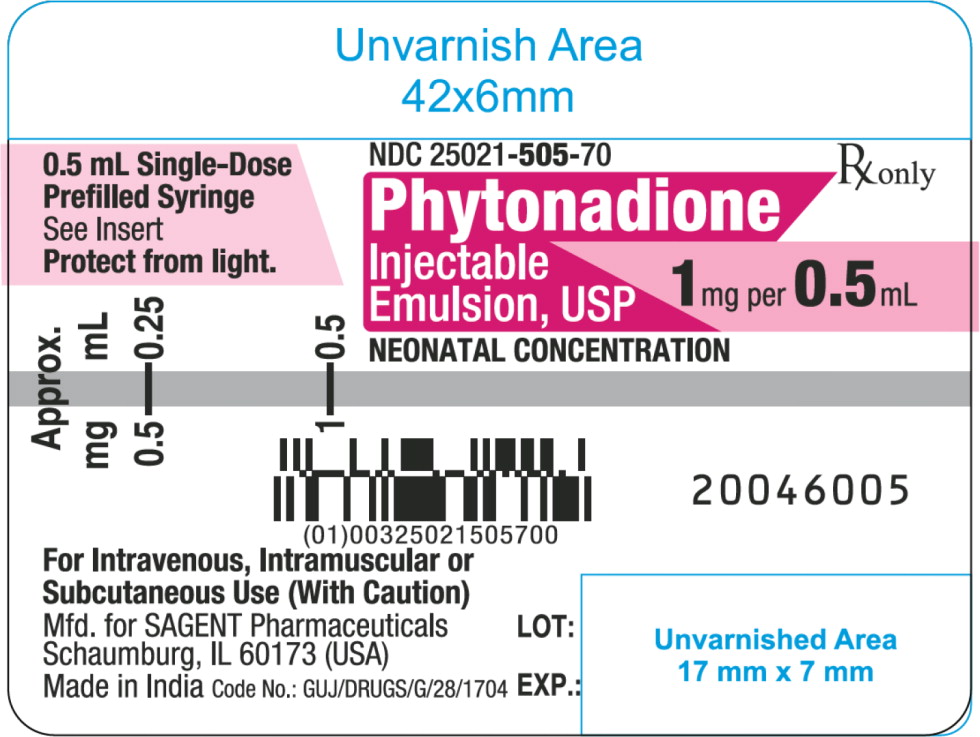
The recommended dosage of Phytonadione Injectable Emulsion is 0.5 mg to 1 mg within one hour of birth for a single dose.
Treatment of Vitamin K Deficiency Bleeding in Neonates
The recommended dosage of Phytonadione Injectable Emulsion is 1 mg given either subcutaneously or intramuscularly.
Consider higher doses if the mother has been receiving oral anticoagulants.
A failure to respond (shortening of the INR in 2 to 4 hours) may indicate another diagnosis or coagulation disorder.
Anticoagulants
Phytonadione Injectable Emulsion may induce temporary resistance to prothrombin-depressing anticoagulants, especially when larger doses of Phytonadione Injectable Emulsion are used. Should this occur, higher doses of anticoagulant therapy may be needed when resuming anticoagulant therapy, or a change in therapy to a different class of anticoagulant may be necessary (i.e., heparin sodium).
Phytonadione Injectable Emulsion does not affect the anticoagulant action of heparin.
Risk Summary
If Phytonadione is needed during pregnancy, consider using a preservative-free formulation.
Published studies with the use of phytonadione during pregnancy have not reported a clear association with phytonadione and adverse developmental outcomes (see Data). There are maternal and fetal risks associated with vitamin K deficiency during pregnancy (see Clinical Considerations). Animal reproduction studies have not been conducted with phytonadione.
The estimated background risk for the indicated population is unknown. All pregnancies have a background risk of birth defect, loss, or other adverse outcomes. In the U.S. general population, the estimated background risk of major birth defects and miscarriage in clinically recognized pregnancies is 2 to 4% and 15 to 20%, respectively.
Clinical Considerations
Disease-associated maternal and/or embryo/fetal risk
Pregnant women with vitamin K deficiency hypoprothrombinemia may be at an increased risk for bleeding diatheses during pregnancy and hemorrhagic events at delivery. Subclinical maternal vitamin K deficiency during pregnancy has been implicated in rare cases of fetal intracranial hemorrhage.
Data
Human Data
Phytonadione has been measured in cord blood of infants whose mothers were treated with phytonadione during pregnancy in concentrations lower than seen in maternal plasma. Administration of vitamin K1 to pregnant women shortly before delivery increased both maternal and cord blood concentrations. Published data do not report a clear association with phytonadione and adverse maternal or fetal outcomes when used during pregnancy. However, these studies cannot definitively establish the absence of any risk because of methodologic limitations including small sample size and lack of blinding.
Animal Data
In pregnant rats receiving vitamin K1 orally, fetal plasma and liver concentrations increased following administration, supporting placental transfer.
Risk Summary
If available, preservative-free Phytonadione is recommended when Phytonadione is needed during lactation [see USE IN SPECIFIC POPULATIONS (8.4)].
Phytonadione is present in breastmilk. There are no data on the effects of Phytonadione Injectable Emulsion on the breastfed child or on milk production. The developmental and health benefits of breastfeeding should be considered along with the clinical need for Phytonadione Injectable Emulsion and any potential adverse effects on the breastfed child from Phytonadione Injectable Emulsion or from the underlying maternal condition.
Absorption:
Phytonadione is readily absorbed following intramuscular administration.
Distribution:
After absorption, phytonadione is initially concentrated in the liver, but the concentration declines rapidly. Very little vitamin K accumulates in tissues.
Elimination:
Little is known about the metabolic fate of vitamin K. Almost no free unmetabolized vitamin K appears in bile or urine.
Serious Hypersensitivity Reactions
Advise the patient and caregivers to immediately report signs of hypersensitivity after receiving Phytonadione Injectable Emulsion [see WARNINGS AND PRECAUTIONS (5.1)].
Cutaneous Reactions
Advise the patient and caregivers to report the occurrence of new rashes after receiving Phytonadione Injectable Emulsion. These reactions may be delayed for up to a year after treatment [see WARNINGS AND PRECAUTIONS (5.3)].
Rx Only
sagent®
Mfd. for SAGENT Pharmaceuticals
Schaumburg, IL 60173 (USA)
Made in India
©2025 Sagent Pharmaceuticals
October 2025