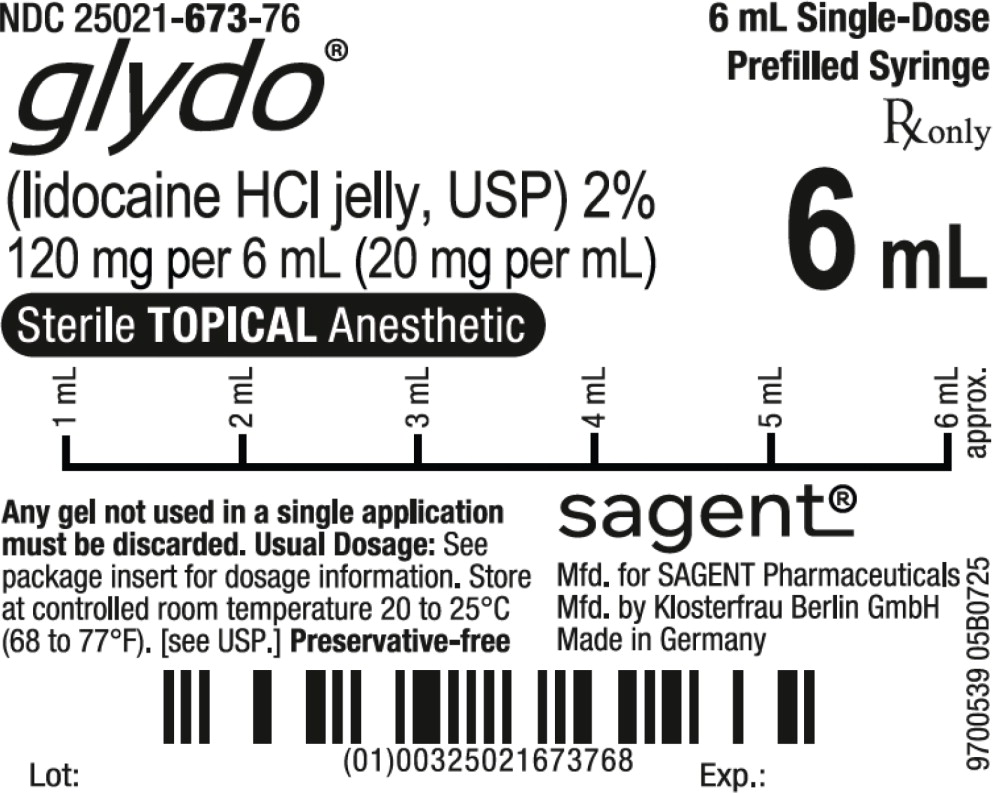
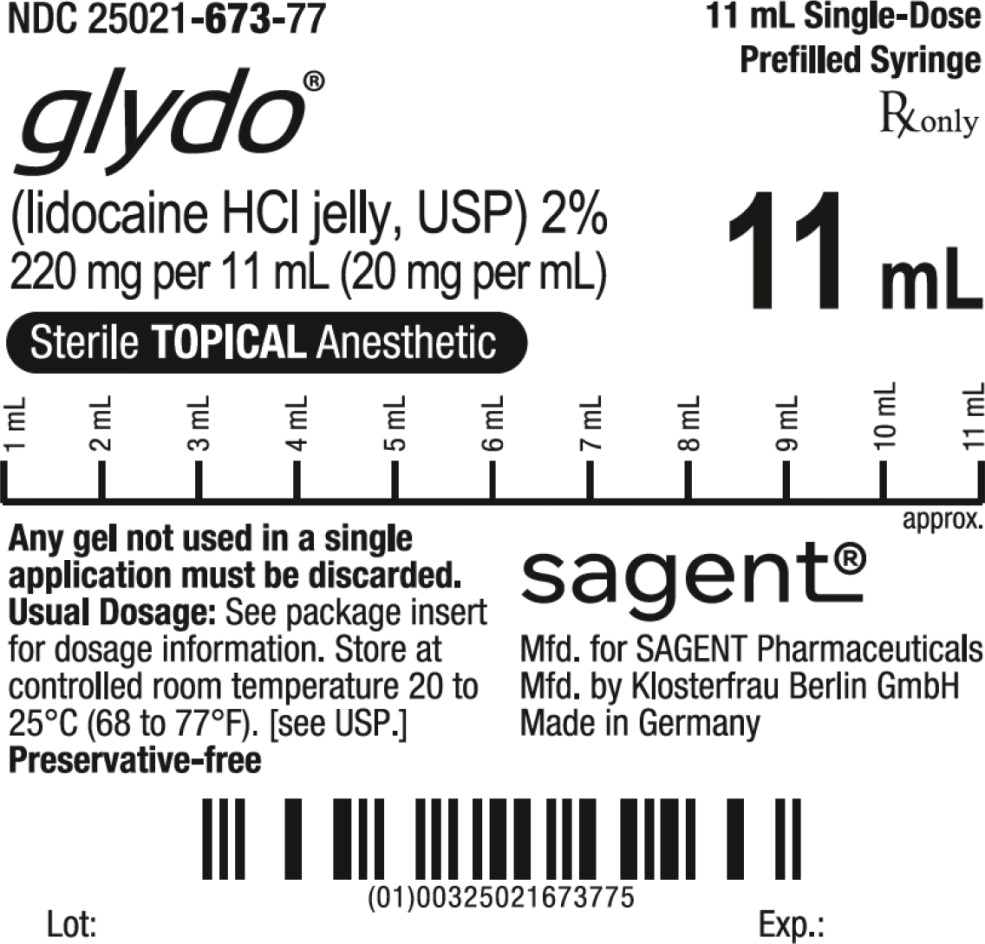
Administration Precautions
The toxic effects of local anesthetics are additive. Monitor for neurologic and cardiovascular effects related to local anesthetic systemic toxicity when additional local anesthetics are administered with GLYDO (lidocaine HCl jelly) 2% [see Warnings and Precautions (5.1), Adverse Reactions (6), Overdosage (10)].
The dosage varies and depends upon the area to be anesthetized, vascularity of the tissues, individual tolerance, and the technique of anesthesia. The lowest dosage needed to provide effective anesthesia should be administered. Dosages should be reduced for children and for elderly and debilitated patients.
Although the incidence of adverse effects with GLYDO (lidocaine HCl jelly) 2% is quite low, caution should be exercised, particularly when employing large amounts, since the incidence of adverse effects is directly proportional to the total dose of local anesthetic agent administered.
No more than 600 mg of lidocaine HCl should be given in any 12 hour period.
Nervous System Disorders
Adverse reactions were characterized by excitation and/or depression of the central nervous system and included lightheadedness, nervousness, apprehension, euphoria, confusion, dizziness, drowsiness, tinnitus, blurred or double vision, vomiting, sensations of heat, cold or numbness, twitching, tremors, convulsions, unconsciousness, respiratory depression, and arrest. The excitatory manifestations may be very brief or may not occur at all, in which case the first manifestation of toxicity may be drowsiness merging into unconsciousness and respiratory arrest.
Drowsiness following the administration of lidocaine is usually an early sign of a high blood level of the drug and may occur as a consequence of rapid absorption.
Cardiac Disorders
High doses have led to high plasma levels and related depression of the myocardium, decreased cardiac output, heartblock, hypotension, bradycardia, and cardiovascular collapse, which may lead to cardiac arrest.
Immune System Disorders
Allergic reactions are characterized by cutaneous lesions, urticaria, edema, or anaphylactoid reactions. Allergic reactions may occur as a result of sensitivity either to the local anesthetic agent or to other components in the formulation.
Risk Summary
Available published data and decades of clinical use with GLYDO 2% Jelly in pregnant women have not identified any drug-associated risk for major birth defects, miscarriage, or other adverse maternal or fetal outcomes. Local anesthetics may cause varying degrees of toxicity to the mother and fetus and adverse reactions include alterations of the central nervous system, peripheral vascular tone and cardiac function [see Clinical Considerations].
There was no evidence of teratogenicity when lidocaine was administered to pregnant rats and rabbits subcutaneously at 0.8 and 0.16 times, respectively, the maximum recommended human dose (MRHD) of 600 mg during the period of organogenesis. In a published animal reproduction study, pregnant rats administered lidocaine by continuous subcutaneous infusion at 8 times the MRHD during the period of organogenesis resulted in lower fetal body weights [see Data].
The background risk of major birth defects and miscarriage for the indicated population is unknown. All pregnancies have a background risk of birth defect, loss, or other adverse outcomes. In the U.S. general population, the estimated background risks of major birth defects and miscarriage in clinically recognized pregnancies is 2 to 4% and 15 to 20%, respectively.
Clinical Considerations
Maternal adverse reactions
During treatment of systemic toxicity, which may appear as maternal hypotension or fetal bradycardia, the parturient should be maintained in the left lateral decubitus position if possible or manual displacement of the uterus off the great vessels be accomplished. Elevating the patient's legs will also help prevent decreases in blood pressure. The fetal heart rate also should be monitored continuously, and electronic fetal monitoring is highly advisable.
Labor or delivery
Local anesthetics rapidly cross the placenta and can cause varying degrees of maternal, fetal and neonatal toxicity [see Clinical Pharmacology (12.3)]. The incidence and degree of toxicity depend upon the procedure performed, the type and amount of drug used, and the technique of drug administration. Adverse reactions in the parturient, fetus and neonate involve alterations of the central nervous system, peripheral vascular tone, and cardiac function. However, dosage recommendations for local anesthesia are much lower than dosage recommendations for other major blocks.
Data
Animal Data
Reproduction studies for lidocaine have been performed in both rats and rabbits. There was no evidence of harm to the fetus when pregnant rats were given subcutaneous doses of up to 50 mg/kg lidocaine (approximately 0.8 times the MRHD of 600 mg based on body surface area (BSA) comparison) during the period of organogenesis. In addition, there was no evidence of harm to the fetus when pregnant rabbits were given a subcutaneous dose of 5 mg/kg (approximately 0.16 times the MRHD based on BSA comparison) during the period of organogenesis. Treatment of pregnant rabbits with 25 mg/kg (approximately 0.8 times the MRHD based on BSA comparison) produced evidence of maternal toxicity and evidence of delayed fetal development, including a non-significant decrease in fetal weight (7%) and an increase in minor skeletal anomalies (skull and sternebral defect, reduced ossification of the phalanges).
The effect of lidocaine on post-natal development was examined in rats by treating pregnant female rats daily subcutaneously at doses of 2, 10, and 50 mg/kg (approximately 0.03, 0.16, and 0.8 times, respectively, the MRHD based on BSA comparison) from Day 15 of pregnancy and up to 20 days postpartum. No signs of adverse effects were seen either in dams or in the pups up to and including the dose of 10 mg/kg; however, the number of surviving pups was reduced at 50 mg/kg, both at birth and the duration of lactation period, the effect most likely being secondary to maternal toxicity. No other effects on litter size, litter weight, abnormalities in the pups and physical developments of the pups were seen in this study.
A second study examined the effects of lidocaine on post-natal development in the rat that included assessment of the pups from weaning to sexual maturity. Rats were treated for 8 months with 10 or 30 mg/kg, s.c. lidocaine (approximately 0.8 and 1.6 times, respectively, the MRHD based on BSA comparison). This time period encompassed 3 mating periods. There was no evidence of altered post-natal development in any offspring; however, both doses of lidocaine significantly reduced the average number of pups per litter surviving until weaning of offspring from the first 2 mating periods.
In a published study, lidocaine administered to pregnant rats by continuous subcutaneous infusion during the period of organogenesis at 100, 250, and 500 mg/kg/day, did not produce any structural abnormalities, but did result in lower fetal weights at 500 mg/kg/day dose (approximately 8 times the MRHD based on BSA comparison) in the absence of maternal toxicity.
Risk Summary
Published data report the presence of lidocaine and its metabolites in human milk in low amounts, along with poor oral bioavailability. There are no data on the effect of lidocaine on the breastfed infant or the effect on milk production.
The developmental and health benefits of breastfeeding should be considered along with the mother's clinical need for GLYDO 2% Jelly and any potential adverse effects on the breastfed child from GLYDO 2% Jelly or from the underlying maternal condition.
Management of Local Anesthetic Emergencies
The first consideration is prevention, best accomplished by careful and constant monitoring of cardiovascular and respiratory vital signs and the patient's state of consciousness after each local anesthetic administration. At the first sign of change, oxygen should be administered.
The first step in the management of convulsions consists of immediate attention to the maintenance of a patent airway and assisted or controlled ventilation with oxygen and a delivery system capable of permitting immediate positive airway pressure by mask. Immediately after the institution of these ventilatory measures, the adequacy of the circulation should be evaluated, keeping in mind that drugs used to treat convulsions sometimes depress the circulation when administered intravenously. Should convulsions persist despite adequate respiratory support, and if the status of the circulation permits, a benzodiazepine (such as diazepam) may be administered intravenously. The clinician should be familiar, prior to use of local anesthetics, with these anticonvulsant drugs. Supportive treatment of circulatory depression may require administration of intravenous fluids and, when appropriate, a vasopressor as directed by the clinical situation (e.g., ephedrine).
If not treated immediately, both convulsions and cardiovascular depression can result in hypoxia, acidosis, bradycardia, arrhythmias, and cardiac arrest. If cardiac arrest should occur, standard cardiopulmonary resuscitative measures should be instituted.
Endotracheal intubation, employing drugs and techniques familiar to the clinician, may be indicated, after initial administration of oxygen by mask; if difficulty is encountered in the maintenance of a patient airway or if prolonged ventilatory support (assisted or controlled) is indicated.
Dialysis is of negligible value in the treatment of acute overdosage with lidocaine.
Absorption
Lidocaine may be absorbed following topical administration to mucous membranes, its rate and extent of absorption depending upon concentration and total dose administered, the specific site of application, and duration of exposure. In general, the rate of absorption of local anesthetic agents following topical application occurs most rapidly after intratracheal administration. Lidocaine is also well-absorbed from the gastrointestinal tract, but little intact drug may appear in the circulation because of biotransformation in the liver.
Distribution
The plasma binding of lidocaine is dependent on drug concentration, and the fraction bound decreases with increasing concentration. At concentrations of 1 to 4 mcg of free base per mL, 60 to 80 percent of lidocaine is protein bound. Binding is also dependent on the plasma concentration of the alpha-l-acid glycoprotein.
Lidocaine crosses the blood-brain and placental barriers, presumably by passive diffusion.
Elimination
Lidocaine is metabolized rapidly by the liver, and metabolites and unchanged drug are excreted by the kidneys. Biotransformation includes oxidative N-dealkylation, ring hydroxylation, cleavage of the amide linkage, and conjugation. N-dealkylation, a major pathway of biotransformation, yields the metabolites monoethylglycinexylidide and glycinexylidide. The pharmacological/toxicological actions of these metabolites are similar to, but less potent than, those of lidocaine. Approximately 90% of lidocaine administered is excreted in the form of various metabolites, and less than 10% is excreted unchanged.
The primary metabolite in urine is a conjugate of 4-hydroxy-2,6-dimethylaniline.
Studies of lidocaine metabolism following intravenous bolus injections have shown that the elimination half-life of this agent is typically 1.5 to 2 hours. Because of the rapid rate at which lidocaine is metabolized, any condition that affects liver function may alter lidocaine kinetics. The half-life may be prolonged twofold or more in patients with liver dysfunction. Renal dysfunction does not affect lidocaine kinetics but may increase the accumulation of metabolites.
Carcinogenesis
Long-term studies in animals have not been performed to evaluate the carcinogenic potential of lidocaine.
Mutagenesis
The mutagenic potential of lidocaine has been tested in the Ames Salmonella reverse mutation assay, an in vitro chromosome aberrations assay in human lymphocytes and in an in vivo mouse micronucleus assay. There was no indication of any mutagenic effect in these studies.
Impairment of Fertility
The effect of lidocaine on fertility was examined in the rat model. Administration of 30 mg/kg, s.c. (approximately 0.5 times the MRHD based on BSA comparison) to the mating pair did not produce alterations in fertility or general reproductive performance of rats. There are no studies that examine the effect of lidocaine on sperm parameters. There was no evidence of altered fertility.
In a published study, female Sprague-Dawley rats were treated subcutaneously with lidocaine via osmotic pumps starting two weeks prior to mating, and reproductive effects were assessed. Rats dosed up to 250 mg/kg/day (approximately 4 times the MRHD based on BSA comparison) showed no effects on copulatory rate, pregnancy rate, numbers of corpora lutea, or implantations.