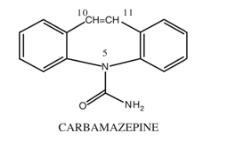
EQUETRO is a potent inducer of hepatic 3A4 and is also known to be an inducer of CYP1A2, 2B6, 2C9/19 and may therefore reduce plasma concentrations of co-medications mainly metabolized by CYP 1A2, 2B6, 2C9/19 and 3A4, through induction of their metabolism. When used concomitantly with EQUETRO, monitoring of concentrations or dosage adjustment of these agents may be necessary.
EQUETRO decreases the concentrations of the following drugs through induction of their metabolism:
Oral Contraceptives (CYP3A4 Substrates)
EQUETRO is a strong inducer of CYP3A4. EQUETRO can increase the metabolism of certain oral contraceptives (through CYP3A4 induction), leading to significantly lower concentrations. This can cause contraceptive failure or breakthrough bleeding. Consider alternatives to oral contraceptives that are significantly affected by induction of CYP3A4; or consider alternatives to EQUETRO.
Delavirdine and other Non-Nucleoside Reverse Transcriptase Inhibitors (CYP3A4 Substrates)
Through induction of CYP3A4, EQUETRO increases the metabolism of delavirdine and certain non-nucleoside reverse transcriptase inhibitors and significantly reduces the plasma concentrations of these drugs. This can cause inadequate antiviral activity, loss of virologic response, and possible resistance to delavirdine or other non-nucleoside reverse transcriptase inhibitors. Therefore, the use of EQUETRO with these non-nucleoside reverse transcriptase inhibitors is contraindicated [see Contraindications (4) and Warnings and Precautions (5.9)].
Nefazodone (CYP3A4 Substrate)
The use of EQUETRO is contraindicated with the use of nefazodone because the concomitant use may result in insufficient plasma concentrations of nefazodone and its active metabolite to achieve a therapeutic effect of nefazodone.
Warfarin (CYP1A2 and CYP3A4 Substrate)
Through induction of CYP1A2 and CYP3A4, EQUETRO decreases the concentration of warfarin and decreases its anticoagulant effectiveness.
Aripiprazole
When carbamazepine is added to aripiprazole, the aripiprazole dose should be doubled. Additional dose increases should be based on clinical evaluation. If carbamazepine is later withdrawn, the aripiprazole dose should be reduced.
Tacrolimus
When carbamazepine is used with tacrolimus, monitoring of tacrolimus blood concentrations and appropriate dosage adjustments are recommended.
Temsirolimus
The use of concomitant strong CYP3A4 inducers such as carbamazepine should be avoided with temsirolimus. If patients must be coadministered carbamazepine with temsirolimus, an adjustment of temsirolimus dosage should be considered.
Lapatinib
The use of carbamazepine with lapatinib should generally be avoided. If carbamazepine is started in a patient already taking lapatinib, the dose of lapatinib should be gradually titrated up. If carbamazepine is discontinued, the lapatinib dose should be reduced.
HIV Protease Inhibitors
Due to strong induction of CYP3A4 caused by carbamazepine, use of EQUETRO with HIV protease inhibitors is not recommended.
Other CYP1A2 and CYP3A4 Substrates
EQUETRO induces CYP1A2 and CYP3A4, leading to decreased concentrations of drugs metabolized by CYP3A4 or CYP1A2. It may be necessary to increase the doses of such drugs when used concomitantly with EQUETRO. Drugs metabolized by CYP3A4 or CYP1A2 include the following:
Acetaminophen, albendazole, alprazolam, aprepitant, buprenorphone, bupropion, buspirone, citalopram, clobazam, clonazepam, clozapine, cyclosporin, delavirdine, desipramine, diazepam, dicumarol, dihydropyridine calcium channel blockers (e.g., felodipine), doxycycline, ethosuximide, everolimus, felbamate, glucocorticoids, haloperidol, imatinib, itraconazole, lamotrigine, levothyroxine, lorazepam, methadone, methsuxamide, mianserin, midazolam, mirtazapine, nefazodone, olanzapine, oral and other hormonal contraceptives, oxcarbazepine, paliperidone, phenytoin, praziquantel, quetiapine, risperidone, sertraline, sirolimus, tadalafil, theophylline, topiramate, tiagabine, tramadol, triazolam, tricyclic antidepressants (e.g., imipramine, amitriptyline, nortriptyline), trazodone, valproate, warfarin , ziprasidone, and zonisamide.
EQUETRO increases the plasma levels of the following drugs by inhibition of their metabolism:
Clomipramine, Phenytoin, and Primidone
EQUETRO can increase the concentrations of clomipramine, phenytoin, and primidone. If a patient has been titrated to a stable dosage on one of these agents in this category, and then begins treatment with EQUETRO, it may be necessary to decrease the dose of these drugs.
Phenytoin
Phenytoin levels have been reported to increase or decrease in the presence of carbamazepine. There are multiple pharmacokinetic mechanisms for changes in phenytoin levels when used concomitantly with EQUETRO. Monitor phenytoin serum levels carefully when used concomitantly with EQUETRO.
Cyclophosphamide
Cyclophosphamide is an inactive prodrug and is converted to its active metabolite in part by CYP3A. The rate of metabolism and the leukopenic activity of cyclophosphamide are reportedly increased by chronic co-administration of CYP3A4 inducers. There is a potential for increased cyclophosphamide toxicity when coadministered with carbamazepine.