Donepezil Hydrochloride
Product Images NDC 31722-139

16 FDA label images from Camber Pharmaceuticals, Inc. · Packaging, Regulatory Labels, and Product Appearance

Product Visual Gallery

This gallery contains 16 technical images submitted to the FDA as part of the official labeling for Donepezil Hydrochloride (NDC 31722-139). Unlike standard consumer photos, these assets often include clinical data figures, molecular chemical structures, and official manufacturer packaging layouts.

As provided by Camber Pharmaceuticals, Inc., these visuals offer a comprehensive scientific overview of the product's physical and chemical identity, aiding pharmacists and researchers in product verification and study.

FDA Label Image

Donepezilcontainer10mg (Donepezilcontainer10mg)
Donepezilcontainer10mg (Donepezilcontainer10mg)
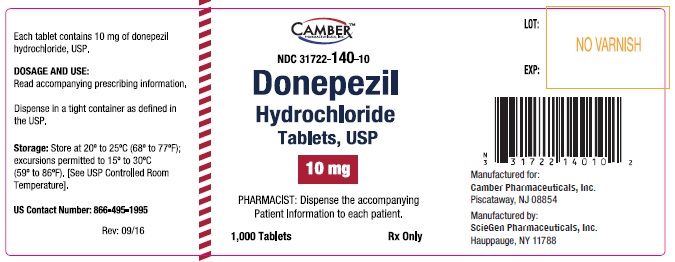
Donepezil Hydrochloride Tablets, USP 10 mg bottle label by Camber Pharmaceuticals, Inc. The label states the strength as 10 mg per tablet and a total count of 1,000 tablets. It includes instructions to dispense with accompanying patient information and storage directions. Manufacturer and barcode details are displayed, along with a lot and expiration date box.*
FDA Label Image

Donepezilcontainer5mg (Donepezilcontainer5mg)

Donepezilcontainer5mg (Donepezilcontainer5mg)
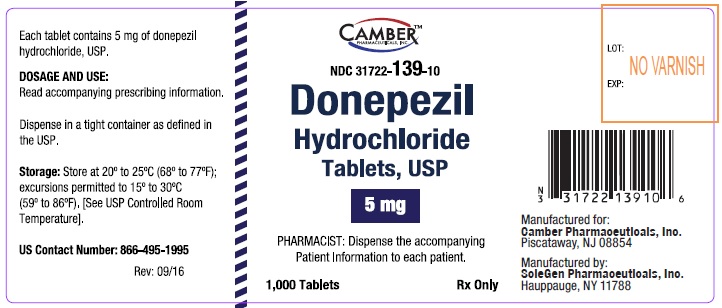
Donepezil Hydrochloride Tablets, USP 5 mg label from Camber Pharmaceuticals, Inc. The label indicates a quantity of 1,000 tablets, a prescription-only medication, and includes dosage, storage instructions, and manufacturer information. The NDC number 31722-139-10 and barcode are visible. The label specifies dispensing with accompanying patient information.*
FDA Label Image

Donepezilfigure1 (Donepezilfigure1)

Donepezilfigure1 (Donepezilfigure1)
A line chart showing ADAS-cog change from baseline (mean ± SE) over 30 weeks of drug treatment comparing Donepezil 10 mg/day, Donepezil 5 mg/day, and placebo groups. The vertical axis ranges from clinical improvement to clinical decline, with all groups starting near zero at baseline. Data points track cognitive changes over time, indicating trends for each treatment group.*
FDA Label Image

Donepezilfigure10 (Donepezilfigure10)

Donepezilfigure10 (Donepezilfigure10)
A cumulative percentage chart showing patient response comparing Donepezil hydrochloride 10 mg/day to placebo. The x-axis indicates the change from baseline in ADCS-ADL scores, while the y-axis represents the cumulative percentage of patients. Donepezil hydrochloride shows a shift toward positive change compared to placebo.*
FDA Label Image

Donepezilfigure11 (Donepezilfigure11)

Donepezilfigure11 (Donepezilfigure11)
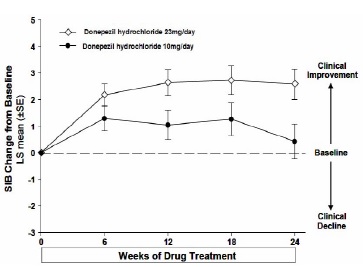
A line graph showing the ADAS-Cog score change from baseline over 24 weeks of drug treatment with Donepezil hydrochloride at dosages of 5 mg/day and 10 mg/day. The vertical axis measures the change in score from baseline, ranging from -3 to 5, indicating clinical improvement or decline. The horizontal axis represents weeks of drug treatment. Data points include error bars showing standard error of the mean (SEM).*
FDA Label Image

Donepezilfigure12 (Donepezilfigure12)

Donepezilfigure12 (Donepezilfigure12)
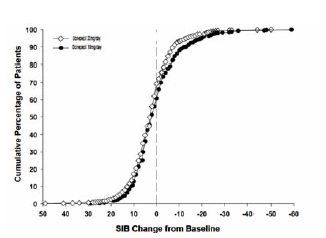
A cumulative percentage curve graph showing patient response over changes in SIB (Severe Impairment Battery) scores from baseline, comparing Donepezil 23 mg/day and Donepezil 10 mg/day dosages. The X-axis represents SIB score changes, while the Y-axis represents cumulative patient percentage, indicating distribution of responses for both dose groups.*
FDA Label Image

Donepezilfigure13 (Donepezilfigure13)

Donepezilfigure13 (Donepezilfigure13)
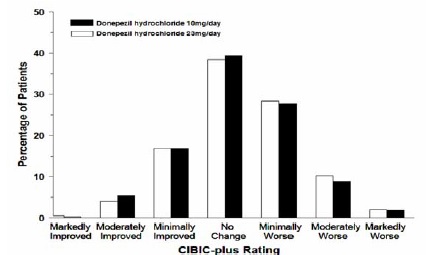
Bar graph showing the percentage of patients by response category for Donepezil hydrochloride at 10 mg/day and 23 mg/day doses. Categories include Markedly Improved, Moderately Improved, Minimally Improved, No Change, Minimally Worse, Moderately Worse, and Markedly Worse, with percentages displayed for each dosing group.*
FDA Label Image

Donepezilfigure2 (Donepezilfigure2)

Donepezilfigure2 (Donepezilfigure2)
A cumulative percentage of patients graph showing change from baseline in ADAS cognitive scores for Donepezil hydrochloride at 5 mg/day and 10 mg/day doses compared to placebo. The x-axis represents change from baseline, while the y-axis shows cumulative percentage of patients. The graph includes data points for 7 points, 4 points, and no change, with a treatment group table summarizing percentage outcomes at different score changes.*
FDA Label Image

Donepezilfigure3 (Donepezilfigure3)

Donepezilfigure3 (Donepezilfigure3)
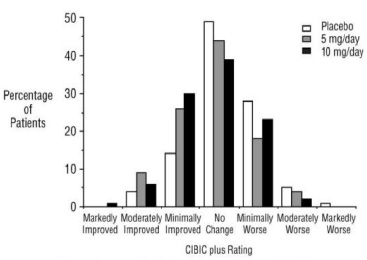
A bar chart showing the percentage of patients by CIBIC plus rating categories including Markedly Improved, Moderately Improved, Minimally Improved, No Change, Minimally Worse, Moderately Worse, and Markedly Worse. Data are presented for placebo, 5 mg/day, and 10 mg/day treatment groups.*
FDA Label Image

Donepezilfigure4 (Donepezilfigure4)

Donepezilfigure4 (Donepezilfigure4)
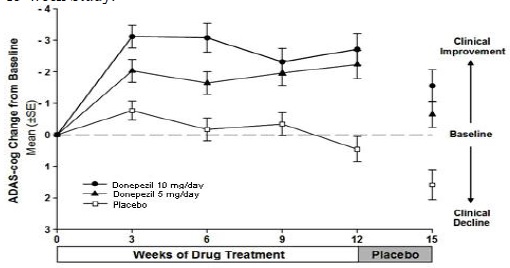
A line graph showing Alzheimer's Disease Assessment Scale-cognitive subscale (ADAS-cog) change from baseline over 12 weeks of drug treatment, comparing Donepezil 10 mg/day, Donepezil 5 mg/day, and placebo groups. The y-axis represents cognitive change from baseline, with clinical improvement above and clinical decline below. Donepezil groups show less cognitive decline compared to placebo.*
FDA Label Image

Donepezilfigure5 (Donepezilfigure5)

Donepezilfigure5 (Donepezilfigure5)
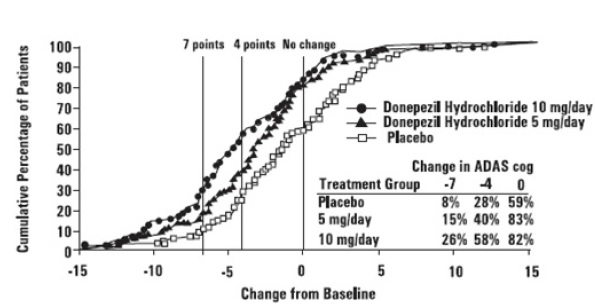
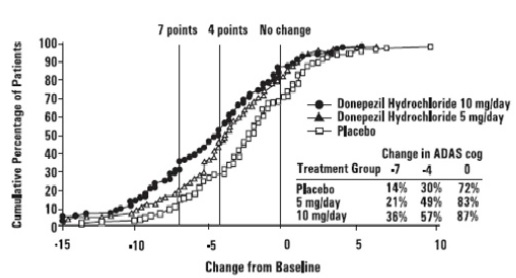
A cumulative percentage plot showing the change from baseline in cognitive function measured by ADAS-cog scores for three treatment groups: Donepezil Hydrochloride 10 mg/day, Donepezil Hydrochloride 5 mg/day, and placebo. The graph includes data points for improvement of 7 points, 4 points, or no change, with a legend indicating each treatment group's curve and an embedded table summarizing the percentage of patients achieving specific changes in ADAS-cog scores.*
FDA Label Image

Donepezilfigure6 (Donepezilfigure6)

Donepezilfigure6 (Donepezilfigure6)
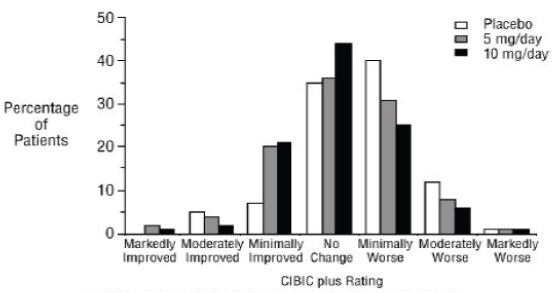
A bar chart depicting the percentage of patients categorized by their CIBIC plus Rating scores. The chart compares three groups: placebo, 5 mg/day, and 10 mg/day dosages, showing distributions across ratings from markedly improved to markedly worse.*
FDA Label Image

Donepezilfigure7 (Donepezilfigure7)

Donepezilfigure7 (Donepezilfigure7)
A line graph comparing the SIB (Severe Impairment Battery) change from baseline over six months of drug treatment between Donepezil hydrochloride 10 mg/day and placebo. The x-axis shows months of treatment (0, 3, 6), and the y-axis shows SIB change from baseline (ranging from -8 to 8), highlighting clinical improvement above baseline and clinical decline below baseline.*
FDA Label Image

Donepezilfigure8 (Donepezilfigure8)

Donepezilfigure8 (Donepezilfigure8)
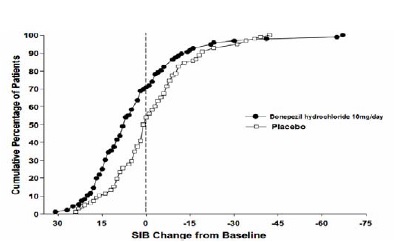
A cumulative percentage curve chart illustrating patient response comparing Donepezil hydrochloride 10 mg/day to placebo. The x-axis shows the SIB (Severe Impairment Battery) change from baseline, while the y-axis represents the cumulative percentage of patients. The Donepezil group shows higher cumulative percentages of patients with greater improvement than placebo.*
FDA Label Image

Donepezilfigure9 (Donepezilfigure9)

Donepezilfigure9 (Donepezilfigure9)
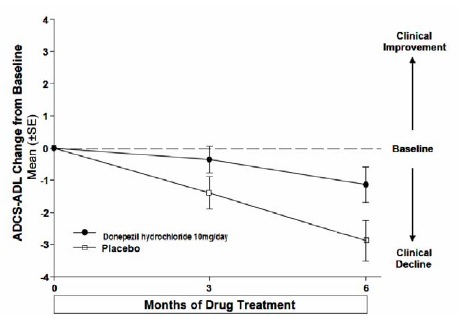
A line graph showing ADCS-ADL change from baseline over six months of drug treatment. The vertical axis represents mean change with standard error, ranging from clinical improvement to clinical decline. The horizontal axis shows months of treatment from zero to six. Two lines compare Donepezil hydrochloride 10 mg/day and placebo, indicating differences in clinical outcome over time.*
FDA Label Image

Donepezilstructure (Donepezilstructure)

Donepezilstructure (Donepezilstructure)
Chemical structure of Donepezil hydrochloride showing its molecular components including aromatic rings, methoxy groups, a piperidine ring, and a hydrochloride moiety.*

* About these descriptions: Image descriptions on this page are generated by automated AI analysis of the product label images from the manufacturer's FDA label submission (SPL). They are provided for reference only and may contain errors or omissions. Always rely on the printed label itself and the official FDA labeling, and consult a pharmacist or healthcare professional with any questions about this product.