The following adverse events have been identified during post-approval use of terbinafine. Because these events are reported voluntarily from a population of uncertain size, it is not always possible to reliably estimate their frequency or establish a causal relationship to drug exposure.
Adverse events, based on worldwide experience with terbinafine tablets use, include: idiosyncratic and symptomatic hepatic injury and more rarely, cases of liver failure, some leading to death or liver transplant, serious skin reactions (e.g., Stevens-Johnson Syndrome and toxic epidermal necrolysis), severe neutropenia, thrombocytopenia, agranulocytosis, pancytopenia, anemia, angioedema, and allergic reactions (including anaphylaxis) [see Warnings and Precautions (5.1, 5.5 , and 5.6)].
Psoriasiform eruptions or exacerbation of psoriasis, acute generalized exanthematous pustulosis and precipitation and exacerbation of cutaneous and systemic lupus erythematosus have been reported in patients taking terbinafine [see Warnings and Precautions (5.7)].
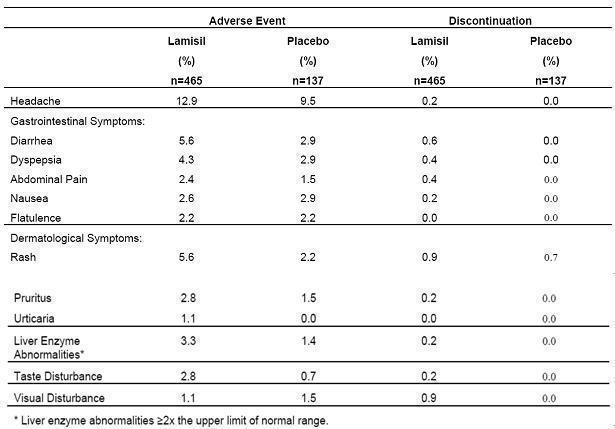
Cases of taste disturbance, including taste loss, have been reported with the use of terbinafine tablets. It can be severe enough to result in decreased food intake, weight loss, and depressive symptoms [see Warnings and Precautions (5.2)]. Depressive symptoms independent of taste disturbance have been reported with use of terbinafine tablets. In some cases, depressive symptoms have been reported to subside with discontinuance of therapy and to recur with reinstitution of therapy [see Warnings and Precautions (5.4)]. Cases of smell disturbance, including smell loss, have been reported with the use of terbinafine tablets [see Warnings and Precautions (5.3)].
Other adverse reactions which have been reported include malaise, fatigue, vomiting, arthralgia, myalgia, rhabdomyolysis, reduced visual acuity, visual field defect, hair loss, serum sickness-like reaction, vasculitis, pancreatitis, influenza-like illness, pyrexia, increased blood creatine phosphokinase, photosensitivity reactions, tinnitus, hearing impairment and vertigo.
Altered prothrombin time (prolongation and reduction) in patients concomitantly treated with warfarin has been reported.