Lisdexamfetamine Dimesylate Tablet, Chewable
Product Images NDC 31722-324

View Photos of Packaging, Regulatory Labels, and Product Appearance

Product Visual Gallery

This gallery contains 24 technical images submitted to the FDA as part of the official labeling for Lisdexamfetamine Dimesylate (NDC 31722-324). Unlike standard consumer photos, these assets often include clinical data figures, molecular chemical structures, and official manufacturer packaging layouts.

As provided by Camber Pharmaceuticals, Inc., these visuals offer a comprehensive scientific overview of the product's physical and chemical identity, aiding pharmacists and researchers in product verification and study.

FDA Label Image

10 (10)

10 (10)
Packaging label for Lisdexamfetamine Dimesylate Chewable Tablets 10 mg by Camber Pharmaceuticals, Inc. The label includes product name, dosage strength, quantity of 100 chewable tablets, storage instructions, dispensing guidance, and manufacturer information for prescription oral tablets.*
FDA Label Image

20 (20)

20 (20)
Label for Lisdexamfetamine Dimesylate chewable tablets 20 mg by Camber Pharmaceuticals, Inc. The label shows the product name, dosage strength, quantity of 100 chewable tablets, and directions to chew completely before swallowing. It includes storage instructions, pharmacist warnings, and manufacturer information for both Ascent Pharmaceuticals, Inc. and Camber Pharmaceuticals, Inc.*
FDA Label Image

30 (30)

30 (30)
Label for Lisdexamfetamine Dimesylate Chewable Tablets 30 mg, a prescription human drug by Camber Pharmaceuticals, Inc. The bottle contains 100 chewable tablets for oral use. The label includes storage instructions, dosage guidance advising to chew completely before swallowing, and manufacturer information for Camber Pharmaceuticals and Ascent Pharmaceuticals.*
FDA Label Image

40 (40)

40 (40)
Lisdexamfetamine Dimesylate Chewable Tablets 40 mg by Camber Pharmaceuticals, Inc. The label shows the product name, strength, and chewable tablet dosage form. It includes a note to chew tablets completely before swallowing and dispensing instructions for pharmacists. The package contains 100 chewable tablets with prescription only status. Storage instructions and manufacturer details are also provided.*
FDA Label Image

50 (50)

50 (50)
Label for Lisdexamfetamine Dimesylate 50 mg chewable tablets by Camber Pharmaceuticals, Inc. The label includes dosage form (chewable tablets), quantity (100 tablets), and storage instructions. It advises chewing tablets completely before swallowing and provides manufacturer information along with a barcode and a note to dispense the medication guide with each prescription.*
FDA Label Image

60 (60)

60 (60)
Label for Lisdexamfetamine Dimesylate 60 mg chewable tablets from Camber Pharmaceuticals, Inc. The label displays the proprietary and generic names, strength, dosage form, and unit count of 100 chewable tablets. It includes pharmacist and patient instructions, storage conditions, manufacturer details, and a barcode.*
FDA Label Image

Figure3 (Figure 3)

Figure3 (Figure 3)
A figure illustrating the effect of lisdexamfetamine dimesylate on the pharmacokinetics of various interacting drugs, including guanfacine, venlafaxine, caffeine, dextromethorphan, omeprazole, and midazolam. The chart shows fold changes and 90% confidence intervals for Cmax and AUC values relative to reference, indicating variations in drug exposure caused by coadministration with lisdexamfetamine dimesylate.*
FDA Label Image

Figure1 (Figure1)

Figure1 (Figure1)
A graph titled 'Specific Populations' depicting fold change and 90% confidence intervals for Cmax and AUC of d-amphetamine in various special populations, including gender, age groups (65-74 years, 75 years and older), and renal impairment levels (mild, moderate, severe, end stage renal disease). The x-axis shows the change relative to reference values, highlighting pharmacokinetic differences across these groups.*
FDA Label Image

Figure2 (Figure2)

Figure2 (Figure2)
A figure illustrating the effect of other drugs (Guanfacine, Venlafaxine, Omeprazole) on the pharmacokinetics of Lisdexamfetamine Dimesylate, showing fold changes and 90% confidence intervals for Cmax and AUC relative to a reference. The horizontal axis represents change relative to reference from 0.0 to 2.0.*
FDA Label Image

Figure4 (Figure4)

Figure4 (Figure4)
A line graph titled 'LS Mean SKAMP Deportment Subscale Score by Treatment and Time-point for Pediatric Patients Ages 6 to 12 with ADHD after 1 Week of Double Blind Treatment (Study 3)'. It compares LS mean SKAMP deportment scores over time post-dose (hours) between placebo and lisdexamfetamine dimesylate. The graph shows scores on the y-axis ranging from 0 to 2 and time on the x-axis from -0.5 to 13 hours. Placebo scores increase then gradually decline, while lisdexamfetamine dimesylate scores decrease initially and then rise toward the end. Error bars indicate variability at each time point.*
FDA Label Image

Figure5 (Figure5)

Figure5 (Figure5)
A Kaplan-Meier plot illustrating the estimated proportion of pediatric patients aged 6 to 17 with treatment failure over time, comparing lisdexamfetamine dimesylate and placebo groups. The y-axis shows the proportion of subjects with relapse or treatment failure (%), and the x-axis represents days after randomization, up to 55 days. The graph shows a lower proportion of treatment failure in the lisdexamfetamine dimesylate group compared to placebo over the study period.*
FDA Label Image

Figure6 (Figure6)

Figure6 (Figure6)
Line graph showing LS Mean (SE) PERMP Total Score by treatment and time point for adults aged 18 to 55 with ADHD after 1 week of double-blind treatment in Study 8. The x-axis represents time post-dose (hours) from -0.5 to 14, and the y-axis represents LS Mean (SE) PERMP Total Scores from 250 to 330. Two lines compare placebo and lisdexamfetamine dimesylate, with lisdexamfetamine showing higher scores throughout most time points.*
FDA Label Image

Figure7 (Figure7)

Figure7 (Figure7)
A Kaplan-Meier curve chart depicting the estimated proportion of subjects with relapse in adults with ADHD over time. The graph compares placebo and lisdexamfetamine dimesylate groups, showing the proportion of subjects with relapse or treatment failure on the y-axis and time in days after randomization on the x-axis.*
FDA Label Image

Image Description (Figure8)

Image Description (Figure8)
Kaplan-Meier estimated proportions chart showing the relapse rates over time in adults with binge eating disorder (BED) from Study 13. The chart compares subjects treated with lisdexamfetamine dimesylate versus placebo. The x-axis represents time in days after randomization, and the y-axis shows the proportion of subjects with relapse percentage. The plot includes subject count at risk for each group over the time period.*
FDA Label Image

Chemical Structure (Chemical Structure)

Chemical Structure (Chemical Structure)
Chemical structure of lisdexamfetamine dimesylate, the active ingredient in LISDEXAMFETAMINE DIMESYLATE chewable tablets by Camber Pharmaceuticals, Inc.*
FDA Label Image

Table1 (Table1)

Table1 (Table1)
A data table listing adverse reactions reported by 2% or more of pediatric patients ages 6 to 12 with ADHD taking lisdexamfetamine dimesylate compared to placebo in a 4-week clinical trial. The table shows reaction types such as decreased appetite, insomnia, abdominal pain, irritability, vomiting, and others with their corresponding percentages in both treatment groups.*
FDA Label Image

Table2 (Table2)

Table2 (Table2)
A data table listing adverse reactions reported by 2% or more of pediatric patients aged 13 to 17 years with ADHD taking lisdexamfetamine dimesylate compared to placebo in a 4-week clinical trial. The table includes reactions such as decreased appetite, insomnia, weight decreased, dry mouth, palpitations, anorexia, and tremor, with corresponding percentages for each group.*
FDA Label Image

Table3 (Table3)

Table3 (Table3)
Table listing adverse reactions reported by 2% or more of adult patients with ADHD taking lisdexamfetamine dimesylate compared to placebo in a 4-week clinical trial. Reactions include decreased appetite, insomnia, dry mouth, diarrhea, nausea, anxiety, anorexia, feeling jittery, agitation, increased blood pressure, hyperhidrosis, restlessness, decreased weight, dyspnea, increased heart rate, tremor, and palpitations with percentages for both treatment and placebo groups.*
FDA Label Image

Table4 (Table4)

Table4 (Table4)
A data table listing adverse reactions reported by 2% or more of adult patients with binge eating disorder (BED) taking lisdexamfetamine dimesylate, compared to placebo, in two 12-week clinical trials. The table includes reactions like dry mouth, insomnia, decreased appetite, increased heart rate, anxiety, and others, with percentages for both lisdexamfetamine (N=373) and placebo (N=372) groups.*
FDA Label Image

Table5 (Table5)

Table5 (Table5)
A data table titled 'Drugs having clinically important interactions with amphetamines,' focusing on MAO Inhibitors (MAOI). It details clinical impacts such as slowed amphetamine metabolism and risks including hypertensive crisis and neurological effects, and provides an intervention warning against administering lisdexamfetamine dimesylate during or within 14 days after MAOI use.*
FDA Label Image

Table6.1 (Table6.1)

Table6.1 (Table6.1)
A data table summarizing primary efficacy results from short-term studies of lisdexamfetamine dimesylate in pediatric patients (ages 6 to 17) and adults with ADHD. The table includes study number, age range, primary endpoint, treatment group with dosages, mean baseline scores, least squares mean change from baseline, and placebo-subtracted differences with confidence intervals.*
FDA Label Image

Table6.2 (Table6.2)

Table6.2 (Table6.2)
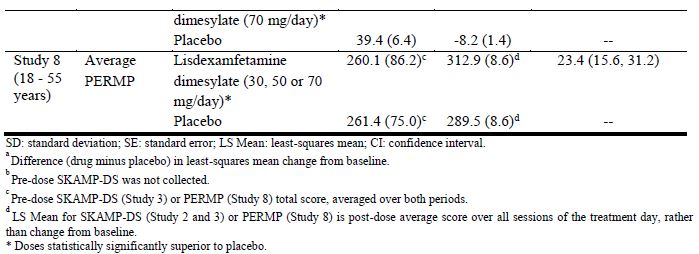
A data table presenting statistical results from Study 8 involving lisdexamfetamine dimesylate at doses of 30, 50, or 70 mg/day compared to placebo. The table includes average PERMP scores for age range 18 to 55 years, with standard deviation and confidence intervals noted. Footnotes clarify data specifics such as pre-dose measures and statistical significance versus placebo.*
FDA Label Image

Table5.1 (Table6)

Table5.1 (Table6)
A data table detailing clinical impact and intervention guidelines for lisdexamfetamine dimesylate interactions with serotonergic drugs, CYP2D6 inhibitors, alkalinizing agents, acidifying agents, and tricyclic antidepressants. It lists effects on serotonin syndrome risk, blood levels, and cardiovascular impacts with recommendations for dose adjustments and monitoring.*
FDA Label Image

Table7 (Table7)

Table7 (Table7)
Table summarizing primary efficacy results in binge eating disorder (BED) from studies 11 and 12, showing mean baseline scores, least-squares mean change from baseline, and placebo-subtracted differences for lisdexamfetamine dimesylate 50 or 70 mg/day versus placebo at week 12.*

* About these descriptions: Image descriptions on this page are generated by automated AI analysis of the product label images from the manufacturer's FDA label submission (SPL). They are provided for reference only and may contain errors or omissions. Always rely on the printed label itself and the official FDA labeling, and consult a pharmacist or healthcare professional with any questions about this product.