Topiramate Capsule, Extended Release
Product Images NDC 31722-550

View Photos of Packaging, Regulatory Labels, and Product Appearance

Product Visual Gallery

This gallery contains 26 technical images submitted to the FDA as part of the official labeling for Topiramate (NDC 31722-550). Unlike standard consumer photos, these assets often include clinical data figures, molecular chemical structures, and official manufacturer packaging layouts.

As provided by Camber Pharmaceuticals, Inc., these visuals offer a comprehensive scientific overview of the product's physical and chemical identity, aiding pharmacists and researchers in product verification and study.

FDA Label Image

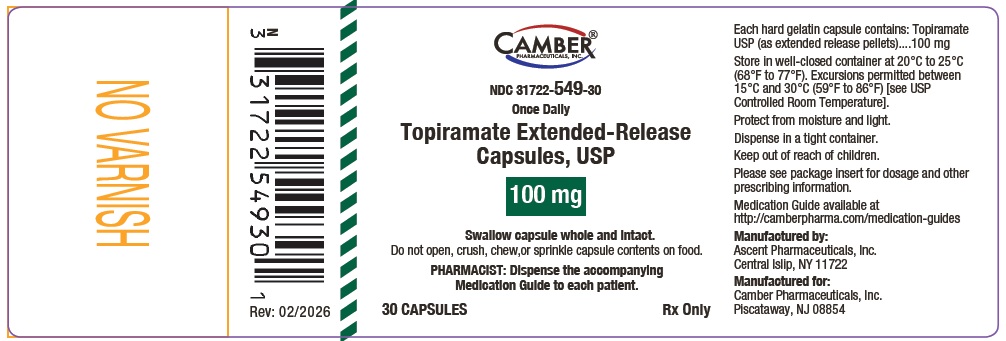
100 (100 mg)

100 (100 mg)
Topiramate Extended-Release Capsules, USP 100 mg by Camber Pharmaceuticals, Inc. The label includes dosage form as capsules, extended release, with a package count of 30 capsules. Storage and handling instructions, manufacturer details, and a barcode are visible. The label also states 'Rx Only' and includes medication guide information.*
FDA Label Image

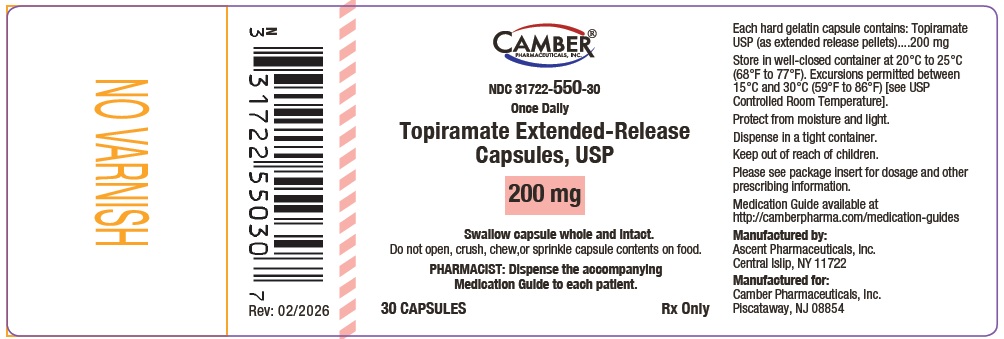
200 (200 mg)

200 (200 mg)
Label for Topiramate Extended-Release Capsules, USP 200 mg by Camber Pharmaceuticals, Inc. The oral capsule package contains 30 capsules with no varnish, labeled for once-daily use. The label includes storage instructions, manufacturing details, and cautions not to open or crush the capsules.*
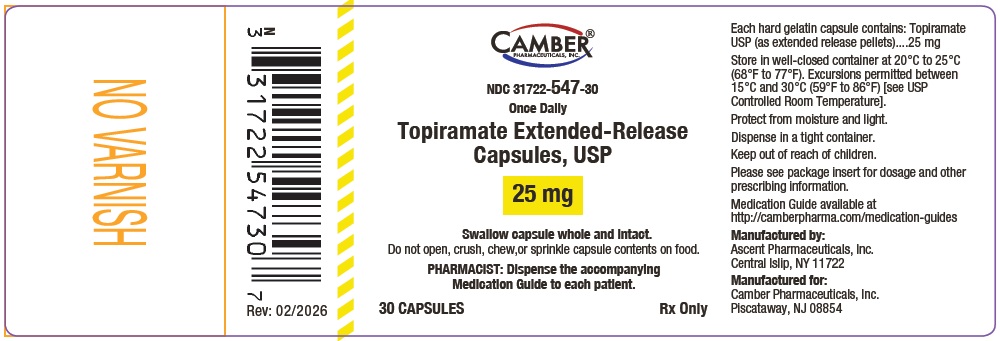
FDA Label Image

25 (25 mg)

25 (25 mg)
Label for Topiramate Extended-Release Capsules, USP 25 mg by Camber Pharmaceuticals, Inc. The label indicates the capsules are oral, extended-release, and the package contains 30 capsules. Storage and handling instructions, as well as manufacturer information, are also included.*
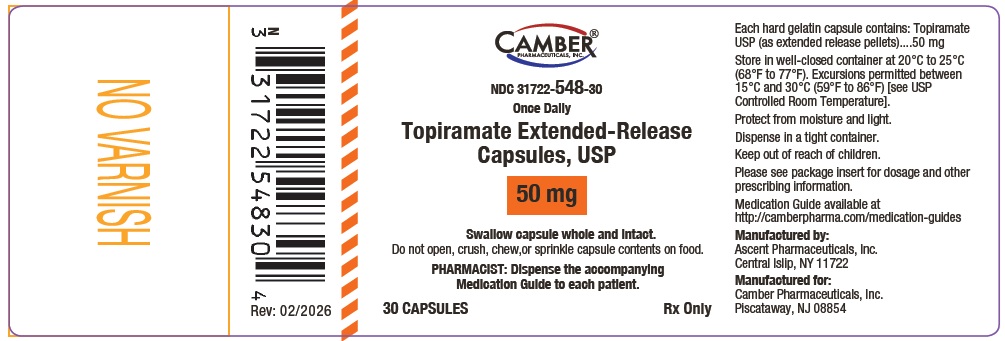
FDA Label Image

50 (50 mg)

50 (50 mg)
TOPIRAMATE 50 mg Extended-Release Capsules, USP label by Camber Pharmaceuticals, Inc. The label states the capsules are to be swallowed whole and intact, with a quantity of 30 capsules per container. It includes storage instructions, manufacturing details, and a warning to keep out of reach of children. The label also displays a barcode and revision date of 02/2026.*
FDA Label Image

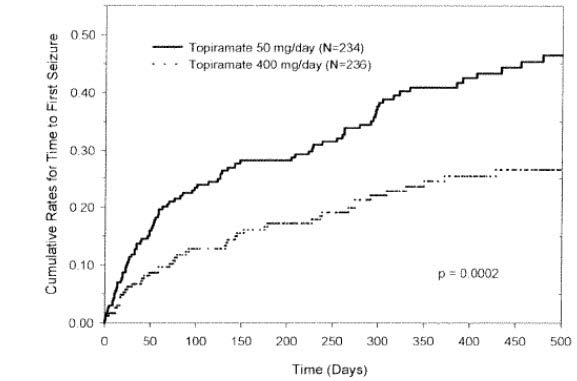
Figure 1 (Figure 1)

Figure 1 (Figure 1)
A Kaplan-Meier cumulative rate plot illustrating time to first seizure for two Topiramate dosage groups: 50 mg/day (N=234) and 400 mg/day (N=236). The x-axis represents time in days up to 500, and the y-axis represents cumulative rates for time to first seizure, comparing lower and higher dose responses.*
FDA Label Image

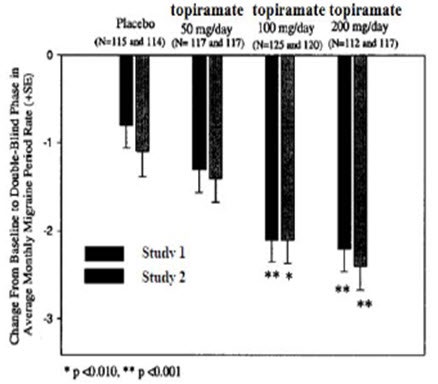
Figure 2 (Figure 2)

Figure 2 (Figure 2)
A bar chart comparing the change from baseline to double-blind phase in average monthly migraine period rate (±SE) across different dosages of topiramate (50 mg/day, 100 mg/day, 200 mg/day) and placebo. Two studies are represented, with Study 1 shown by solid bars and Study 2 by patterned bars. Statistically significant reductions in migraine rates are indicated for topiramate doses compared to placebo.*
FDA Label Image

Mg1 (Mg1)

Mg1 (Mg1)
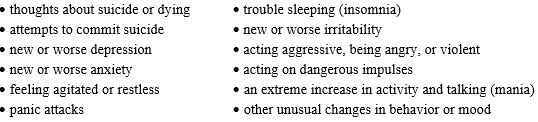
This text panel lists behavioral and mood-related side effects associated with topiramate, including thoughts about suicide or dying, attempts to commit suicide, new or worsened depression and anxiety, agitation, panic attacks, insomnia, irritability, aggressive or violent behavior, dangerous impulses, mania, and other unusual changes in behavior or mood.*
FDA Label Image

Mg2 (Mg2)

Mg2 (Mg2)
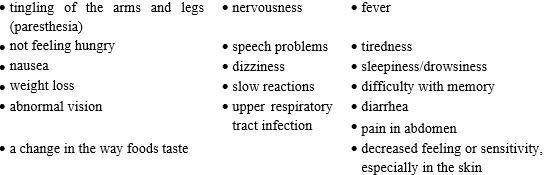
Text panel listing possible side effects including tingling of the arms and legs, nervousness, fever, not feeling hungry, speech problems, tiredness, nausea, dizziness, sleepiness/drowsiness, weight loss, slow reactions, difficulty with memory, abnormal vision, upper respiratory tract infection, diarrhea, pain in abdomen, changes in taste, and decreased feeling or sensitivity especially in the skin.*
FDA Label Image

Structural Formula (Structural Formula)

Structural Formula (Structural Formula)
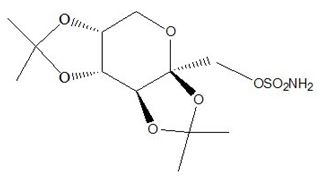
Chemical structure diagram depicting the molecular structure of topiramate, the active ingredient in TOPIRAMATE extended release capsules. The diagram shows the arrangement of atoms and bonds forming the compound's characteristic rings and functional groups.*
FDA Label Image

Table 1 (Table 1)

Table 1 (Table 1)
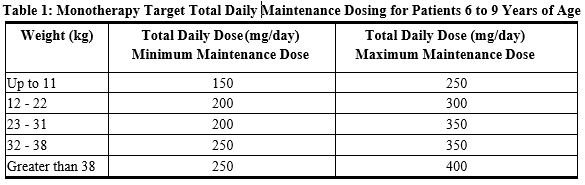
A table titled 'Monotherapy Target Total Daily Maintenance Dosing for Patients 6 to 9 Years of Age' showing weight categories in kilograms and corresponding minimum and maximum total daily doses in mg/day. It details dose ranges based on patient weight from up to 11 kg to greater than 38 kg.*
FDA Label Image

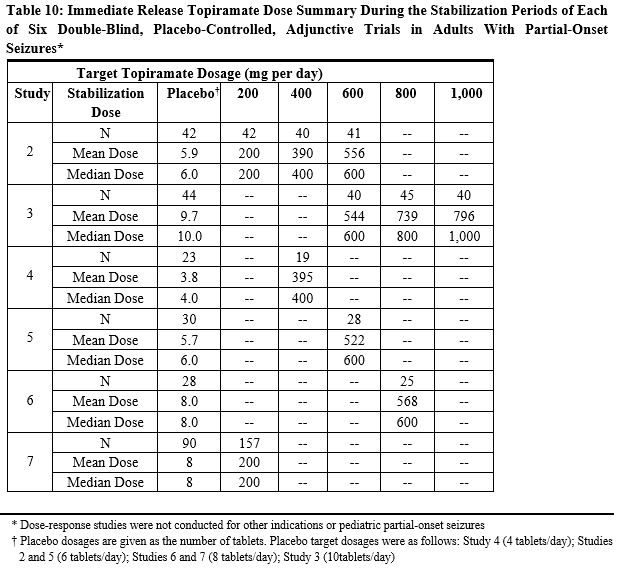
Table 10 (Table 10)

Table 10 (Table 10)
A data table summarizing immediate release Topiramate doses during stabilization periods in six double-blind, placebo-controlled, adjunctive trials in adults with partial-onset seizures. It details study numbers, stabilization doses, placebo group sizes, and mean/median doses for daily Topiramate dosages of 200 to 1,000 mg.*
FDA Label Image

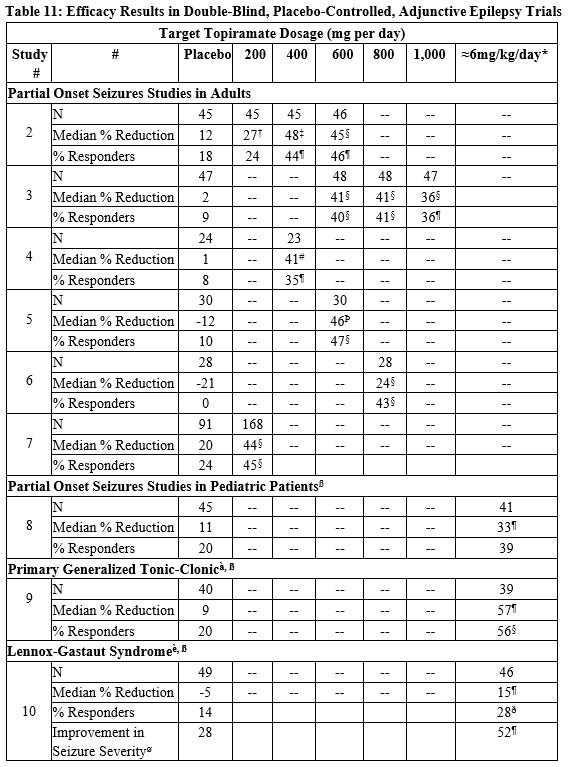
Table 11.1 (Table 11.1)

Table 11.1 (Table 11.1)
A data table titled 'Efficacy Results in Double-Blind, Placebo-Controlled, Adjunctive Epilepsy Trials' presenting target Topiramate dosages in mg per day ranging from placebo to 1,000 mg and approximately 6 mg/kg/day. It summarizes median percentage reduction and percentage of responders for partial onset seizures in adults and pediatric patients, primary generalized tonic-clonic seizures, and Lennox-Gastaut Syndrome across multiple studies.*
FDA Label Image

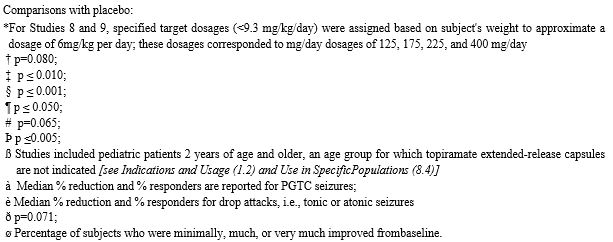
Table 11.2 (Table 11.2)

Table 11.2 (Table 11.2)
A text panel containing footnotes and statistical annotations related to clinical studies of topiramate extended-release capsules. It includes information on dosage assignment based on body weight, significance levels for study results, patient age groups, and seizure response metrics.*
FDA Label Image

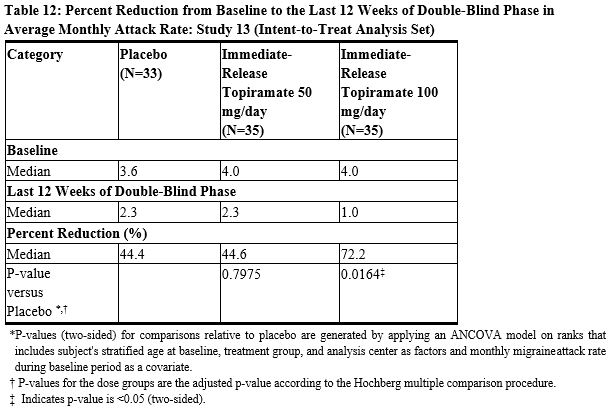
Table 12 (Table 12)

Table 12 (Table 12)
A data table titled "Percent Reduction from Baseline to the Last 12 Weeks of Double-Blind Phase in Average Monthly Attack Rate: Study 13 (Intent-to-Treat Analysis Set)." It compares placebo, immediate-release Topiramate 50 mg/day, and immediate-release Topiramate 100 mg/day groups on baseline median, last 12 weeks median, median percent reduction, and p-values versus placebo.*
FDA Label Image

Table 2 (Table 2)

Table 2 (Table 2)
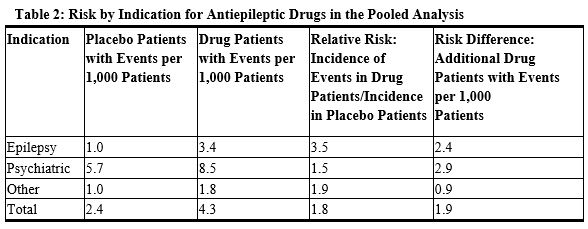
A data table titled 'Risk by Indication for Antiepileptic Drugs in the Pooled Analysis' showing the incidence of events across placebo patients and drug patients per 1,000 patients. The table includes columns for indication types (Epilepsy, Psychiatric, Other, Total), event rates in placebo and drug patients, relative risk, and risk difference for additional drug patients with events per 1,000 patients.*
FDA Label Image

Table 3.1 (Table 3.1)

Table 3.1 (Table 3.1)
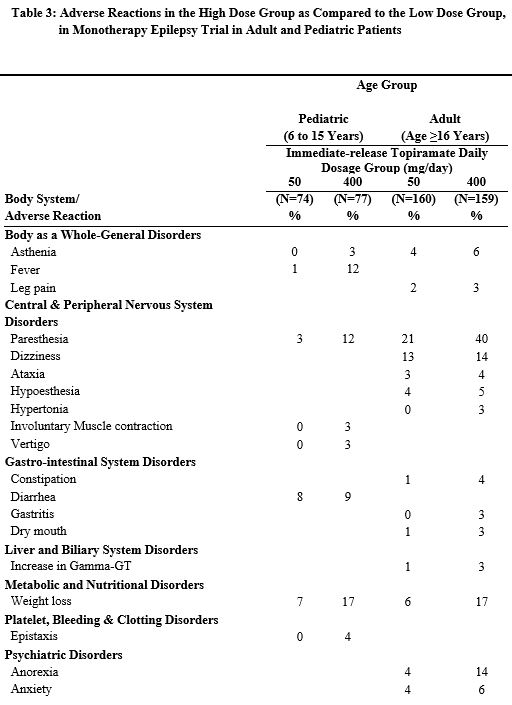
A data table titled 'Adverse Reactions in the High Dose Group as Compared to the Low Dose Group, in Monotherapy Epilepsy Trial in Adult and Pediatric Patients.' It presents percentages of various adverse reactions by body system for pediatric (6 to 15 years) and adult (age ≥16 years) groups receiving immediate-release topiramate daily dosages of 50 mg and 400 mg for pediatrics, and 50 mg and 400 mg for adults. Adverse reactions listed include general disorders, nervous system disorders, gastrointestinal issues, liver and biliary disorders, metabolic and nutritional disorders, bleeding and clotting disorders, and psychiatric disorders.*
FDA Label Image

Table 3.2 (Table 3.2)

Table 3.2 (Table 3.2)
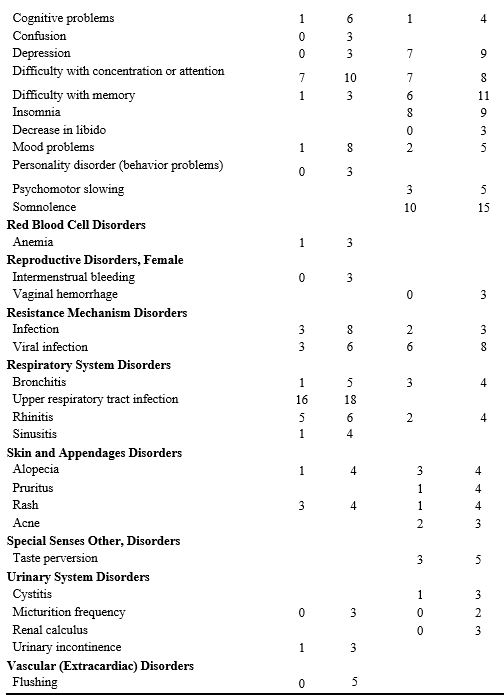
A data table listing various side effects or disorders across several categories including cognitive problems, red blood cell disorders, female reproductive disorders, resistance mechanism disorders, respiratory system disorders, skin and appendages disorders, special senses, urinary system disorders, and vascular disorders. Each row shows different symptoms or conditions with associated numerical values likely representing incidence or frequencies.*
FDA Label Image

Table 4.1 (Table 4.1)

Table 4.1 (Table 4.1)
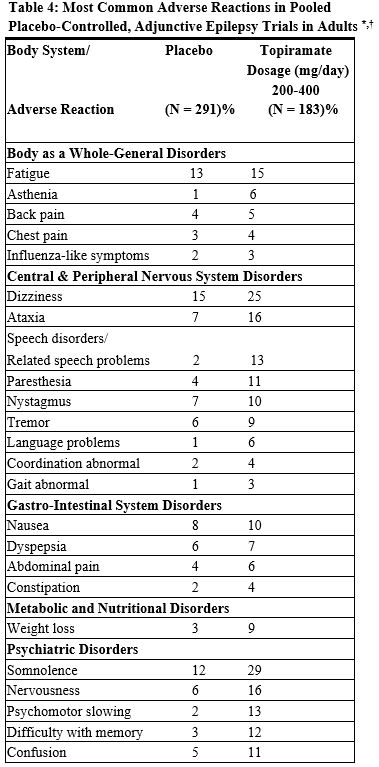
A data table titled 'Most Common Adverse Reactions in Pooled Placebo-Controlled, Adjunctive Epilepsy Trials in Adults' comparing percent incidence of adverse reactions between placebo and Topiramate dosages 200-400 mg/day. It categorizes reactions by body system, including general disorders, nervous system, gastrointestinal, metabolic, and psychiatric disorders, showing higher rates for several reactions in the Topiramate group than placebo.*
FDA Label Image

Table 4.2 (Table 4.2)

Table 4.2 (Table 4.2)
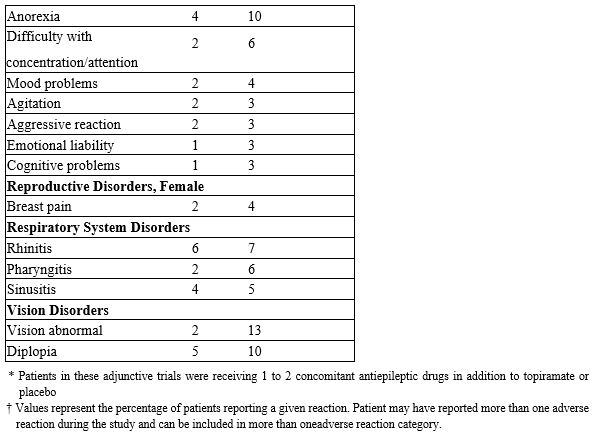
A table listing various adverse reactions grouped by categories such as cognitive, reproductive, respiratory, and vision system disorders. It shows the number and percentage of patients reporting reactions like anorexia, difficulty with concentration, mood problems, rhinitis, sinusitis, and vision abnormalities. Footnotes explain patient treatment context and data reporting details.*
FDA Label Image

Table 5.1 (Table 5.1)

Table 5.1 (Table 5.1)
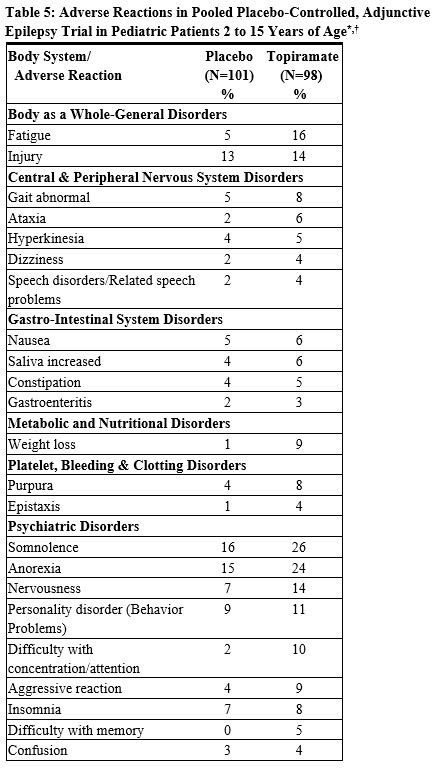
Data table listing adverse reactions reported in a pooled placebo-controlled adjunctive epilepsy trial with pediatric patients aged 2 to 15 years, comparing placebo and Topiramate treatment groups. The table categorizes reactions by body system, such as general disorders, nervous system, gastrointestinal, metabolic, bleeding disorders, and psychiatric disorders, showing the percentage occurrence for each group.*
FDA Label Image

Table 5.2 (Table 5.2)

Table 5.2 (Table 5.2)
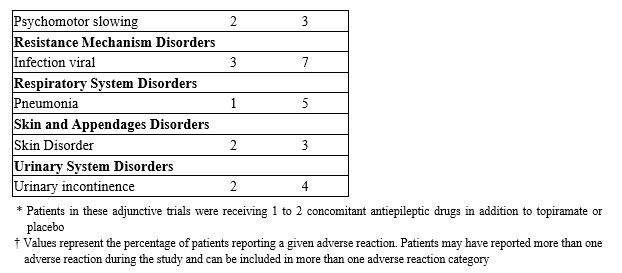
A data table summarizing adverse reaction rates in clinical trials, categorized by system disorders such as resistance mechanism disorders, respiratory system disorders, skin and appendages disorders, and urinary system disorders. The table also includes notes regarding concomitant antiepileptic drug use and the calculation of percentage values for reported adverse reactions.*
FDA Label Image

Table 6.1 (Table 6.1)

Table 6.1 (Table 6.1)
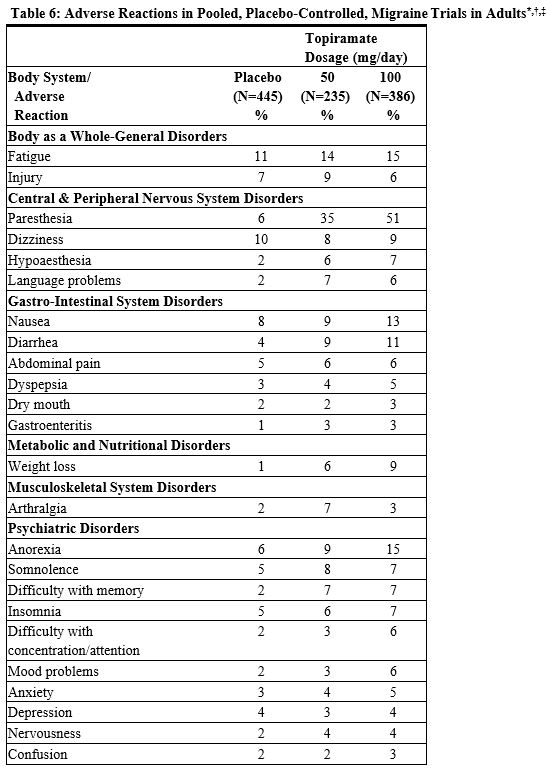
Data table presenting adverse reactions in pooled, placebo-controlled migraine trials in adults taking Topiramate at dosages of 50 mg and 100 mg per day compared to placebo. The table categorizes adverse reactions by body system, listing percentages of occurrence for each dose and placebo, including nervous system disorders, gastrointestinal issues, metabolic, musculoskeletal, and psychiatric disorders.*
FDA Label Image

Table 6.2 (Table 6.2)

Table 6.2 (Table 6.2)
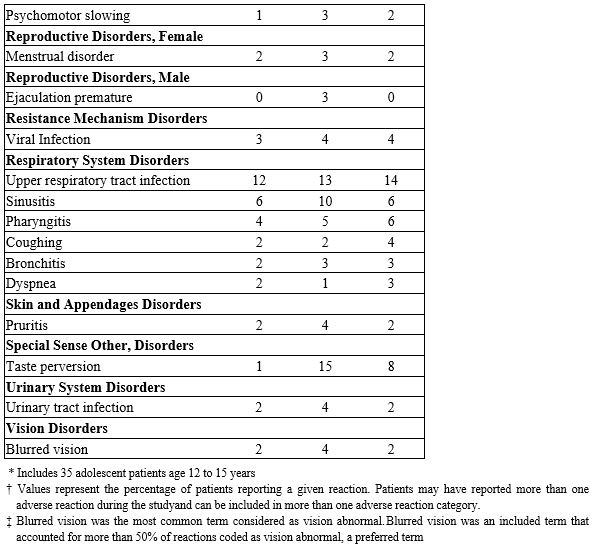
A data table presenting the percentage of adolescent patients (ages 12 to 15) reporting various adverse reactions categorized by system disorders during a study. Categories include reproductive disorders, resistance mechanism disorders, respiratory system disorders, skin and appendages disorders, special sense other disorders, urinary system disorders, and vision disorders, with specific reactions and corresponding percentage values.*
FDA Label Image

Table 7 (Table 7)

Table 7 (Table 7)
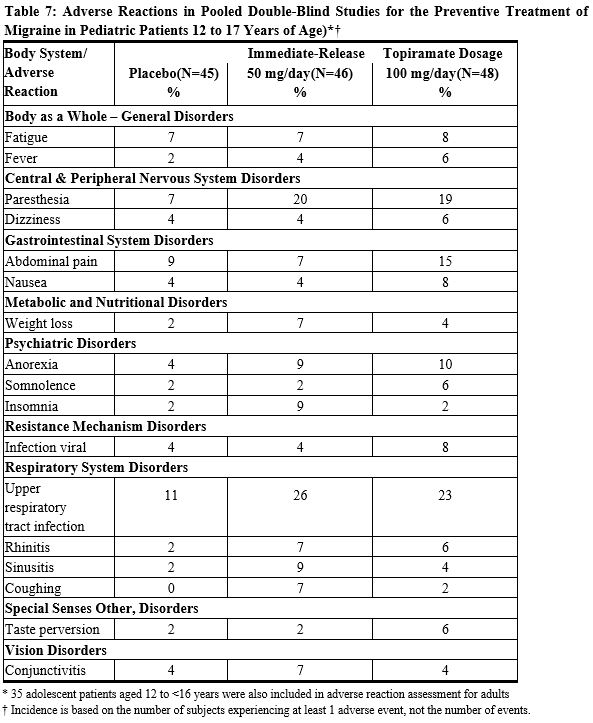
A data table showing adverse reactions in pooled double-blind studies for preventive treatment of migraine in pediatric patients 12 to 17 years old. It compares placebo, immediate-release topiramate (50 mg/day), and topiramate dosage (100 mg/day) across various body system disorders, listing percentages of subjects experiencing specific adverse reactions such as fatigue, paresthesia, abdominal pain, anorexia, upper respiratory tract infection, and vision disorders.*
FDA Label Image

Table 8 (Table 8)

Table 8 (Table 8)
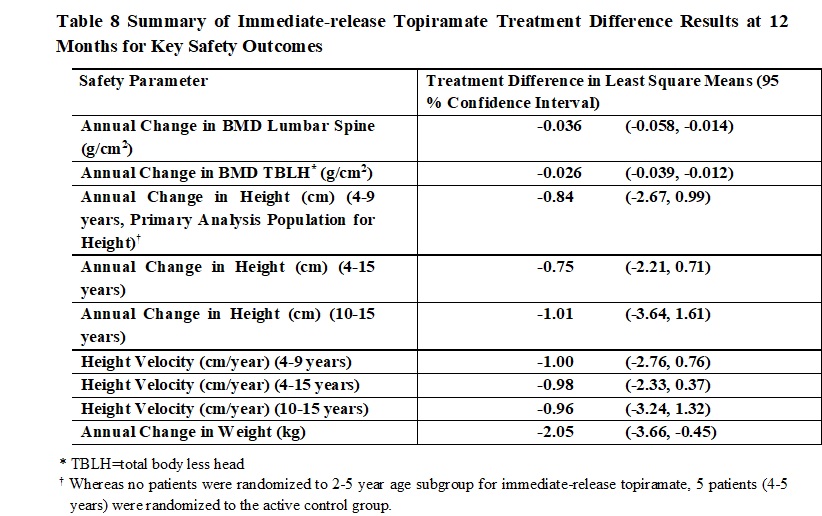
A data table titled 'Summary of Immediate-release Topiramate Treatment Difference Results at 12 Months for Key Safety Outcomes.' It lists safety parameters such as annual changes in bone mineral density (BMD) of the lumbar spine and total body less head (TBLH), annual changes in height across different age groups, height velocity, and annual changes in weight. The table presents treatment differences in least square means with 95% confidence intervals for these safety parameters.*
FDA Label Image

Table 9 (Table 9)

Table 9 (Table 9)
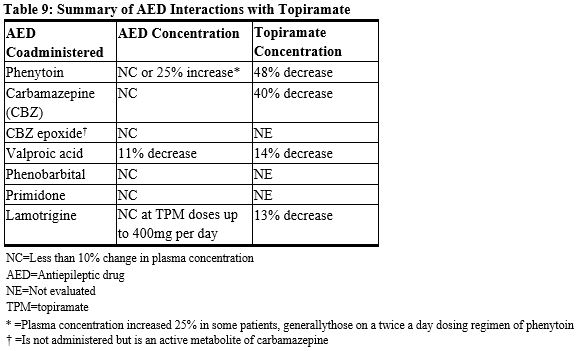
A data table titled 'Summary of AED Interactions with Topiramate' showing the effects of various antiepileptic drugs (AEDs) coadministered with Topiramate on their plasma concentrations and Topiramate concentrations. The table includes drugs such as Phenytoin, Carbamazepine, Valproic acid, Phenobarbital, Primidone, and Lamotrigine, with notes on plasma concentration changes, and explanations of abbreviations used in the table.*

* About these descriptions: Image descriptions on this page are generated by automated AI analysis of the product label images from the manufacturer's FDA label submission (SPL). They are provided for reference only and may contain errors or omissions. Always rely on the printed label itself and the official FDA labeling, and consult a pharmacist or healthcare professional with any questions about this product.