Aripiprazole Tablet
Product Images NDC 31722-919

View Photos of Packaging, Regulatory Labels, and Product Appearance

Product Visual Gallery

This gallery contains 27 technical images submitted to the FDA as part of the official labeling for Aripiprazole (NDC 31722-919). Unlike standard consumer photos, these assets often include clinical data figures, molecular chemical structures, and official manufacturer packaging layouts.

As provided by Camber Pharmaceuticals, Inc., these visuals offer a comprehensive scientific overview of the product's physical and chemical identity, aiding pharmacists and researchers in product verification and study.

FDA Label Image

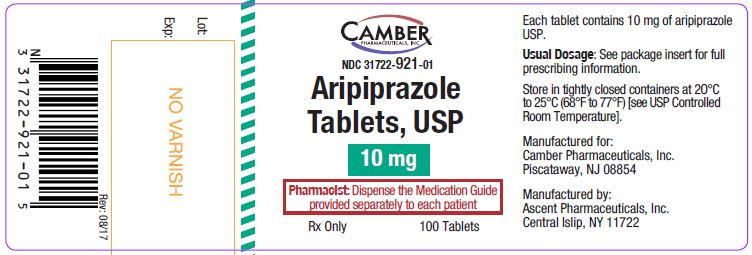
10mg (10mg)

10mg (10mg)
Aripiprazole Tablets USP 10 mg oral tablets packaging label by Camber Pharmaceuticals, Inc. The label shows the strength of 10 mg per tablet and a count of 100 tablets. It includes directions to dispense the Medication Guide to each patient and storage instructions at 20°C to 25°C. Manufacturer details for both Camber Pharmaceuticals and Ascent Pharmaceuticals are present.*
FDA Label Image

15mg (15mg)

15mg (15mg)
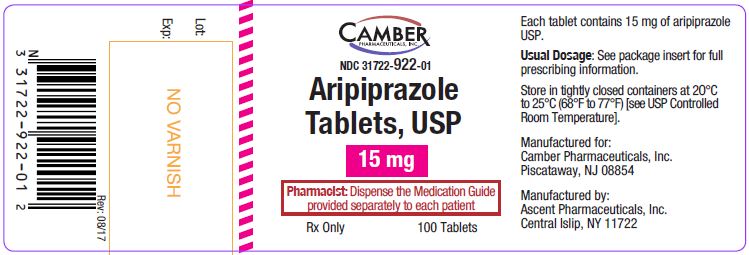
Label for Aripiprazole tablets, USP 15 mg, oral dosage form from Camber Pharmaceuticals, Inc. The label includes the NDC 31722-922-01 and indicates a package of 100 tablets. It instructs pharmacists to dispense the Medication Guide separately and provides storage conditions and manufacturer information for Camber Pharmaceuticals and Ascent Pharmaceuticals.*
FDA Label Image

20mg (20mg)

20mg (20mg)
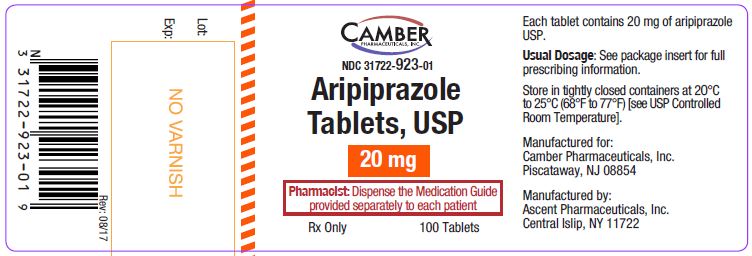
Label for Aripiprazole Tablets, USP 20 mg by Camber Pharmaceuticals, Inc. The label states the product name, strength, and dosage form as tablets. It includes a note for pharmacists to dispense the medication guide separately. The package contains 100 tablets and is for prescription use only. Storage and manufacturing information is also provided.*
FDA Label Image

2mg (2mg)

2mg (2mg)
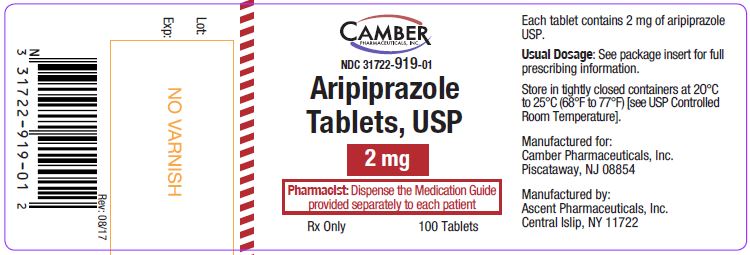
Label for Aripiprazole Tablets USP, 2 mg strength, oral tablet form, supplied by Camber Pharmaceuticals, Inc. The label states 100 tablets per container and includes instructions for pharmacists to dispense a Medication Guide. Storage instructions and manufacturer details are also visible.*
FDA Label Image

30mg (30mg)

30mg (30mg)
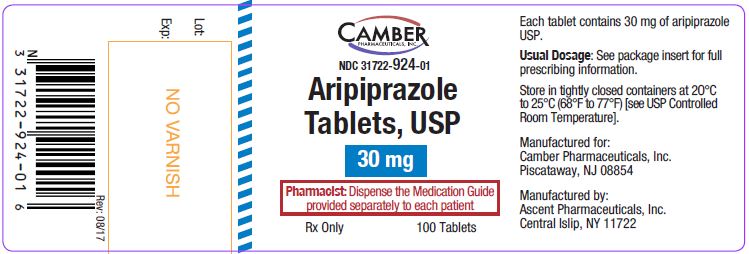
Label for Aripiprazole Tablets USP 30 mg by Camber Pharmaceuticals, Inc. The label includes a barcode, NDC 31722-924-01, and states the package contains 100 tablets. It instructs pharmacists to dispense the medication guide separately. Storage instructions and manufacturing details by Camber Pharmaceuticals (Piscataway, NJ) and Ascent Pharmaceuticals (Central Islip, NY) are also present.*
FDA Label Image

5.4 (5.4)

5.4 (5.4)
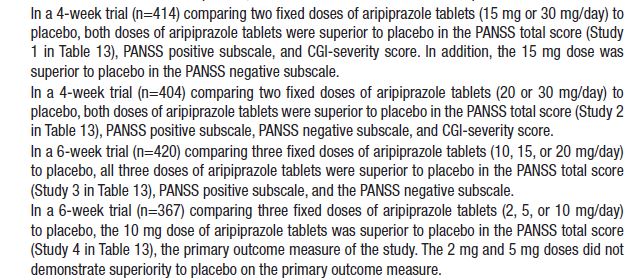
Text summarizing clinical trial results comparing various fixed doses of aripiprazole tablets (2 mg to 30 mg per day) to placebo. The studies assess the efficacy of aripiprazole in PANSS total score, positive and negative subscales, and CGI-severity score, indicating dose-dependent superiority over placebo in multiple measures.*
FDA Label Image

5.7 (5.7)

5.7 (5.7)
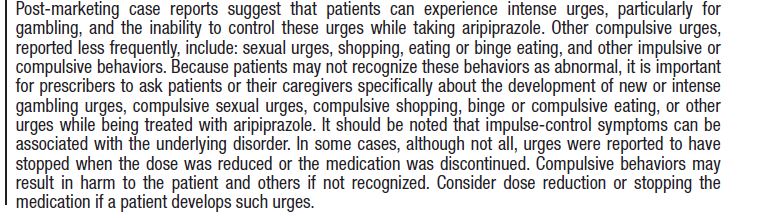
Text excerpt from aripiprazole prescribing information discussing post-marketing reports of patients experiencing intense urges such as gambling or compulsive behaviors including sexual urges, shopping, and binge eating. It highlights the need for prescribers to inquire about such urges and considers dose adjustment or discontinuation if these urges develop.*
FDA Label Image

5.9 (5.9)

5.9 (5.9)
A text panel excerpt discussing potential side effects of antipsychotics, including aripiprazole tablets. It mentions risks such as somnolence, postural hypotension, motor and sensory instability, and the importance of assessing risk factors for fractures or injuries in patients starting or continuing antipsychotic treatment.*
FDA Label Image

5mg (5mg)

5mg (5mg)
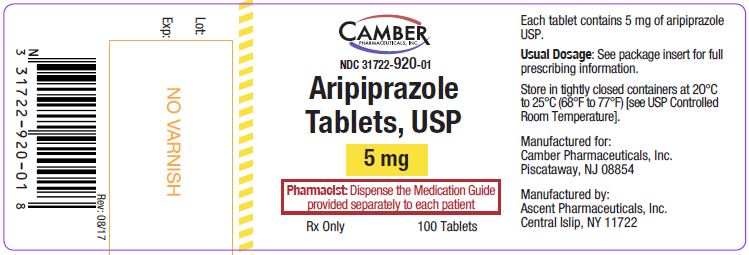
Aripiprazole Tablets USP, 5 mg oral tablets by Camber Pharmaceuticals, Inc. The label indicates 100 tablets per container, with an NDC of 31722-920-01. It includes storage instructions, dispensing information for pharmacists, and manufacturing details for Camber Pharmaceuticals and Ascent Pharmaceuticals.*
FDA Label Image

Figure2 (Figure2)

Figure2 (Figure2)
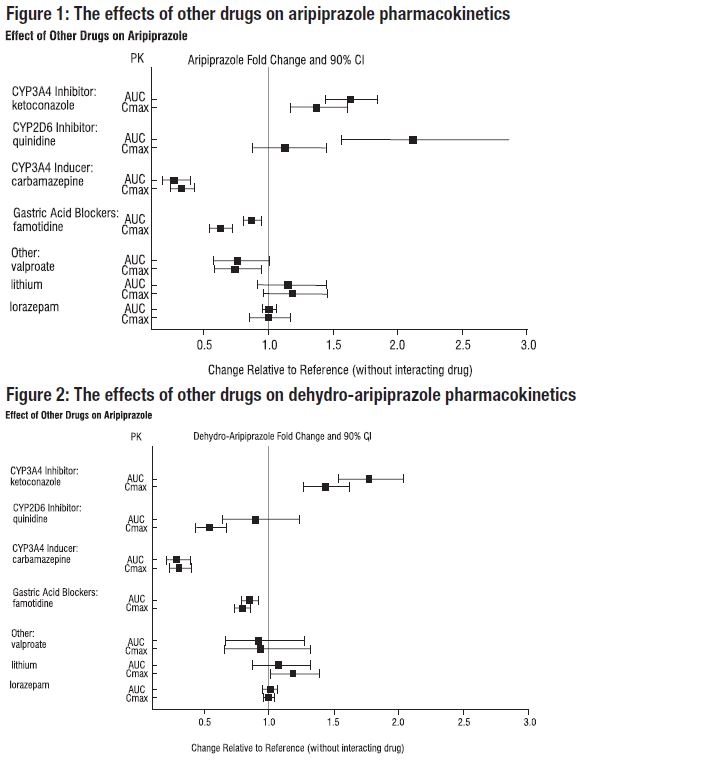
Two pharmacokinetic graphs illustrating effects of various other drugs on aripiprazole and dehydro-aripiprazole. Each chart shows fold change and 90% confidence intervals for AUC and Cmax parameters relative to reference without interacting drugs. Drugs assessed include CYP3A4 inhibitors (ketoconazole), CYP2D6 inhibitors (quinidine), CYP3A4 inducers (carbamazepine), gastric acid blockers (famotidine), and others (valproate, lithium, lorazepam).*
FDA Label Image

Figure3 (Figure3)

Figure3 (Figure3)
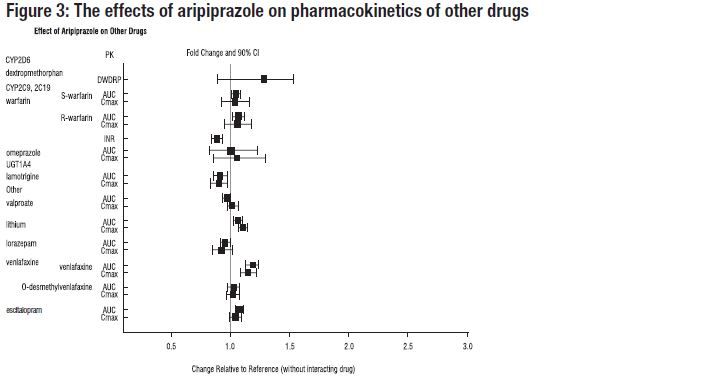
A pharmacokinetic chart illustrating the effects of aripiprazole on various drugs. The horizontal axis represents fold change relative to reference (without interacting drug), ranging from 0.5 to 3.0. The vertical axis lists drugs metabolized by CYP2D6, CYP2C9, CYP1A4, and other enzymes. Error bars indicate 90% confidence intervals for changes in pharmacokinetic parameters such as AUC, Cmax, INR, and DWRP.*
FDA Label Image

Figure5 (Figure5)

Figure5 (Figure5)
Two charts showing the pharmacokinetic fold change and 90% confidence intervals for aripiprazole and dehydro-aripiprazole. Each chart compares effects of intrinsic factors including CYP2D6 metabolizer status, gender, age groups, hepatic impairment severity, and severe renal impairment on the AUC and Cmax relative to reference populations.*
FDA Label Image

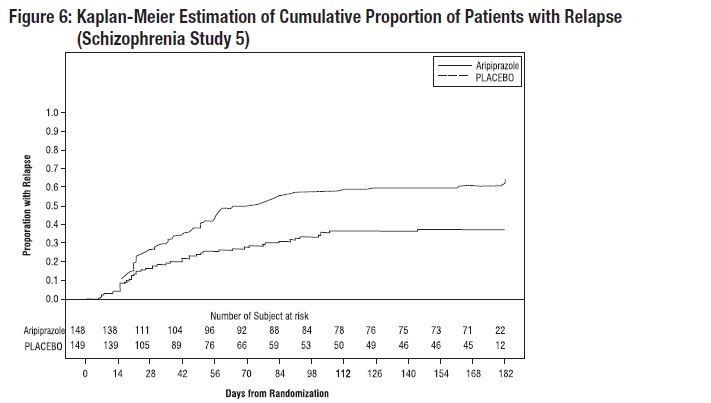
Figure6 (Figure6)

Figure6 (Figure6)
Kaplan-Meier plot showing the cumulative proportion of patients with relapse over days from randomization in a schizophrenia study. Two curves compare aripiprazole and placebo groups, with numbers of subjects at risk listed below the x-axis. The y-axis represents proportion with relapse from 0 to 1, and the x-axis shows days up to 182.*
FDA Label Image

Mg3 (Mg3)

Mg3 (Mg3)
A text panel providing warnings and instructions related to monitoring mood, behavior, thoughts, or feelings when starting or adjusting an antidepressant medication. It advises contacting a healthcare provider promptly if new or worsening symptoms occur and emphasizes keeping follow-up appointments as scheduled.*
FDA Label Image

Mg1 (Mg1)

Mg1 (Mg1)
A text panel discussing potential side effects of aripiprazole tablets, including high blood sugar (hyperglycemia), increased fat levels in blood, and weight gain. It highlights symptoms of high blood sugar such as thirst, frequent urination, hunger, weakness, stomach sickness, and fruity-smelling breath, advising patients to consult healthcare providers.*
FDA Label Image

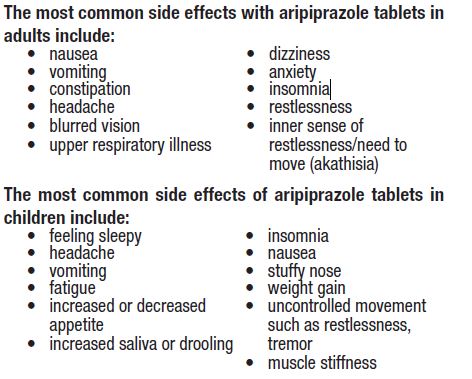
Mg2 (Mg2)

Mg2 (Mg2)
A text panel listing the most common side effects of aripiprazole tablets in adults and children. Adult side effects include nausea, vomiting, constipation, headache, blurred vision, upper respiratory illness, dizziness, anxiety, insomnia, restlessness, and akathisia. Children's side effects include sleepiness, headache, vomiting, fatigue, appetite changes, drooling, insomnia, nausea, stuffy nose, weight gain, tremor, and muscle stiffness.*
FDA Label Image

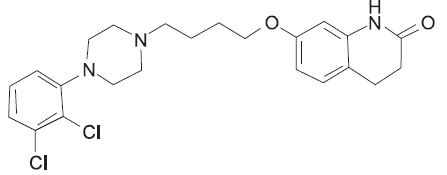
Structure (Structure)

Structure (Structure)
Chemical structure of aripiprazole, the active ingredient in ARIPIPRAZOLE tablets by Camber Pharmaceuticals, Inc. The diagram shows the molecular arrangement including rings, chlorine atoms, and functional groups characteristic of aripiprazole.*
FDA Label Image

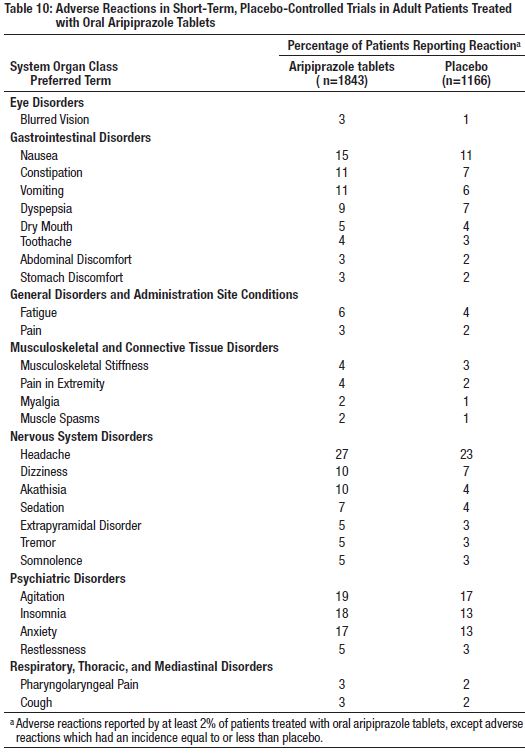
Tab10 (Tab10)

Tab10 (Tab10)
A data table titled 'Adverse Reactions in Short-Term, Placebo-Controlled Trials in Adult Patients Treated with Oral Aripiprazole Tablets.' It lists system organ classes and preferred terms for adverse reactions with corresponding percentages of patients reporting each reaction for aripiprazole tablets (n=1843) and placebo (n=1166). Categories include Eye Disorders, Gastrointestinal Disorders, General Disorders, Musculoskeletal Disorders, Nervous System Disorders, Psychiatric Disorders, and Respiratory Disorders.*
FDA Label Image

Tab11 (Tab11)

Tab11 (Tab11)
Table listing adverse reactions in short-term, placebo-controlled trials of pediatric patients (6 to 18 years) treated with oral aripiprazole tablets. It compares percentages of patients reporting various adverse events by system organ class between those taking aripiprazole and placebo groups.*
FDA Label Image

Tab12 (Tab12)

Tab12 (Tab12)
A data table listing drug interactions with aripiprazole tablets, including concomitant drug classes such as strong CYP3A4 inhibitors and inducers, antihypertensive drugs, and benzodiazepines. It details the clinical rationale for each interaction and provides clinical recommendations for dose adjustment or monitoring.*
FDA Label Image

Tab13 (Tab13)

Tab13 (Tab13)
Data table titled "Schizophrenia Studies" summarizing efficacy results of aripiprazole tablets in multiple studies. It lists study numbers, treatment groups with various aripiprazole doses in mg/day, and placebo. Columns include mean baseline score, least squares mean change from baseline, and placebo-subtracted differences with confidence intervals for the primary efficacy measure PANNS.*
FDA Label Image

Tab4 (Tab4)

Tab4 (Tab4)
A data table titled "Changes in Fasting Glucose From Placebo-Controlled Monotherapy Trials in Adult Patients". It reports the percentage of patients experiencing category changes in fasting glucose levels from baseline under two treatment arms, Aripiprazole tablets and placebo. The table distinguishes between "Normal to High" (<100 mg/dL to ≥126 mg/dL) and "Borderline to High" (≥100 mg/dL and <126 mg/dL to ≥126 mg/dL) categories, presenting counts and percentages for each group.*
FDA Label Image

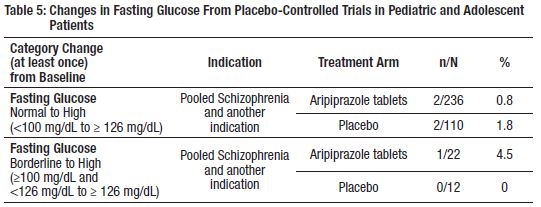
Tab5 (Tab5)

Tab5 (Tab5)
A data table titled 'Changes in Fasting Glucose From Placebo-Controlled Trials in Pediatric and Adolescent Patients' showing results for Aripiprazole tablets versus placebo. It presents categories of fasting glucose changes from baseline, indications, treatment arms, sample sizes, and percentages for pooled schizophrenia and another indication.*
FDA Label Image

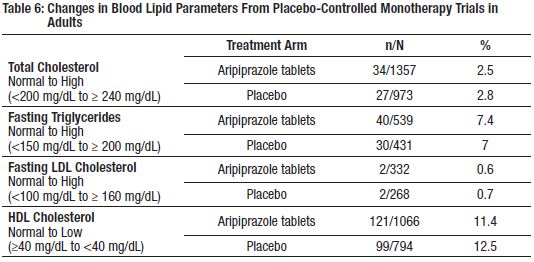
Tab6 (Tab6)

Tab6 (Tab6)
A data table titled 'Changes in Blood Lipid Parameters From Placebo-Controlled Monotherapy Trials in Adults' comparing the percentage and number of patients experiencing changes in total cholesterol, fasting triglycerides, fasting LDL cholesterol, and HDL cholesterol between aripiprazole tablets and placebo groups.*
FDA Label Image

Tab7 (Tab7)

Tab7 (Tab7)
A data table titled 'Table 7: Changes in Blood Lipid Parameters from Placebo-Controlled Monotherapy Trials in Pediatric and Adolescent Patients in Schizophrenia and Another Indication.' It compares lipid changes between aripiprazole tablets and placebo across three parameters: total cholesterol, fasting triglycerides, and HDL cholesterol. The table presents treatment arm, sample sizes, and percentage values for normal to high lipid levels.*
FDA Label Image

Tab8 (Tab8)

Tab8 (Tab8)
A data table showing the percentage of patients with weight gain of 7% or more of body weight in placebo-controlled trials of aripiprazole tablets in adult patients. The table compares aripiprazole tablets and placebo groups for schizophrenia and other indications, listing the number of patients and percentages with weight gain.*
FDA Label Image

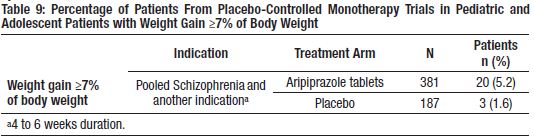
Tab9 (Tab9)

Tab9 (Tab9)
A data table titled 'Percentage of Patients From Placebo-Controlled Monotherapy Trials in Pediatric and Adolescent Patients with Weight Gain ≥7% of Body Weight' showing the number of patients (N) and percentage (%) experiencing weight gain in the Aripiprazole tablets and placebo treatment arms. It compares pooled schizophrenia and another indication over 4 to 6 weeks, with 381 patients in the aripiprazole group and 187 in placebo.*

* About these descriptions: Image descriptions on this page are generated by automated AI analysis of the product label images from the manufacturer's FDA label submission (SPL). They are provided for reference only and may contain errors or omissions. Always rely on the printed label itself and the official FDA labeling, and consult a pharmacist or healthcare professional with any questions about this product.