Topiramate
Product Images NDC 33261-106

12 FDA label images from Aidarex Pharmaceuticals Llc · Packaging, Regulatory Labels, and Product Appearance

Product Visual Gallery

This gallery contains 12 technical images submitted to the FDA as part of the official labeling for Topiramate (NDC 33261-106). Unlike standard consumer photos, these assets often include clinical data figures, molecular chemical structures, and official manufacturer packaging layouts.

As provided by Aidarex Pharmaceuticals Llc, these visuals offer a comprehensive scientific overview of the product's physical and chemical identity, aiding pharmacists and researchers in product verification and study.

FDA Label Image

Table 2 (Part 1)

Table 2 (Part 1)
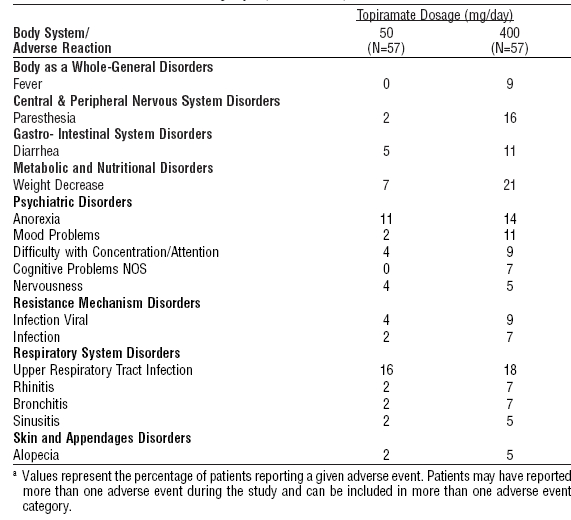
A data table displaying adverse reactions to Topiramate at dosages of 50 mg/day and 400 mg/day across various body systems, including nervous system disorders, gastrointestinal issues, and metabolic effects, with patient counts for each reaction detailed for two dosage groups.*
FDA Label Image

Table 12 (Topiramate 25mg Tab For Glenmark 10)

Table 12 (Topiramate 25mg Tab For Glenmark 10)
Data table showing protocol efficacy results of Topiramate in various dosages (mg/day) compared to placebo, including median percentage reduction and percentage responders for different seizure types and study populations, such as adults with partial onset seizures and pediatric patients. The table details outcomes for multiple dosage levels ranging from 200 to 1000 mg/day across different study groups.*
FDA Label Image

Glenmark Logo (Topiramate 25mg Tab For Glenmark 11)

FDA Label Image

Image Label (Topiramate 25mg Tab For Glenmark 12)

Image Label (Topiramate 25mg Tab For Glenmark 12)
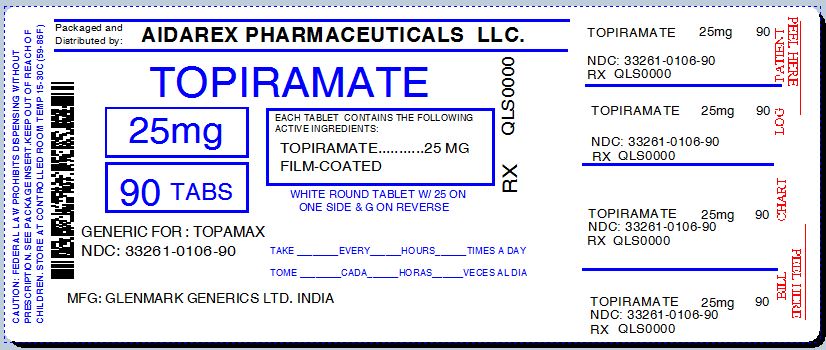
Topiramate 25mg tablet bottle label by Aidarex Pharmaceuticals LLC. The label states 90 film-coated, white round tablets with the imprint 25. It is a generic version of Topamax, manufactured by Glenmark Generics Ltd, India. NDC 33261-0106-90 is shown along with typical pharmacy label areas for dosing instructions and barcodes.*
FDA Label Image

Table 2 (Part 2)

Table 2 (Part 2)
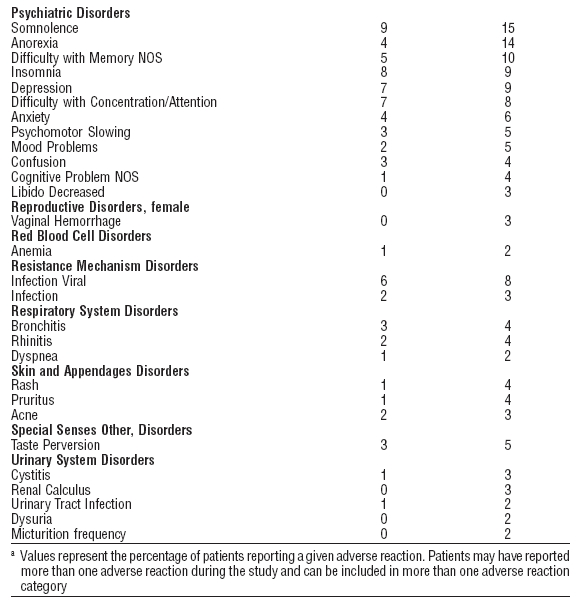
This data table presents the percentage of patients reporting various adverse reactions across multiple disorder categories during a study. Categories include psychiatric disorders, reproductive disorders (female), red blood cell disorders, resistance mechanism disorders, respiratory system disorders, skin and appendages disorders, special senses disorders, and urinary system disorders. Each adverse reaction is accompanied by two columns of percentage values representing different patient groups or time points.*
FDA Label Image

Table 3 (Topiramate 25mg Tab For Glenmark 3)

Table 3 (Topiramate 25mg Tab For Glenmark 3)
This table presents adverse reactions reported by patients at two dosage levels (50 mg/day and 400 mg/day) of Topiramate. It categorizes side effects by body systems, including general disorders, nervous system, gastrointestinal, metabolic, psychiatric, resistance mechanism, respiratory, and skin disorders, with respective counts for each dosage group.*
FDA Label Image

Table 4 (Topiramate 25mg Tab For Glenmark 4)

Table 4 (Topiramate 25mg Tab For Glenmark 4)
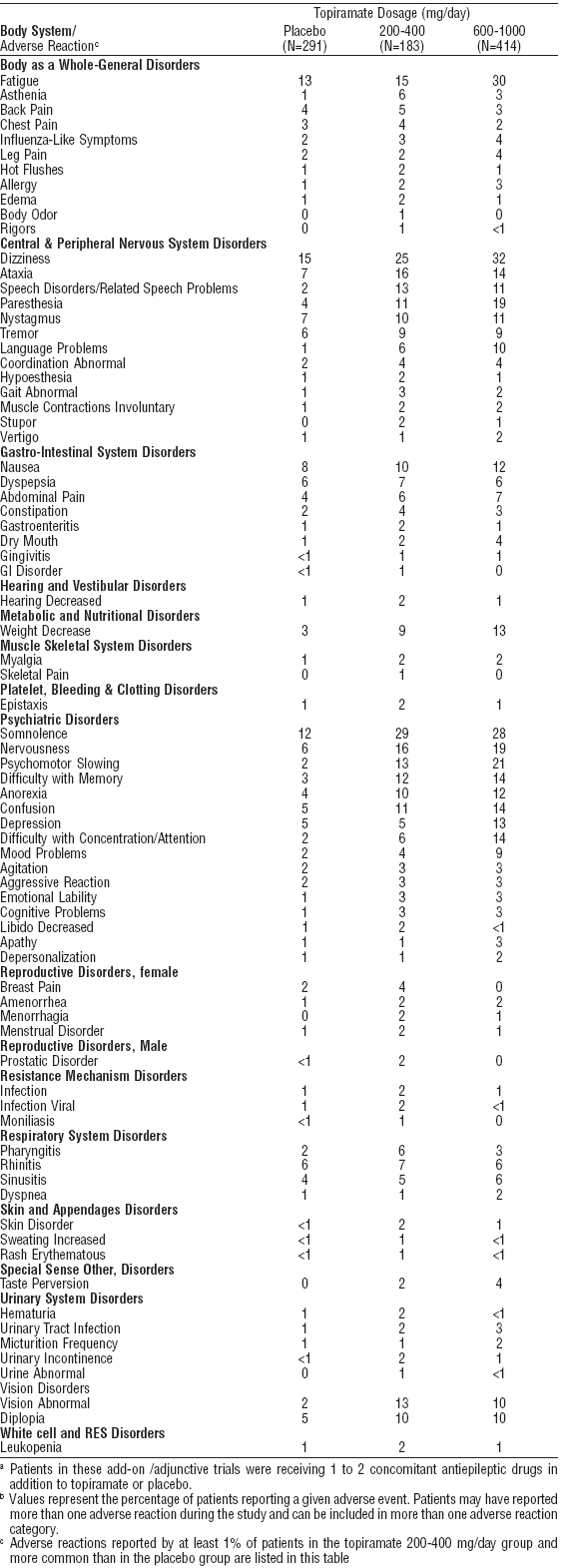
A data table presenting the percentage of patients experiencing various adverse reactions by body system for Topiramate at dosages of 200-400 mg/day and 600-1000 mg/day, compared to placebo. Categories include general disorders, nervous system, gastrointestinal, psychiatric, reproductive, respiratory, skin, urinary, and blood disorders among others, with corresponding patient counts for each group.*
FDA Label Image

Table 5 (Topiramate 25mg Tab For Glenmark 5)

Table 5 (Topiramate 25mg Tab For Glenmark 5)
A data table presenting the incidence of adverse reactions by body system for Topiramate at 200 mg/day compared to placebo. It lists various disorders and specific adverse reactions with patient percentages, showing a higher occurrence in the Topiramate group for symptoms such as fatigue, somnolence, dizziness, and others. Footnotes note the study context and interpretation details.*
FDA Label Image

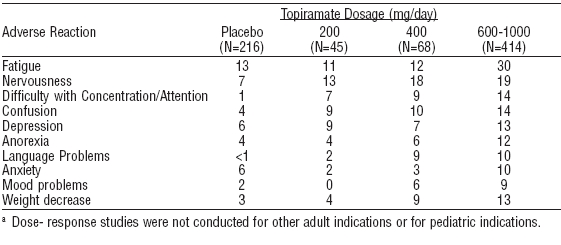
Table 6 (Topiramate 25mg Tab For Glenmark 6)

Table 6 (Topiramate 25mg Tab For Glenmark 6)
A data table titled 'Topiramate Dosage (mg/day)' showing adverse reactions to Topiramate at different dose levels (Placebo, 200, 400, and 600-1000 mg/day) with sample sizes listed. The table lists rates of fatigue, nervousness, difficulty with concentration/attention, confusion, depression, anorexia, language problems, anxiety, mood problems, and weight decrease. A footnote indicates dose-response studies were not conducted for other adult or pediatric indications.*
FDA Label Image

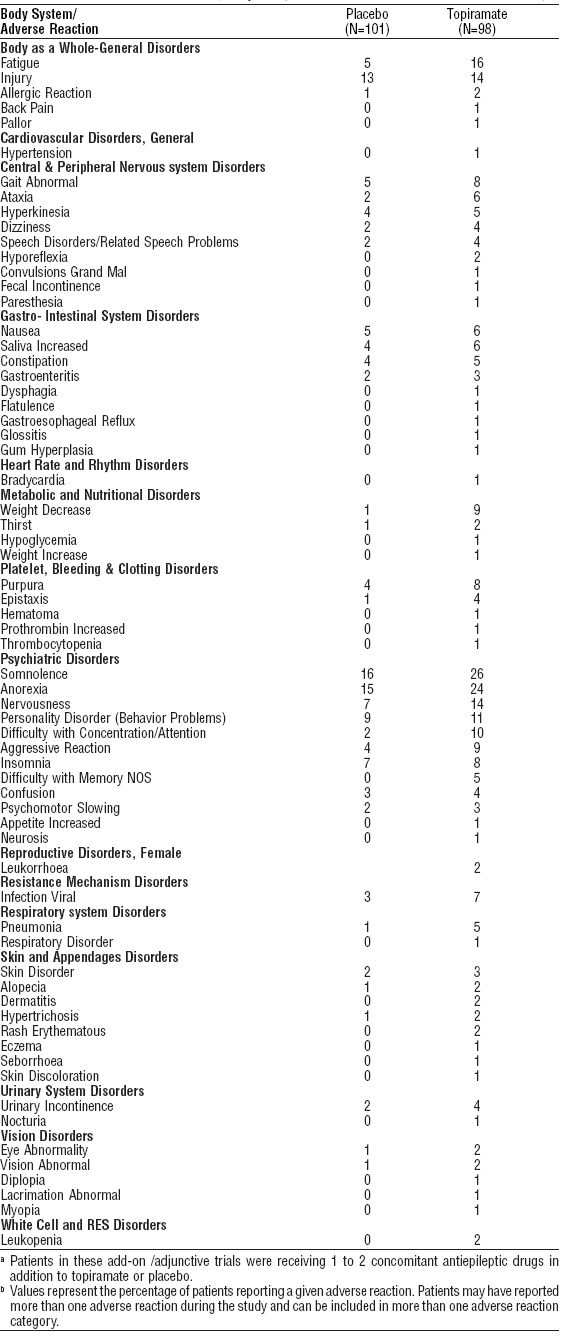
Table 7 (Topiramate 25mg Tab For Glenmark 7)

Table 7 (Topiramate 25mg Tab For Glenmark 7)
A data table comparing the frequency of adverse reactions between placebo (N=101) and Topiramate (N=98) groups across multiple body systems and disorders. The table lists adverse reactions such as fatigue, hypertension, dizziness, nausea, somnolence, and various psychiatric, gastrointestinal, respiratory, skin, urinary, vision, and blood disorders, with corresponding patient counts for each treatment group.*
FDA Label Image

Structure Of Topiramate (Topiramate 25mg Tab For Glenmark 8)

Structure Of Topiramate (Topiramate 25mg Tab For Glenmark 8)
Chemical structure diagram of Topiramate, showing its molecular components and stereochemistry with oxygen, carbon, sulfur, nitrogen, and hydrogen atoms arranged in a complex cyclic structure.*
FDA Label Image

Figure 1 (Topiramate 25mg Tab For Glenmark 9)

Figure 1 (Topiramate 25mg Tab For Glenmark 9)
A Kaplan-Meier curve showing cumulative rates for time to first seizure over 500 days for Topiramate at 50 mg/day and 400 mg/day doses, with the 50 mg/day group showing higher seizure rates. The chart includes sample sizes (N=234 and N=236) and a significance p-value of 0.0002.*

* About these descriptions: Image descriptions on this page are generated by automated AI analysis of the product label images from the manufacturer's FDA label submission (SPL). They are provided for reference only and may contain errors or omissions. Always rely on the printed label itself and the official FDA labeling, and consult a pharmacist or healthcare professional with any questions about this product.