Apixaban Tablet, Film Coated
Product Images NDC 33342-337

View Photos of Packaging, Regulatory Labels, and Product Appearance

Product Visual Gallery

This gallery contains 12 technical images submitted to the FDA as part of the official labeling for Apixaban (NDC 33342-337). Unlike standard consumer photos, these assets often include clinical data figures, molecular chemical structures, and official manufacturer packaging layouts.

As provided by Macleods Pharmaceuticals Limited, these visuals offer a comprehensive scientific overview of the product's physical and chemical identity, aiding pharmacists and researchers in product verification and study.

FDA Label Image

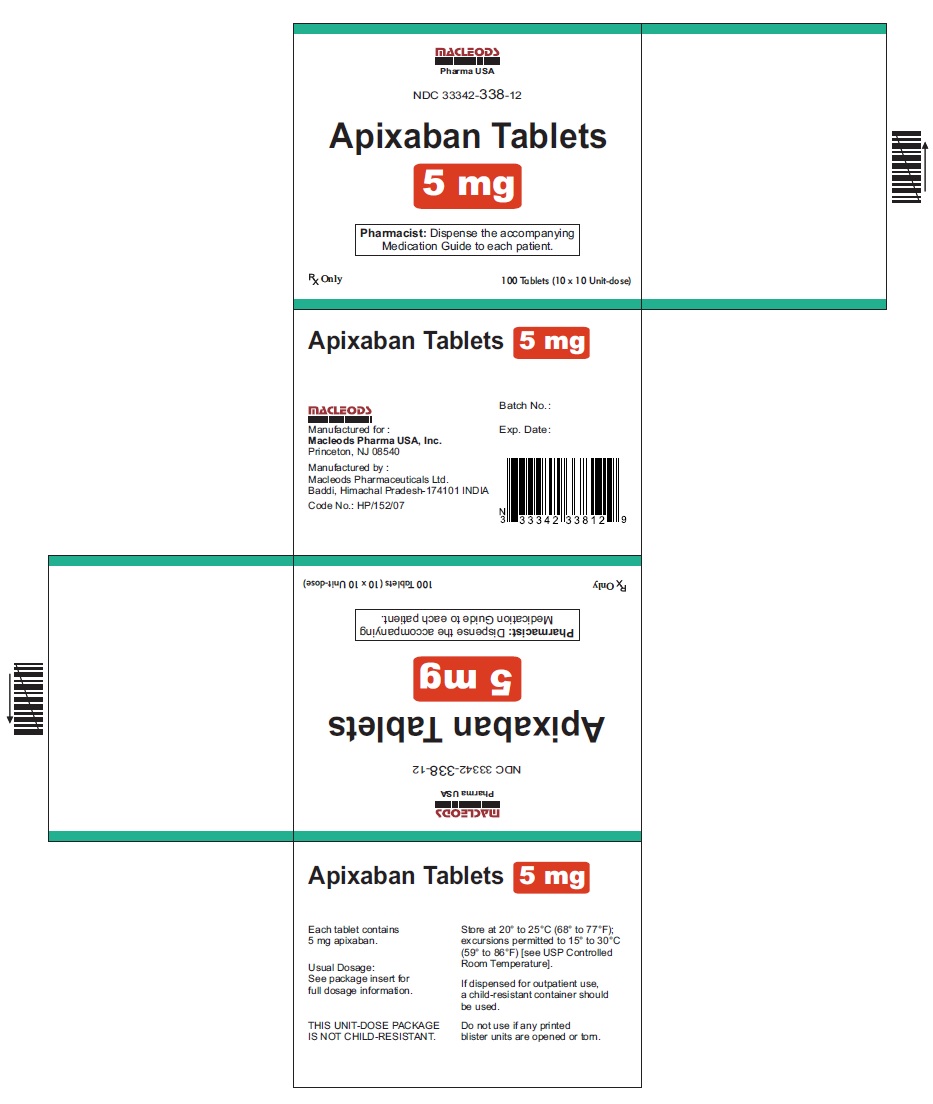
889 (Apixaban 2 5mg 100s Carton)
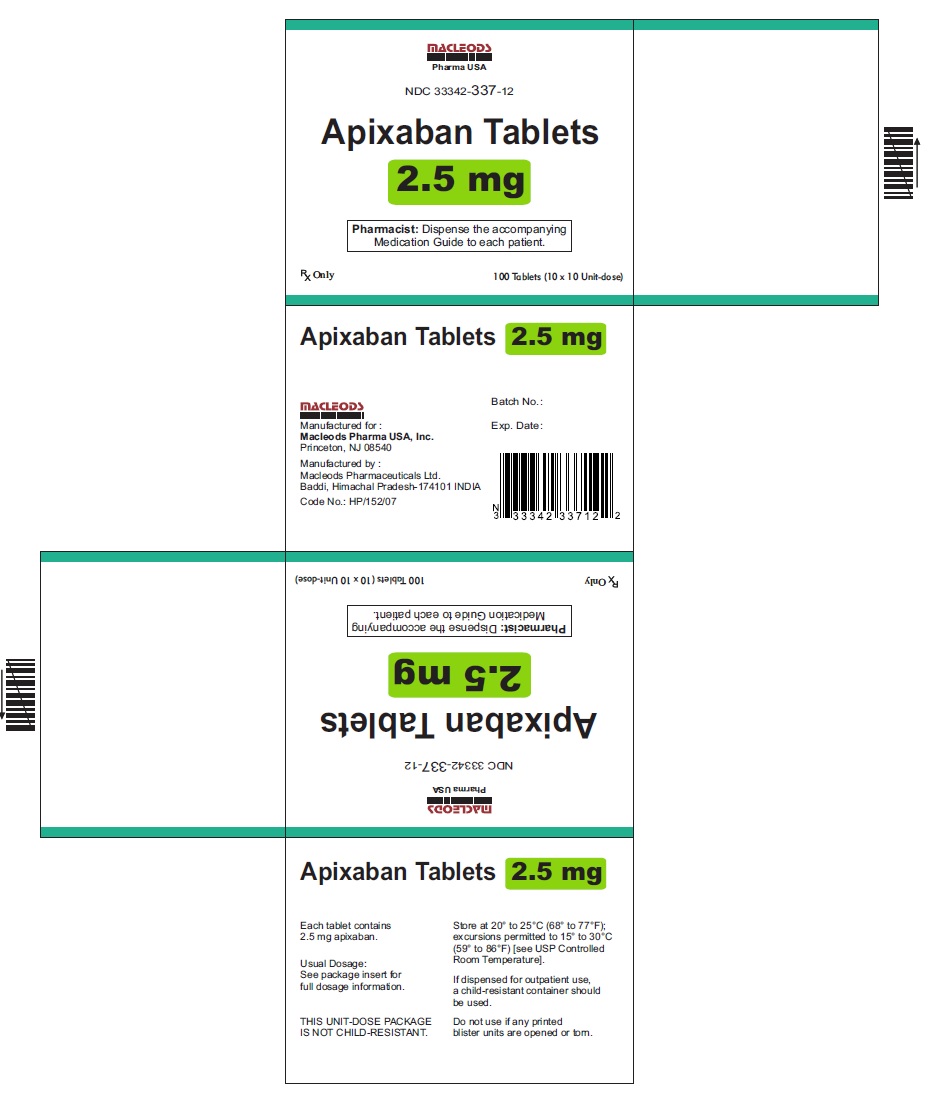
889 (Apixaban 2 5mg 100s Carton)
This is a description for Apixaban Tablets, identified with National Drug Code 33342-337-12. The text also indicates the necessity for pharmacists to provide a Medication Guide to each patient. The tablets are 2.5 mg and come in a unit-dose package. The packaging should contain essential dosage information for patient use. Additionally, caution is advised as the unit-dose package may not be child-resistant.*
FDA Label Image

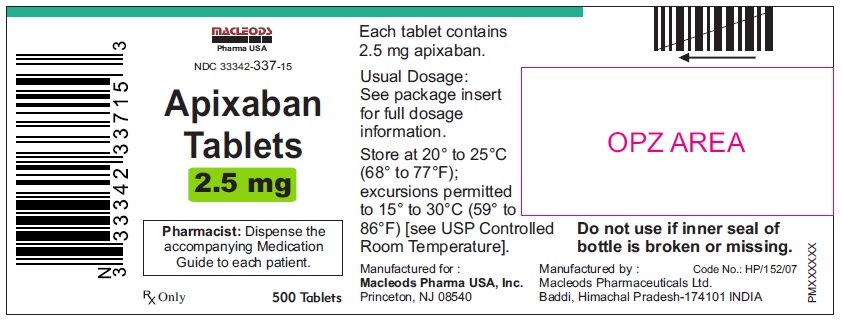
112 (Apixaban 2 5mg 500s Container)

112 (Apixaban 2 5mg 500s Container)
Each tablet contains 2.5 mg apixaban. The usual dosage information and storage instructions can be found in the package insert. The tablets should be stored at a temperature between 15°C to 30°C (59°F to 86°F). It is important not to use the medication if the inner seal of the bottle is broken or missing. The medication is manufactured by Macleods Pharma USA, Inc. and Macleods Pharmaceuticals Ltd.*
FDA Label Image

009 (Apixaban 2 5mg 60s Container)

009 (Apixaban 2 5mg 60s Container)
This is a description of Apixaban Tablets with a dosage of 2.5mg. The pharmacist is advised to dispense a Medication Guide to each patient. The tablets come in a bottle containing 60 tablets. The recommended dosage information can be found in the package insert. The tablets should be stored at a temperature range of 20° to 25°C (68° to 77°F), with excursions allowed to 15° to 30°C (59° to 86°F). The product is manufactured for Macleods Pharma USA, Inc. and manufactured by Madleods Pharmaceuticals Ltd. from India. It is important not to use the product if the inner seal of the bottle is broken or missing.*
FDA Label Image

009 (Apixaban 5mg 100s Carton)

009 (Apixaban 5mg 100s Carton)
This text provides information about Apixaban Tablets, including the manufacturer and expiration date. It also highlights the recommended storage conditions and dosage information. Additionally, it reminds pharmacists to provide the medication guide to each patient.*
FDA Label Image

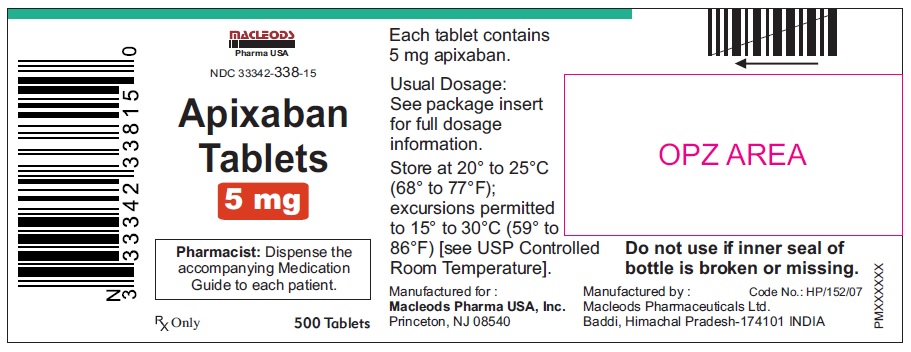
897 (Apixaban 5mg 500s Container)

897 (Apixaban 5mg 500s Container)
This text contains information about Apixaban tablets, with each tablet containing 5 mg of Apixaban. The recommended storage conditions are between 20°C to 25°C, with excursions permitted to 15°C to 30°C. The dosage information can be found in the package insert. The tablets are manufactured by Macleods Pharmaceuticals Ltd in India and distributed by Macleods Pharma USA, Inc. The product should not be used if the inner seal of the bottle is broken or missing. Each bottle contains 500 tablets.*
FDA Label Image

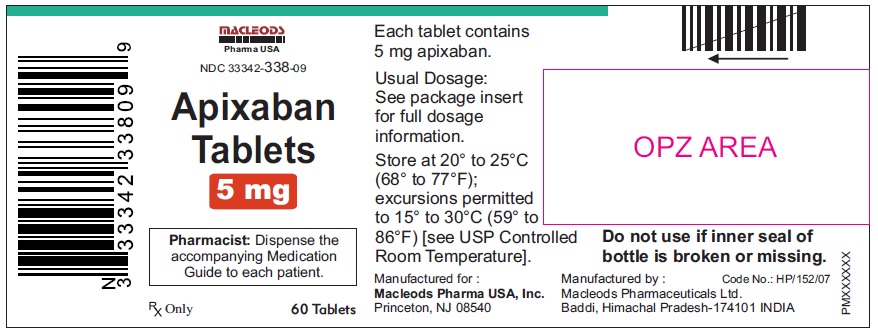
343 (Apixaban 5mg 60s Container)

343 (Apixaban 5mg 60s Container)
This is a description of Apixaban tablets in 5 mg strength. Each bottle contains 60 tablets, with each tablet containing 5 mg of apixaban. The recommended dosage should be as per the package insert. The tablets should be stored at a temperature between 20°C to 25°C (68°F to 77°F), with excursions permitted between 15°C to 30°C (59°F to 86°F). It is advised not to use the medication if the inner seal of the bottle is broken or missing. The tablets are manufactured by Macleods Pharma USA, Inc. for distribution in the United States.*
FDA Label Image

Fig-4 (Apixaban Figure 4)

Fig-4 (Apixaban Figure  4)
The text provides statistical data related to the comparison of two medications (Warfarin and Apixaban) in preventing stroke and systemic embolism in patients. The P-value for the comparison is 0.0114, indicating statistical significance. The Hazard Ratio (HR) for Apixaban over Warfarin is 0.79, with a 95% confidence interval of 0.6 to 0.95, suggesting a lower risk with Apixaban. The number of events (stroke/systemic embolism) and the total number of subjects for each medication are listed. Additionally, a graph displays the time to stroke/systemic embolism over 21 months for both medications.*
FDA Label Image

Figure-1 (Apixaban Figure 1)

Figure-1 (Apixaban Figure 1)
This appears to be data related to a clinical trial, comparing the effectiveness of two medications, Apixaban and Warfarin, in subsets of patients based on various parameters such as age, sex, weight, medical history, and region. The data includes the percentage of patients falling into each subgroup and the respective number of events per year for each medication. Additionally, hazard ratios with confidence intervals are provided to indicate the comparative effectiveness of Apixaban and Warfarin. It seems to assess the efficacy of these medications in different patient populations.*
FDA Label Image

Fig-2 (Apixaban Figure 2)

Fig-2 (Apixaban Figure 2)
This text appears to list different drugs and their effects on the fold change of drug PK values along with the corresponding 90% confidence intervals. It includes information about strong CYP3A4 and P-gp inhibitors like Ketoconazole and other inhibitors like Diltiazem and Naproxen. Additionally, it mentions a strong CYP3M and P-gp inducer, Rifampin, and presents data related to changes relative to reference values. *
FDA Label Image

Fig-3 (Apixaban Figure 3)

Fig-3 (Apixaban Figure 3)
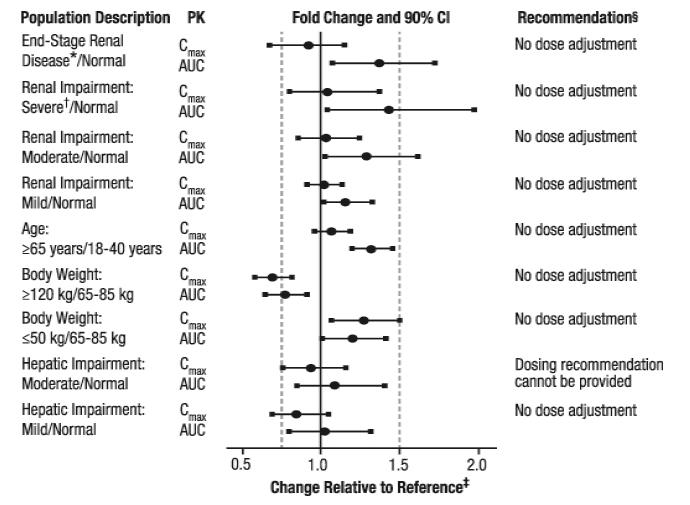
This text outlines population descriptions based on various health conditions such as end-stage renal disease, renal impairment, age ranges, body weight categories, and hepatic impairment levels. It also provides information on fold change and 90% confidence intervals, along with dosing recommendations. Specific recommendations for dose adjustments are indicated for different conditions, with a note that dosing recommendations cannot be provided in some cases.*
FDA Label Image

Fig-5 (Apixaban Figure 5)

Fig-5 (Apixaban Figure 5)
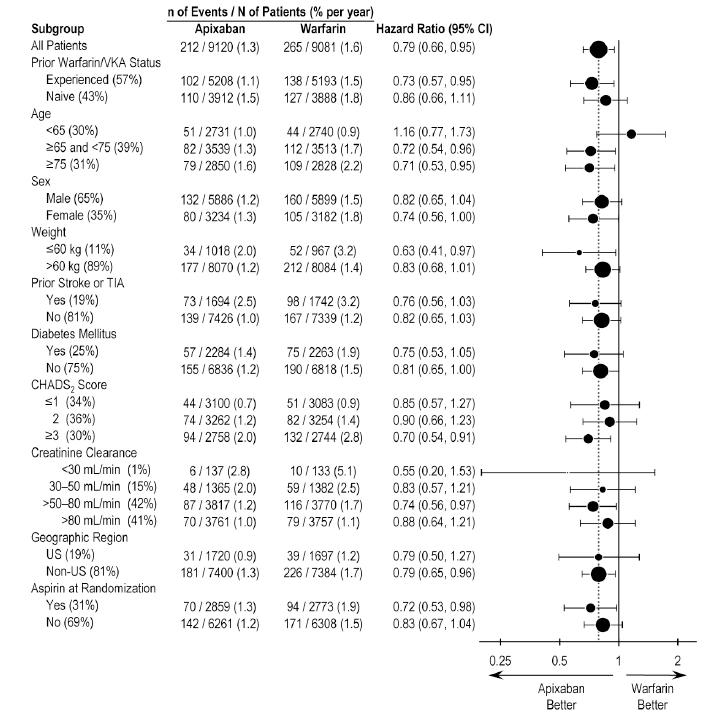
This text provides information on the subgroups of patients included in a study for evaluating the outcomes of Apixaban versus Warfarin in terms of various parameters such as age, sex, weight, prior stroke or TIA history, diabetes status, CHADS score, creatinine clearance, geographic region, and more. It also presents the number of events per year for each medication and the hazard ratios with their corresponding confidence intervals. The text indicates that Apixaban was generally more effective compared to Warfarin based on the results provided. This detailed data can be used by healthcare professionals and researchers to understand the effectiveness and safety of these medications in different patient subgroups.*
FDA Label Image

Str (Apixaban Structure)

* These product label images have been analyzed using experimental machine learning. Please verify findings with the primary label text.