Because clinical trials are conducted under widely varying conditions, adverse reaction rates observed in the clinical trials of a drug cannot be directly compared to rates in the clinical trials of another drug and may not reflect the rates observed in clinical practice.
During clinical development for the approved indications, 34,947 adult patients were exposed to Rivaroxaban tablets.
Hemorrhage
The most common adverse reactions with rivaroxaban tablets were bleeding complications [see Warnings and Precautions (5.2)].
Nonvalvular Atrial Fibrillation
In the ROCKET AF trial, the most frequent adverse reactions associated with permanent drug discontinuation were bleeding events, with incidence rates of 4.3% for rivaroxaban tablets vs. 3.1% for warfarin. The incidence of discontinuations for non-bleeding adverse events was similar in both treatment groups.
Table 5 shows the number of patients experiencing various types of bleeding events in the ROCKET AF trial.
Table 5: Bleeding Events in ROCKET AF*- On Treatment Plus 2 Days
Parameter
| Rivaroxaban tablets
N=7111
n (%/year)
| Warfarin
N=7125
n (%/year)
| Rivaroxaban tablets vs. Warfarin HR
(95% CI)
|
Major Bleeding†
| 395 (3.6)
| 386 (3.5)
| 1.04 (0.90, 1.20)
|
Intracranial
Hemorrhage (ICH) ‡
| 55 (0.5)
| 84 (0.7)
| 0.67 (0.47, 0.93)
|
Hemorrhagic
Stroke§
| 36 (0.3)
| 58 (0.5)
| 0.63 (0.42, 0.96)
|
Other ICH
| 19 (0.2)
| 26 (0.2)
| 0.74 (0.41, 1.34)
|
Gastrointestinal (GI)¶
| 221 (2.0)
| 140 (1.2)
| 1.61 (1.30, 1.99)
|
Fatal Bleeding#
| 27 (0.2)
| 55 (0.5)
| 0.50 (0.31, 0.79)
|
ICH
| 24 (0.2)
| 42 (0.4)
| 0.58 (0.35, 0.96)
|
Non-intracranial
| 3 (0.0)
| 13 (0.1)
| 0.23 (0.07, 0.82)
|
Abbreviations: HR = Hazard Ratio, CI = Confidence interval, CRNM = Clinically Relevant Non-Major.
* Major bleeding events within each subcategory were counted once per patient, but patients may have contributed events to multiple subcategories. These events occurred during treatment or within 2 days of stopping treatment.
† Defined as clinically overt bleeding associated with a decrease in hemoglobin of ≥2 g/dL, a transfusion of ≥2 units of packed red blood cells or whole blood, bleeding at a critical site, or with a fatal outcome.
‡ Intracranial bleeding events included intraparenchymal, intraventricular, subdural, subarachnoid and/or epidural hematoma.
§ Hemorrhagic stroke in this table specifically refers to non-traumatic intraparenchymal and/or intraventricular hematoma in patients on treatment plus 2 days.
¶ Gastrointestinal bleeding events included upper GI, lower GI, and rectal bleeding.
# Fatal bleeding is adjudicated death with the primary cause of death from bleeding.
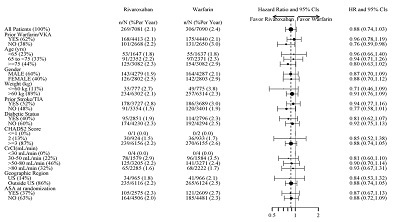
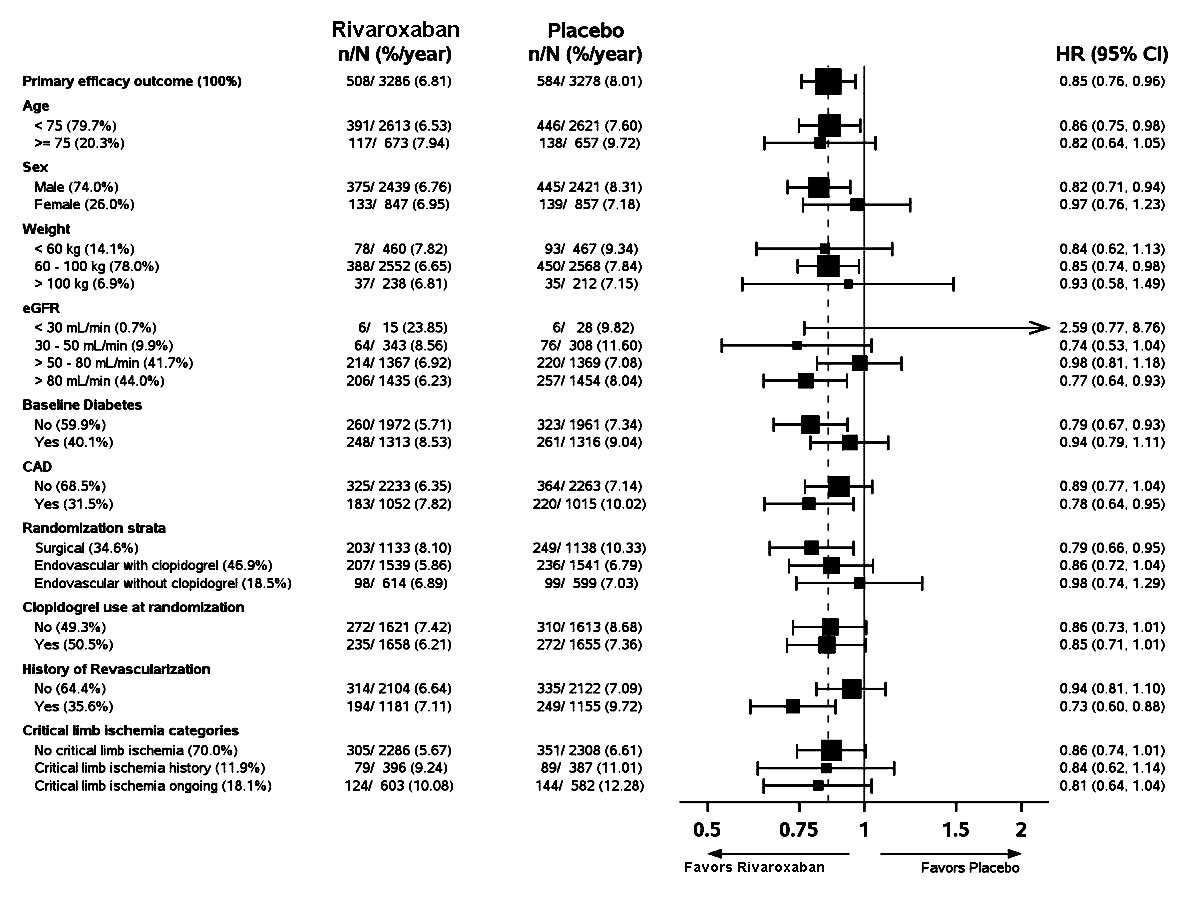
Figure 1 shows the risk of major bleeding events across major subgroups.
Figure 1: Risk of Major Bleeding Events by Baseline Characteristics in ROCKET AF – On Treatment Plus 2 Days

Rivaroxaban-fig-01 (Rivaroxaban Fig 01)
Note: The figure above presents effects in various subgroups all of which are baseline characteristics and all of which were pre-specified (diabetic status was not pre-specified in the subgroup, but was a criterion for the CHADS2 score). The 95% confidence limits that are shown do not take into account how many comparisons were made, nor do they reflect the effect of a particular factor after adjustment for all other factors. Apparent homogeneity or heterogeneity among groups should not be over-interpreted.
Treatment of Deep Vein Thrombosis (DVT) and/or Pulmonary Embolism (PE)
EINSTEIN DVT and EINSTEIN PE Studies
In the pooled analysis of the EINSTEIN DVT and EINSTEIN PE clinical studies, the most frequent adverse reactions leading to permanent drug discontinuation were bleeding events, with Rivaroxaban tablets vs. enoxaparin/Vitamin K antagonist (VKA) incidence rates of 1.7% vs. 1.5%, respectively. The mean duration of treatment was 208 days for Rivaroxaban tablets -treated patients and 204 days for enoxaparin/VKA-treated patients.
Table 6 shows the number of patients experiencing major bleeding events in the pooled analysis of the EINSTEIN DVT and EINSTEIN PE studies.
Table 6: Bleeding Events* in the Pooled Analysis of EINSTEIN DVT and EINSTEIN PE Studies
Parameter
| Rivaroxaban tablets †
N=4130
n (%)
| Enoxaparin/ VKA†
N=4116
n (%)
|
Major bleeding event
| 40 (1.0)
| 72 (1.7)
|
Fatal bleeding
| 3 (<0.1)
| 8 (0.2)
|
Intracranial
| 2 (<0.1)
| 4 (<0.1)
|
Non-fatal critical organ bleeding
| 10 (0.2)
| 29 (0.7)
|
Intracranial‡
| 3 (<0.1)
| 10 (0.2)
|
Retroperitoneal‡
| 1 (<0.1)
| 8 (0.2)
|
Intraocular‡
| 3 (<0.1)
| 2 (<0.1)
|
Intra-articular‡
| 0
| 4 (<0.1)
|
Non-fatal non-critical organ bleeding§
| 27 (0.7)
| 37 (0.9)
|
Decrease in Hb ≥ 2 g/dL
| 28 (0.7)
| 42 (1.0)
|
Transfusion of ≥2 units of whole blood or packed red blood cells
| 18 (0.4)
| 25 (0.6)
|
Clinically relevant non-major bleeding
| 357 (8.6)
| 357 (8.7)
|
Any bleeding
| 1169 (28.3)
| 1153 (28.0)
|
* Bleeding event occurred after randomization and up to 2 days after the last dose of study drug. Although a patient may have had 2 or more events, the patient is counted only once in a category.
† Treatment schedule in EINSTEIN DVT and EINSTEIN PE studies: Rivaroxaban tablets 15 mg twice daily for 3 weeks followed by 20 mg once daily; enoxaparin/VKA [enoxaparin: 1 mg/kg twice daily, VKA: individually titrated doses to achieve a target INR of 2.5 (range: 2.0-3.0)]
‡ Treatment-emergent major bleeding events with at least >2 subjects in any pooled treatment group
§ Major bleeding which is not fatal or in a critical organ, but resulting in a decrease in Hb ≥ 2 g/dL and/or transfusion of ≥2 units of whole blood or packed red blood cells
Reduction in the Risk of Recurrence of DVT and/or PE
EINSTEIN CHOICE Study
In the EINSTEIN CHOICE clinical study, the most frequent adverse reactions associated with permanent drug discontinuation were bleeding events, with incidence rates of 1% for Rivaroxaban tablets 10 mg, 2% for Rivaroxaban tablets 20 mg, and 1% for acetylsalicylic acid (aspirin) 100 mg. The mean duration of treatment was 293 days for Rivaroxaban tablets 10 mg-treated patients and 286 days for aspirin 100 mg-treated patients.
Table 7 shows the number of patients experiencing bleeding events in the EINSTEIN CHOICE study.
Table 7: Bleeding Events* in EINSTEIN CHOICE
Parameter
| Rivaroxaban tablets †
10 mg
N=1127 n (%)
| Acetylsalicylic Acid
(aspirin)† 100 mg
N=1131
n (%)
|
Major bleeding event
| 5 (0.4)
| 3 (0.3)
|
Fatal bleeding
| 0
| 1 (<0.1)
|
Non-fatal critical organ bleeding
| 2 (0.2)
| 1 (<0.1)
|
Non-fatal non-critical organ bleeding§
| 3 (0.3)
| 1 (<0.1)
|
Clinically relevant non-major (CRNM) bleeding¶
| 22 (2.0)
| 20 (1.8)
|
Any bleeding
| 151 (13.4)
| 138 (12.2)
|
* Bleeding event occurred after the first dose and up to 2 days after the last dose of study drug. Although a patient may have had 2 or more events, the patient is counted only once in a category.
† Treatment schedule: Rivaroxaban tablets 10 mg once daily or aspirin 100 mg once daily.
§ Major bleeding which is not fatal or in a critical organ, but resulting in a decrease in Hb ≥ 2 g/dL and/or transfusion of ≥ 2 units of whole blood or packed red blood cells.
¶ Bleeding which was clinically overt, did not meet the criteria for major bleeding, but was associated with medical intervention, unscheduled contact with a physician, temporary cessation of treatment, discomfort for the patient, or impairment of activities of daily life.
In the EINSTEIN CHOICE study, there was an increased incidence of bleeding, including major and CRNM bleeding in the Rivaroxaban tablets 20 mg group compared to the Rivaroxaban tablets 10 mg or aspirin 100 mg groups.
Prophylaxis of Deep Vein Thrombosis Following Hip or Knee Replacement Surgery
In the RECORD clinical trials, the overall incidence rate of adverse reactions leading to permanent treatment discontinuation was 3.7% with Rivaroxaban tablets.
The rates of major bleeding events and any bleeding events observed in patients in the RECORD clinical trials are shown in Table 8.
Table 8: Bleeding Events* in Patients Undergoing Hip or Knee Replacement Surgeries (RECORD 1-3)
| Rivaroxaban tablets 10 mg
| Enoxaparin†
|
Total treated patients
| N=4487 n (%)
| N=4524 n (%)
|
Major bleeding event
| 14 (0.3)
| 9 (0.2)
|
Fatal bleeding
| 1 (<0.1)
| 0
|
Bleeding into a critical organ
| 2 (<0.1)
| 3 (0.1)
|
Bleeding that required re-operation
| 7 (0.2)
| 5 (0.1)
|
Extra-surgical site bleeding requiring transfusion of >2 units of whole blood or packed cells
| 4 (0.1)
| 1 (<0.1)
|
Any bleeding event‡
| 261 (5.8)
| 251 (5.6)
|
Hip Surgery Studies
| N=3281 n (%)
| N=3298 n (%)
|
Major bleeding event
| 7 (0.2)
| 3 (0.1)
|
Fatal bleeding
| 1 (<0.1)
| 0
|
Bleeding into a critical organ
| 1 (<0.1)
| 1 (<0.1)
|
Bleeding that required re-operation
| 2 (0.1)
| 1 (<0.1)
|
Extra-surgical site bleeding requiring transfusion of >2 units of whole blood or packed cells
| 3 (0.1)
| 1 (<0.1)
|
Any bleeding event‡
| 201 (6.1)
| 191 (5.8)
|
Knee Surgery Study
| N=1206 n (%)
| N=1226 n (%)
|
Major bleeding event
| 7 (0.6)
| 6 (0.5)
|
Fatal bleeding
| 0
| 0
|
Bleeding into a critical organ
| 1 (0.1)
| 2 (0.2)
|
Bleeding that required re-operation
| 5 (0.4)
| 4 (0.3)
|
Extra-surgical site bleeding
requiring transfusion of >2 units of whole blood or packed cells
| 1 (0.1)
| 0
|
Any bleeding event‡
| 60 (5.0)
| 60 (4.9)
|
* Bleeding events occurring any time following the first dose of double-blind study medication (which may have been prior to administration of active drug) until two days after the last dose of double-blind study medication. Patients may have more than one event.
† Includes the placebo-controlled period for RECORD 2, enoxaparin dosing was 40 mg once daily (RECORD 1-3)
‡ Includes major bleeding events
Following Rivaroxaban tablets treatment, the majority of major bleeding complications (≥60%) occurred during the first week after surgery.
Prophylaxis of Venous Thromboembolism in Acutely Ill Medical Patients at Risk for
Thromboembolic Complications Not at High Risk of Bleeding
In the MAGELLAN study, the most frequent adverse reactions associated with permanent drug discontinuation were bleeding events. Cases of pulmonary hemorrhage and pulmonary hemorrhage with bronchiectasis were observed. Patients with bronchiectasis/pulmonary cavitation, active cancer (i.e., undergoing acute, in-hospital cancer treatment), dual antiplatelet therapy or active gastroduodenal ulcer or any bleeding in the previous three months all had an excess of bleeding with rivaroxaban compared with enoxaparin/placebo and are excluded from all MAGELLAN data presented in Table 9. The incidence of bleeding leading to drug discontinuation was 2.5% for rivaroxaban vs. 1.4% for enoxaparin/placebo.
Table 9 shows the number of patients experiencing various types of bleeding events in the MAGELLAN study.
Table 9: Bleeding Events in MAGELLAN* Study–Safety Analysis Set - On Treatment Plus 2 Days
MAGELLAN Study¶
| Rivaroxaban tablets 10 mg
N=3218
n (%)
| Enoxaparin 40 mg /placebo N=3229 n (%)
|
Major bleeding‡†
| 22 (0.7)
| 15 (0.5)
|
Critical site bleeding
| 7 (0.2)
| 4 (0.1)
|
Fatal bleeding§
| 3 (<0.1)
| 1 (<0.1)
|
Clinically relevant non-major bleeding events (CRNM)
| 93 (2.9)
| 34 (1.1)
|
* Patients at high risk of bleeding (i.e. bronchiectasis/pulmonary cavitation, active cancer, dual antiplatelet therapy or active gastroduodenal
ulcer or any bleeding in the previous three months) were excluded.
† Major bleeding events within each subcategory were counted once per patient, but patients may have contributed events to multiple
subcategories. These events occurred during treatment or within 2 days of stopping treatment.
‡ Defined as clinically overt bleeding associated with a drop in hemoglobin of ≥2 g/dL, a transfusion of ≥2 units of packed red blood cells
or whole blood, bleeding at a critical site, or with a fatal outcome.
§ Fatal bleeding is adjudicated death with the primary cause of death from bleeding.
¶ Patients received either rivaroxaban or placebo once daily for 35 ±4 days starting in hospital and continuing post hospital discharge or
received enoxaparin or placebo once daily for 10 ±4 days in the hospital.
Reduction of Risk of Major Cardiovascular Events in Patients with CAD
In the COMPASS trial overall, the most frequent adverse reactions associated with permanent drug discontinuation were bleeding events, with incidence rates of 2.7% for rivaroxaban 2.5 mg twice daily vs. 1.2% for placebo on background therapy for all patients with aspirin 100 mg once daily.
The incidences of important bleeding events in the CAD and PAD populations in COMPASS were similar.
Table 10 shows the number of patients experiencing various types of major bleeding events in the COMPASS trial.
Table 10: Major Bleeding Events* in COMPASS - On Treatment Plus 2 Days*
Parameter
| rivaroxaban N=9134
n (%/year)
| Placebo † N=9107
n (%/year)
| rivaroxaban vs.
Placebo HR (95 % CI)
|
Modified ISTH Major Bleeding‡
| 263 (1.6)
| 144 (0.9)
| 1.8 (1.5, 2.3)
|
- Fatal bleeding event
Intracranial hemorrhage (ICH) Non-intracranial
| 12 (<0.1)
6 (<0.1)
6 (<0.1)
| 8 (<0.1)
3 (<0.1)
5 (<0.1)
| 1.5 (0.6, 3.7)
2.0 (0.5, 8.0)
1.2 (0.4, 4.0)
|
-Symptomatic bleeding in critical organ (non-fatal)
-ICH (fatal and non-fatal)
Hemorrhagic Stroke Other ICH
|
58 (0.3)
23 (0.1)
18 (0.1)
6 (<0.1)
|
43 (0.3)
21 (0.1)
13 (<0.1)
9 (<0.1)
|
1.4 (0.9, 2.0)
1.1 (0.6, 2.0)
1.4 (0.7, 2.8)
0.7 (0.2, 1.9)
|
- Bleeding into the surgical site requiring reoperation (non-fatal, not in critical organ)
| 7 (<0.1)
| 6 (<0.1)
| 1.2 (0.4, 3.5)
|
- Bleeding leading to hospitalization (non-fatal, not in critical organ, not
requiring reoperation)
| 188 (1.1)
| 91 (0.5)
| 2.1 (1.6, 2.7)
|
Major GI bleeding
| 117 (0.7)
| 49 (0.3)
| 2.4 (1.7, 3.4)
|
Major bleeding events within each subcategory were counted once per patient, but patients may have contributed events to multiple subcategories. These events occurred during treatment or within 2 days of stopping treatment in the safety analysis set in COMPASS patients.
† Treatment schedule: rivaroxaban 2.5 mg twice daily or placebo. All patients received background therapy with aspirin 100 mg once daily.
‡ Defined as i) fatal bleeding, or ii) symptomatic bleeding in a critical area or organ, such as intraarticular, intramuscular with compartment syndrome, intraspinal, intracranial, intraocular, respiratory, pericardial, liver, pancreas, retroperitoneal, adrenal gland or kidney; or iii) bleeding into the surgical site requiring reoperation, or iv) bleeding leading to hospitalization.
CI: confidence interval; HR: hazard ratio; ISTH: International Society on Thrombosis and Hemostasis
Reduction of Risk of Major Thrombotic Vascular Events in Patients with Peripheral Artery Disease (PAD), Including Patients after Lower Extremity Revascularization due to Symptomatic PAD
The incidence of premature permanent discontinuation due to bleeding events for rivaroxaban 2.5 mg twice daily vs. placebo on background therapy with aspirin 100 mg once daily in VOYAGER was 4.1% vs. 1.6% and in COMPASS PAD was 2.7% vs. 1.3%, respectively.
Table 11 shows the number of patients experiencing various types of TIMI (Thrombolysis in Myocardial Infarction) major bleeding events in the VOYAGER trial. The most common site of bleeding was gastrointestinal.
Table 11: Major Bleeding Events* in VOYAGER-On Treatment Plus 2 Days
| Rivaroxaban †
N=3256
| Placebo†
N=3248
| Rivaroxaban vs.
Placebo HR (95 % CI)
|
Parameter
| n (%)
| Event rate
%/year
| n (%)
| Event rate
%/year
|
TIMI Major Bleeding
(CABG/non-CABG)
| 62 (1.9)
| 0.96
| 44 (1.4)
| 0.67
| 1.4 (1.0, 2.1)
|
Fatal bleeding
| 6 (0.2)
| 0.09
| 6 (0.2)
| 0.09
| 1.0 (0.3, 3.2)
|
Intracranial bleeding
| 13 (0.4)
| 0.20
| 17 (0.5)
| 0.26
| 0.8 (0.4, 1.6)
|
Clinically overt signs of
hemorrhage associated
with a drop in
hemoglobin of ≥5 g/dL
or drop in hematocrit of
≥15%
| 46 (1.4)
| 0.71
| 24 (0.7)
| 0.36
| 1.9 (1.2, 3.2)
|
* Major bleeding events within each subcategory were counted once per patient, but patients may have contributed events to multiple subcategories.
† Treatment schedule: rivaroxaban 2.5 mg twice daily or placebo. All patients received background therapy with aspirin 100 mg once daily.
CABG: Coronary artery bypass graft; CI: confidence interval; HR: hazard ratio; TIMI: Thrombolysis in Myocardial Infarction Bleeding Criteria
Other Adverse Reactions
Non-hemorrhagic adverse reactions reported in ≥1% of Rivaroxaban tablets -treated patients in the EINSTEIN DVT and EINSTEIN PE studies are shown in Table 12
Table 12: Other Adverse Reactions* Reported by ≥1% of Rivaroxaban Tablets -Treated Patients in EINSTEIN DVT and EINSTEIN PE Studies
Body System
Adverse Reaction
|
|
|
EINSTEIN DVT Study
| Rivaroxaban tablets 20 mg
N=1718
n (%)
| Enoxaparin/VKA
N=1711
n (%)
|
Gastrointestinal disorders
|
|
|
Abdominal pain
| 46 (2.7)
| 25 (1.5)
|
General disorders and administration
site conditions
|
|
|
Fatigue
| 24 (1.4)
| 15 (0.9)
|
Musculoskeletal and connective tissue disorders
|
|
|
Back pain
| 50 (2.9)
| 31 (1.8)
|
Muscle spasm
| 23 (1.3)
| 13 (0.8)
|
Nervous system disorders
|
|
|
Dizziness
| 38 (2.2)
| 22 (1.3)
|
Psychiatric disorders
|
|
|
Anxiety
| 24 (1.4)
| 11 (0.6)
|
Depression
| 20 (1.2)
| 10 (0.6)
|
Insomnia
| 28 (1.6)
| 18 (1.1)
|
EINSTEIN PE Study
| Rivaroxaban tablets 20 mg
N=2412
n (%)
| Enoxaparin/VKA
N=2405
n (%)
|
Skin and subcutaneous tissue disorders
|
|
|
Pruritus
| 53 (2.2)
| 27 (1.1)
|
* Adverse reaction with Relative Risk >1.5 for Rivaroxaban tablets versus comparator
Non-hemorrhagic adverse reactions reported in ≥1% of Rivaroxaban tablets -treated patients in RECORD 1-3 studies are shown in
Table 13.
Table 13: Other Adverse Drug Reactions* Reported by ≥1% of Rivaroxaban Tablets -Treated Patients in RECORD 1-3 Studies
Body System
Adverse Reaction
| Rivaroxaban tablets 10 mg
N=4487
n (%)
| Enoxaparin†
N=4524
n (%)
|
Injury, poisoning and procedural complications
|
|
|
Wound secretion
| 125 (2.8)
| 89 (2.0)
|
Musculoskeleta
and connective tissue disorders
|
|
|
Pain in extremity
| 74 (1.7)
| 55 (1.2)
|
Muscle spasm
| 52 (1.2)
| 32 (0.7)
|
Nervous system disorders
|
|
|
Syncope
| 55 (1.2)
| 32 (0.7)
|
Skin and subcutaneous tissue disorders
|
|
|
Pruritus
| 96 (2.1)
| 79 (1.8)
|
Blister
| 63 (1.4)
| 40 (0.9)
|
* Adverse reaction occurring any time following the first dose of double-blind medication, which may have been prior to administration of active drug, until two days after the last dose of double-blind study medication
† Includes the placebo-controlled period of RECORD 2, enoxaparin dosing was 40 mg once daily (RECORD 1-3)
Pediatric Patients
Treatment of Venous Thromboembolism and Reduction in Risk of Recurrent Venous Thromboembolism in Pediatric Patients
The safety assessment is based on data from the EINSTEIN Junior Phase 3 study in 491 patients from birth to less than 18 years of age. Patients were randomized 2:1 to receive body weight-adjusted doses of rivaroxaban or comparator (unfractionated heparin, low molecular weight heparin, fondaparinux or VKA).
Discontinuation due to bleeding events occurred in 6 (1.8%) patients in the rivaroxaban group and 3 (1.9%) patients in the comparator group.
Table 14 shows the number of patients experiencing bleeding events in the EINSTEIN Junior study. In female patients who had experienced menarche, ages 12 to <18 years of age, menorrhagia occurred in 23 (27%) female patients in the rivaroxaban group and 5 (10%) female patients in the comparator group.
Table 14: Bleeding Events in EINSTEIN Junior Study – Safety Analysis Set -Main Treatment Period*
Parameter
| rivaroxaban† N=329 n (%)
| Comparator Group‡ N=162 n (%)
|
Major bleeding§
| 0
| 2 (1.2)
|
Clinically relevant non-major bleeding¶
| 10 (3.0)
| 1 (0.6)
|
Trivial bleeding
| 113 (34.3)
| 44 (27.2)
|
Any bleeding
| 119 (36.2)
| 45 (27.8)
|
* These events occurred after randomization until 3 months of treatment (1 month for patients <2 years with central venous catheter-related VTE (CVC-VTE). Patients may have more than one event.
† Treatment schedule: body weight-adjusted doses of rivaroxaban tablets; randomized 2:1 (rivaroxaban tablets: Comparator).
‡ Unfractionated heparin (UFH), low Molecular weight heparin (LMWH), fondaparinux or VKA.
§ Defined as clinically overt bleeding associated with a decrease in hemoglobin of ≥2g/dL, a transfusion of ≥2 units
of packed red blood cells or whole blood, bleeding at a critical site, or with a fatal outcome.
¶ Defined as clinically overt bleeding, which did not meet the criteria for major bleeding, but was associated with medical intervention, unscheduled contact with a physician, temporary cessation of treatment, discomfort for the patient, or impairment of activities of daily life.
Non-bleeding adverse reactions reported in ≥5% of rivaroxaban -treated patients are shown in Table 15.
Table 15: Other Adverse Reactions* Reported in rivaroxaban tablets -Treated Patients by ≥5% in EINSTEIN Junior Study
Adverse Reaction
| rivaroxaban † N=329 n (%)
| Comparator GroupN=162 n (%)
|
Pain in extremity
| 23 (7)
| 7 (4.3)
|
Fatigue†
| 23 (7)
| 7 (4.3)
|
*Adverse reaction with Relative Risk >1.5 for rivaroxaban versus comparator.
† The following terms were combined: fatigue, asthenia.
A clinically relevant adverse reaction in rivaroxaban -treated patients was vomiting (10.6% in the rivaroxaban group vs 8% in the comparator group).
Thromboprophylaxis in Pediatric Patients with Congenital Heart Disease (CHD) after the Fontan Procedure
The data below are based on Part B of the UNIVERSE study which was designed to evaluate the safety and efficacy of rivaroxaban for thromboprophylaxis in 98 children with CHD after the Fontan procedure who took at least one dose of study drug. Patients in Part B were randomized 2:1 to receive either body weight-adjusted doses of rivaroxaban or aspirin (approximately 5 mg/kg).
Discontinuation due to bleeding events occurred in 1 (1.6%) patient in the rivaroxaban group and no patients in the aspirin group.
Table 16 shows the number of patients experiencing bleeding events in the UNIVERSE study.
Table 16: Bleeding Events in UNIVERSE Study -Safety Analysis Set -On Treatment Plus 2 Days
Parameter
| Rivaroxaban *N=64 n (%)
| Aspirin* N=34 n (%)
|
Major Bleeding†
| 1 (1.6)
| 0
|
Epistaxis leading to transfusion
| 1 (1.6)
| 0
|
Clinically relevant non-major (CRNM) bleeding§
| 4 (6.3)
| 3 (8.8)
|
Trivial bleeding
| 21 (32.8)
| 12 (35.3)
|
Any bleeding
| 23 (35.9)
| 14 (41.2)
|
* Treatment schedule: body weight-adjusted doses of rivaroxaban or aspirin (approximately 5 mg/kg); randomized 2:1 (rivaroxaban : Aspirin).
† Defined as clinically overt bleeding associated with a decrease in hemoglobin of ≥2 g/dL, a transfusion of the equivalent of ≥2 units of
packed red blood cells or whole blood, bleeding at a critical site, or with a fatal outcome.
§ Defined as clinically overt bleeding, which did not meet the criteria for major bleeding, but was associated with medical intervention,
unscheduled contact with a physician, temporary cessation of treatment discomfort for the patient, or impairment of activities of daily life.
Non-bleeding adverse reactions reported in ≥5% of rivaroxaban treated patients are shown in Table 17.
Table 17: Other Adverse Reactions* Reported by ≥5% of rivaroxaban tablets -Treated Patients in UNIVERSE Study (Part B)
Adverse Reaction
| (rivaroxaban N=64 n (%)
| Aspirin N=34 n (%)
|
Cough
| 10 (15.6)
| 3 (8.8)
|
Vomiting
| 9 (14.1)
| 3 (8.8)
|
Gastroenteritis†
| 8 (12.5)
| 1 (2.9)
|
Rash†
| 6 (9.4)
| 2 (5.9)
|
* Adverse reaction with Relative Risk >1.5 for rivaroxaban versus aspirin.
† The following terms were combined: Gastroenteritis: gastroenteritis, gastroenteritis viral Rash: rash, rash maculo-papular, viral rash