Piperacillin And Tazobactam Injection, Powder, Lyophilized, For Solution
Product Images NDC 35369-0504

View Photos of Packaging, Regulatory Labels, and Product Appearance

Product Visual Gallery

This gallery contains 4 technical images submitted to the FDA as part of the official labeling for Piperacillin And Tazobactam (NDC 35369-0504). Unlike standard consumer photos, these assets often include clinical data figures, molecular chemical structures, and official manufacturer packaging layouts.

As provided by Shandong Anxin Pharmaceutical Co., Ltd., these visuals offer a comprehensive scientific overview of the product's physical and chemical identity, aiding pharmacists and researchers in product verification and study.

FDA Label Image

Principal Display Panel – 40.5 Grams Carton (Carton Label)

Principal Display Panel – 40.5 Grams Carton (Carton Label)
This appears to be a package insert for a medication called Piperacillin and Tazobactam for Injection, which is used for intravenous infusion. The medication comes in a 40.5-gram vial and must be reconstituted with a diluent to achieve a concentration of 200 mg/mL of piperacillin and 25 mg/mL of tazobactam. The reconstituted solution should not be frozen and any unused portion should be discarded after 24-48 hours depending on storage conditions. The medication is manufactured by Shandong Anxin Pharmaceutical Co., Ltd. in China.*
FDA Label Image

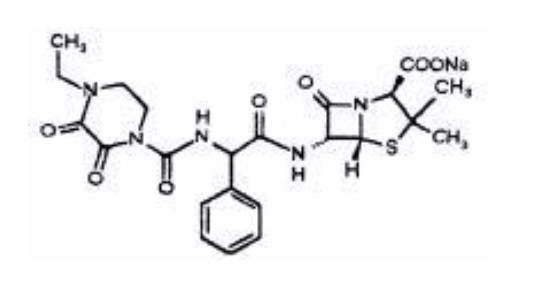
Chemical Structure (Piperacillin Sodium)

FDA Label Image

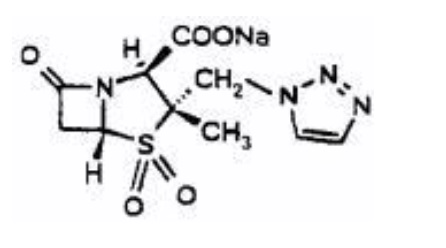
Chemical Structure (Tazobactam Sodium)

FDA Label Image

Principal Display Panel – 40.5 Grams Vial (Vial Label)

Principal Display Panel – 40.5 Grams Vial (Vial Label)
This text is for a pharmacy bulk package for injection containing piperacillin and tazobactam. The package provides instructions for reconstitution of the powders and includes storage and stability guidelines. The product is manufactured by Shangdong Amin Pharmaceutical Co. Ltd. The text also contains some seemingly random sequences of characters that are not understandable.*

* These product label images have been analyzed using experimental machine learning. Please verify findings with the primary label text.