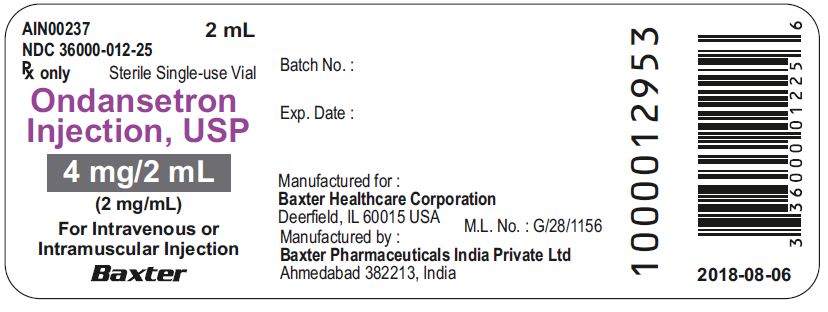
Dosage and Administration
The recommended dosage for adult and pediatric patients 6 months of age and older for prevention of nausea and vomiting associated with emetogenic chemotherapy is 0.15‑mg/kg per dose for 3 doses (maximum of 16 mg per dose).
Caution: Dilution of Ondansetron Injection, USP is required in adult and pediatric patients prior to administration.
Infuse intravenously over 15 minutes beginning 30 minutes before the start of emetogenic chemotherapy and then repeat 4 and 8 hours after the first dose.
Dosage and Administration
The recommended dose and administration instructions for adult and pediatric patients 1 month of age and older for prevention of postoperative nausea and vomiting are shown in Table 1
Table 1 . Recommended Dose and Administration of Ondansetron Injection, USP for Prevention of Postoperative Nausea and Vomiting
Population
| Recommended Single Dose
| Administration Instructions
| Timing of Administration
|
Adults and pediatric patients older than 12 years of age
| 4 mg Few patients above 80 kg have been studied.
| May be administered intravenously or intramuscularly:
- Intravenously: infuse undiluted syringe contents (4 mg) over at least 30 seconds and preferably longer (over 2 to 5 minutes).
- Intramuscularly: inject undiluted syringe contents (4 mg)
| Administer immediately before induction of anesthesia, or postoperatively if the patient did not receive prophylactic antiemetics and experiences nausea and/or vomiting occurring within 2 hours after surgery. Administration of a second intravenous dose of 4 mg ondansetron postoperatively in adult patients who received a 4 mg prophylactic dose does not provide additional control of nausea and vomiting [see Clinical Studies (14.3)] . For pediatric patients (1 month to 12 years) prevention of nausea and vomiting was only studied in patients who had not received prophylactic ondansetron.
|
Pediatric patients 1 month to 12 years and more than 40 kg
| 4 mg
| Infuse intravenously over at least 30 seconds and preferably longer (over 2 to 5 minutes).
|
Pediatric patients 1 month to 12 years and 40 kg or less
| 0.1 mg/kg
| Infuse intravenously over at least 30 seconds and preferably longer (over 2 to 5 minutes).
|
Chemotherapy-induced Nausea and Vomiting:
Table 2. Adverse Reactions Reported in >5% of Adult Patients Who Received Ondansetron at a Dosage of Three 0.15-mg/kg Doses
Adverse Reaction
|
Number of Adult Patients with Reaction |
Ondansetron Injection, USP 0.15 mg/kg x 3 (n = 419)
|
Metoclopramide
(n = 156)
|
Placebo (n = 34)
|
Diarrhea |
16% |
44% |
18% |
Headache |
17% |
7% |
15% |
Fever |
8% |
5% |
3% |
Cardiovascular: Rare cases of angina (chest pain), electrocardiographic alterations, hypotension, and tachycardia have been reported.
Gastrointestinal: Constipation has been reported in 11% of chemotherapy patients receiving multiday ondansetron.
Hepatic: In comparative trials in cisplatin chemotherapy patients with normal baseline values of aspartate transaminase (AST) and alanine transaminase (ALT), these enzymes have been reported to exceed twice the upper limit of normal in approximately 5% of patients. The increases were transient and did not appear to be related to dose or duration of therapy. On repeat exposure, similar transient elevations in transaminase values occurred in some courses, but symptomatic hepatic disease did not occur.
Integumentary: Rash has occurred in approximately 1% of patients receiving ondansetron.
Neurological: There have been rare reports consistent with, but not diagnostic of, extrapyramidal reactions in patients receiving Ondansetron Injection, USP Injection, and rare cases of grand mal seizure.
Other: Rare cases of hypokalemia have been reported.
Postoperative Nausea and Vomiting: The adverse reactions in Table 3 have been reported in ≥ 2% of adults receiving ondansetron at a dosage of 4 mg intravenous over 2 to 5 minutes in clinical trials.
Table 3. Adverse Reactions Reported in ≥ 2% (and with Greater Frequency than the Placebo Group) of Adult Patients Receiving Ondansetron at a Dosage of 4 mg Intravenous over 2 to 5 Minutes
| Adverse Reaction Adverse Reactions: Rates of these reactions were not significantly different in the ondansetron and placebo groups Patients were receiving multiple concomitant perioperative and postoperative medications
| Ondansetron Injection, USP
4 mg Intravenous
(n = 547)
| Placebo
(n = 547)
|
Headache
| 92 (17%)
| 77 (14%)
|
Drowsiness/sedation
| 44 (8%)
| 37 (7%)
|
Injection site reaction
| 21 (4%)
| 18 (3%)
|
Fever
| 10 (2%)
| 6 (1%)
|
Cold sensation
| 9 (2%)
| 8 (1%)
|
Pruritus
| 9 (2%)
| 3 (<1%)
|
Paresthesia
| 9 (2%)
| 2 (<1%)
|
Pediatric Use: Rates of adverse reactions were similar in both the ondansetron and placebo groups in pediatric patients receiving ondansetron (a single 0.1-mg/kg dose for pediatric patients weighing 40 kg or less, or 4 mg for pediatric patients weighing more than 40 kg) administered intravenously over at least 30 seconds. Diarrhea was seen more frequently in patients taking Ondansetron Injection, USP (2%) compared with placebo (<1%) in the 1 month to 24 month age group. These patients were receiving multiple concomitant perioperative and postoperative medications.
Absorption: A trial was performed in normal volunteers (n = 56) to evaluate the pharmacokinetics of a single 4-mg dose administered as a 5-minute infusion compared with a single intramuscular injection. Systemic exposure as measured by mean AUC were equivalent, with values of 156 [95% CI 136, 180] and 161 [95% CI 137, 190] ng•h/mL for intravenous and intramuscular groups, respectively. Mean peak plasma concentrations were 42.9 [95% CI 33.8, 54.4] ng/mL at 10 minutes after intravenous infusion and 31.9 [95% CI 26.3, 38.6] ng/mL at 41 minutes after intramuscular injection.
Distribution: Plasma protein binding of ondansetron as measured in vitro was 70% to 76%, over the pharmacologic concentration range of 10 to 500 ng/mL. Circulating drug also distributes into erythrocytes.
Elimination
Metabolism: Ondansetron is extensively metabolized in humans, with approximately 5% of a radiolabeled dose recovered as the parent compound from the urine. The primary metabolic pathway is hydroxylation on the indole ring followed by subsequent glucuronide or sulfate conjugation.
Although some nonconjugated metabolites have pharmacologic activity, these are not found in plasma at concentrations likely to significantly contribute to the biological activity of ondansetron. The metabolites are observed in the urine.
In vitro metabolism studies have shown that ondansetron is a substrate for multiple human hepatic cytochrome P-450 enzymes, including CYP1A2, CYP2D6, and CYP3A4. In terms of overall ondansetron turnover, CYP3A4 plays a predominant role while formation of the major in vivo metabolites is apparently mediated by CYP1A2. The role of CYP2D6 in ondansetron in vivo metabolism is relatively minor.
The pharmacokinetics of intravenous ondansetron did not differ between subjects who were poor metabolisers of CYP2D6 and those who were extensive metabolisers of CYP2D6, further supporting the limited role of CYP2D6 in ondansetron disposition in vivo.
Excretion: In adult cancer patients, the mean ondansetron elimination half-life was 4.0 hours, and there was no difference in the multidose pharmacokinetics over a 4-day period. In a dose proportionality trial, systemic exposure to 32 mg of ondansetron was not proportional to dose as measured by comparing dose-normalized AUC values with an 8-mg dose. This is consistent with a small decrease in systemic clearance with increasing plasma concentrations.
Specific Populations
Geriatric Patients: A reduction in clearance and increase in elimination half‑life are seen in patients older than 75 years of age [see Use in Specific Populations (8.5)].
Pediatrics Patients: Pharmacokinetic samples were collected from 74 cancer patients 6 to 48 months, who received a dose of 0.15 mg/kg of intravenous ondansetron every 4 hours for 3 doses during a safety and efficacy trial. These data were combined with sequential pharmacokinetics data from 41 surgery patients aged1 month to 24 months, who received a single dose of 0.1 mg/kg of intravenous ondansetron prior to surgery with general anesthesia, and a population pharmacokinetic analysis was performed on the combined data set. The results of this analysis are included in Table 5 and are compared with the pharmacokinetic results in cancer patients aged 4 to 18 years.
Table 5. Pharmacokinetics in Pediatric Cancer Patients Aged 1 Month to 18 Years
| Subjects and Age Group | N
| CL
(L/h/kg)
| Vdss
(L/kg)
| T½ (h)
|
| | Geometric Mean
| Mean
|
Pediatric Cancer Patients 4 to 18 years
| N = 21
| 0.599
| 1.9
| 2.8
|
| Population PK Patients Population PK (Pharmacokinetic) Patients: 64% cancer patients and 36% surgery patients. 1 month to 48 months
| N = 115
| 0.582
| 3.65
| 4.9
|
Based on the population pharmacokinetic analysis, cancer patients aged 6 to 48 months who receive a dose of 0.15 mg/kg of intravenous ondansetron every 4 hours for 3 doses would be expected to achieve a systemic exposure (AUC) consistent with the exposure achieved in previous pediatric trials in cancer patients (4 to 18 years) at similar doses.
In a trial of 21 pediatric patients (3 to 12 years) who were undergoing surgery requiring anesthesia for a duration of 45 minutes to 2 hours, a single intravenous dose of ondansetron, 2 mg (3 to 7 years) or 4 mg (8 to 12 years), was administered immediately prior to anesthesia induction. Mean weight-normalized clearance and volume of distribution values in these pediatric surgical patients were similar to those previously reported for young adults. Mean terminal half-life was slightly reduced in pediatric patients (range: 2.5 to 3 hours) in comparison with adults (range: 3 to 3.5 hours).
In a trial of 51 pediatric patients (aged 1 month to 24 months) who were undergoing surgery requiring general anesthesia, a single intravenous dose of ondansetron, 0.1 or 0.2 mg/kg, was administered prior to surgery. As shown in Table 6, the 41 patients with pharmacokinetic data were divided into 2 groups, patients aged 1 month to 4 months and patients aged 5 to 24 months, and are compared with pediatric patients aged 3 to 12 years.
Table 6. Pharmacokinetics in Pediatric Surgery Patients Aged 1 Month to 12 Years
Subjects and Age group
| N
| CL
(L/h/kg)
| Vdss
(L/kg)
| T½
(h)
|
| | Geometric Mean
| Mean
|
Pediatric Surgery Patients
3 to 12 years
| N = 21
| 0.439
| 1.65
| 2.9
|
Pediatric Surgery Patients
5 to 24 months
| N = 22
| 0.581
| 2.3
| 2.9
|
Pediatric Surgery Patients
1 month to 4 months
| N = 19
| 0.401
| 3.5
| 6.7
|
In general, surgical and cancer pediatric patients younger than 18 years tend to have a higher ondansetron clearance compared with adults leading to a shorter half-life in most pediatric patients. In patients aged 1 month to 4 months, a longer half-life was observed due to the higher volume of distribution in this age-group.
In a trial of 21 pediatric cancer patients (aged 4 to 18 years) who received three intravenous doses of 0.15 mg/kg of ondansetron at 4-hour intervals, patients older than 15 years exhibited ondansetron pharmacokinetic parameters similar to those of adults.
Patient with Renal Impairment: Due to the very small contribution (5%) of renal clearance to the overall clearance, renal impairment was not expected to significantly influence the total clearance of ondansetron. However, ondansetron mean plasma clearance was reduced by about 41% in patients with severe renal impairment (creatinine clearance < 30 mL/min). This reduction in clearance is variable and was not consistent with an increase in half-life. [see Use in Specific Populations (8.7)] .
Patients with Hepatic Impairment: In patients with mild-to-moderate hepatic impairment, clearance is reduced 2-fold and mean half-life is increased to 11.6 hours compared with 5.7 hours in those without hepatic impairment. In patients with severe hepatic impairment (Child-Pugh score of 10 or greater), clearance is reduced 2-fold to 3-fold and apparent volume of distribution is increased with a resultant increase in half-life to 20 hours. [see Dosage and Administration (2.3), Use in Specific Populations (8.6)] .
Drug Interaction Studies
CYP 3A4 Inducers: Ondansetron elimination may be affected by cytochrome P-450 inducers. In a pharmacokinetic trial of 16 epileptic patients maintained chronically on CYP3A4 inducers, carbamazepine, or phenytoin, a reduction in AUC, Cmax, and t½ of ondansetron was observed. This resulted in a significant increase in the clearance of ondansetron. In a pharmacokinetic study of 10 healthy subjects receiving a single-dose intravenous dose of ondansetron 8 mg after 600 mg rifampin once daily for five days, the AUC and the t½ of ondansetron were reduced by 48% and 46%, respectively. These changes in ondansetron exposure with CYP3A4 inducers are not thought to be clinically relevant [see Drug Interactions (7.3)].
Chemotherapeutic Agents: Carmustine, etoposide, and cisplatin do not affect the pharmacokinetics of ondansetron [see Drug Interactions (7.6)].
Cisplatin-Based Chemotherapy: In a double-blind study in 28 patients, Ondansetron Injection, USP (three 0.15-mg/kg doses) was significantly more effective than placebo in preventing nausea and vomiting induced by cisplatin-based chemotherapy. Therapeutic response was as shown in Table 7.
Table 7. Therapeutic Response in Prevention of Chemotherapy-Induced Nausea and Vomiting in Single-Day Cisplatin TherapyChemotherapy was high dose (100 and 120 mg/m2; Ondansetron Injection, USP n = 6, placebo n = 5) or moderate dose (50 and 80 mg/m2; Ondansetron Injection, USP n = 8, placebo n = 9). Other chemotherapeutic agents included fluorouracil, doxorubicin, and cyclophosphamide. There was no difference between treatments in the types of chemotherapy that would account for differences in response.
in Adults
| Ondansetron Injection, USP (0.15 mg/kg x 3)
| Placebo
| P Value Efficacy based on "all patients treated" analysis.
|
Number of patients
| 14
| 14
| |
Treatment response
| | | |
0 Emetic episodes
| 2 (14%)
| 0 (0%)
| |
1-2 Emetic episodes
| 8 (57%)
| 0 (0%)
| |
3-5 Emetic episodes
| 2 (14%)
| 1 (7%)
| |
More than 5 emetic episodes/rescued
| 2 (14%)
| 13 (93%)
| 0.001
|
Median number of emetic episodes
| 1.5
| Undefined Median undefined since at least 50% of the patients were rescued or had more than five emetic episodes.
| |
Median time to first emetic episode (h)
| 11.6
| 2.8
| 0.001
|
| Median nausea scores (0-100) Visual analog scale assessment of nausea: 0 = no nausea, 100 = nausea as bad as it can be.
| 3
| 59
| 0.034
|
| Global satisfaction with control of nausea and vomiting (0-100) Visual analog scale assessment of satisfaction: 0 = not at all satisfied, 100 = totally satisfied.
| 96
| 10.5
| 0.009
|
Ondansetron injection (0.15-mg/kg x 3 doses) was compared with metoclopramide (2 mg/kg x 6 doses) in a single-blind trial in 307 patients receiving cisplatin ≥ 100 mg/m2 with or without other chemotherapeutic agents. Patients received the first dose of ondansetron or metoclopramide 30 minutes before cisplatin. Two additional ondansetron doses were administered 4 and 8 hours later, or five additional metoclopramide doses were administered 2, 4, 7, 10, and 13 hours later. Cisplatin was administered over a period of 3 hours or less. Episodes of vomiting and retching were tabulated over the period of 24 hours after cisplatin. The results of this trial are summarized in Table 8.
Table 8. Therapeutic Response in Prevention of Vomiting Induced by Cisplatin (≥ 100 mg/m2) Single-Day TherapyIn addition to cisplatin, 68% of patients received other chemotherapeutic agents, including cyclophosphamide, etoposide, and fluorouracil. There was no difference between treatments in the types of chemotherapy that would account for differences in response
in Adults
| Ondansetron Injection, USP
0.15 mg/kg x 3
| Metoclopramide
2 mg/kg x 6
|
P Value
|
Number of patients in efficacy population
| 136
| 138
| |
Treatment Response
| | | |
0 Emetic episodes
| 54 (40%)
| 41 (30%)
| |
1-2 Emetic episodes
| 34 (25%)
| 30 (22%)
| |
3-5 Emetic episodes
| 19 (14%)
| 18 (13%)
| |
More than 5 emetic episodes / rescued
| 29 (21%)
| 49 (36%)
| |
Comparison of treatments with respect to
| | | |
0 Emetic episodes
| 54/136
| 41/138
| 0.083
|
More than 5 emetic episodes/rescued
| 29/136
| 49/138
| 0.009
|
Median number of emetic episodes
| 1
| 2
| 0.005
|
Median time to first emetic episode (h)
| 20.5
| 4.3
| <0.001
|
| Global satisfaction with control of nausea and vomiting (0-100) Visual analog scale assessment: 0 = not at all satisfied, 100 = totally satisfied.
| 85
| 63
| 0.001
|
Acute dystonic reactions
| 0
| 8
| 0.005
|
Akathisia
| 0
| 10
| 0.002
|
Cyclophosphamide-Based Chemotherapy: In a double-blind, placebo-controlled study of Ondansetron Injection, USP (three 0.15-mg/kg doses) in 20 patients receiving cyclophosphamide (500 to 600 mg/m2) chemotherapy, Ondansetron Injection, USP was significantly more effective than placebo in preventing nausea and vomiting. The results are summarized in Table 9.
Table 9. Therapeutic Response in Prevention of Chemotherapy-Induced Nausea and Vomiting in Single-Day Cyclophosphamide TherapyChemotherapy consisted of cyclophosphamide in all patients, plus other agents, including fluorouracil, doxorubicin, methotrexate, and vincristine. There was no difference between treatments in the type of chemotherapy that would account for differences in response.
in Adults
| Ondansetron Injection, USP (0.15 mg/kg x 3)
| Placebo
| P-Value Efficacy based on "all patients treated" analysis.
|
Number of patients
| 10
| 10
| |
Treatment response
| | | |
0 Emetic episodes
| 7 (70%)
| 0 (0%)
| 0.001
|
1-2 Emetic episodes
| 0 (0%)
| 2 (20%)
| |
3-5 Emetic episodes
| 2 (20%)
| 4 (40%)
| |
More than 5 emetic episodes/rescued
| 1 (10%)
| 4 (40%)
| 0.131
|
Median number of emetic episodes
| 0
| 4
| 0.008
|
Median time to first emetic episode (h)
| Undefined Median undefined since at least 50% of patients did not have any emetic episodes.
| 8.79
| |
| Median nausea scores (0-100) Visual analog scale assessment of nausea: 0 = no nausea, 100 = nausea as bad as it can be.
| 0
| 60
| 0.001
|
| Global satisfaction with control of nausea and vomiting (0-100) Visual analog scale assessment of satisfaction: 0 = not at all satisfied, 100 = totally satisfied.
| 100
| 52
| 0.008
|
Re-treatment: In uncontrolled trials, 127 patients receiving cisplatin (median dose, 100 mg/m2) and ondansetron who had two or fewer emetic episodes were re-treated with ondansetron and chemotherapy, mainly cisplatin, for a total of 269 re-treatment courses (median, 2; range, 1 to 10). No emetic episodes occurred in 160 (59%), and two or fewer emetic episodes occurred in 217 (81%) re-treatment courses.
Pediatrics: Four open-label, noncomparative (one US, three foreign) trials have been performed with 209 pediatric cancer patients aged 4 to 18 years given a variety of cisplatin or noncisplatin regimens. In the three foreign trials, the initial dose of Ondansetron Injection, USP ranged from 0.04 to 0.87 mg/kg for a total dose of 2.16 to 12 mg. This was followed by the oral administration of ondansetron ranging from 4 to 24 mg daily for 3 days. In the US trial, Ondansetron Injection, USP was administered intravenously (only) in three doses of 0.15 mg/kg each for a total daily dose of 7.2 to 39 mg. In these trials, 58% of the 196 evaluable patients had a complete response (no emetic episodes) on Day 1. Thus, prevention of vomiting in these pediatric patients was essentially the same as for patients older than 18 years.
An open-label, multicenter, noncomparative trial has been performed in 75 pediatric cancer patients aged 6 to 48 months receiving at least one moderately or highly emetogenic chemotherapeutic agent. Fifty-seven percent (57%) were females; 67% were white, 18% were American Hispanic, and 15% were black patients. Ondansetron Injection, USP was administered intravenously over 15 minutes in three doses of 0.15 mg/kg. The first dose was administered 30 minutes before the start of chemotherapy, the second and third doses were administered 4 and 8 hours after the first dose, respectively. Eighteen patients (25%) received routine prophylactic dexamethasone (i.e., not given as rescue). Of the 75 evaluable patients, 56% had a complete response (no emetic episodes) on Day 1. Thus, prevention of vomiting in these pediatric patients was comparable to the prevention of vomiting in patients aged 4 years and older.
Adults: Adult surgical patients who received ondansetron immediately before the induction of general balanced anesthesia (barbiturate: thiopental, methohexital, or thiamylal; opioid: alfentanil or fentanyl; nitrous oxide; neuromuscular blockade: succinylcholine/curare and/or vecuronium or atracurium; and supplemental isoflurane) were evaluated in two double-blind US trials involving 554 patients. Ondansetron Injection, USP (4 mg) intravenous given over 2 to 5 minutes was significantly more effective than placebo. The results of these trials are summarized in Table 10.
Table 10. Therapeutic Response in Prevention of Postoperative Nausea and Vomiting in Adult Patients
| Ondansetron
4 mg
Intravenous
| Placebo
| P Value
|
| Study 1 | | | |
Emetic episodes:
| | | |
Number of patients
| 136
| 139
| |
Treatment response over 24-h postoperative period
| | | |
0 Emetic episodes
| 103 (76%)
| 64 (46%)
| <0.001
|
1 Emetic episodes
| 13 (10%)
| 17 (12%)
| |
More than 1 emetic Episode/rescued
| 20 (15%)
| 58 (42%)
| |
Nausea assessments:
Number of patients
No nausea over 24-h postoperative period
| 134
56 (42%)
| 136
39 (29%)
| |
| Study 2 | | | |
Emetic episodes:
| | | |
Number of patients
| 136
| 143
| |
Treatment response over 24-h postoperative period
| | | |
0 Emetic episodes
| 85 (63%)
| 63 (44%)
| 0.002
|
1 Emetic episodes
| 16 (12%)
| 29 (20%)
| |
More than 1 emetic episode/rescued
| 35 (26%)
| 51 (36%)
| |
Nausea assessments:
| | | |
Number of patients
| 125
| 133
| |
No nausea over 24-h postoperative period
| 48 (38%)
| 42 (32%)
| |
The populations in Table 10 consisted mainly of females undergoing laparoscopic procedures.
In a placebo-controlled trial conducted in 468 males undergoing outpatient procedures, a single 4-mg intravenous ondansetron dose prevented postoperative vomiting over a 24-hour period in 79% of males receiving drug compared with 63% of males receiving placebo (P < 0.001).
Two other placebo-controlled trials were conducted in 2,792 patients undergoing major abdominal or gynecological surgeries to evaluate a single 4-mg or 8-mg intravenous ondansetron dose for prevention of postoperative nausea and vomiting over a 24-hour period. At the 4-mg dosage, 59% of patients receiving ondansetron versus 45% receiving placebo in the first trial (P < 0.001) and 41% of patients receiving ondansetron versus 30% receiving placebo in the second trial (P = 0.001) experienced no emetic episodes. No additional benefit was observed in patients who received intravenous ondansetron 8 mg compared with patients who received intravenous ondansetron 4 mg.
Pediatrics: Three double-blind, placebo-controlled trials have been performed (one US, two foreign) in 1,049 male and female patients (aged 2 to 12 years) undergoing general anesthesia with nitrous oxide. The surgical procedures included tonsillectomy with or without adenoidectomy, strabismus surgery, herniorrhaphy, and orchidopexy. Patients were randomized to either single intravenous doses of ondansetron (0.1 mg/kg for pediatric patients weighing 40 kg or less, 4 mg for pediatric patients weighing more than 40 kg) or placebo. Study drug was administered over at least 30 seconds, immediately prior to or following anesthesia induction. Ondansetron was significantly more effective than placebo in preventing nausea and vomiting. The results of these trials are summarized in Table 11.
Table 11. Therapeutic Response in Prevention of Postoperative Nausea and Vomiting in Pediatric Patients Aged 2 to 12 Years
Treatment Response Over 24 Hours
| Ondansetron
n (%)
| Placebo
n (%)
| P Value
|
Study 1
| | | |
Number of patients
0 Emetic episodes
FailureFailure was one or more emetic episodes, rescued, or withdrawn.
| 205
140 (68%)
65 (32%)
| 210
82 (39%)
128 (61%)
| ≤ 0.001
|
Study 2
| | | |
Number of patients
0 Emetic episodes
Failure
| 112
68 (61%)
44 (39%)
| 110
38 (35%)
72 (65%)
| ≤ 0.001
|
Study 3
| | | |
Number of patients
0 Emetic episodes
Failure
Nausea assessmentsNausea measured as none, mild, or severe.
Number of patients
None
| 206
123 (60%)
83 (40%)
185
119 (64%)
| 206
96 (47%)
110 (53%)
191
99 (52%)
| ≤ 0.01
≤ 0.01
|
A double-blind, multicenter, placebo-controlled trial was conducted in 670 pediatric patients aged 1 month to 24 months who were undergoing routine surgery under general anesthesia. Seventy-five percent (75%) were males; 64% were white, 15% were black, 13% were American Hispanic, 2% were Asian, and 6% were “other race” patients. A single 0.1-mg/kg intravenous dose of ondansetron administered within 5 minutes following induction of anesthesia was statistically significantly more effective than placebo in preventing vomiting. In the placebo group, 28% of patients experienced vomiting compared with 11% of subjects who received ondansetron (P ≤ 0.01). Overall, 32 (10%) of placebo patients and 18 (5%) of patients who received ondansetron received antiemetic rescue medication(s) or prematurely withdrew from the trial.
Adults: Adult surgical patients receiving general balanced anesthesia (barbiturate: thiopental, methohexital, or thiamylal; opioid: alfentanil or fentanyl; nitrous oxide; neuromuscular blockade: succinylcholine/curare and/or vecuronium or atracurium; and supplemental isoflurane) who received no prophylactic antiemetics and who experienced nausea and/or vomiting within 2 hours postoperatively were evaluated in two double-blind US trials involving 441 patients. Patients who experienced an episode of postoperative nausea and/or vomiting were given Ondansetron Injection, USP (4 mg) intravenously over 2 to 5 minutes, and this was significantly more effective than placebo. The results of these trials are summarized in Table 12.
Table 12. Therapeutic Response in Prevention of Further Postoperative Nausea and Vomiting in Adult Patients
| Ondansetron 4 mg Intravenous
| Placebo
| P-Value
|
Study 1
| | | |
Emetic episodes:
Number of patients
Treatment response 24 h after study drug
0 Emetic episodes
1 Emetic episode
More than 1 emetic episode/rescued
Median time to first emetic episode (min)After administration of study drug.
| 104
49 (47%)
12 (12%)
43 (41%)
55.0
| 117
19 (16%)
9 (8%)
89 (76%)
43.0
|
< 0.001
|
Nausea assessments:
Number of patients
Mean nausea score over 24-h postoperative period
| 98
1.7
| 102
3.1
| |
Study 2
| | | |
Emetic episodes:
Number of patients
Treatment response 24 h after study drug
0 Emetic episodes
1 Emetic episodes
More than 1 emetic episode/rescued
Median time to first emetic episode (min)
| 112
49 (44%)
14 (13%)
49 (44%)
60.5
| 108
28 (26%)
3 (3%)
77 (71%)
34.0
|
0.006
|
Nausea assessments:
Number of patients
Mean nausea score over 24-h postoperative periodNausea measured on a scale of 0-10 with 0 = no nausea, 10 = nausea as bad as it can be.
| 105
1.9
| 85
2.9
| |
The populations in Table 12 consisted mainly of women undergoing laparoscopic procedures.
Repeat Dosing in Adults: In patients who do not achieve adequate control of postoperative nausea and vomiting following a single, prophylactic, preinduction, intravenous dose of ondansetron 4 mg, administration of a second intravenous dose of ondansetron 4 mg postoperatively does not provide additional control of nausea and vomiting.
Pediatrics: One double-blind, placebo-controlled, US trial was performed in 351 male and female outpatients (aged 2 to 12 years) who received general anesthesia with nitrous oxide and no prophylactic antiemetics. Surgical procedures were unrestricted. Patients who experienced two or more emetic episodes within 2 hours following discontinuation of nitrous oxide were randomized to either single intravenous doses of ondansetron (0.1 mg/kg for pediatric patients weighing 40 kg or less, 4 mg for pediatric patients weighing more than 40 kg) or placebo administered over at least 30 seconds. Ondansetron was significantly more effective than placebo in preventing further episodes of nausea and vomiting. The results of the trial are summarized in Table 13.
Table 13. Therapeutic Response in Prevention of Further Postoperative Nausea and Vomiting in Pediatric Patients Aged 2 to 12 Years
Treatment Response Over 24 Hours
| Ondansetron
n (%)
| Placebo
n (%)
| P Value
|
Number of patients
0 Emetic episodes
FailureFailure was one or more emetic episodes, rescued, or withdrawn.
| 180
96 (53%)
84 (47%)
| 171
29 (17%)
142 (83%)
| ≤ 0.001
|