Milk Of Magnesia Liquid
Product Images NDC 36800-649

View Photos of Packaging, Regulatory Labels, and Product Appearance

Product Visual Gallery

This gallery contains 1 technical images submitted to the FDA as part of the official labeling for Milk Of Magnesia (NDC 36800-649). Unlike standard consumer photos, these assets often include clinical data figures, molecular chemical structures, and official manufacturer packaging layouts.

As provided by Top Care (topco Associates Llc), these visuals offer a comprehensive scientific overview of the product's physical and chemical identity, aiding pharmacists and researchers in product verification and study.

Product Images & Figures Index

FDA Label Image

1 (Top 649)

1 (Top 649)
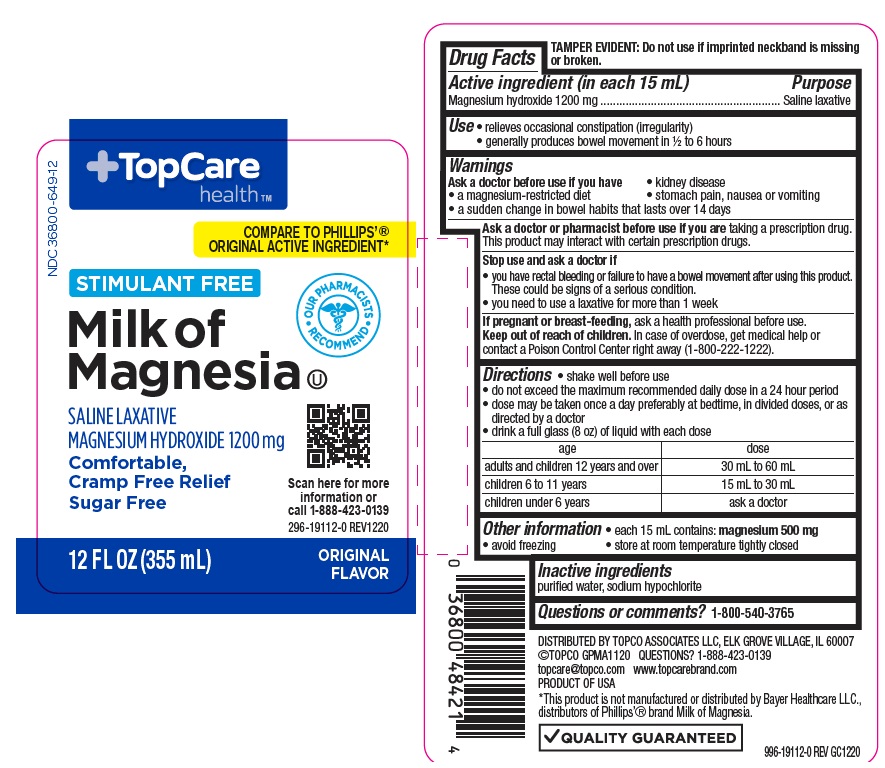
TopCare Milk of Magnesia is a saline laxative that relieves occasional constipation and generally produces a bowel movement in 1 to 6 hours. It contains magnesium hydroxide 1200 mg and is sugar-free and stimulant-free. Shake well before use and do not exceed the maximum recommended daily dose in a 24-hour period. The dosage may be taken once a day, preferably at bedtime, in divided doses or as directed by a doctor. It is advisable to drink a full glass of liquid with each dose. TopCare Milk of Magnesia should be used only if recommended by a doctor if the user has kidney disease or a magnesium-restricted diet, stomach pain, nausea or vomiting, or sudden changes in bowel habits that last over 14 days. If falling a prescription drug, one should consult a doctor or pharmacist. Children under six years should ask a doctor before use. If signs of a serious condition like rectal bleeding or the failure to have a bowel movement after using the product are noticed, users should stop using it and ask a doctor. Pregnant or breastfeeding women should consult a healthcare professional before use. It is not advisable to use it for more than 1 week, and it should be kept out of the reach of children. If an overdose occurs, medical help should be sought immediately.*

* These product label images have been analyzed using experimental machine learning. Please verify findings with the primary label text.