Careone Arthritis Pain Relief Gel
Product Images NDC 41520-788

15 FDA label images from American Sales Company · Packaging, Regulatory Labels, and Product Appearance

Product Visual Gallery

This gallery contains 15 technical images submitted to the FDA as part of the official labeling for Careone Arthritis Pain Relief (NDC 41520-788). Unlike standard consumer photos, these assets often include clinical data figures, molecular chemical structures, and official manufacturer packaging layouts.

As provided by American Sales Company, these visuals offer a comprehensive scientific overview of the product's physical and chemical identity, aiding pharmacists and researchers in product verification and study.

FDA Label Image

Hands Opening Package (Image 02)
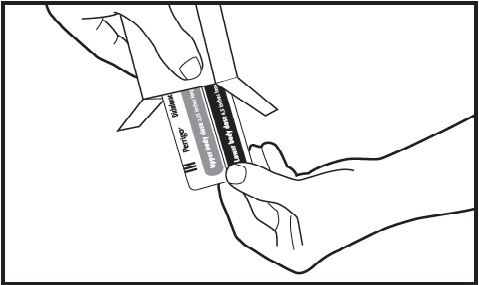
Hands Opening Package (Image 02)
An instructional illustration showing a person opening a rectangular package by pulling apart the flaps, with hands positioned to hold and open the carton containing the product.*
FDA Label Image

Taking Off Cap (Image 03)

Taking Off Cap (Image 03)
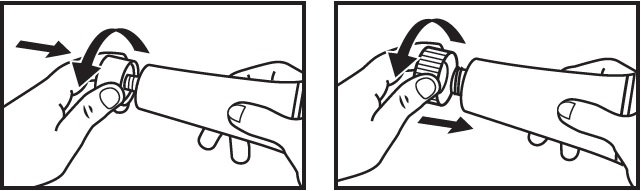
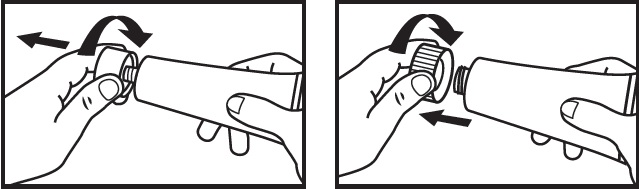
Instructional illustrations showing how to remove the cap from a tube. The first image shows twisting the cap counterclockwise to open, and the second image shows pulling the cap away from the tube after unscrewing.*
FDA Label Image

Remove Cap (Image 04)

Remove Cap (Image 04)
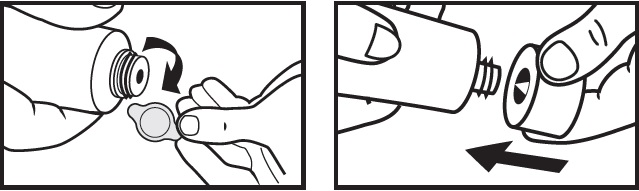
Two-panel black-and-white illustration showing instructions for opening a tube. The first panel depicts a person removing a safety seal from the tube opening by pulling it off. The second panel shows a person twisting off the tube cap by hand, indicated by an arrow.*
FDA Label Image

Replacing Cap (Image 05)

Replacing Cap (Image 05)
Instructional illustration showing how to remove and reattach the cap of a tube, likely representing the topical gel packaging for CareOne arthritis pain relief 10 mg/g diclofenac sodium.*
FDA Label Image

How Often To Use (Four Times A Day)

How Often To Use (Four Times A Day)
Illustration showing four simple black and white icons representing times of day: start of the day with rising sun, middle of the day with a full sun, late afternoon with the sun declining, and end of the day with a crescent moon, each labeled accordingly.*
FDA Label Image

Where To Apply (Examples Of Where To Apply)

Where To Apply (Examples Of Where To Apply)
An instructional diagram showing a human body with labeled areas indicating correct and incorrect application zones for a topical gel. Correct usage examples show 1 or 2 areas such as hands, knees, or a knee, while an incorrect example shows three areas (hands and ankle) crossed out.*
FDA Label Image

Measure With Dosing Card (Image 06)

Measure With Dosing Card (Image 06)
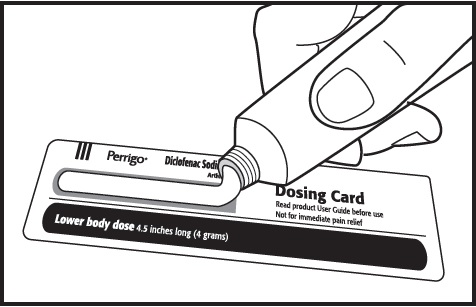
Illustration showing a hand dispensing diclofenac sodium gel from a tube onto a dosing card. The dosing card indicates the lower body dose as 4.5 inches (4 grams) and advises reading the product user guide before use, noting it is not for immediate pain relief.*
FDA Label Image

Measure Dosing Card (Image 07)

Measure Dosing Card (Image 07)
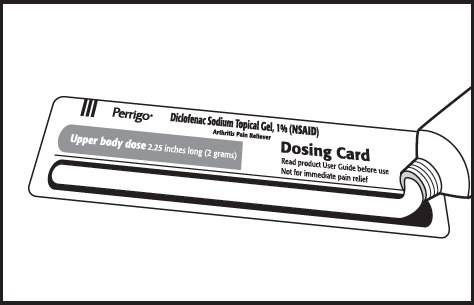
Packaging label for Perrigo Diclofenac Sodium Topical Gel, 1% (NSAID). The label includes dosing instructions noting an upper body dose of 2.25 inches long (2 grams), and cautions to read the product User Guide before use and that it is not for immediate pain relief. The label mentions it as an arthritis pain reliever.*
FDA Label Image

Apply To Areas (Apply To Areas)

Apply To Areas (Apply To Areas)
Illustration diagram depicting topical application areas for CareOne arthritis pain relief gel on upper and lower body parts. Upper body includes elbow (sides, inner and outer), wrist (sides, top, and bottom), and hand (top, palm, and fingers). Lower body areas shown are knee (sides, kneecap, and back), ankle (sides, front, and back), and foot (sole, top, and toes).*
FDA Label Image

Wash Your Hands (Wash Your Hands)

Wash Your Hands (Wash Your Hands)
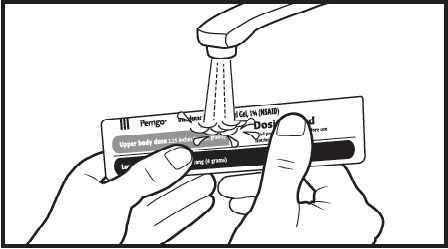
An instructional illustration showing hands being rinsed under running water, likely demonstrating hand washing or rinsing directions related to topical medication application.*
FDA Label Image

Washind Dosing Card (Image 08)

Washind Dosing Card (Image 08)
An instructional illustration depicting hands holding a tube of topical gel under a running tap water faucet, suggesting rinsing or cleaning the tube. The tube label partially shows the text related to dosing instructions for a gel medication.*
FDA Label Image

Wait 10 Minutes (Wait 10 Minutes)

Wait 10 Minutes (Wait 10 Minutes)
An illustration of a clock face highlighting a 10-minute interval, presumably indicating a time-related instruction or wait period associated with the product usage.*
FDA Label Image

Cartilage (Cartilage)

Cartilage (Cartilage)
An anatomical illustration showing two knee joint cross-sections comparing healthy cartilage and worn-away cartilage. The healthy cartilage side depicts a smooth joint surface, while the worn-away cartilage side shows areas labeled as broken cartilage, indicating cartilage degradation.*
FDA Label Image

Correct Examples (Correct Examples)

Correct Examples (Correct Examples)
Illustration showing recommended topical application sites for CareOne arthritis pain relief gel on the hand, elbow, wrist, ankle, knees, and feet. Includes specific markings for upper body (hand and elbow), lower body (knees and ankle), and distinctions for left (L) and right (R) knees.*
FDA Label Image

87a-arthritis-pain-relief-gel (Image 01)

87a-arthritis-pain-relief-gel (Image 01)
CareOne arthritis pain relief gel, 1% diclofenac sodium topical gel in a 3.53 oz (100 g) tube. The label highlights it is for topical use to relieve arthritis pain, specifying original prescription strength. The labeler is American Sales Company. The packaging features treatment area illustrations for hand, wrist, elbow, foot, ankle, and knee, with usage instructions and drug facts included on the label.*

* About these descriptions: Image descriptions on this page are generated by automated AI analysis of the product label images from the manufacturer's FDA label submission (SPL). They are provided for reference only and may contain errors or omissions. Always rely on the printed label itself and the official FDA labeling, and consult a pharmacist or healthcare professional with any questions about this product.