Diclofenac Sodium And Misoprostol Tablet, Delayed Release
Product Images NDC 42291-232

8 FDA label images from Avkare · Packaging, Regulatory Labels, and Product Appearance

Product Visual Gallery

This gallery contains 8 technical images submitted to the FDA as part of the official labeling for Diclofenac Sodium And Misoprostol (NDC 42291-232). Unlike standard consumer photos, these assets often include clinical data figures, molecular chemical structures, and official manufacturer packaging layouts.

As provided by Avkare, these visuals offer a comprehensive scientific overview of the product's physical and chemical identity, aiding pharmacists and researchers in product verification and study.

FDA Label Image

1 (Dosage 1)

1 (Dosage 1)
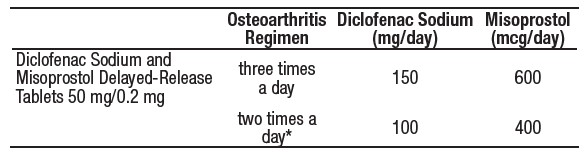
A data table comparing osteoarthritis treatment regimens with Diclofenac Sodium and Misoprostol delayed-release tablets. It shows dosing frequencies: three times a day and two times a day, with corresponding daily dosages in milligrams for Diclofenac Sodium (150 mg and 100 mg) and micrograms for Misoprostol (600 mcg and 400 mcg). Tablets strength listed is 50 mg/0.2 mg.*

FDA Label Image

2 (Dosage 2)

2 (Dosage 2)
A dosage instruction panel for Diclofenac Sodium and Misoprostol Delayed-Release Tablets 75 mg/0.2 mg, indicating dosing frequency as two times a day. It includes a note about dosage effectiveness and intolerance related to ulcer prevention.*
FDA Label Image

3 (Dosage 3)

3 (Dosage 3)
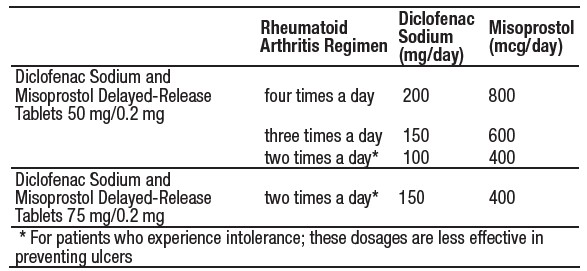
A dosage table for Diclofenac Sodium and Misoprostol delayed-release tablets showing daily amounts of diclofenac sodium (mg) and misoprostol (mcg) for different rheumatoid arthritis regimens. It includes doses for 50 mg/0.2 mg and 75 mg/0.2 mg strengths, with recommendations for frequency from two to four times a day and a note about reduced effectiveness for patients with intolerance at lower dosages.*
FDA Label Image

1 (Drug Interactions)

1 (Drug Interactions)
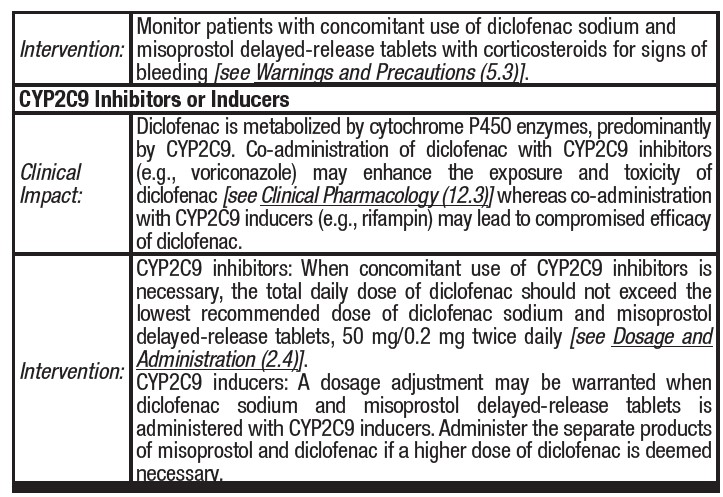
This image shows a drug information panel discussing the clinical impact and intervention recommendations related to CYP2C9 inhibitors or inducers when using diclofenac sodium and misoprostol delayed-release tablets. It includes warnings about interactions with CYP2C9 modulators, dosage adjustments, and monitoring guidance for patients on corticosteroids.*
FDA Label Image

2 (Table 2)

2 (Table 2)
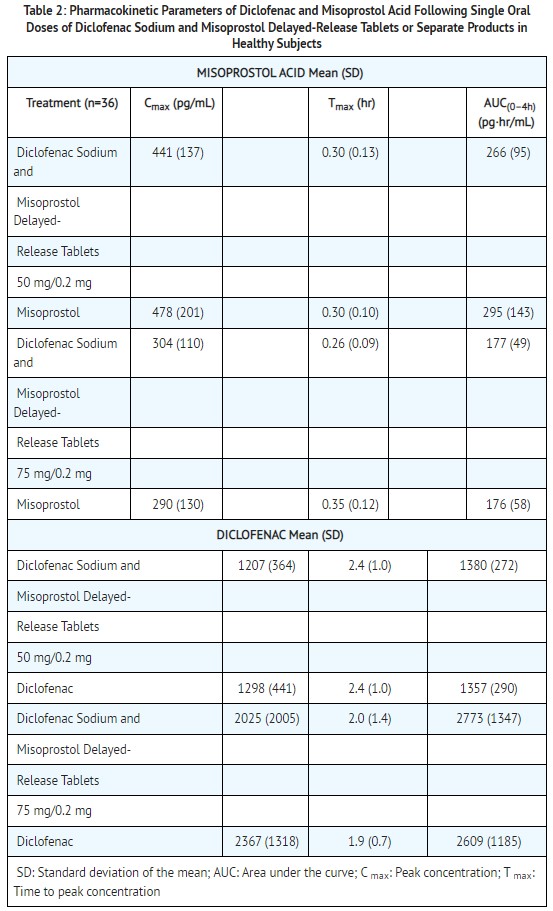
A pharmacokinetic data table showing parameters of Misoprostol Acid and Diclofenac after oral doses of Diclofenac Sodium and Misoprostol delayed-release tablets or separate products in healthy subjects. It includes mean and standard deviation values for Cmax, Tmax, and AUC(0-4h) for two dosage strengths: 50 mg/0.2 mg and 75 mg/0.2 mg.*
FDA Label Image

1 (Ulcer Chart)

1 (Ulcer Chart)
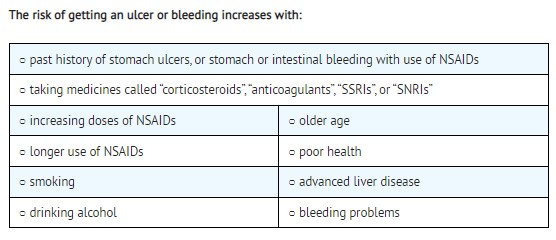
A table listing risk factors for ulcers or bleeding associated with NSAID use. It includes past history of stomach ulcers or intestinal bleeding, use of corticosteroids, anticoagulants, SSRIs, or SNRIs, increasing doses and longer use of NSAIDs, smoking, alcohol consumption, older age, poor health, advanced liver disease, and bleeding problems.*
FDA Label Image

1 (232 60)

1 (232 60)
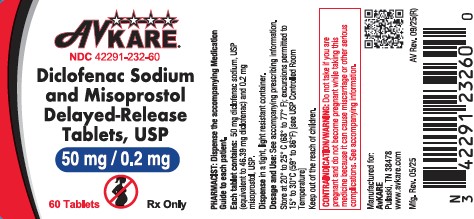
Diclofenac Sodium and Misoprostol Delayed-Release Tablets, USP, 50 mg/0.2 mg, in a carton labeled with AvKARE branding. The package contains 60 tablets and is indicated as prescription-only. The label includes medication information, warnings, a barcode, and the manufacturer details (AvKARE, Pulaski, TN).*
FDA Label Image

1 (233 60)

1 (233 60)
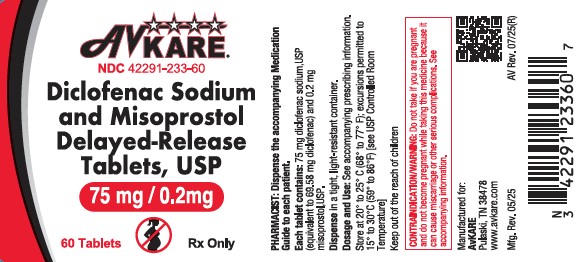
Label for AvKARE Diclofenac Sodium and Misoprostol Delayed-Release Tablets, USP 75 mg / 0.2 mg. The label displays the dosage form as oral delayed-release tablets, with a package count of 60 tablets. It includes usage instructions for pharmacists, storage conditions, and manufacturer details from AvKARE in Pulaski, TN. The label also features the NDC number 42291-233-60 and indicates Rx only status.*

* About these descriptions: Image descriptions on this page are generated by automated AI analysis of the product label images from the manufacturer's FDA label submission (SPL). They are provided for reference only and may contain errors or omissions. Always rely on the printed label itself and the official FDA labeling, and consult a pharmacist or healthcare professional with any questions about this product.