Quetiapine
Product Images NDC 42291-697

View Photos of Packaging, Regulatory Labels, and Product Appearance

Product Visual Gallery

This gallery contains 18 technical images submitted to the FDA as part of the official labeling for Quetiapine (NDC 42291-697). Unlike standard consumer photos, these assets often include clinical data figures, molecular chemical structures, and official manufacturer packaging layouts.

As provided by Avkare, these visuals offer a comprehensive scientific overview of the product's physical and chemical identity, aiding pharmacists and researchers in product verification and study.
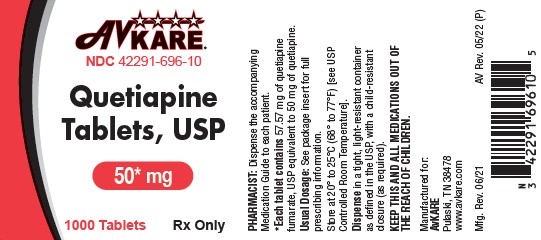
FDA Label Image

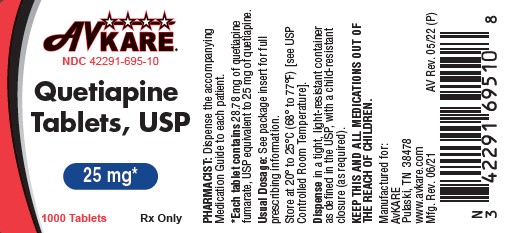
1000 (695 10)

FDA Label Image

1000 (696 10)

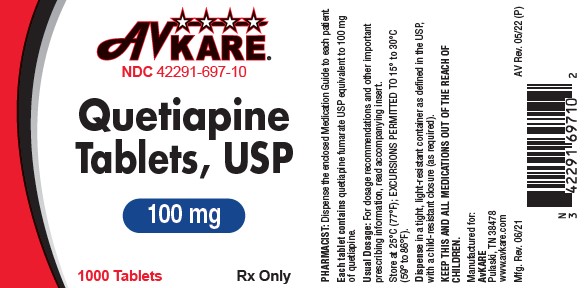
FDA Label Image

1000 (697 10)

1000 (697 10)
The text seems to be a label from a bottle of Quetia tablets. The bottle contains 1000 tablets, and the National Drug Code (NDC) is 42291-697-10. Any other information that could be found on the label is not available due to the low quality of the .*
FDA Label Image

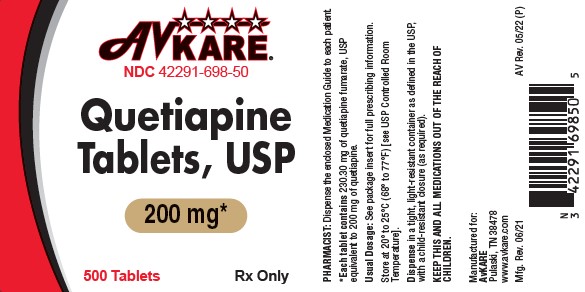
500 (698 50)

500 (698 50)
The text describes a medication called Quetiapine in the form of tablets that have a strength of 200 mg. The manufacturer of the medication is called AVKARE, and the National Drug Code (NDC) for the medication is 42291-698-50. The package contains 500 tablets and it is only available with a prescription.*
FDA Label Image

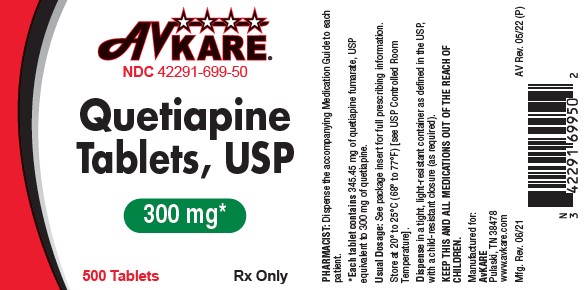
500 (699 50)

500 (699 50)
This appears to be the label of a medication package called Quetia. It contains 500 tablets and the NDC code is 42291-699-50. However, no additional information such as the purpose, dosage or instructions are available.*
FDA Label Image

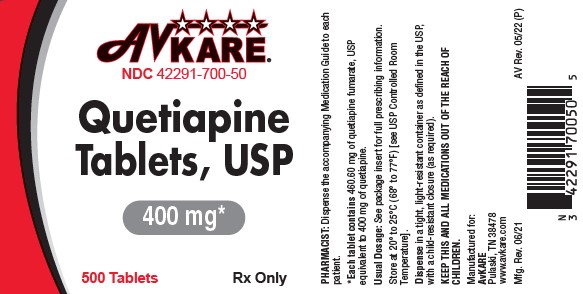
500 (700 50)

500 (700 50)
This appears to be the label information for a medication named "Quetia" in tablet form. The National Drug Code (NDC) number for this medication is 42291-700-50 and it comes in a bottle with 500 tablets. There is no further information available.*
FDA Label Image

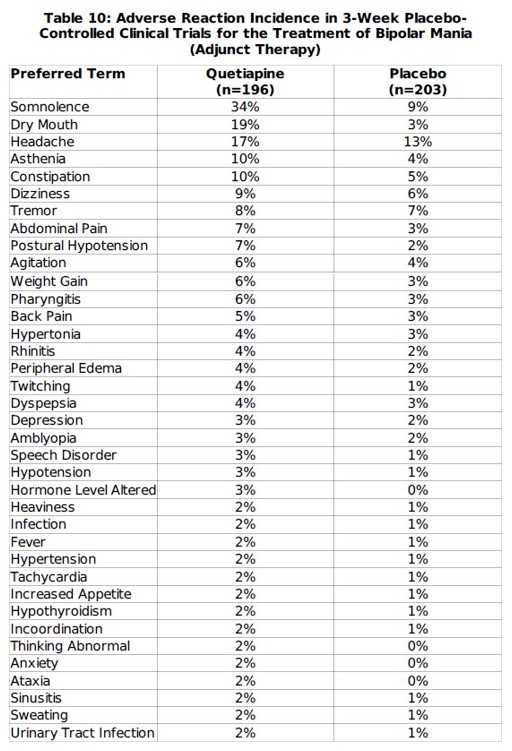
10 (Table 10)

10 (Table 10)
This table shows the incidence of adverse reactions during 3-week placebo-controlled clinical trials for the treatment of bipolar mania using Quetiapine as an adjunct therapy. It includes the percentage of patients experiencing each preferred term adverse reaction for both the Quetiapine group (203 patients) and the Placebo group. The adverse reactions listed include somnolence, dry mouth, headache, asthenia, constipation, dizziness, tremor, abdominal pain, postural hypotension, agitation, weight gain, pharyngitis, back pain, and others.*
FDA Label Image

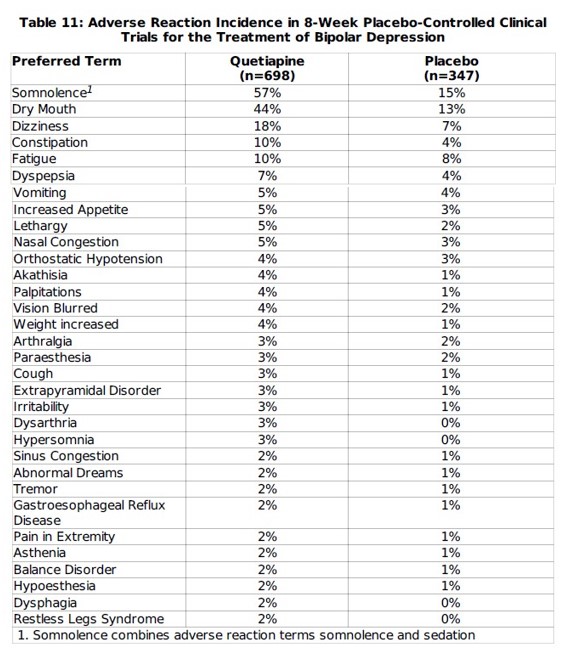
11 (Table 11)

FDA Label Image

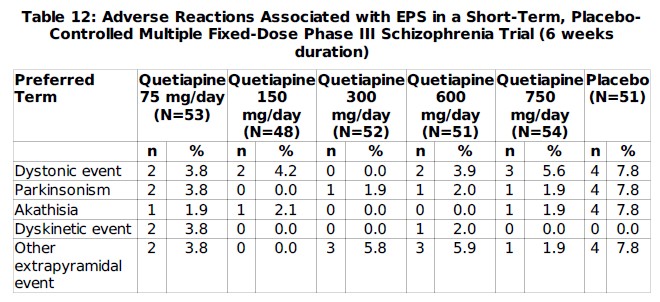
12 (Table 12)

12 (Table 12)
Table 12 shows the adverse reactions associated with EPS (Extrapyramidal Symptoms) in a short-term, placebo-controlled multiple fixed-dose Phase ll Schizophrenia trial of 6 weeks. The table lists the preferred term for the adverse reaction, followed by the dosage of Quetiapine administered, and Placebo, and the number of patients that showed the adverse reaction along with its percentage. The adverse reactions mentioned in the table are Dystonic event, Parkinsonism, Akathisia, Dyskinetic event, and Other extrapyramidal events.*
FDA Label Image

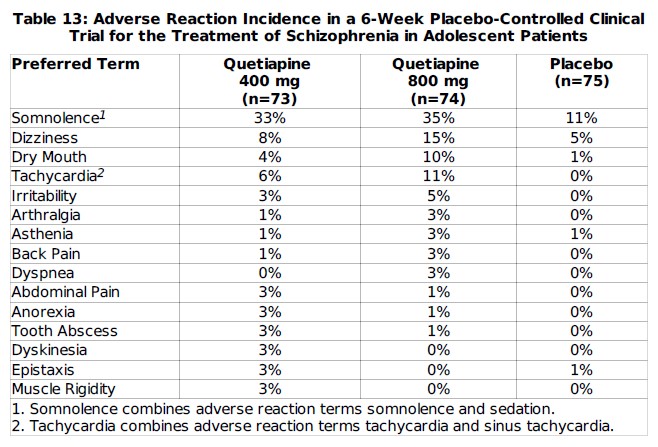
13 (Table 13)

13 (Table 13)
Table 13 displays the adverse reactions incidence in a 6-week clinical trial for the treatment of schizophrenia in adolescent patients. The table shows the prevalence of preferred terms such as somnolence, dizziness, dry mouth, tachycardia, irritability, arthralgia, asthenia, back pain, dyspnea, abdominal pain, anorexia, tooth abscess, dyskinesia, epistaxis, and muscle rigidity. The incidence percentages of these symptoms are shown for two dosages of Quetiapine (400mg and 800mg) and placebo. Note that the Somnolence category combines somnolence and sedation, and Tachycardia combines tachycardia and sinus tachycardia.*
FDA Label Image

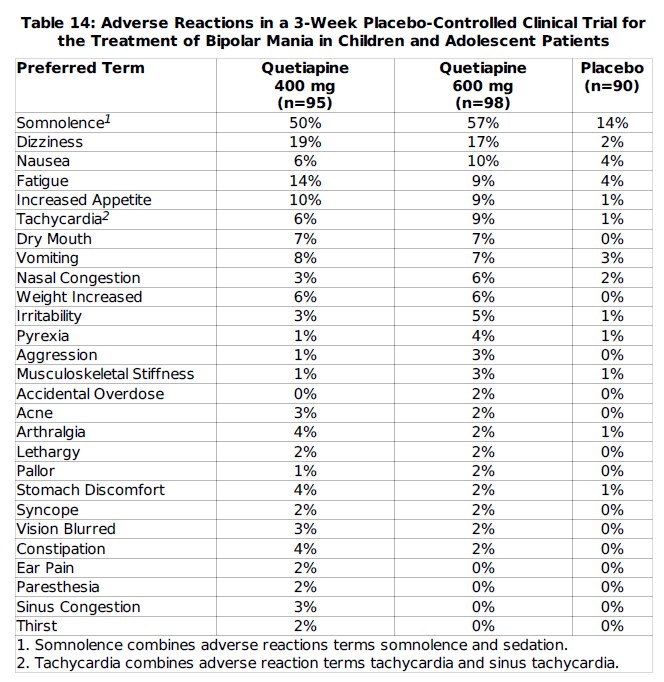
14 (Table 14)

14 (Table 14)
This table shows the adverse reactions in a 3-week clinical trial for the treatment of bipolar mania in children and adolescent patients for Quetiapine at 400mg and 600mg doses compared to a placebo. The table lists preferred terms of various adverse reactions and the percentage of patients who experienced them. The adverse reactions include sleepiness, dizziness, nausea, fatigue, increased appetite, tachycardia, dry mouth, vomiting, nasal congestion, weight gain, irritability, pyrexia, aggression, musculoskeletal stiffness, accidental overdose, acne, arthralgia, lethargy, pallor, stomach discomfort, syncope, blurred vision, constipation, ear pain, paresthesia, sinus congestion, and thirst.*
FDA Label Image

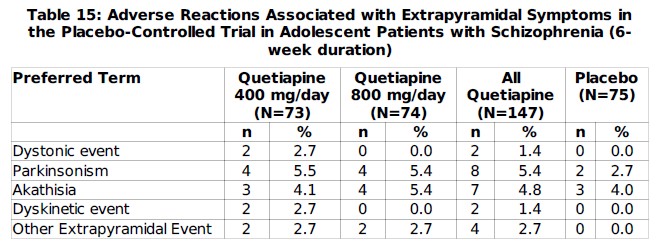
14 (Table 15)

14 (Table 15)
The text describes a table showing the adverse reactions associated with Extrapyramidal Symptoms in the Placebo-Controlled Trial in Adolescent Patients with Schizophrenia. The table compares the effects of two different doses of Quetiapine (400 mg/day and 800 mg/day) with a Placebo group. The Preferred Terms for the side effects are Dystonic event, Parkinsonism, Akathisia, Dyskinetic event, and Other Extrapyramidal Event. The table lists the number and percentage of patients who experienced adverse effects with each treatment.*
FDA Label Image

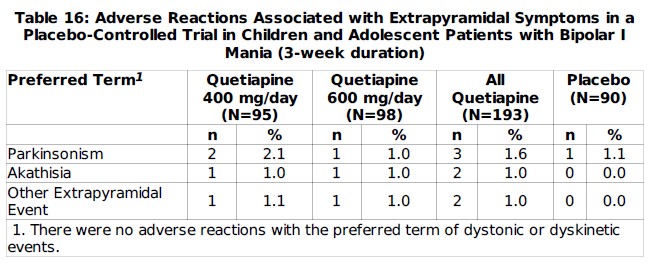
16 (Table 16)

16 (Table 16)
This table shows adverse reactions associated with extrapyramidal symptoms in a placebo-controlled trial in children and adolescent patients with bipolar mania. The table indicates the prevalence of Parkinsonism, Akathisia, and Other Extrapyramidal Events associated with Quetiapine and Placebo. The data shows that there were no adverse reactions with the preferred term of dystonic or dyskinetic events.*
FDA Label Image

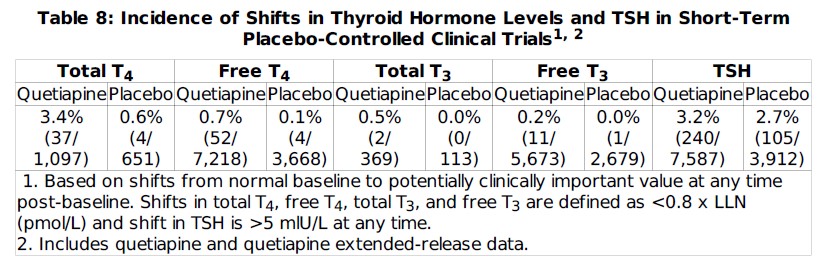
8 (Table 8)

8 (Table 8)
The table shows the incidence of shifts in thyroid hormone levels and TSH in short-term placebo-controlled clinical trials for Quetiapine and Placebo. The shifts are defined as potentially clinically important shifts from normal baseline values. The table includes data for total T4, free T4, total T3, free T3, and TSH. The incidence for Quetiapine and Placebo are compared for each. The data includes both Quetiapine and Quetiapine extended-release.*
FDA Label Image

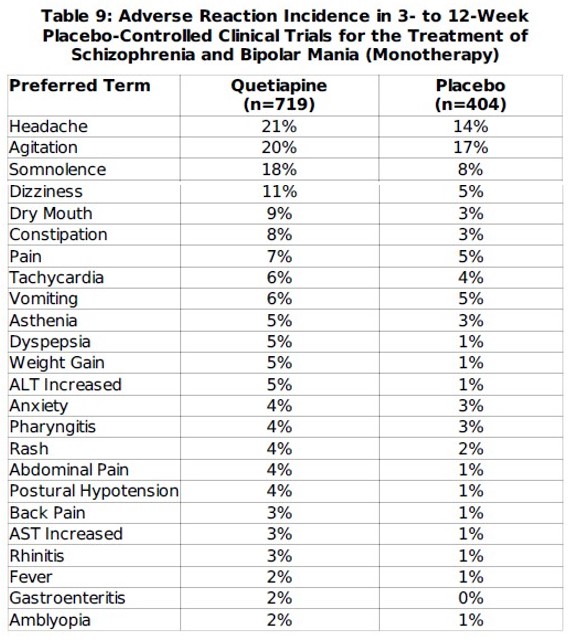
9 (Table 9)

9 (Table 9)
The table indicates the incidence of adverse reactions in clinical trials involving Quetiapine and Placebo for the treatment of Schizophrenia and Bipolar Mania in a 3 to 12 week period. Patients who received Quetiapine had relatively higher incidence of Headache, Agitation, and Somnolence compared to Placebo. Quetiapine also showed a higher incidence of side effects such as dry mouth, constipation, pain, tachycardia, vomiting, asthenia, dyspepsia, weight gain, ALT, anxiety, pharyngitis, rash, abdominal pain, postural hypotension, back pain, AST, rhinitis, fever, and gastroenteritis. Amblyopia showed an incidence of 2% for both the Quetiapine and Placebo group.*
FDA Label Image

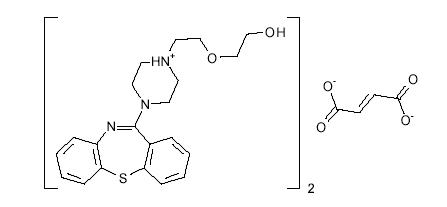
Quetiapine Fumarate Structural Formula (Image 1)

FDA Label Image

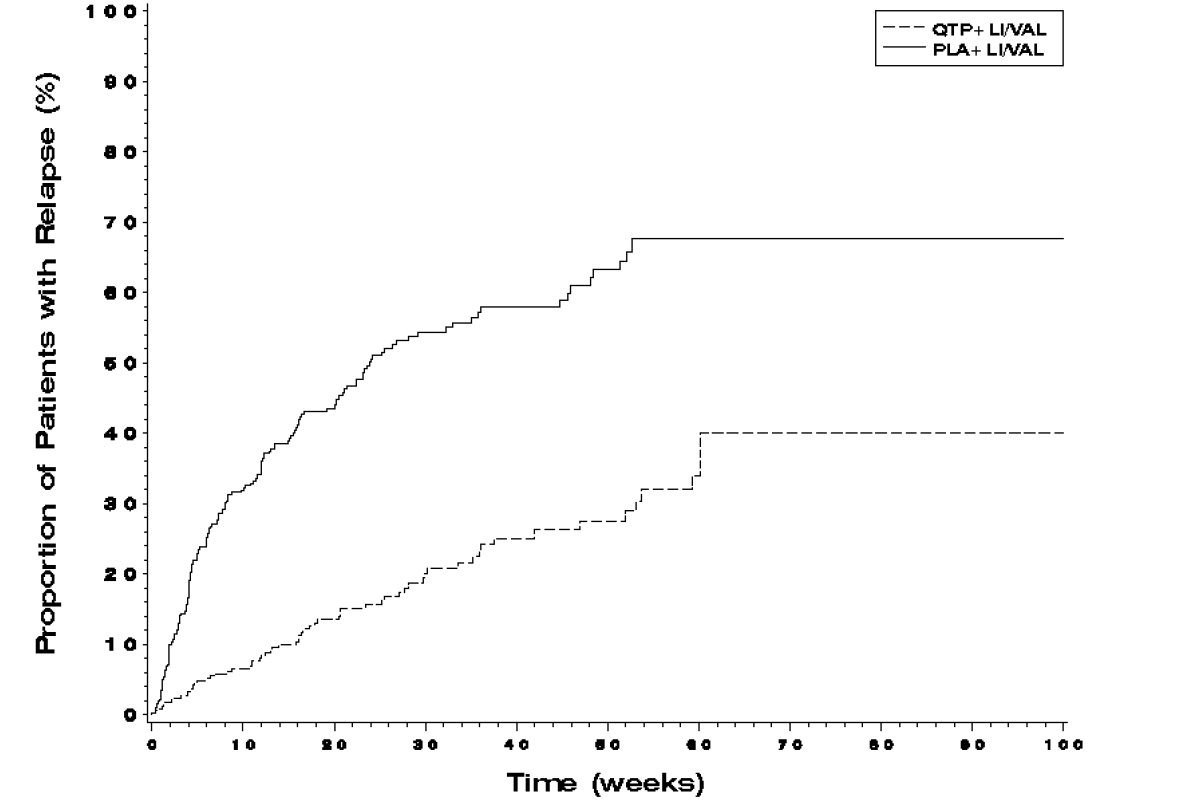
Figure 1 (Image 2)

FDA Label Image

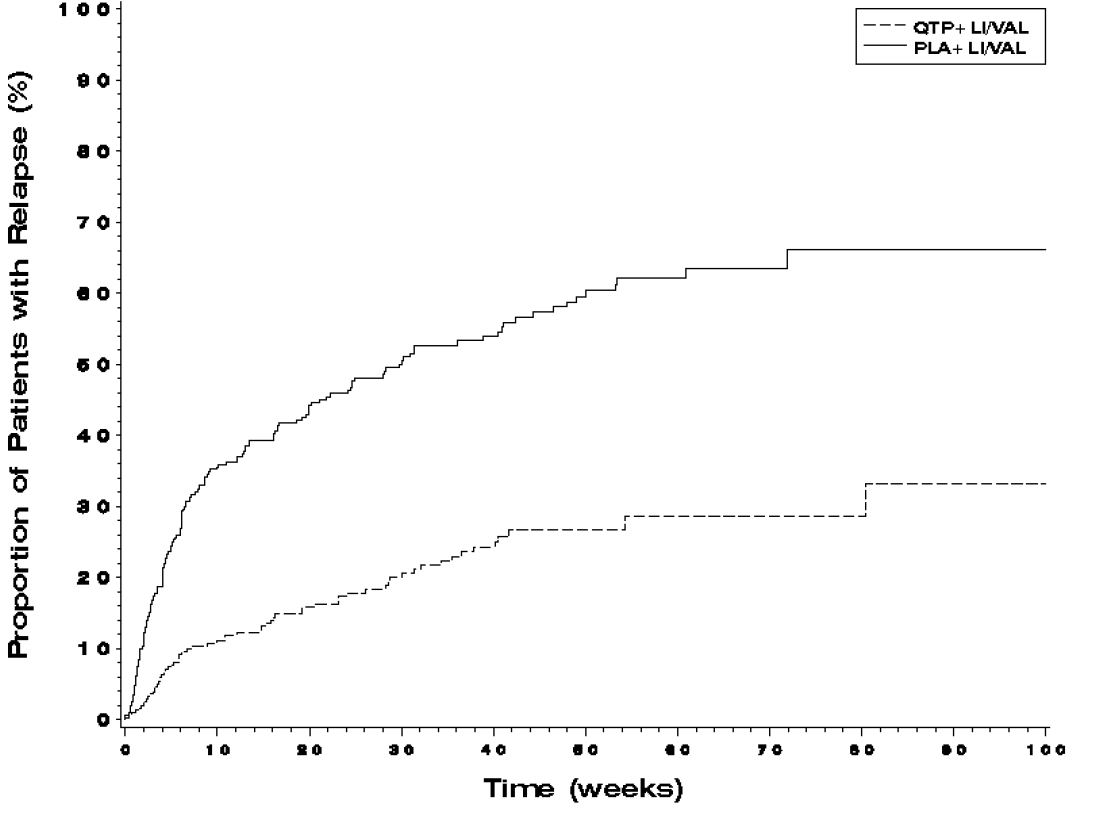
Figure 2 (Image 3)

* These product label images have been analyzed using experimental machine learning. Please verify findings with the primary label text.