Risperidone
Product Images NDC 42291-913
View Photos of Packaging, Regulatory Labels, and Product Appearance
Product Visual Gallery
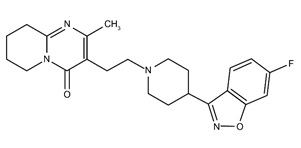
This gallery contains 25 technical images submitted to the FDA as part of the official labeling for Risperidone (NDC 42291-913). Unlike standard consumer photos, these assets often include clinical data figures, molecular chemical structures, and official manufacturer packaging layouts.
As provided by Avkare, these visuals offer a comprehensive scientific overview of the product's physical and chemical identity, aiding pharmacists and researchers in product verification and study.
Product Images & Figures Index
10.2
11.1
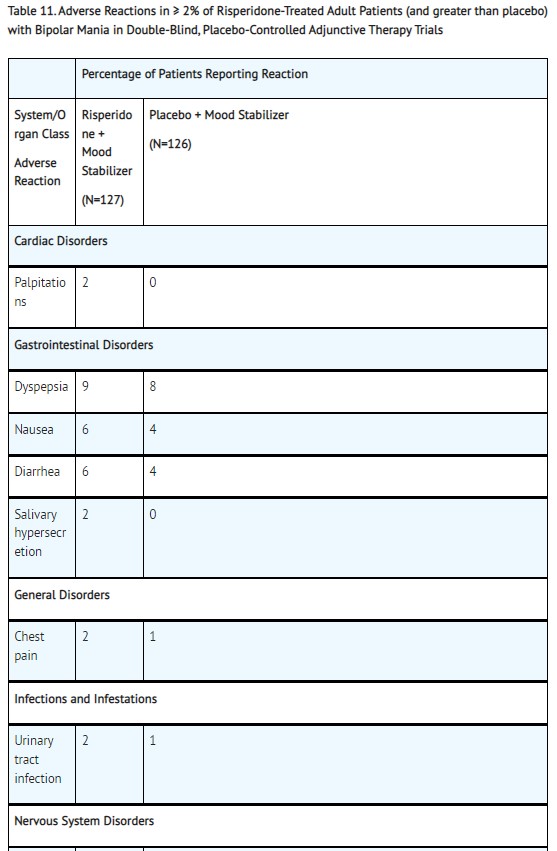
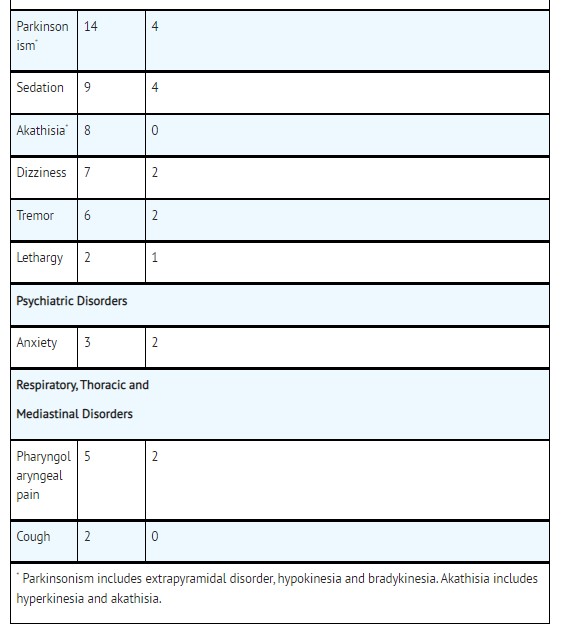
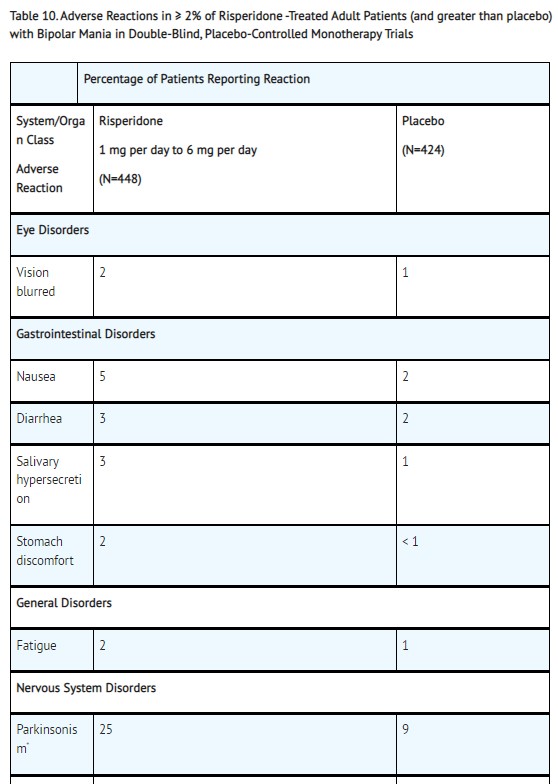
The table presents adverse reactions in over 2% of adult patients treated with Risperidone for Bipolar Mania, and not experienced by those on placebo in double-blind trials. Reported reactions include Dyspepsia (9% Risperidone vs 8% placebo), Nausea (6% vs 4%), Diarrhea (6% vs 4%), and Salivary hypersecretion (2% vs 0%). Cardiac, gastrointestinal, general, and nervous system disorders are among the classification of reactions examined.*
11.2
12.1
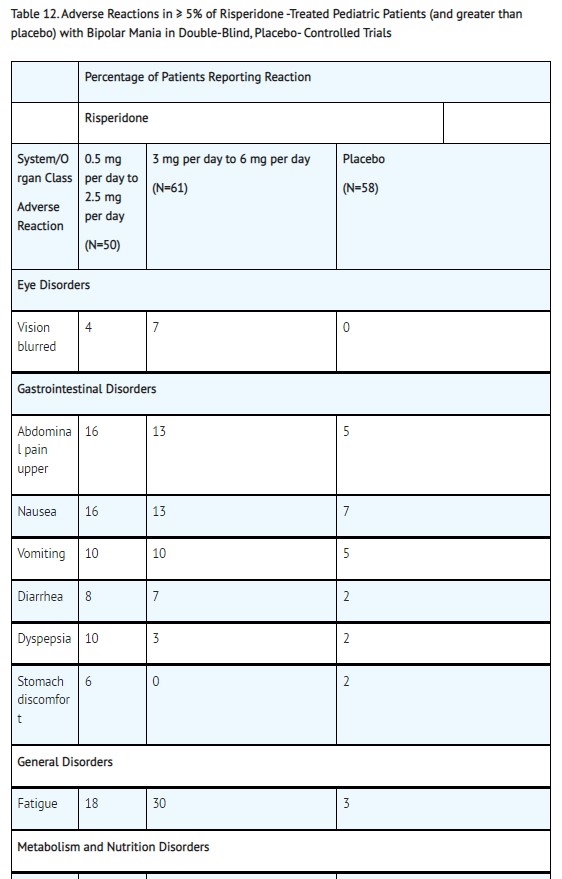
Table 12 provides information on adverse reactions reported in more than 5% of Risperidone-treated pediatric patients experiencing Bipolar Mania in Double-Blind, Placebo-Controlled Trials. The table lists various adverse reactions across different systems, such as Eye Disorders, Gastrointestinal Disorders, and General Disorders. Some of the reactions reported include blurred vision, abdominal pain, nausea, vomiting, diarrhea, and stomach discomfort. This data is essential for healthcare professionals to understand and manage potential side effects in pediatric patients receiving Risperidone treatment.*
12.2
13.1
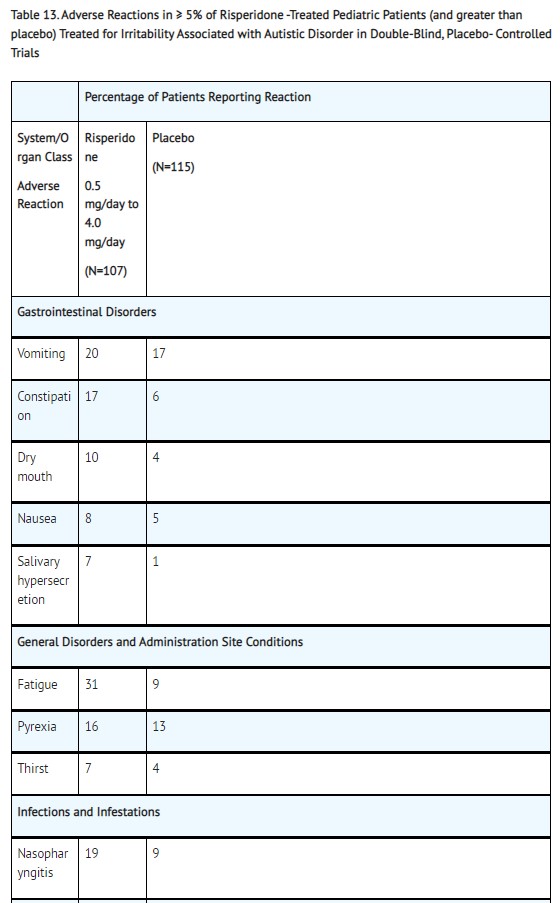
This text provides a table showing the adverse reactions reported in more than 5% of pediatric patients treated with Risperidone for irritability associated with autistic disorder in controlled trials. The adverse reactions include gastrointestinal disorders such as vomiting, constipation, dry mouth, nausea, and hypersecretion of salivary glands. General disorders and administration site conditions like pyrexia and thirst were also noted. Infections and infestations, such as nasopharyngitis, were reported as well.*
13.2
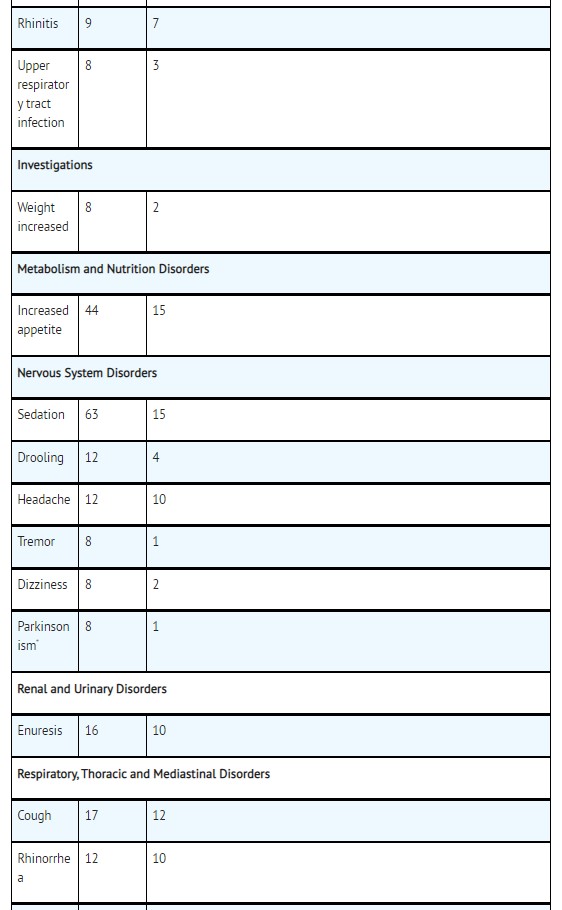
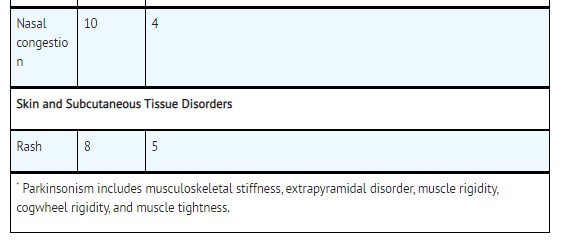
This text appears to be a detailed list of medical conditions and symptoms, including rhinitis, upper respiratory tract infection, weight increase, increased appetite, sedation, drooling, tremor, polyuria, cough, and rhinorrhea. It seems to outline various disorders affecting different systems like metabolism, nervous system, renal and urinary systems, and respiratory system. The document provides a snapshot of symptoms and disorders for potential evaluation and diagnosis.*
13.3
14
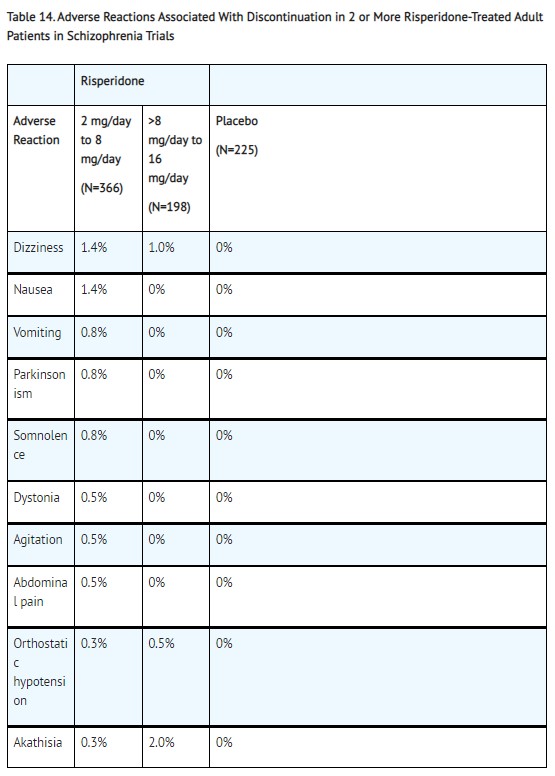
This document provides details on adverse reactions associated with discontinuation of Risperidone treatment in adult schizophrenia trials. Some of the reactions mentioned include Dizziness, Nausea, Vomiting, Insomnia, Somnolence, Agitation, Abdominal pain, Orthostatic hypotension, and Akathisia. The percentages of occurrence for each reaction in the Risperidone-treated group compared to the Placebo group are also listed.*
15
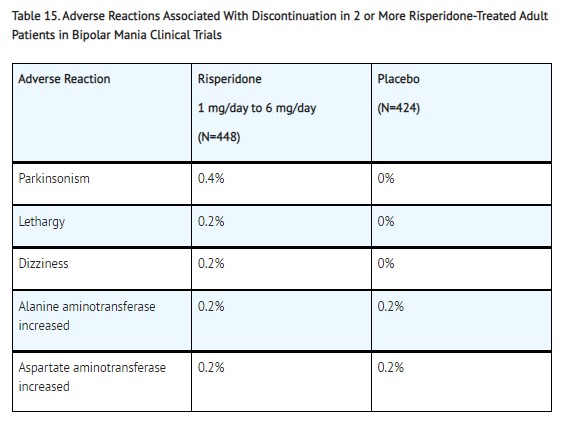
This text provides a table listing adverse reactions associated with discontinuation in risperidone-treated adult patients in bipolar mania clinical trials. The table compares the percentages of various adverse reactions between the risperidone group (doses ranging from 1 mg/day to 6 mg/day, N=424) and the placebo group (N=448). Some of the reactions mentioned include Parkinsonism, dizziness, increased alanine aminotransferase levels, and minotransferase levels.*
16
17
8.1
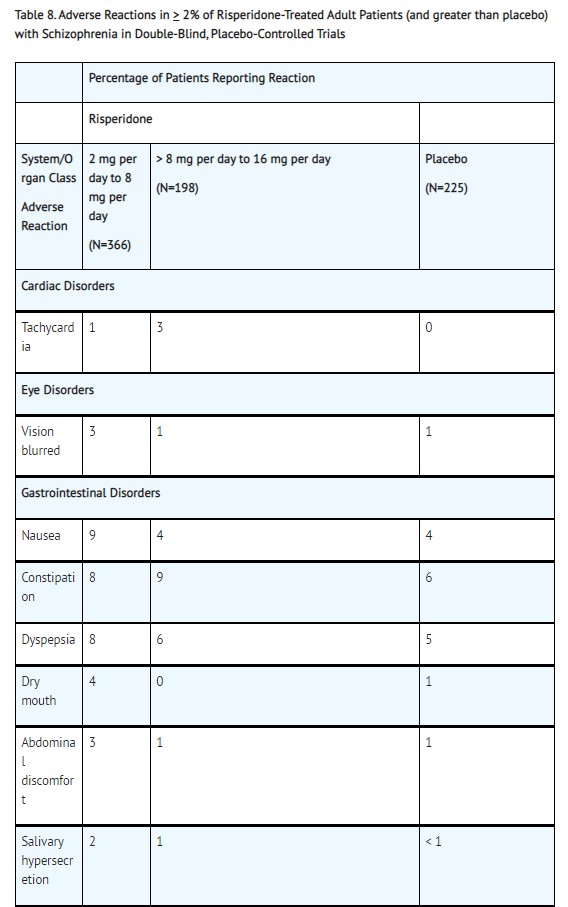
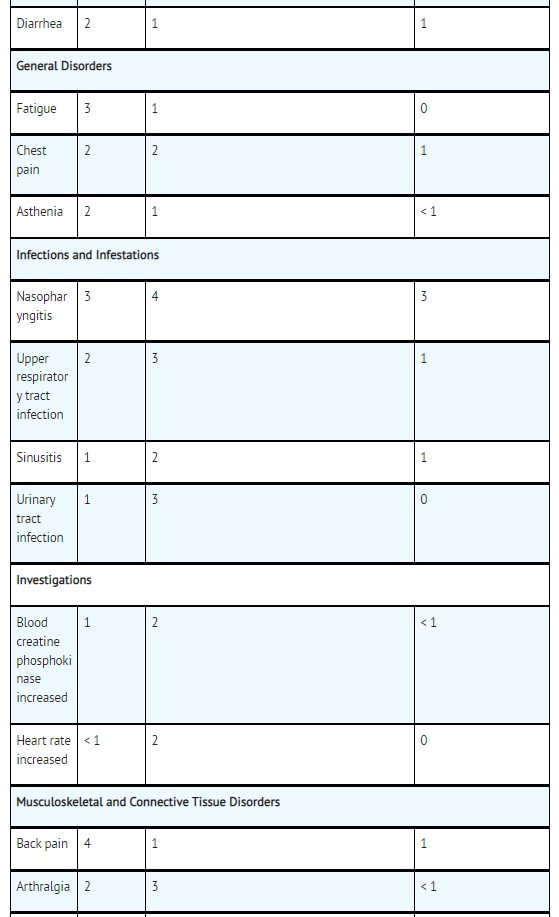
This text provides a summary of adverse reactions reported in Risperidone-treated adult patients with schizophrenia in double-blind, placebo-controlled trials. The table highlights the percentages of patients reporting various reactions categorized by different system/organ classes. Adverse reactions such as Tachycardia, Blurred Vision, Gastrointestinal Disorders (Nausea, Constipation, Dyspepsia), Dry Mouth, Abdominal Discomfort, and Salivary Hypersecretion are detailed along with the corresponding percentages for Risperidone-treated patients compared to those on a placebo.*
8.2
8.3
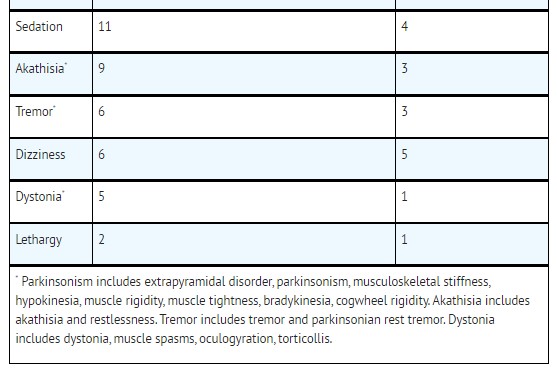
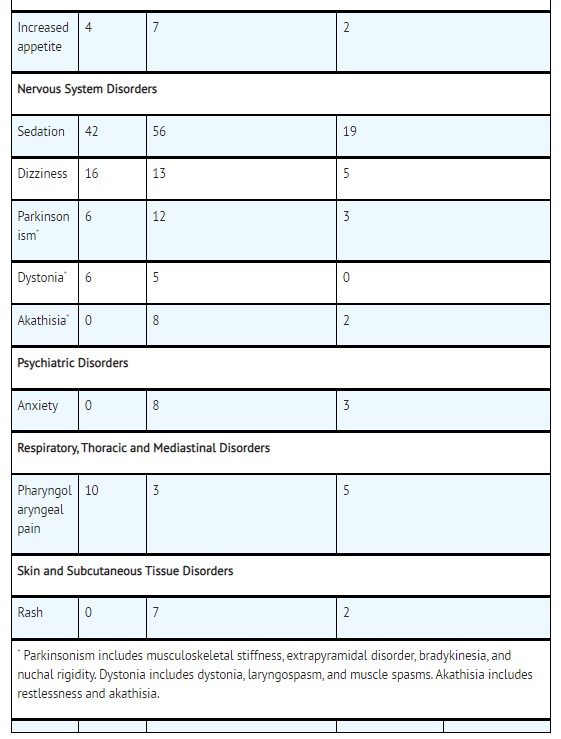
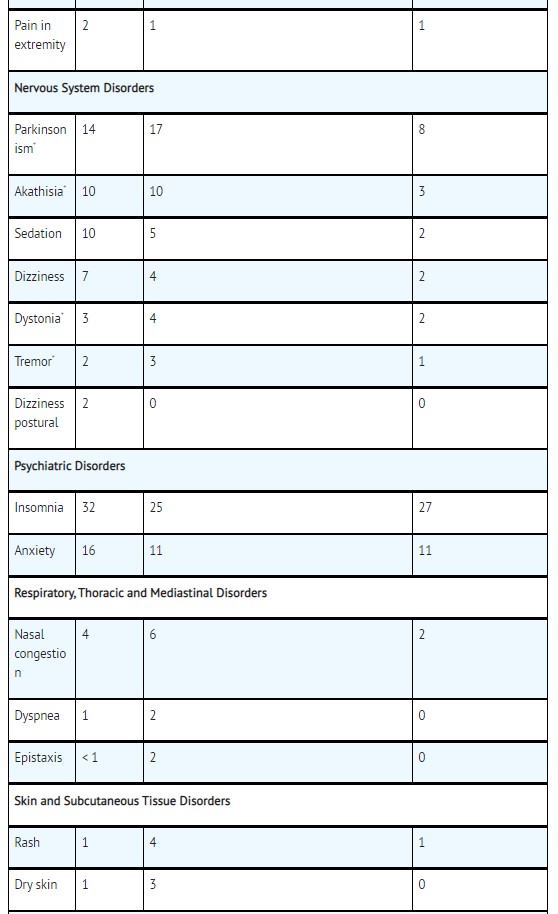
This text provides a list of various symptoms associated with different disorders such as Nervous System Disorders, Psychiatric Disorders, Respiratory, Thoracic, and Mediastinal Disorders, and Skin and Subcutaneous Tissue Disorders. The symptoms listed include Akathisia, Dizziness, Dystonia, Tremor, Insomnia, Anxiety, Nasal congestion, Dyspnea, Epistaxis, and Rash. Each symptom is accompanied by a set of three numbers, possibly indicating severity or frequency.*
8.4
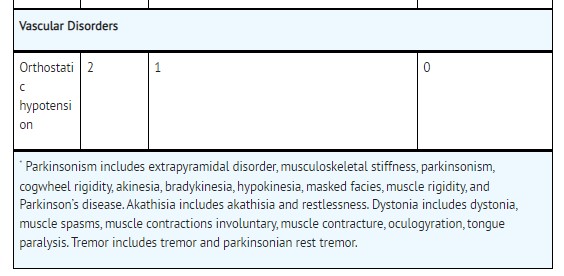
This text discusses various vascular disorders, with a particular focus on orthostatic hypotension. It also details symptoms and conditions related to Parkinsonism, Akathisia, Dystoniz, and Tremor. Parkinsonism symptoms described here include extrapyramidal disorder, musculoskeletal stiffness, cogwheel rigidity, akinesia, bradykinesia, hypokinesia, masked facies, muscle rigidity, and Parkinson's disease. Akathisia is described as including restlessness, while Dystoniz involves muscle spasms, involuntary muscle contractions, muscle contracture, oculogyration, and tongue paralysis. Tremor, on the other hand, encompasses tremor and parkinsonian rest tremor.*
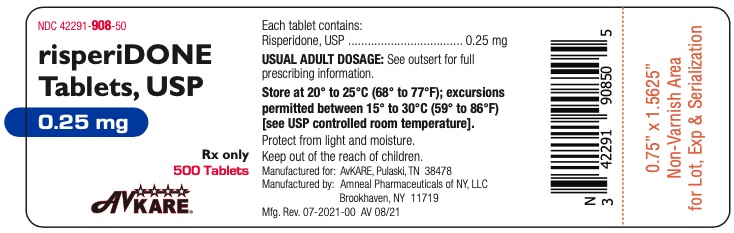
25 (908 50 0.25mg 500ct)
This is a description for Risperidone tablets, USP 0.25mg by Avkare. The usual adult dosage information can be found in the package insert. The tablets should be stored at a temperature range of 20° to 25°C and protected from light and moisture. They should be kept out of the reach of children. The product was manufactured by Avkare in Tennessee and distributed by Amneal Pharmaceuticals in New York.*
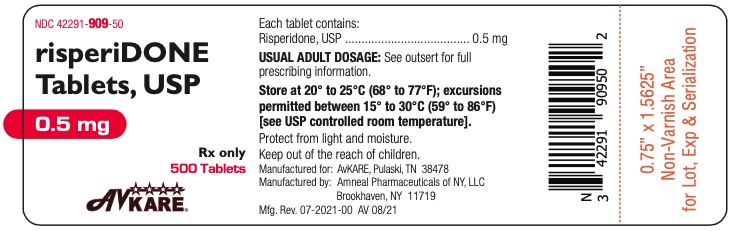
.5 (909 50 .5mg 500ct)
This text is from a medication package containing tablets of Risperidone USP 0.5mg. The recommended adult dosage is specified in the information leaflet inside the packaging. The tablets should be stored at a temperature range of 20°C to 25°C (68°F to 77°F) with short excursions permitted between 15°C to 30°C (59°F to 86°F). It is advised to protect the tablets from light and moisture. The product should only be used under prescription and kept out of reach of children. The package contains 500 tablets, manufactured by AKARE in Tennessee and distributed by Amneal Pharmaceuticals in New York. The package has a lot, expiration date, and serialization information.*
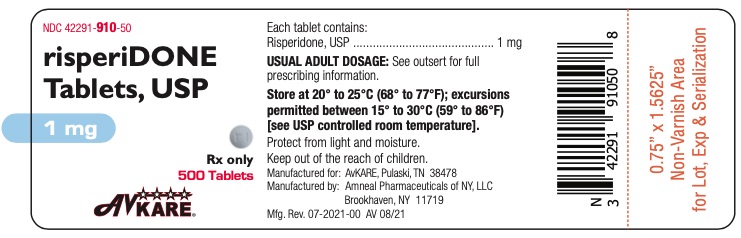
1 (910 50 1mg 500ct)
This is a description of Risperidone Tablets. Each tablet contains Risperidone, USP 1mg. The usual adult dosage and full prescribing information can be found in the insert. The tablets should be stored between 20° to 25°C (68° to 77°F) and protected from light and moisture. The manufacturing details are provided for AKARE Pulaski, TN 38478 and Amera Pharmaceuticals of NY, LLC Brocknaien NY 11719.*
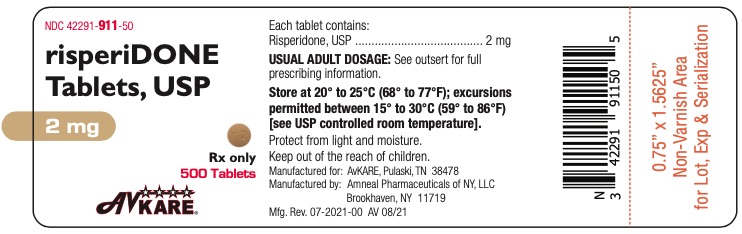
2 (911 50 2mg 500ct)
This text is a description of Risperidone Tablets, USP with a strength of 2mg. The medication is available in a pack of 500 tablets and is for prescription-only use. The recommended storage temperature is between 20°C to 25°C, with excursions permitted between 15°C to 30°C. It is advised to protect the tablets from light and moisture and keep them out of reach of children. The medication is manufactured by ANI Pharmaceuticals and distributed by AVKARE. For specific dosage instructions, refer to the provided information sheet.*
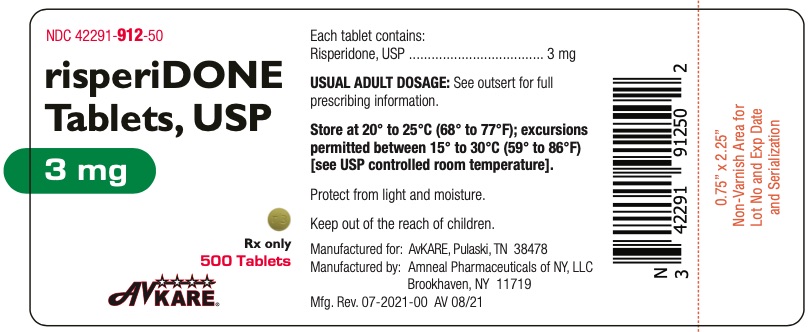
3 (912 50 3mg 500ct)
This is a description of a medication labeled as NDC 42291-812-50, containing 3mg of risperidonel USP. It is advised to be stored at temperatures between 20° to 25°C, with excursions permitted between 15° to 30°C. The tablets should be protected from light and moisture and kept out of the reach of children. The medication is manufactured for AKARE and Amneal Pharmaceuticals in Pulaski, TN and Brookhaven, NY respectively.*
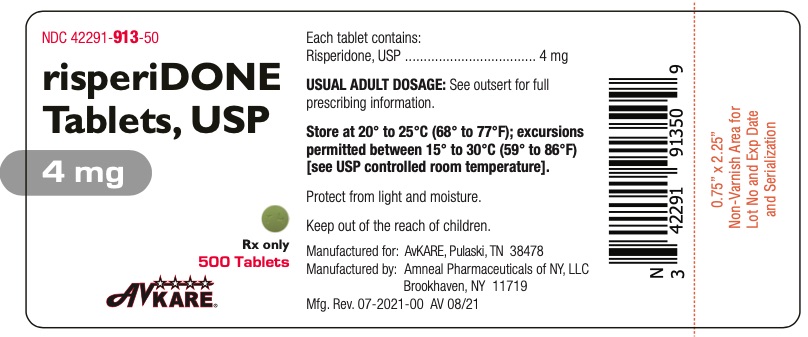
4 (913 50 4mg 500ct)
This text provides information about Risperidone tablets in a pack of 500, with a dosage of 4mg per tablet. It includes storage instructions, manufacturer details, and mentions of protecting the tablets from light and moisture. The text also references the full prescribing information available in the outsert.*
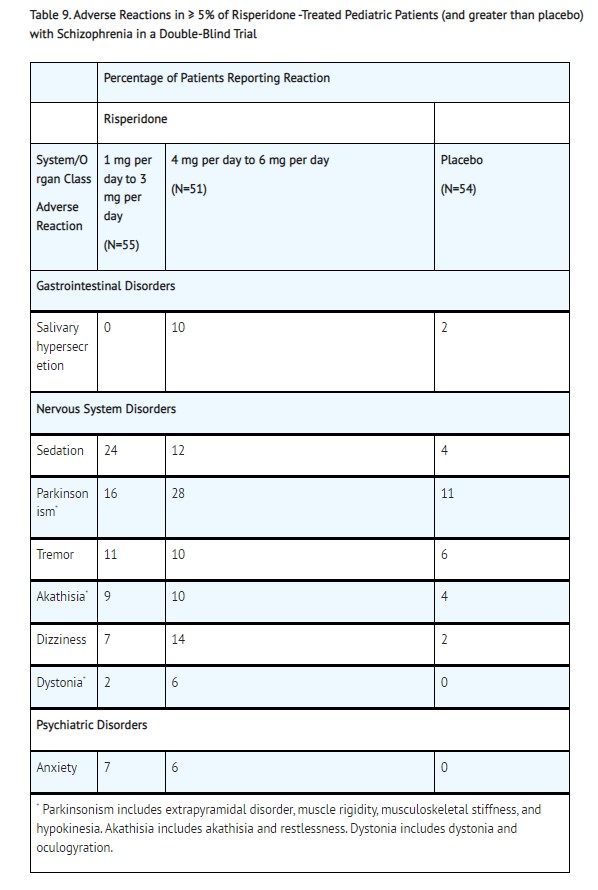
Table 9
The provided text outlines adverse reactions reported in Risperidone-treated pediatric patients with schizophrenia in a double-blind trial. The table shows the percentage of patients reporting reactions, including gastrointestinal disorders like salivary hypersecretion, nervous system disorders like sedation, Parkinsonism, tremor, akathisia, dizziness, and dystonia, as well as psychiatric disorders like anxiety. Parkinsonism includes extrapyramidal disorder, muscle rigidity, musculoskeletal stiffness, and hypokinesia, while akathisia includes akathisia and restlessness, and dystonia includes dystonia.*
1 (Risperidone Tablets Usp 1)
* These product label images have been analyzed using experimental machine learning. Please verify findings with the primary label text.