Because clinical trials are conducted under widely varying conditions, adverse reaction rates observed in the clinical trials of a drug cannot be directly compared to rates in the clinical trials of another drug and may not reflect the rates observed in practice.
The stated frequencies of adverse reactions represent the proportion of patients who experienced, at least once, one treatment-emergent adverse reaction of the type listed. A reaction was considered treatment-emergent if it occurred for the first time or worsened while receiving therapy following baseline evaluation.
The data described below reflect exposure to duloxetine in placebo-controlled adult trials for MDD (N=3779), GAD (N=1018), OA (N=503), CLBP (N=600), DPNP (N=906), and FM (N=1294). The age range in this pooled population was 17 to 89 years of age. In this pooled population, 66%, 61%, 61%, 43%, and 94% of adult patients were female; and 82%, 73%, 85%, 74%, and 86% of adult patients were Caucasian in the MDD, GAD, OA and CLBP, DPNP, and FM populations, respectively. Most patients received duloxetine dosages of a total of 60 to 120 mg per day
[see
Clinical Studies (
14)]
. The data below do not include results of the trial that evaluated the efficacy of duloxetine for the treatment of GAD in patients ≥65 years old (Study GAD-5)
[see Clinical Studies (
14.3)]
; however, the adverse reactions observed in this geriatric population were generally similar to adverse reactions in the overall adult population.
Approximately 8.4% (319/3779) of duloxetine-treated patients in placebo-controlled adult trials for MDD discontinued treatment due to an adverse reaction, compared with 4.6% (117/2536) of placebo-treated patients. Nausea (duloxetine 1.1%, placebo 0.4%) was the only adverse reaction reported as a reason for discontinuation and considered to be drug-related (i.e., discontinuation occurring in at least 1% of the duloxetine-treated patients and at a rate of at least twice that of placebo-treated patients).
Approximately 13.7% (139/1018) of the duloxetine-treated patients in placebo-controlled adult trials for GAD discontinued treatment due to an adverse reaction, compared with 5% (38/767) for placebo-treated patients. Common adverse reactions reported as a reason for discontinuation and considered to be drug-related (as defined above) included nausea (duloxetine 3.3%, placebo 0.4%), and dizziness (duloxetine 1.3%, placebo 0.4%).
Approximately 12.9% (117/906) of the duloxetine-treated patients in placebo-controlled adult trials for DPNP discontinued treatment due to an adverse reaction, compared with 5.1% (23/448) for placebo-treated patients. Common adverse reactions reported as a reason for discontinuation and considered to be drug-related (as defined above) included nausea (duloxetine 3.5%, placebo 0.7%), dizziness (duloxetine 1.2%, placebo 0.4%), and somnolence (duloxetine 1.1%, placebo 0%).
Approximately 17.5% (227/1294) of the duloxetine-treated patients in 3- to 6- month placebo-controlled adult trials for FM discontinued treatment due to an adverse reaction, compared with 10.1% (96/955) for placebo-treated patients. Adverse reactions reported as a reason for discontinuation and considered to be drug-related (as defined above) included nausea (duloxetine 2.0%, placebo 0.5%), headache (duloxetine 1.2%, placebo 0.3%), somnolence (duloxetine 1.1%, placebo 0%), and fatigue (duloxetine 1.1%, placebo 0.1%).
Approximately 15.7% (79/503) of the duloxetine-treated patients in 13-week, placebo-controlled adult trials for chronic pain due to OA discontinued treatment due to an adverse reaction, compared with 7.3% (37/508) for placebo-treated patients. Adverse reactions reported as a reason for discontinuation and considered to be drug-related (as defined above) included nausea (duloxetine 2.2%, placebo 1%).
Approximately 16.5% (99/600) of the duloxetine-treated patients in 13-week, placebo-controlled adult trials for CLBP discontinued treatment due to an adverse reaction, compared with 6.3% (28/441) for placebo-treated patients. Adverse reactions reported as a reason for discontinuation and considered to be drug-related (as defined above) included nausea (duloxetine 3%, placebo 0.7%), and somnolence (duloxetine 1%, placebo 0%).
The most commonly observed adverse reactions in duloxetine-treated patients (as defined above) were:
- Diabetic Peripheral Neuropathic Pain: nausea, somnolence, decreased appetite, constipation, hyperhidrosis, and dry mouth.
- Fibromyalgia: nausea, dry mouth, constipation, somnolence, decreased appetite, hyperhidrosis, and agitation.
- Chronic Pain due to Osteoarthritis: nausea, fatigue, constipation, dry mouth, insomnia, somnolence, and dizziness.
- Chronic Low Back Pain: nausea, dry mouth, insomnia, somnolence, constipation, dizziness, and fatigue.
The most commonly observed adverse reactions in duloxetine-treated patients in all the pooled adult populations (i.e., MDD, GAD, DPNP, FM, OA, and CLBP) (incidence of at least 5% and at least twice the incidence in placebo-treated patients) were nausea, dry mouth, somnolence, constipation, decreased appetite, and hyperhidrosis.
Table 2 displays the incidence of adverse reactions in placebo-controlled trials for approved adult populations (i.e., MDD, GAD, DPNP, FM, OA, and CLBP) that occurred in 5% or more of duloxetine-treated patients and with an incidence greater than placebo-treated patients.
Table 2: Adverse Reactions: Incidence of 5% or More and Greater than Placebo in Placebo-Controlled Trials of Approved Adult Populations
The inclusion of an event in the table is determined based on the percentages before rounding; however, the percentages displayed in the table are rounded to the nearest integer.
|
|
|
|
|
|
Adverse Reaction
| Percentage of Patients Reporting Reaction
|
| Duloxetine
(N=8100)
| Placebo
(N=5655)
|
Nausea
c
| 23
| 8
|
Headache
| 14
| 12
|
Dry mouth
| 13
| 5
|
Somnolence
e
| 10
| 3
|
Fatigue
b,c
| 9
| 5
|
Insomnia
d
| 9
| 5
|
Constipation
c
| 9
| 4
|
Dizziness
c
| 9
| 5
|
Diarrhea
| 9
| 6
|
Decreased appetite
c
| 7
| 2
|
Hyperhidrosis
c
| 6
| 1
|
Abdominal pain
f
| 5
| 4
|
Adverse Reactions in Pooled MDD and GAD Trials in Adults
Table 3 displays the incidence of adverse reactions in MDD and GAD placebo-controlled adult trials that occurred in 2% or more of duloxetine-treated patients and with an incidence greater than placebo-treated patients.
Table 3: Adverse Reactions: Incidence of 2% or More and Greater than Placebo in MDD and GAD Placebo-Controlled Trials in Adults
a,b |
|
|
|
|
|
|
|
|
|
|
| Percentage of Patients Reporting Reaction
|
System Organ Class / Adverse Reaction
| Duloxetine
(N=4797)
| Placebo
(N=3303)
|
Cardiac Disorders
| | |
Palpitations
| 2
| 1
|
Eye Disorders
| | |
Vision blurred
| 3
| 1
|
Gastrointestinal Disorders
| | |
Nausea
c
| 23
| 8
|
Dry mouth
| 14
| 6
|
Constipation
c
| 9
| 4
|
Diarrhea
| 9
| 6
|
Abdominal pain
d
| 5
| 4
|
Vomiting
| 4
| 2
|
General Disorders and Administration Site Conditions
| | |
Fatigue
e
| 9
| 5
|
Metabolism and Nutrition Disorders
| | |
Decreased appetite
c
| 6
| 2
|
Nervous System Disorders
| | |
Headache
| 14
| 14
|
Dizziness
c
| 9
| 5
|
Somnolence
f
| 9
| 3
|
Tremor
| 3
| 1
|
Psychiatric Disorders
| | |
Insomnia
g
| 9
| 5
|
Agitation
h
| 4
| 2
|
Anxiety
| 3
| 2
|
Reproductive System and Breast Disorders
| | |
Erectile dysfunction
| 4
| 1
|
Ejaculation delayed
c
| 2
| 1
|
Libido decreased
i
| 3
| 1
|
Orgasm abnormal
j
| 2
| <1
|
Respiratory, Thoracic, and Mediastinal Disorders
| | |
Yawning
| 2
| <1
|
Skin and Subcutaneous Tissue Disorders
| | |
Hyperhidrosis
| 6
| 2
|
Adverse Reactions in the DPNP, FM, OA, and CLBP Adult Trials
Table 4 displays the incidence of adverse reactions that occurred in 2% or more of duloxetine-treated patients (determined prior to rounding) in the premarketing acute phase of DPNP, FM, OA, and CLBP placebo-controlled adult trials and with an incidence greater than placebo-treated patients.
Table 4: Adverse Reactions: Incidence of 2% or More and Greater than Placebo in DPNP, FM, OA, and CLBP Placebo-Controlled Trials
a |
|
|
|
|
|
|
|
|
|
|
|
|
| Percentage of Patients Reporting Reaction
|
System Organ Class / Adverse Reaction
| Duloxetine
(N=3303)
| Placebo
(N=2352)
|
Gastrointestinal Disorders
| | |
Nausea
| 23
| 7
|
Dry mouth
b
| 11
| 3
|
Constipation
b
| 10
| 3
|
Diarrhea
| 9
| 5
|
Abdominal Pain
c
| 5
| 4
|
Vomiting
| 3
| 2
|
Dyspepsia
| 2
| 1
|
General Disorders and Administration Site Conditions
| | |
Fatigue
d
| 11
| 5
|
Infections and Infestations
| | |
Nasopharyngitis
| 4
| 4
|
Upper Respiratory Tract Infection
| 3
| 3
|
Influenza
| 2
| 2
|
Metabolism and Nutrition Disorders
| | |
Decreased Appetite
b
| 8
| 1
|
Musculoskeletal and Connective Tissue
| | |
Musculoskeletal Pain
e
| 3
| 3
|
Muscle Spasms
| 2
| 2
|
Nervous System Disorders
| | |
Headache
| 13
| 8
|
Somnolence
b,f
| 11
| 3
|
Dizziness
| 9
| 5
|
Paraesthesia
g
| 2
| 2
|
Tremor
b
| 2
| <1
|
Psychiatric Disorders
| | |
Insomnia
b,h
| 10
| 5
|
Agitation
i
| 3
| 1
|
Reproductive System and Breast Disorders
| | |
Erectile Dysfunction
b
| 4
| <1
|
Ejaculation Disorder
j
| 2
| <1
|
Respiratory, Thoracic, and Mediastinal Disorders
| | |
Cough
| 2
| 2
|
Skin and Subcutaneous Tissue Disorders
| | |
Hyperhidrosis
| 6
| 1
|
Vascular Disorders
| | |
Flushing
k
| 3
| 1
|
Blood pressure increased
l
| 2
| 1
|
Effects on Male and Female Sexual Function in Adults with MDD
Changes in sexual desire, sexual performance and sexual satisfaction often occur as manifestations of psychiatric disorders or diabetes, but they may also be a consequence of pharmacologic treatment. Because adverse sexual reactions are presumed to be voluntarily underreported, the Arizona Sexual Experience Scale (ASEX), a validated measure designed to identify sexual adverse reactions, was used prospectively in 4 MDD placebo-controlled adults trials (Studies MDD-1, MDD-2, MDD-3, and MDD-4)
[see Clinical Studies (
14.2)]
. The ASEX scale includes five questions that pertain to the following aspects of sexual function: 1) sex drive, 2) ease of arousal, 3) ability to achieve erection (men) or lubrication (women), 4) ease of reaching orgasm, and 5) orgasm satisfaction. Positive numbers signify a worsening of sexual function from baseline. Negative numbers signify an improvement from a baseline level of dysfunction, which is commonly seen in depressed patients.
In these trials, duloxetine-treated male patients experienced significantly more sexual dysfunction, as measured by the total score on the ASEX and the ability to reach orgasm, than placebo-treated male patients (see Table 5). Duloxetine-treated female patients did not experience more sexual dysfunction than placebo-treated female patients as measured by ASEX total score. Healthcare providers should routinely inquire about possible sexual adverse reactions in duloxetine-treated patients.
Table 5: Mean Change in ASEX Scores by Gender in MDD Placebo-Controlled Adult Trials
| Male Patients
n=Number of patients with non-missing change score for ASEX total
| Female Patients
|
| Duloxetine (n=175)
| Placebo (n=83)
| Duloxetine (n=241)
| Placebo (n=126)
|
ASEX Total (Items 1 to 5)
| 0.56
p=0.013 versus placebo
| -1.07
| -1.15
| -1.07
|
Item 1-Sex drive
| -0.07
| -0.12
| -0.32
| -0.24
|
Item 2-Arousal
| 0.01
| -0.26
| -0.21
| -0.18
|
Item 3-Ability to achieve erection (men); Lubrication (women)
| 0.03
| -0.25
| -0.17
| -0.18
|
Item 4-Ease of reaching orgasm
| 0.40
p<0.001 versus placebo
| -0.24
| -0.09
| -0.13
|
Item 5-Orgasm satisfaction
| 0.09
| -0.13
| -0.11
| -0.17
|
Vital Sign Changes in Adults
In placebo-controlled clinical trials across approved adult populations for change from baseline to endpoint, duloxetine treated patients had mean increases of 0.23 mm Hg in systolic blood pressure (SBP) and 0.73 mm Hg in diastolic blood pressure (DBP) compared to mean decreases of 1.09 mm Hg in SBP and 0.55 mm Hg in DBP placebo-treated patients. There was no significant difference in the frequency of sustained (3 consecutive visits) elevated blood pressure
[see Warnings and Precautions (
5.3,
5.11)]
.
Duloxetine treatment, for up to 26 weeks in placebo-controlled trials across approved adult populations, typically caused a small increase in heart rate for change from baseline to endpoint compared to placebo of up to 1.37 beats per minute (increase of 1.20 beats per minute in duloxetine-treated patients, decrease of 0.17 beats per minute in placebo-treated patients).
Laboratory Changes in Adults
Duloxetine treatment in placebo-controlled clinical trials across approved adult populations, was associated with small mean increases from baseline to endpoint in ALT, AST, CPK, and alkaline phosphatase; infrequent, modest, transient, abnormal values were observed for these analytes in duloxetine-treated patients when compared with placebo-treated patients
[see Warnings and Precautions (
5.2)]
.High bicarbonate, cholesterol, and abnormal (high or low) potassium, were observed more frequently in duloxetine treated patients compared to placebo-treated patients.
Other Adverse Reactions Observed During the Clinical Trial Evaluation of Duloxetine in Adults
Following is a list of adverse reactions reported by patients treated with duloxetine in clinical adult trials. In clinical trials of all approved adult populations, 34,756 patients were treated with duloxetine. Of these, 27% (9337) took duloxetine for at least 6 months, and 12% (4317) took duloxetine for at least one year. The following listing is not intended to include reactions (1) already listed in previous tables or elsewhere in labeling, (2) for which a drug cause was remote, (3) which were so general as to be uninformative, (4) which were not considered to have significant clinical implications, or (5) which occurred at a rate equal to or less than placebo.
Reactions are categorized by body system according to the following definitions: frequent adverse reactions are those occurring in at least 1/100 patients; infrequent adverse reactions are those occurring in 1/100 to 1/1000 patients; rare reactions are those occurring in fewer than 1/1000 patients.
Cardiac Disorders
Frequent:palpitations;
Infrequent:myocardial infarction, tachycardia, and Takotsubo cardiomyopathy.
Ear and Labyrinth Disorders
Frequent:vertigo;
Infrequent:ear pain and tinnitus.
Endocrine Disorders
Infrequent:hypothyroidism.
Eye Disorders
Frequent:vision blurred;
Infrequent:diplopia, dry eye, and visual impairment.
Gastrointestinal Disorders
Frequent:flatulence;
Infrequent:dysphagia, eructation, gastritis, gastrointestinal hemorrhage, halitosis, and stomatitis;
Rare:gastric ulcer.
General Disorders and Administration Site Conditions
Frequent:chills/rigors;
Infrequent:falls, feeling abnormal, feeling hot and/or cold, malaise, and thirst;
Rare:gait disturbance.
Infections and Infestations
Infrequent:gastroenteritis and laryngitis.
Investigations
Frequent:weight increased, weight decreased;
Infrequent:blood cholesterol increased.
Metabolism and Nutrition Disorders
Infrequent:dehydration and hyperlipidemia;
Rare:dyslipidemia.
Musculoskeletal and Connective Tissue Disorders
Frequent:musculoskeletal pain;
Infrequent:muscle tightness and muscle twitching.
Nervous System Disorders
Frequent:dysgeusia, lethargy, and paraesthesia/hypoesthesia;
Infrequent:disturbance in attention, dyskinesia, myoclonus, and poor quality sleep;
Rare:dysarthria.
Psychiatric Disorders
Frequent:abnormal dreams and sleep disorder;
Infrequent:apathy, bruxism, disorientation/confusional state, irritability, mood swings, and suicide attempt;
Rare:completed suicide.
Renal and Urinary Disorders
Frequent:urinary frequency;
Infrequent:dysuria, micturition urgency, nocturia, polyuria, and urine odor abnormal.
Reproductive System and Breast Disorders
Frequent:anorgasmia/orgasm abnormal;
Infrequent:menopausal symptoms, sexual dysfunction, and testicular pain;
Rare:menstrual disorder.
Respiratory, Thoracic and Mediastinal Disorders
Frequent:yawning, oropharyngeal pain;
Infrequent:throat tightness.
Skin and Subcutaneous Tissue Disorders
Frequent:pruritus;
Infrequent:cold sweat, dermatitis contact, erythema, increased tendency to bruise, night sweats, and photosensitivity reaction;
Rare:ecchymosis.
Vascular Disorders
Frequent:hot flush;
Infrequent:flushing, orthostatic hypotension, and peripheral coldness.
Adverse Reactions Observed in Placebo-Controlled Clinical Trials in Pediatric Patients
Pediatric Clinical Trial Database
The data described below reflect exposure to duloxetine (N=567) in pediatric patients aged 7 to 18 years of age from two 10-week, placebo-controlled trials in patients with MDD (N=341) (Studies MDD-6 and MDD-7), one 10-week placebo-controlled trial in GAD (N=135) (Study GAD-6), and a 13-week trial in fibromyalgia (N=91). Duloxetine is not approved for the treatment of MDD in pediatric patients
[see Use in Specific
Populations (
8.4)]
. Of the duloxetine-treated patients in these studies, 36% were 7 to 11 years of age (64% were between 12 to 18 years old), 55% were female, and 69% were Caucasian. Patients received 30 to 120 mg of duloxetine per day during placebo-controlled acute treatment studies. In the pediatric MDD, GAD, and fibromyalgia trials up to 40 weeks long, there were 988 duloxetine-treated pediatric patients aged 7 to 17 years of age (most patients received 30 to 120 mg per day) – 35% were 7 to 11 years of age (65% were 12 to 17 years old) and 56% were female.
Most Common Adverse Reactions in Pediatric Trials
The most common adverse reactions (≥5% in duloxetine-treated patients and at least twice the incidence of placebo-treated patients) in all pooled pediatric populations (MDD, GAD, and fibromyalgia) were decreased weight, decreased appetite, nausea, vomiting, fatigue, and diarrhea.
Adverse Reactions in Pediatric Patients Aged 7 to 17 Years Old with MDD and GAD
The adverse reaction profile observed in clinical trials in pediatric patients aged 7 to 18 years old with MDD and GAD was consistent with the adverse reaction profile observed in adult clinical trials. The most common (≥5% and twice placebo) adverse reactions observed in these pediatric clinical trials included: nausea, diarrhea, decreased weight, and dizziness.
Table 6 provides the incidence of adverse reactions in MDD and GAD pediatric placebo-controlled trials that occurred in greater than 2% of patients treated with duloxetine and with an incidence greater than patients treated with placebo. Duloxetine is not approved in the treatment of MDD in pediatric patients
[see Use in Specific Populations (
8.4)]
.
Table 6: Adverse Reactions: Incidence of 2% or More and Greater than Placebo in Three 10-week Pediatric Placebo-Controlled Trials in MDD and GAD
a |
|
|
|
|
|
System Organ Class/Adverse Reaction
| Percentage of Pediatric Patients Reporting Reaction
|
| Duloxetine
(N=476)
| Placebo
(N=362)
|
Gastrointestinal Disorders
Nausea
Abdominal Pain
b
Vomiting
Diarrhea
Dry Mouth
| 18
13
9
6
2
| 8
10
4
3
1
|
General Disorders and Administration Site Conditions
Fatigue
c
| 7
| 5
|
Investigations
Decreased Weight
d
| 14
| 6
|
Metabolism and Nutrition Disorders
Decreased Appetite
| 10
| 5
|
Nervous System Disorders
Headache
Somnolence
e
Dizziness
| 18
11
8
| 13
6
4
|
Psychiatric Disorders
Insomnia
f
| 7
| 4
|
Respiratory, Thoracic, and Mediastinal Disorders
Oropharyngeal Pain
Cough
| 4
3
| 2
1
|
Other adverse reactions that occurred at an incidence of less than 2% and were reported by more duloxetine-treated patients than placebo-treated patients in pediatric MDD and GAD clinical trials included: abnormal dreams (including nightmare), anxiety, flushing (including hot flush), hyperhidrosis, palpitations, pulse increased, and tremor(Duloxetine is not approved to treat pediatric patients with MDD).
The most commonly reported symptoms following discontinuation of duloxetine in pediatric MDD and GAD clinical trials included headache, dizziness, insomnia, and abdominal pain
[see
Warnings and Precautions (
5.7)]
.
Growth (Height and Weight) in Pediatric Patients 7 to 17 Years Old with GAD and MDD
Decreased appetite and weight loss have been observed in association with the use of SSRIs and SNRIs. Duloxetine-treated pediatric patients in clinical trials experienced a 0.1 kg mean decrease in weight at 10 weeks, compared with a mean weight gain of approximately 0.9 kg in placebo-treated pediatric patients. The proportion of patients who experienced a clinically significant decrease in weight (≥3.5%) was greater in the duloxetine group than in the placebo group (16% and 6%, respectively). Subsequently, over the 4- to 6-month uncontrolled extension periods, duloxetine -treated patients on average trended toward recovery to their expected baseline weight percentile based on population data from age- and sex-matched peers.
In studies up to 9 months, duloxetine-treated pediatric patients experienced an increase in height of 1.7 cm on average (2.2 cm increase in patients 7 to 11 years of age and 1.3 cm increase in patients 12 to 17 years of age). While height increase was observed during these studies, a mean decrease of 1% in height percentile was observed (decrease of 2% in patients 7 to 11 years of age and increase of 0.3% in patients 12 to 17 years of age). Weight and height should be monitored regularly in pediatric patients treated with duloxetine
[see Use in Specific Populations (
8.4)].
Adverse Reactions in Pediatric Patients Aged 13 to 17 Years Old with Fibromyalgia
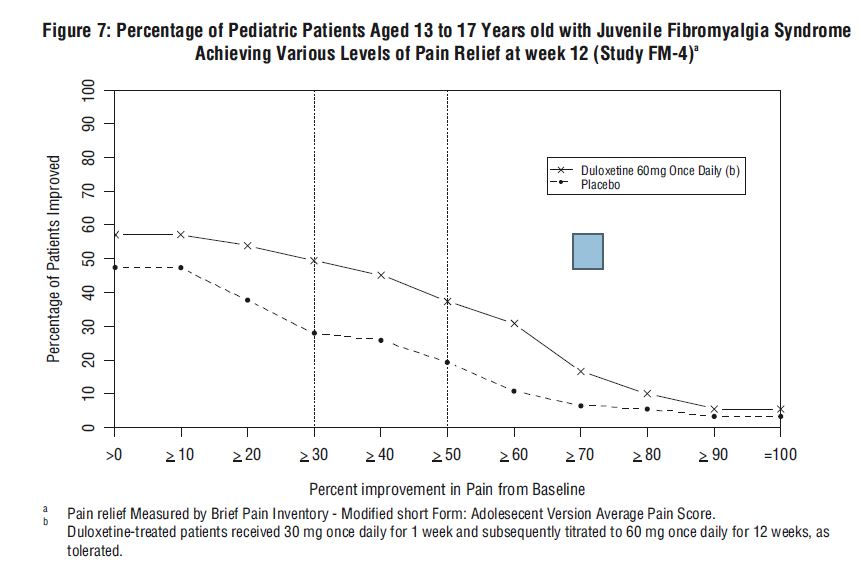
Table 7 provides the incidence of adverse reactions in a fibromyalgia pediatric placebo-controlled trial (Study FM-4) that occurred in greater than 5% of patients treated with duloxetine and with an incidence greater than patients treated with placebo
[see Clinical Studies (
14.5)].
Table 7: Adverse Reactions: Incidence of 5% or More and Greater than Placebo in a 13- week Placebo-Controlled Trial in Pediatric Patients 13 to 17 Years Old with Fibromyalgia (Study FM-4)
a |
|
| Duloxetine (N=91)
| Placebo (N=93)
|
Nausea
| 25%
| 15%
|
Decreased appetite
| 15%
| 3%
|
Vomiting
| 15%
| 5%
|
Decreased weightb
| 15%
| 5%
|
Headache
| 14%
| 11%
|
Nasopharyngitis
| 9%
| 2%
|
Somnolence
| 9%
| 3%
|
Upper respiratory tract infection
| 7%
| 2%
|
Viral gastroenteritis
| 5%
| 0%
|
Fatigue
| 5%
| 2%
|