General
Patients on prolonged therapy with any potent medication should be under close observation. Periodic monitoring of organ system function, including renal, hepatic and hematopoietic, should be done.
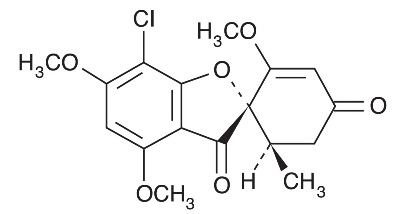
Since griseofulvin is derived from species of penicillin, the possibility of cross sensitivity with penicillin exists; however, known penicillin-sensitive patients have been treated without difficulty.
Lupus erythematosus, lupus-like syndromes or exacerbations of existing lupus erythematosus have been reported in patients receiving griseofulvin.
Since a photosensitivity reaction is occasionally associated with griseofulvin therapy, patients should be warned to avoid exposure to intense or prolonged natural or artificial sunlight.
Drug Interactions:
Griseofulvin has been reported in the literature to interfere with the metabolism of various compounds. Whether this is due to a P-450 mediated enzyme induction effects on sulfurtransferase and/or glucotransferase activity, or some other mechanism is unknown.
Griseofulvin decreases the activity of warfarin-type anticoagulants, so that patients receiving these drugs concomitantly may require dosage adjustment of the anticoagulant during and after griseofulvin therapy.
Griseofulvin may enhance the hepatic metabolism of estrogens, including the estrogen component of oral contraceptives, thereby reducing the effectiveness of contraception and causing menstrual irregularities. Therefore, an alternate or second form of birth control may be indicated during periods of concurrent use (see also
CONTRAINDICATIONS ).
Cyclosporine levels may be reduced when administered concomitantly with griseofulvin, resulting in a decrease in the pharmacologic effects of cyclosporine.
Serum salicylate concentrations may be decreased when griseofulvin is given concomitantly with salicylates.
Barbiturates usually depress griseofulvin activity by decreasing plasma levels and concomitant administration may require a dosage adjustment of the antifungal agent.
Nausea, vomiting, flushing, tachycardia, and severe hypotension have been reported following alcohol ingestion during griseofulvin therapy.
Carcinogenesis, Mutagenesis, Impairment of Fertility
In subacute toxicity studies, orally administered griseofulvin produced hepatocellular necrosis in mice, but this has not been seen in other species. Chronic feeding of griseofulvin, at levels ranging from 0.5 to 2.5% of the diet, resulted in the development of liver tumors in several strains of mice, particularly in males. Smaller particle sizes resulted in an enhanced effect. Lower oral-dosage levels have not been tested. Subcutaneous administration of relatively small doses of griseofulvin once a week during the first three weeks of life has also been reported to induce hepatomata in mice. Thyroid tumors, mostly adenomas but some carcinomas, have been reported in male rats receiving griseofulvin at levels of 2.0%, 1.0% and 0.2% of the diet, and in female rats receiving the two higher dose levels. Studies in other animal species were inadequate assessments of tumorigenicity.
Disturbances in porphyrin metabolism have been reported in griseofulvin-treated laboratory animals. Griseofulvin has been reported to have a colchicine-like effect on mitosis and was cocarcinogenic with methylcholanthrene in cutaneous tumor induction in laboratory animals. Griseofulvin interferes with chromosomal distribution during cell division, causing aneuploidy in plant and mammalian cells. These effects have been demonstrated
in vitro at concentrations that may be achieved in the serum with the recommended therapeutic dosage.
Suppression of spermatogenesis has been reported to occur in rats and sperm abnormalities have been observed in griseofulvin treated mice, but these were not detected in man. Male patients should wait at least six months after completing griseofulvin therapy before fathering a child.
Pregnancy: Teratogenic Effects: Pregnancy Category X: See
CONTRAINDICATIONS and
PRECAUTIONS, Drug Interactions.
Nursing Mothers
It is not known if griseofulvin is excreted in human milk. Because many drugs are excreted in human milk and because of the potential for tumorigenicity shown for griseofulvin in animal studies (see
PRECAUTIONS, Carcinogenesis, Mutagenesis, Impairment of Fertility), a decision should be made whether to discontinue nursing or to discontinue the drug, taking into account the importance of the drug to the mother.
Pediatric Use
Safety and effectiveness in pediatric patients 2 years of age and younger have not been established. Safety in pediatric patients older than 2 years of age at dosages greater than 10 mg/kg daily has not been established.