Principal Display Panel (Kit Carton)
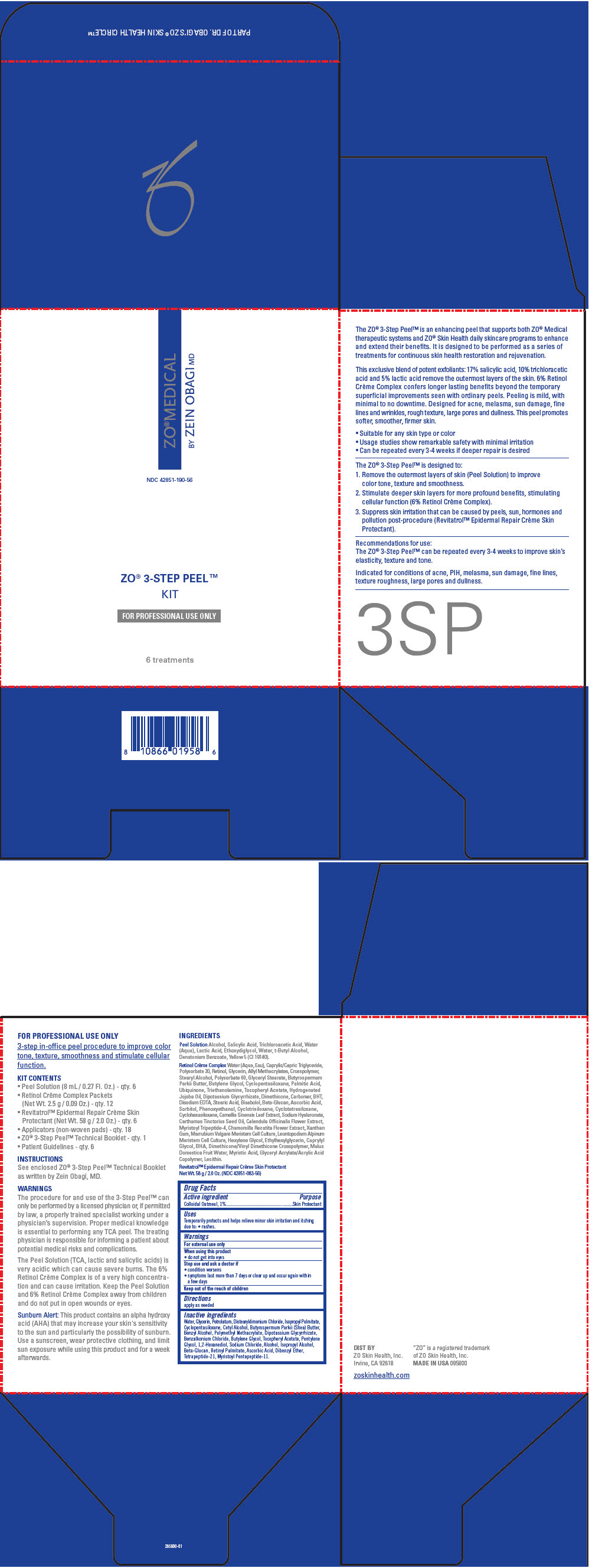
The text describes a 3-step peel system called the 20° 3-Step Peel™. It involves a peel solution that contains an exclusive blend of potent extolans made of 7% saliclc acid, 10% trichioracetic acid, and 5% lactc acid, and 6% Retinol Créme Complex. It provides mild peeling with minimal to no downtime and can be repeated every 3-4 weeks for a softer, smoother, and firmer skin. This peel system is suitable for any skin type or color with remarkable safety and minimal irritation. It is designed to improve color tone, texture, and smoothness, stimulate cellular function, and suppress skin irritation. The kit contains peel solution, retinol cream complex packets, Revitatro™ Epidermal Repair Créme Skin Protectant, applicators, technical booklet, and patient guidelines. The instructions recommend that only licensed physicians can perform this procedure under proper medical supervision and inform patients about potential medical risks and complications. The peel solution and 6% Retinol Créme Complex should be kept away from children and not put in open wounds or eyes. The text also contains warnings about the acidic properties of the peel solution and sunburn alerts.*
