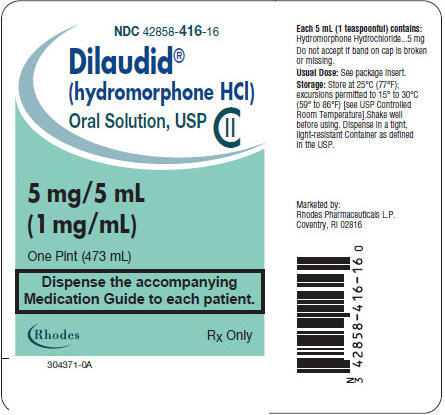
Other
Risk of Medication Errors
Ensure accuracy when prescribing, dispensing, and administering DILAUDID Oral Solution. Dosing errors due to confusion between mg and mL can result in accidental overdose and death [see Dosage and Administration (2.1), Warnings and Precautions (5.1)].
Addiction, Abuse, and Misuse
DILAUDID Oral Solution and DILAUDID Tablets expose patients and other users to the risks of opioid addiction, abuse, and misuse, which can lead to overdose and death. Assess each patient's risk prior to prescribing DILAUDID Oral Solution or DILAUDID Tablets, and monitor all patients regularly for the development of these behaviors and conditions [see Warnings and Precautions (5.2)].
Life-Threatening Respiratory Depression
Serious, life-threatening, or fatal respiratory depression may occur with use of DILAUDID Oral Solution and DILAUDID Tablets. Monitor for respiratory depression, especially during initiation of DILAUDID Oral Solution or DILAUDID Tablets or following a dose increase [see Warnings and Precautions (5.3)].
Accidental Ingestion
Accidental ingestion of even one dose of DILAUDID Oral Solution or DILAUDID Tablets, especially by children, can result in a fatal overdose of hydromorphone [see Warnings and Precautions (5.3)].
Neonatal Opioid Withdrawal Syndrome
Prolonged use of DILAUDID Oral Solution or DILAUDID Tablets during pregnancy can result in neonatal opioid withdrawal syndrome, which may be life-threatening if not recognized and treated, and requires management according to protocols developed by neonatology experts. If opioid use is required for a prolonged period in a pregnant woman, advise the patient of the risk of neonatal opioid withdrawal syndrome and ensure that appropriate treatment will be available [see Warnings and Precautions (5.4)].
Risks From Concomitant Use With Benzodiazepines Or Other CNS Depressants
Concomitant use of opioids with benzodiazepines or other central nervous system (CNS) depressants, including alcohol, may result in profound sedation, respiratory depression, coma, and death [see Warnings and Precautions (5.5), Drug Interactions (7)].
- Reserve concomitant prescribing of DILAUDID Oral Solution OR DILAUDID Tablets and benzodiazepines or other CNS depressants for use in patients for whom alternative treatment options are inadequate.
- Limit dosages and durations to the minimum required.
- Follow patients for signs and symptoms of respiratory depression and sedation.
- Have not been tolerated, or are not expected to be tolerated,
- Have not provided adequate analgesia, or are not expected to provide adequate analgesia
- Advise patients to always obtain a calibrated oral syringe/dosing cup from the pharmacist for administering DILAUDID Oral Solution to ensure that the dose is measured and administered accurately [see Warnings and Precautions (5.1)]. Advise patients never to use household teaspoons or tablespoons to measure DILAUDID Oral Solution.
- Advise patients not to adjust the dose of DILAUDID Oral Solution or DILAUDID Tablets without consulting with a physician or other healthcare professional.
- If patients have been receiving treatment with DILAUDID Oral Solution or DILAUDID Tablets for more than a few weeks and cessation of therapy is indicated, counsel them on the importance of safely tapering the dose as abrupt discontinuation of the medication could precipitate withdrawal symptoms. Provide a dose schedule to accomplish a gradual discontinuation of the medication [see Dosage and Administration (2.5, 2.6)].
Limitations of Use
Because of the risks of addiction, abuse, and misuse with opioids, even at recommended doses [see Warnings and Precautions (5.2)], reserve DILAUDID Oral Solution and DILAUDID Tablets for use in patients for whom alternative treatment options [e.g., non-opioid analgesics or opioid combination products]:
Initiating Treatment with DILAUDID Oral Solution or DILAUDID Tablets
Dilaudid Oral Solution
Initiate treatment with DILAUDID Oral Solution in a dosing range of one-half (2.5 mL) to two teaspoonful (10 mL) 2.5 mg to 10 mg every 3 to 6 hours as needed for pain.
Dilaudid Tablets
Initiate treatment with DILAUDID Tablets in a dosing range of 2 mg to 4 mg, orally, every 4 to 6 hours.
Conversion from Other Opioids to DILAUDID Oral Solution or DILAUDID Tablets
There is inter-patient variability in the potency of opioid drugs and opioid formulations. Therefore, a conservative approach is advised when determining the total daily dosage of DILAUDID Oral Solution or DILAUDID Tablets. It is safer to underestimate a patient's 24-hour DILAUDID dosage than to overestimate the 24-hour dosage and manage an adverse reaction due to overdose.
In general, it is safest to start DILAUDID therapy by administering half of the usual starting dose every 3 to 6 hours for DILAUDID Oral Solution; and every 4 to 6 hours for DILAUDID Tablets. The dose of DILAUDID can be gradually adjusted until adequate pain relief and acceptable side effects have been achieved [See Dosage and Administration (2.4)].
Conversion from DILAUDID Oral Solution or DILAUDID Tablets to Extended-Release Hydromorphone Hydrochloride
The relative bioavailability of DILAUDID Oral Solution and DILAUDID Tablets compared to extended-release hydromorphone hydrochloride is unknown, so conversion to extended-release tablets must be accompanied by close observation for signs of excessive sedation and respiratory depression.
Patients with Chronic Pulmonary Disease: DILAUDID Oral Solution- or DILAUDID Tablet-treated patients with significant chronic obstructive pulmonary disease or cor pulmonale, and those with a substantially decreased respiratory reserve, hypoxia, hypercapnia, or pre-existing respiratory depression are at increased risk of decreased respiratory drive including apnea, even at recommended dosages of DILAUDID Oral Solution or DILAUDID Tablets [see Warnings and Precautions (5.3)].
Elderly, Cachectic, or Debilitated Patients: Life-threatening respiratory depression is more likely to occur in elderly, cachectic, or debilitated patients because they may have altered pharmacokinetics or altered clearance compared to younger, healthier patients [see Warnings and Precautions (5.3)].
Monitor such patients closely, particularly when initiating and titrating DILAUDID Oral Solution or DILAUDID Tablets and when DILAUDID is given concomitantly with other drugs that depress respiration [see Warnings and Precautions (5.3)]. Alternatively, consider the use of non-opioid analgesics in these patients.
Less Frequently Observed Adverse Reactions
Cardiac disorders: tachycardia, bradycardia, palpitations
Eye disorders: vision blurred, diplopia, miosis, visual impairment
Gastrointestinal disorders: constipation, ileus, diarrhea, abdominal pain
General disorders and administration site conditions: weakness, feeling abnormal, chills
Hepatobiliary disorders: biliary colic
Metabolism and nutrition disorders: decreased appetite
Musculoskeletal and connective tissue disorders: muscle rigidity
Nervous system disorders: headache, tremor, paraesthesia, nystagmus, increased intracranial pressure, syncope, taste alteration, involuntary muscle contractions, presyncope
Psychiatric disorders: agitation, mood altered, nervousness, anxiety, depression, hallucination, disorientation, insomnia, abnormal dreams
Renal and urinary disorders: urinary retention, urinary hesitation, antidiuretic effects
Respiratory, thoracic, and mediastinal disorders: bronchospasm, laryngospasm
Skin and subcutaneous tissue disorders: urticaria, rash, hyperhidrosis
Vascular disorders: flushing, hypotension, hypertension
Serotonin syndrome: Cases of serotonin syndrome, a potentially life-threatening condition, have been reported during concomitant use of opioids with serotonergic drugs.
Adrenal insufficiency: Cases of adrenal insufficiency have been reported with opioid use, more often following greater than one month of use.
Anaphylaxis: Anaphylaxis has been reported with ingredients contained in DILAUDID Oral Solution or DILAUDID Tablets.
Androgen deficiency: Cases of androgen deficiency have occurred with chronic use of opioids [see Clinical Pharmacology (12.2)].
Risk Summary
Prolonged use of opioid analgesics during pregnancy may cause neonatal opioid withdrawal syndrome [see Warnings and Precautions (5.4)]. There are no available data with DILAUDID in pregnant women to inform a drug-associated risk for major birth defects and miscarriage.
In animal reproduction studies, reduced postnatal survival of pups, and decreased were noted following oral treatment of pregnant rats with hydromorphone during gestation and through lactation at doses 0.8 times the human daily dose of 24 mg/day (HDD), respectively. In published studies, neural tube defects were noted following subcutaneous injection of hydromorphone to pregnant hamsters at doses 6.4 times the HDD and soft tissue and skeletal abnormalities were noted following subcutaneous continuous infusion of 3 times the HDD to pregnant mice. No malformations were noted at 4 or 40.5 times the HDD in pregnant rats or rabbits, respectively [see Data]. Based on animal data, advise pregnant women of the potential risk to a fetus.
The estimated background risk of major birth defects and miscarriage for the indicated population is unknown. All pregnancies have a background risk of birth defect, loss, or other adverse outcomes. In the U.S. general population, the estimated background risk of major birth defects and miscarriage in clinically recognized pregnancies is 2 to 4% and 15 to 20%, respectively.
Clinical Considerations
Fetal/Neonatal Adverse Reactions
Prolonged use of opioid analgesics during pregnancy for medical or nonmedical purposes can result in physical dependence in the neonate and neonatal opioid withdrawal syndrome shortly after birth.
Neonatal opioid withdrawal syndrome presents as irritability, hyperactivity and abnormal sleep pattern, high pitched cry, tremor, vomiting, diarrhea and failure to gain weight. The onset, duration, and severity of neonatal opioid withdrawal syndrome vary based on the specific opioid used, duration of use, timing and amount of last maternal use, and rate of elimination of the drug by the newborn. Observe newborns for symptoms of neonatal opioid withdrawal syndrome and manage accordingly [see Warnings and Precautions (5.4)].
Data
Animal Data
Pregnant rats were treated with hydromorphone hydrochloride from Gestation Day 6 to 17 via oral gavage doses of 1, 5, or 10 mg/kg/day (0.4, 2, or 4 times the HDD of 24 mg based on body surface area, respectively). Maternal toxicity was noted in all treatment groups (reduced food consumption and body weights in the two highest dose groups). There was no evidence of malformations or embryotoxicity reported.
Pregnant rabbits were treated with hydromorphone hydrochloride from Gestation Day 7 to 19 via oral gavage doses of 10, 25, or 50 mg/kg/day (8.1, 20.3, or 40.5 times the HDD of 24 mg based on body surface area, respectively). Maternal toxicity was noted in the two highest dose groups (reduced food consumption and body weights). There was no evidence of malformations or embryotoxicity reported.
In a published study, neural tube defects (exencephaly and cranioschisis) were noted following subcutaneous administration of hydromorphone hydrochloride (19 to 258 mg/kg) on Gestation Day 8 to pregnant hamsters (6.4 to 87.2 times the HDD of 24 mg/day based on body surface area). The findings cannot be clearly attributed to maternal toxicity. No neural tube defects were noted at 14 mg/kg (4.7 times the human daily dose of 24 mg/day).
In a published study, CF-1 mice were treated subcutaneously with continuous infusion of 7.5, 15, or 30 mg/kg/day hydromorphone hydrochloride (1.5, 3, or 6.1 times the human daily dose of 24 mg based on body surface area) via implanted osmotic pumps during organogenesis (Gestation Days 7 to 10). Soft tissue malformations (cryptorchidism, cleft palate, malformed ventricles and retina), and skeletal variations (split supraoccipital, checkerboard and split sternebrae, delayed ossification of the paws and ectopic ossification sites) were observed at doses 3 times the human dose of 24 mg/day based on body surface area. The findings cannot be clearly attributed to maternal toxicity.
Increased pup mortality and decreased pup body weights were noted at 0.8 and 2 times the human daily dose of 24 mg in a study in which pregnant rats were treated with hydromorphone hydrochloride from Gestation Day 7 to Lactation Day 20 via oral gavage doses of 0, 0.5, 2, or 5 mg/kg/day (0.2, 0.8, or 2 times the HDD of 24 mg based on body surface area, respectively). Maternal toxicity (decreased food consumption and body weight gain) was also noted at the two highest doses tested.
Risk Summary
Low levels of opioid analgesics have been detected in human milk. The developmental and health benefits of breastfeeding should be considered along with the mother's clinical need for DILAUDID Oral Solution or DILAUDID Tablets and any potential adverse effects on the breastfed infant from DILAUDID Oral Solution or DILAUDID Tablets or from the underlying maternal condition.
Clinical Considerations
Monitor infants exposed to DILAUDID through breast milk for excess sedation and respiratory depression. Withdrawal symptoms can occur in breastfed infants when maternal administration of hydromorphone is stopped, or when breast-feeding is stopped.
Infertility
Chronic use of opioids may cause reduced fertility in females and males of reproductive potential. It is not known whether these effects on fertility are reversible [see Adverse Reactions (6.2), Clinical Pharmacology (12.2), Nonclinical Toxicology (13.1)].
Risks Specific to Abuse of DILAUDID
DILAUDID Oral Solution and DILAUDID Tablets are for oral use only. Abuse of DILAUDID Oral Solution or DILAUDID Tablets poses a risk of overdose and death. The risk is increased with concurrent abuse of DILAUDID ORAL LQIUID or DILAUDID Tablets with alcohol and other central nervous system depressants.
Parenteral drug abuse is commonly associated with transmission of infectious diseases such as hepatitis and HIV.
Clinical Presentation
Acute overdose with DILAUDID Oral Solution or DILAUDID Tablets can be manifested by respiratory depression, somnolence progressing to stupor or coma, skeletal muscle flaccidity, cold and clammy skin, constricted pupils, and, in some cases, pulmonary edema, bradycardia, hypotension, partial or complete airway obstruction, atypical snoring, and death. Marked mydriasis rather than miosis may be seen with hypoxia in overdose situations [see Clinical Pharmacology (12.2)].
Treatment of Overdose
In case of overdose, priorities are the reestablishment of a patent and protected airway and institution of assisted or controlled ventilation, if needed. Employ other supportive measures (including oxygen and vasopressors) in the management of circulatory shock and pulmonary edema as indicated. Cardiac arrest or arrhythmias will require advanced life-support techniques.
The opioid antagonists, naloxone or nalmefene, are specific antidotes to respiratory depression resulting from opioid overdose. For clinically significant respiratory or circulatory depression secondary to hydromorphone overdose, administer an opioid antagonist. Opioid antagonists should not be administered in the absence of clinically significant respiratory or circulatory depression secondary to hydromorphone overdose.
Because the duration of opioid reversal is expected to be less than the duration of action of hydromorphone in DILAUDID Oral Solution or DILAUDID Tablets, carefully monitor the patient until spontaneous respiration is reliably reestablished. If the response to an opioid antagonist is suboptimal or only brief in nature, administer additional antagonist as directed by the product's prescribing information.
In an individual physically dependent on opioids, administration of the recommended usual dosage of the antagonist will precipitate an acute withdrawal syndrome. The severity of the withdrawal symptoms experienced will depend on the degree of physical dependence and the dose of the antagonist administered. If a decision is made to treat serious respiratory depression in the physically dependent patient, administration of the antagonist should be initiated with care and by titration with smaller than usual doses of the antagonist.
Effects on the Central Nervous System
Hydromorphone produces respiratory depression by direct action on brain stem respiratory centers. The respiratory depression involves a reduction in the responsiveness of the brain stem respiratory centers to both increases in carbon dioxide tension and to electrical stimulation.
Hydromorphone causes miosis, even in total darkness. Pinpoint pupils are a sign of opioid overdose but are not pathognomonic (e.g., pontine lesions of hemorrhagic or ischemic origins may produce similar findings). Marked mydriasis rather than miosis may be seen due to hypoxia in overdose situations.
Effects on the Gastrointestinal Tract and Other Smooth Muscle
Hydromorphone causes a reduction in motility associated with an increase in smooth muscle tone in the antrum of the stomach and duodenum. Digestion of food in the small intestine is delayed and propulsive contractions are decreased. Propulsive peristaltic waves in the colon are decreased, while tone may be increased to the point of spasm, resulting in constipation. Other opioid-induced effects may include a reduction in biliary and pancreatic secretions, spasm of sphincter of Oddi, and transient elevations in serum amylase.
Effects on the Cardiovascular System
Hydromorphone produces peripheral vasodilation which may result in orthostatic hypotension or syncope. Manifestations of histamine release and/or peripheral vasodilation may include pruritus, flushing, red eyes and sweating and/or orthostatic hypotension.
Effects on the Endocrine System
Opioids inhibit the secretion of adrenocorticotropic hormone (ACTH), cortisol, and luteinizing hormone (LH) in humans [see Adverse Reactions (6.2)]. They also stimulate prolactin, growth hormone (GH) secretion, and pancreatic secretion of insulin and glucagon.
Chronic use of opioids may influence the hypothalamic-pituitary-gonadal axis, leading to androgen deficiency that may manifest as low libido, impotence, erectile dysfunction, amenorrhea, or infertility. The causal role of opioids in the clinical syndrome of hypogonadism is unknown because the various medical, physical, lifestyle, and psychological stressors that may influence gonadal hormone levels have not been adequately controlled for in studies conducted to date [see Adverse Reactions (6.2)].
Effects on the Immune System
Opioids have been shown to have a variety of effects on components of the immune system in in vitro and animal models. The clinical significance of these findings is unknown. Overall, the effects of opioids appear to be modestly immunosuppressive.
Concentration–Efficacy Relationships
The minimum effective analgesic concentration will vary widely among patients, especially among patients who have been previously treated with potent agonist opioids. The minimum effective analgesic concentration of hydromorphone for any individual patient may increase over time due to an increase in pain, the development of a new pain syndrome, and/or the development of analgesic tolerance [see Dosage and Administration (2.1, 2.5)].
Concentration–Adverse Reaction Relationships
There is a relationship between increasing hydromorphone plasma concentration and increasing frequency of dose-related opioid adverse reactions such as nausea, vomiting, CNS effects, and respiratory depression. In opioid-tolerant patients, the situation may be altered by the development of tolerance to opioid-related adverse reactions [see Dosage and Administration (2.2, 2.3, 2.5)].
Absorption
The analgesic activity of DILAUDID (hydromorphone hydrochloride) is due to the parent drug, hydromorphone. Hydromorphone is rapidly absorbed from the gastrointestinal tract after oral administration and undergoes extensive first-pass metabolism. Exposure of hydromorphone (Cmax and AUC0-24) is dose-proportional at a dose range of 2 and 8 mg. In vivo bioavailability following single-dose administration of the 8 mg tablet is approximately 24% (coefficient of variation 21%). Bioequivalence between the DILAUDID 8 mg TABLET and an equivalent dose of DILAUDID Oral Solution has been demonstrated.
After oral administration of DILAUDID, peak plasma hydromorphone concentrations are generally attained within ½ to 1 hour.
| Mean (%cv) | ||||
|---|---|---|---|---|
| Dosage Form | Cmax (ng) | Tmax (hrs) | AUC (ng*hr/mL) | T ½ (hrs) |
| 8 mg Tablet | 5.5 (33%) | 0.74 (34%) | 23.7 (28%) | 2.6 (18%) |
| 8 mg Oral Liquid | 5.7 (31%) | 0.73 (71%) | 24.6 (29%) | 2.8 (20%) |
Food Effects
In a study conducted with a single 8 mg dose of hydromorphone (2 mg hydromorphone immediate-release tablets), food lowered Cmax by 25%, prolonged Tmax by 0.8 hour, and increased AUC by 35%. The effects may not be clinically relevant.
Distribution
At therapeutic plasma levels, hydromorphone is approximately 8 to 19% bound to plasma proteins. After an intravenous bolus dose, the steady state of volume distribution [mean (% cv)] is 302.9 (32%) liters.
Elimination
The systemic clearance is approximately 1.96 (20%) liters/minute. The terminal elimination half-life of hydromorphone after an intravenous dose is about 2.3 hours.
Metabolism
Hydromorphone is extensively metabolized via glucuronidation in the liver, with greater than 95% of the dose metabolized to hydromorphone-3-glucuronide along with minor amounts of 6-hydroxy reduction metabolites.
Excretion
Only a small amount of the hydromorphone dose is excreted unchanged in the urine. Most of the dose is excreted as hydromorphone-3-glucuronide along with minor amounts of 6-hydroxy reduction metabolites.
Specific Populations
Hepatic Impairment
After oral administration of a single 4 mg dose (2 mg hydromorphone immediate-release tablets), mean exposure to hydromorphone (Cmax and AUC∞) is increased 4-fold in patients with moderate (Child-Pugh Group B) hepatic impairment compared with subjects with normal hepatic function. Due to increased exposure of hydromorphone, patients with moderate hepatic impairment should be started at a lower dose and closely monitored during dose titration. Pharmacokinetics of hydromorphone in severe hepatic impairment patients has not been studied. Further increase in Cmax and AUC of hydromorphone in this group is expected. As such, starting dose should be even more conservative [see Use in Specific Populations (8.6)].
Renal Impairment
After oral administration of a single 4 mg dose (2 mg hydromorphone immediate-release tablets), exposure to hydromorphone (Cmax and AUC0-48) is increased in patients with impaired renal function by 2-fold in moderate (CLcr = 40 to 60 mL/min) and 3-fold in severe (CLcr < 30 mL/min) renal impairment compared with normal subjects (CLcr > 80 mL/min). In addition, in patients with severe renal impairment hydromorphone appeared to be more slowly eliminated with longer terminal elimination half-life (40 hr) compared to patients with normal renal function (15 hr). Patients with moderate renal impairment should be started on a lower dose. Starting doses for patients with severe renal impairment should be even lower. Patients with renal impairment should be closely monitored during dose titration [see Use in Specific Populations (8.7)].
Age: Geriatric Population
In the geriatric population, age has no effect on the pharmacokinetics of hydromorphone.
Sex
Sex has little effect on the pharmacokinetics of hydromorphone. Females appear to have higher Cmax (25%) than males with comparable AUC0-24 values. The difference observed in Cmax may not be clinically relevant.
Carcinogenesis
Long term studies in animals to evaluate the carcinogenic potential of hydromorphone have not been conducted.
Mutagenesis
Hydromorphone was positive in the mouse lymphoma assay in the presence of metabolic activation, but was negative in the mouse lymphoma assay in the absence of metabolic activation. Hydromorphone was not mutagenic in the in vitro bacterial reverse mutation assay (Ames assay). Hydromorphone was not clastogenic in either the in vitro human lymphocyte chromosome aberration assay or the in vivo mouse micronucleus assay.
Impairment of Fertility
Reduced implantation sites and viable fetuses were noted at 2.1 times the human daily dose of 32 mg/day in a study in which female rats were treated orally with 1.75, 3.5, or 7 mg/kg/day hydromorphone hydrochloride (0.5, 1.1, or 2.1 times a human daily dose of 24 mg/day (HDD) based on body surface area) beginning 14 days prior to mating through Gestation Day 7 and male rats were treated with the same hydromorphone hydrochloride doses beginning 28 days prior to and throughout mating.
Medication Errors
Instruct patients how to measure and take the correct dose of DILAUDID, and to always use the enclosed cup when administering DILAUDID Oral Solution to ensure the dose is measured and administered accurately [see Warnings and Precautions (5.1)].
If the prescribed concentration is changed, instruct patients on how to correctly measure the new dose to avoid errors which could result in accidental overdose and death.
Addiction, Abuse, and Misuse
Inform patients that the use of DILAUDID Oral Solution or DILAUDUD Tablets, even when taken as recommended, can result in addiction, abuse, and misuse, which can lead to overdose and death [see Warnings and Precautions (5.2)]. Instruct patients not to share DILAUDID Oral Solution or DILAUDUD Tablets with others and to take steps to protect DILAUDID Oral Solution or DILAUDUD Tablets from theft or misuse.
Life-Threatening Respiratory Depression
Inform patients of the risk of life-threatening respiratory depression, including information that the risk is greatest when starting DILAUDID Oral Solution or DILAUDUD Tablets or when the dosage is increased, and that it can occur even at recommended dosages [see Warnings and Precautions (5.3)]. Advise patients how to recognize respiratory depression and to seek medical attention if breathing difficulties develop.
Accidental Ingestion
Inform patients that accidental ingestion, especially by children, may result in respiratory depression or death [see Warnings and Precautions (5.3)]. Instruct patients to take steps to store DILAUDID Oral Solution or DILAUDUD Tablets securely and to dispose of unused DILAUDID Oral Solution or DILAUDUD Tablets. When DILAUDID Oral Solution or DILAUDUD Tablets are no longer needed, the unused medication should be destroyed by flushing it down the toilet.
Interactions with Benzodiazepines and Other CNS Depressants
Inform patients and caregivers that potentially fatal additive effects may occur if DILAUDID Oral Solution or DILAUDUD Tablets are used with benzodiazepines or other CNS depressants, including alcohol, and not to use these concomitantly unless supervised by a health care provider [see Warnings and Precautions (5.4), Drug Interactions (7)].
Serotonin Syndrome
Inform patients that DILAUDID could cause a rare but potentially life-threatening condition resulting from concomitant administration of serotonergic drugs. Warn patients of the symptoms of serotonin syndrome and to seek medical attention right away if symptoms develop. Instruct patients to inform their healthcare providers if they are taking, or plan to take serotonergic medications. [see Drug Interactions 7].
MAOI Interaction
Inform patients to avoid taking DILAUDID Oral Solution or DILAUDUD Tablets while using any drugs that inhibit monoamine oxidase. Patients should not start MAOIs while taking DILAUDID Oral Solution or DILAUDUD Tablets [see Dug Interactions (7)].
Adrenal Insufficiency
Inform patients that opioids could cause adrenal insufficiency, a potentially life-threatening condition. Adrenal insufficiency may present with non-specific symptoms and signs such as nausea, vomiting, anorexia, fatigue, weakness, dizziness, and low blood pressure. Advise patients to seek medical attention if they experience a constellation of these symptoms [see Warnings and Precautions (5.7)].
Important Administration Instructions
Instruct patients how to properly take DILAUDID.
Hypotension
Inform patients that DILAUDID Oral Solution or DILAUDID Tablets may cause orthostatic hypotension and syncope. Instruct patients how to recognize symptoms of low blood pressure and how to reduce the risk of serious consequences should hypotension occur (e.g., sit or lie down, carefully rise from a sitting or lying position) [see Warnings and Precautions (5.8)].
Anaphylaxis
Inform patients that anaphylaxis has been reported with ingredients contained in DILAUDID Oral Solution or DILAUDID Tablets. Advise patients how to recognize such a reaction and when to seek medical attention [see Contraindications (4), Adverse Reactions (6)].
Neonatal Opioid Withdrawal Syndrome
Inform female patients of reproductive potential that prolonged use of DILAUDID Oral Solution or DILAUDID Tablets during pregnancy can result in neonatal opioid withdrawal syndrome, which may be life-threatening if not recognized and treated [see Warnings and Precautions (5.4), Use in Specific Populations (8.1)].
Embryo-Fetal Toxicity
Inform female patients of reproductive potential that DILAUDID Oral Solution or DILAUDID Tablets can cause fetal harm and to inform their healthcare provider of a known or suspected pregnancy [see Use in Specific Populations (8.1), Warnings and Precautions (5.4)]
Infertility
Inform patients that chronic use of opioids may cause reduced fertility. It is not known whether these effects on fertility are reversible [see Use in Specific Population (8.3)].
Driving or Operating Heavy Machinery
Inform patients that DILAUDID Oral Solution or DILAUDID Tablets may impair the ability to perform potentially hazardous activities such as driving a car or operating heavy machinery. Advise patients not to perform such tasks until they know how they will react to the medication [see Warnings and Precautions (5.13)].
Constipation
Advise patients of the potential for severe constipation, including management instructions and when to seek medical attention [see Adverse Reactions (6), Clinical Pharmacology (12.2)].
Disposal of Unused DILAUDID Oral Solution or DILAUDID Tablets
Advise patients to flush unused DILAUDID Oral Solution or DILAUDID Tablets down the toilet.
Healthcare professionals can telephone Rhodes Pharmaceuticals L.P.'s Medical Services Department (1-888-827-0616) for information on this product.
Manufactured by:
Halo Pharmaceutical, Inc.
Whippany, NJ 07981
Marketed by:
Rhodes Pharmaceuticals L.P.
Coventry, RI 02816
Componet # 304374-0B
Revised: 03/2017