Zee 3-in-one First Aid Antibiotic
Product Images NDC 42961-035

View Photos of Packaging, Regulatory Labels, and Product Appearance

Product Visual Gallery

This gallery contains 2 technical images submitted to the FDA as part of the official labeling for Zee 3-in-one First Aid Antibiotic (NDC 42961-035). Unlike standard consumer photos, these assets often include clinical data figures, molecular chemical structures, and official manufacturer packaging layouts.

As provided by Cintas Corporation, these visuals offer a comprehensive scientific overview of the product's physical and chemical identity, aiding pharmacists and researchers in product verification and study.

FDA Label Image

Carton-label (Carton Label)
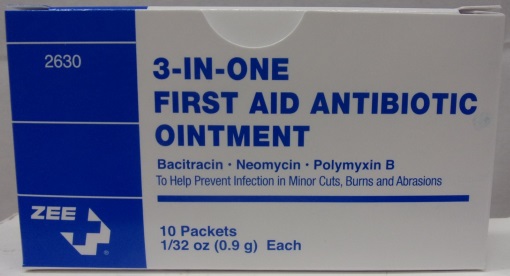
Carton-label (Carton Label)
This is a package of 10 packets of 3-IN-ONE FIRST AID ANTIBIOTIC OINTMENT containing Bacitracin-Neomycin-Polymyxin-8. The ointment is effective in preventing infections and abrasions. Each packet contains 1/32 02 (0.9 g) of the ointment.*
FDA Label Image

Packet-label (Packet Label)

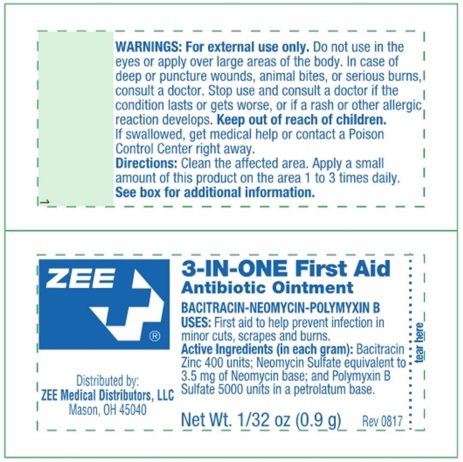
Packet-label (Packet Label)
This text contains information about a 3-IN-ONE First Aid Antibiotic Ointment that is used for minor cuts, scrapes, and burns to prevent infection. The ointment contains active ingredients such as Bacitracin, Neomycin, and Polymyxin B. The user is warned not to use this ointment in or around the eyes or on large areas of the body. The users are instructed to consult a doctor in case of deep or puncture wounds, animal bites, or serious burns. The information also advises the user to stop using the ointment and contact a doctor if the condition persists, worsens or develops an allergic reaction. The user is advised to keep the ointment out of reach of children and seek medical help immediately if swallowed. Directions are included in the text that instructs the user to clean the affected area thoroughly and apply a small amount of the 3-IN-ONE First Aid Antibiotic Ointment three times per day. Additional information can be found on the box.*

* These product label images have been analyzed using experimental machine learning. Please verify findings with the primary label text.