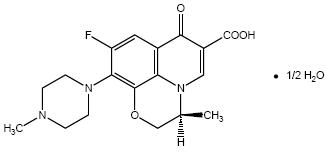
The usual dose of levofloxacin tablets is 250 mg, 500 mg, or 750 mg administered orally every 24 hours, as indicated by infection and described in Table 1. The usual dose of levofloxacin tablets is 250 mg, 500 mg, or 750 mg administered orally every 24 hours, as indicated by infection and described in Table 1.
These recommendations apply to patients with creatinine clearance ≥ 50 mL/min. For patients with creatinine clearance <50 mL/min, adjustments to the dosing regimen are required
.
These recommendations apply to patients with creatinine clearance ≥ 50 mL/min. For patients with creatinine clearance <50 mL/min, adjustments to the dosing regimen are required
[see
Dosage and Administration (2.3)]
.
Table 1: Dosage in Adult Patients with Normal Renal Function (creatinine clearance ≥ 50 mL/min)
Type of Infection
*
| Dosed Every 24 hours
| Duration (days)
†
|
Nosocomial Pneumonia
| 750 mg
| 7 to 14
|
Community Acquired Pneumonia
‡
| 500 mg
| 7 to 14
|
Community Acquired Pneumonia
§
| 750 mg
| 5
|
Complicated Skin and Skin Structure Infections (SSSI)
| 750 mg
| 7 to 14
|
Uncomplicated SSSI
| 500 mg
| 7 to 10
|
Chronic Bacterial Prostatitis
| 500 mg
| 28
|
Inhalational Anthrax (Post-Exposure), adult and pediatric patients > 50 kg
Þ,ß
Pediatric patients < 50 kg and ≥ 6 months of age
Þ,ß
| 500 mg
see Table 2 below (
2.2)
| 60
ß
60
ß
|
Plague, adult and pediatric patients > 50 kg
à
Pediatric patients < 50 kg and ≥ 6 months of age
| 500 mg
see Table 2 below (
2.2)
| 10 to 14
10 to 14
|
Complicated Urinary
Tract Infection (cUTI) or
Acute Pyelonephritis (AP)
¶
| 750 mg
| 5
|
Complicated Urinary Tract Infection (cUTI) or Acute Pyelonephritis (AP)
#
| 250 mg
| 10
|
Uncomplicated Urinary Tract Infection
| 250 mg
| 3
|
Acute Bacterial Exacerbation of Chronic Bronchitis (ABECB)
| 500 mg
| 7
|
Acute Bacterial Sinusitis (ABS)
| 750 mg
| 5
|
500 mg
| 10 to 14
|
Due to the designated pathogens
.
* Due to the designated pathogens
[see Indications and Usage (1)]
.
Sequential therapy (intravenous to oral) may be instituted at the discretion of the physician.
† Sequential therapy (intravenous to oral) may be instituted at the discretion of the physician.
Due to methicillin-susceptible
(including multi-drug-resistant isolates [MDRSP]),
or
‡ Due to methicillin-susceptible
Staphylococcus aureus, Streptococcus pneumoniae (including multi-drug-resistant isolates [MDRSP]),
Haemophilus influenzae, Haemophilus parainfluenzae, Klebsiella pneumoniae, Moraxella catarrhalis, Chlamydophila pneumoniae, Legionella pneumophila, or
Mycoplasma pneumoniae [see
Indications and Usage (1.2)].
Due to
(excluding multi-drug-resistant isolates [MDRSP]),
§ Due to
Streptococcus pneumoniae (excluding multi-drug-resistant isolates [MDRSP]),
Haemophilus influenzae, Haemophilus parainfluenzae, Mycoplasma pneumoniae, or Chlamydophila pneumoniae [see
Indications and Usage (1.3)].
This regimen is indicated for cUTI due to
and AP due to
including cases with concurrent bacteremia.
¶ This regimen is indicated for cUTI due to
Escherichia coli, Klebsiella pneumoniae, Proteus mirabilis and AP due to
E. coli, including cases with concurrent bacteremia.
This regimen is indicated for cUTI due to
,
; and for AP due to
# This regimen is indicated for cUTI due to
Enterococcus faecalis, Enterococcus cloacae, Escherichia coli,
Klebsiella pneumoniae, Proteus mirabilis, Pseudomonas aeruginosa; and for AP due to
E. coli.
Drug administration should begin as soon as possible after suspected or confirmed exposure to aerosolized
. This indication is based on a surrogate endpoint. Levofloxacin plasma concentrations achieved in humans are reasonably likely to predict clinical benefit
.
Þ Drug administration should begin as soon as possible after suspected or confirmed exposure to aerosolized
B. anthracis. This indication is based on a surrogate endpoint. Levofloxacin plasma concentrations achieved in humans are reasonably likely to predict clinical benefit
[see
Clinical Studies (14.9)]
.
The safety of levofloxacin tablets in adults for durations of therapy beyond 28 days or in pediatric patients for durations beyond 14 days has not been studied. An increased incidence of musculoskeletal adverse events compared to controls has been observed in pediatric patients
. Prolonged levofloxacin tablets therapy should only be used when the benefit outweighs the risk.
ß The safety of levofloxacin tablets in adults for durations of therapy beyond 28 days or in pediatric patients for durations beyond 14 days has not been studied. An increased incidence of musculoskeletal adverse events compared to controls has been observed in pediatric patients
[see
Warnings and Precautions (5.10),
Use in Specific Populations (8.4), and
Clinical Studies (14.9)]
. Prolonged levofloxacin tablets therapy should only be used when the benefit outweighs the risk.
Drug administration should begin as soon as possible after suspected or confirmed exposure to
. Higher doses of levofloxacin tablets typically used for treatment of pneumonia can be used for treatment of plague, if clinically indicated.
à Drug administration should begin as soon as possible after suspected or confirmed exposure to
Yersinia pestis. Higher doses of levofloxacin tablets typically used for treatment of pneumonia can be used for treatment of plague, if clinically indicated.