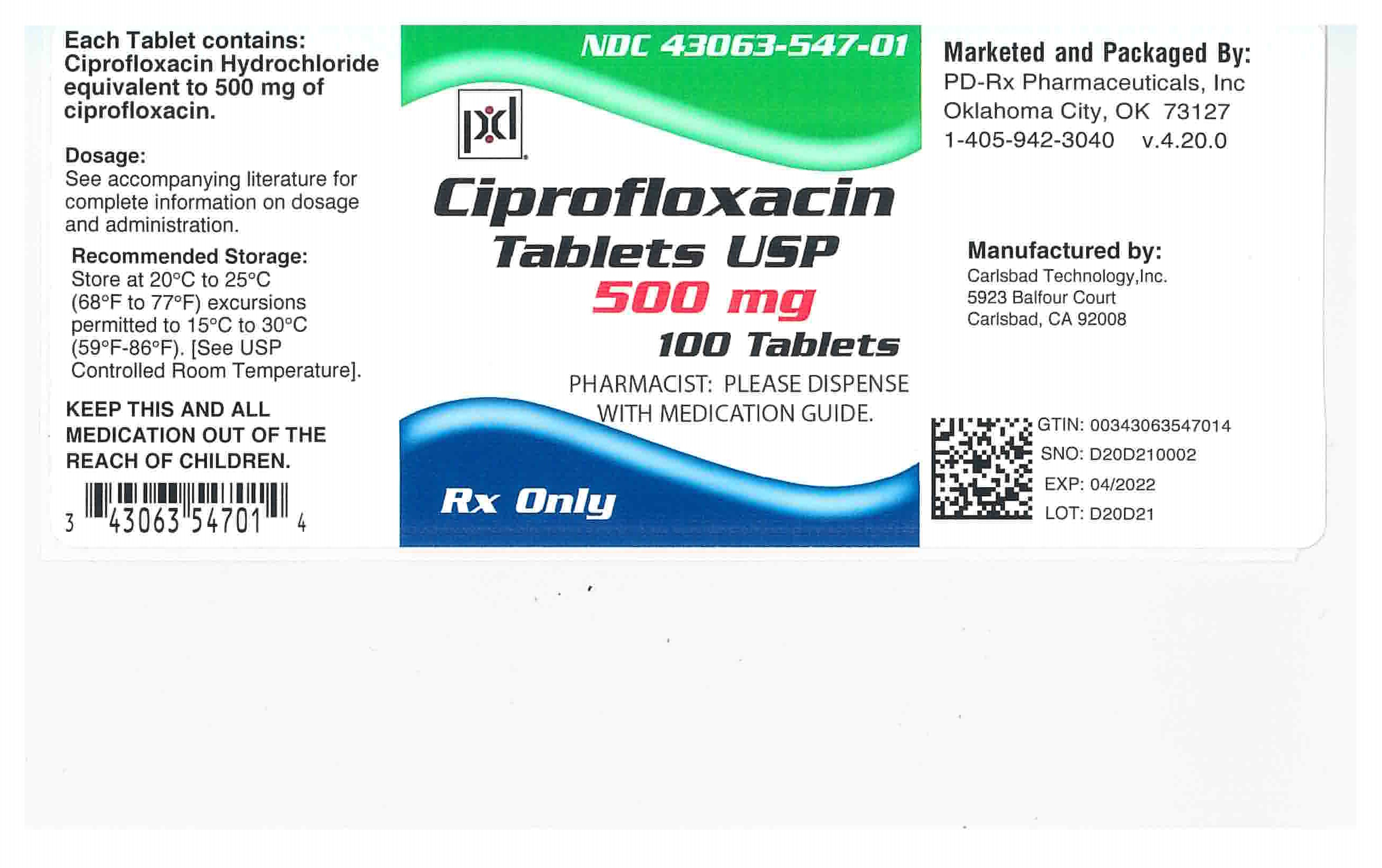
To reduce the development of drug-resistant bacteria and maintain the effectiveness of Ciprofloxacin Tablets and other antibacterial drugs, Ciprofloxacin Tablets should be used only to treat or prevent infections that are proven or strongly suspected to be caused by bacteria.
Absorption: Ciprofloxacin given as an oral tablet is rapidly and well absorbed from the gastrointestinal tract after oral administration. The absolute bioavailability is approximately 70% with no substantial loss by first pass metabolism. Ciprofloxacin maximum serum concentrations and area under the curve are shown in the chart for the 250 mg to 1000 mg dose range.
Dose
(mg)
| Maximum
Serum Concentration
(μg/mL)
| Area
Under Curve (AUC)
(μg•hr/mL)
|
| 250
| 1.2
| 4.8
|
| 500
| 2.4
| 11.6
|
| 750
| 4.3
| 20.2
|
| 1000
| 5.4
| 30.8
|
Maximum serum concentrations are attained 1 to 2 hours after oral dosing. Mean concentrations 12 hours after dosing with 250, 500, or 750 mg are 0.1, 0.2, and 0.4 μg/mL, respectively. The serum elimination half-life in subjects with normal renal function is approximately 4 hours. Serum concentrations increase proportionately with doses up to 1000 mg.
A 500 mg oral dose given every 12 hours has been shown to produce an area under the serum concentration time curve (AUC) equivalent to that produced by an intravenous infusion of 400 mg ciprofloxacin given over 60 minutes every 12 hours. A 750 mg oral dose given every 12 hours has been shown to produce an AUC at steady-state equivalent to that produced by an intravenous infusion of 400 mg given over 60 minutes every 8 hours. A 750 mg oral dose results in a C
max similar to that observed with a 400 mg I.V. dose. A 250 mg oral dose given every 12 hours produces an AUC equivalent to that produced by an infusion of 200 mg ciprofloxacin given every 12 hours.
Steady-state Pharmacokinetic Parameters Following Multiple Oral and I.V. Doses
|
|
|
| Parameters
| 500 mg
| 400 mg
| 750 mg
| 400 mg
|
| AUC (mcg•hr/mL)
| q12h, P.O.
| q12h, I.V.
| q12h, P.O.
| q8h, I.V.
|
| 13.7
a | 12.7
a | 31.6
b | 32.9
c |
| C
max (mcg/mL)
| 2.97
| 4.56
| 3.59
| 4.07
|
Distribution: The binding of ciprofloxacin to serum proteins is 20 to 40% which is not likely to be high enough to cause significant protein binding interactions with other drugs.
After oral administration, ciprofloxacin is widely distributed throughout the body. Tissue concentrations often exceed serum concentrations in both men and women, particularly in genital tissue including the prostate. Ciprofloxacin is present in active form in the saliva, nasal and bronchial secretions, mucosa of the sinuses, sputum, skin blister fluid, lymph, peritoneal fluid, bile, and prostatic secretions. Ciprofloxacin has also been detected in lung, skin, fat, muscle, cartilage, and bone. The drug diffuses into the cerebrospinal fluid (CSF); however, CSF concentrations are generally less than 10% of peak serum concentrations.
Low levels of the drug have been detected in the aqueous and vitreous humors of the eye.
Metabolism: Four metabolites have been identified in human urine which together account for approximately 15% of an oral dose. The metabolites have antimicrobial activity, but are less active than unchanged ciprofloxacin. Ciprofloxacin is an inhibitor of human cytochrome P450 1A2 (CYP1A2) mediated metabolism. Coadministration of ciprofloxacin with other drugs primarily metabolized by CYP1A2 results in increased plasma concentrations of these drugs and could lead to clinically significant adverse events of the coadministered drug (see
CONTRAINDICATIONS;
WARNINGS;
PRECAUTIONS: Drug Interactions).
Excretion: The serum elimination half-life in subjects with normal renal function is approximately 4 hours. Approximately 40 to 50% of an orally administered dose is excreted in the urine as unchanged drug. After a 250 mg oral dose, urine concentrations of ciprofloxacin usually exceed 200 μg/mL during the first two hours and are approximately 30 μg/mL at 8 to 12 hours after dosing. The urinary excretion of ciprofloxacin is virtually complete within 24 hours after dosing. The renal clearance of ciprofloxacin, which is approximately 300 mL/minute, exceeds the normal glomerular filtration rate of 120 mL/minute. Thus, active tubular secretion would seem to play a significant role in its elimination. Co-administration of probenecid with ciprofloxacin results in about a 50% reduction in the ciprofloxacin renal clearance and a 50% increase in its concentration in the systemic circulation.
Although bile concentrations of ciprofloxacin are several fold higher than serum concentrations after oral dosing, only a small amount of the dose administered is recovered from the bile as unchanged drug. An additional 1 to 2% of the dose is recovered from the bile in the form of metabolites. Approximately 20 to 35% of an oral dose is recovered from the feces within 5 days after dosing. This may arise from either biliary clearance or transintestinal elimination.
Drug-drug Interactions: When Ciprofloxacin Tablet is given concomitantly with food, there is a delay in the absorption of the drug, resulting in peak concentrations that occur closer to 2 hours after dosing rather than 1 hour. The overall absorption of Ciprofloxacin Tablet, however, is not substantially affected. Concurrent administration of antacids containing magnesium hydroxide or aluminum hydroxide may reduce the bioavailability of ciprofloxacin by as much as 90%. (See
PRECAUTIONS.
)
The serum concentrations of ciprofloxacin and metronidazole were not altered when these two drugs were given concomitantly.
Concomitant administration with tizanidine is contraindicated (See
CONTRAINDICATIONS). Concomitant administration of ciprofloxacin with theophylline decreases the clearance of theophylline resulting in elevated serum theophylline levels and increased risk of a patient developing CNS or other adverse reactions. Ciprofloxacin also decreases caffeine clearance and inhibits the formation of paraxanthine after caffeine administration. (See
WARNINGS:
PRECAUTIONS.
)
Special Populations: Pharmacokinetic studies of the oral (single dose) and intravenous (single and multiple dose) forms of ciprofloxacin indicate that plasma concentrations of ciprofloxacin are higher in elderly subjects (> 65 years) as compared to young adults. Although the Cmax is increased 16–40%, the increase in mean AUC is approximately 30%, and can be at least partially attributed to decreased renal clearance in the elderly. Elimination half-life is only slightly (~20%) prolonged in the elderly. These differences are not considered clinically significant. (See
PRECAUTIONS: Geriatric Use.
)
Inhalational anthrax (post-exposure): To reduce the incidence or progression of disease following exposure to aerosolized
Bacillus anthracis.
Ciprofloxacin serum concentrations achieved in humans served as a surrogate endpoint reasonably likely to predict clinical benefit and provided the initial basis for approval of this indication.
5 Supportive clinical information for ciprofloxacin for anthrax post-exposure prophylaxis was obtained during the anthrax bioterror attacks of October 2001. (See also,
INHALATIONAL ANTHRAX – ADDITIONAL INFORMATION).
If anaerobic organisms are suspected of contributing to the infection, appropriate therapy should be administered. Appropriate culture and susceptibility tests should be performed before treatment in order to isolate and identify organisms causing infection and to determine their susceptibility to ciprofloxacin. Therapy with Ciprofloxacin may be initiated before results of these tests are known; once results become available appropriate therapy should be continued. As with other drugs, some strains of
Pseudomonas aeruginosa may develop resistance fairly rapidly during treatment with ciprofloxacin. Culture and susceptibility testing performed periodically during therapy will provide information not only on the therapeutic effect of the antimicrobial agent but also on the possible emergence of bacterial resistance.
To reduce the development of drug-resistant bacteria and maintain the effectiveness of Ciprofloxacin Tablets and other antibacterial drugs, Ciprofloxacin Tablets should be used only to treat or prevent infections that are proven or strongly suspected to be caused by susceptible bacteria. When culture and susceptibility information are available, they should be considered in selecting or modifying antibacterial therapy. In the absence of such data, local epidemiology and susceptibility patterns may contribute to the empiric selection of therapy.
Tendinopathy and Tendon Rupture: Fluoroquinolones, including Ciprofloxacin, are associated with an increased risk of tendinitis and tendon rupture in all ages. This adverse reaction most frequently involves the Achilles tendon, and rupture of the Achilles tendon may require surgical repair. Tendinitis and tendon rupture in the rotator cuff (the shoulder), the hand, the biceps, the thumb, and other tendon sites have also been reported. The risk of developing fluoroquinoloneassociated tendinitis and tendon rupture is further increased in older patients usually over 60 years of age, in patients taking corticosteroid drugs, and in patients with kidney, heart or lung transplants. Factors, in addition to age and corticosteroid use, that may independently increase the risk of tendon rupture include strenuous physical activity, renal failure, and previous tendon disorders such as rheumatoid arthritis. Tendinitis and tendon rupture have also occurred in patients taking fluoroquinolones who do not have the above risk factors. Tendon rupture can occur during or after completion of therapy; cases occurring up to several months after completion of therapy have been reported. Ciprofloxacin should be discontinued if the patient experiences pain, swelling, inflammation or rupture of a tendon. Patients should be advised to rest at the first sign of tendinitis or tendon rupture, and to contact their healthcare provider regarding changing to a non-quinolone antimicrobial drug.
Exacerbation of Myasthenia Gravis: Fluoroquinolones, including Ciprofloxacin, have neuromuscular blocking activity and may exacerbate muscle weakness in persons with myasthenia gravis. Postmarketing serious adverse events, including deaths and requirement for ventilatory support, have been associated with fluoroquinolone use in persons with myasthenia gravis. Avoid Ciprofloxacin in patients with known history of myasthenia gravis. (See
PRECAUTIONS: Information for Patients and
ADVERSE REACTIONS: Post-Marketing Adverse Event Reports.
)
Pregnant Women: THE SAFETY AND EFFECTIVENESS OF CIPROFLOXACIN IN PREGNANT AND LACTATING WOMEN HAVE NOT BEEN ESTABLISHED. (See
PRECAUTIONS: Pregnancy,
and
Nursing Mothers subsections.)
Hypersensitivity Reactions: Serious and occasionally fatal hypersensitivity (anaphylactic) reactions, some following the first dose, have been reported in patients receiving quinolone therapy.Some reactions were accompanied by cardiovascular collapse, loss of consciousness, tingling,pharyngeal or facial edema, dyspnea, urticaria, and itching. Only a few patients had a history of hypersensitivity reactions. Serious anaphylactic reactions require immediate emergency treatment with epinephrine. Oxygen, intravenous steroids, and airway management, including intubation, should be administered as indicated.
Theophylline: SERIOUS AND FATAL REACTIONS HAVE BEEN REPORTED IN PATIENTS RECEIVING CONCURRENT ADMINISTRATION OF CIPROFLOXACIN AND THEOPHYLLINE. These reactions have included cardiac arrest, seizure, status epilepticus, and respiratory failure. Although similar serious adverse effects have been reported in patients receiving theophylline alone, the possibility that these reactions may be potentiated by ciprofloxacin cannot be eliminated. If concomitant use cannot be avoided, serum levels of theophylline should be monitored and dosage adjustments made as appropriate.
Central Nervous System Disorders: Convulsions, increased intracranial pressure (including pseudotumor cerebri), and toxic psychosis have been reported in patients receiving quinolones, including ciprofloxacin. Ciprofloxacin may also cause central nervous system (CNS) events including: dizziness, confusion, tremors, hallucinations, depression, and, rarely, suicidal thoughts or acts. These reactions may occur following the first dose. If these reactions occur in patients receiving ciprofloxacin, the drug should be discontinued and appropriate measures instituted. As with all fluoroquinolones, ciprofloxacin should be used with caution in patients with known or suspected CNS disorders that may predispose to seizures or lower the seizure threshold (e.g. severe cerebral arteriosclerosis, epilepsy), or in the presence of other risk factors that may predispose to seizures or lower the seizure threshold (e.g. certain drug therapy, renal dysfunction). (See
PRECAUTIONS: General,
Information for Patients,
Drug Interactions and
ADVERSE REACTIONS.
)
Clostridium Difficile-Associated Diarrhea:
Clostridium difficile associated diarrhea (CDAD) has been reported with use of nearly all antibacterial agents, including Ciprofloxacin, and may range in severity from mild diarrhea to fatal colitis. Treatment with antibacterial agents alters the normal flora of the colon leading to overgrowth of
C. difficile.
C. difficile produces toxins A and B which contribute to the development of CDAD. Hypertoxin producing strains of
C. difficile cause increased morbidity and mortality, as these infections can be refractory to antimicrobial therapy and may require colectomy. CDAD must be considered in all patients who present with diarrhea following antibiotic use. Careful medical history is necessary since CDAD has been reported to occur over two months after the administration of antibacterial agents.
If CDAD is suspected or confirmed, ongoing antibiotic use not directed against
C. difficile may need to be discontinued. Appropriate fluid and electrolyte management, protein supplementation, antibiotic treatment of
C. difficile, and surgical evaluation should be instituted as clinically indicated.
Peripheral neuropathy: Rare cases of sensory or sensorimotor axonal polyneuropathy affecting small and/or large axons resulting in paresthesias, hypoesthesias, dysesthesias and weakness have been reported in patients receiving quinolones, including ciprofloxacin. Ciprofloxacin should be discontinued if the patient experiences symptoms of neuropathy including pain, burning, tingling, numbness, and/or weakness, or is found to have deficits in light touch, pain, temperature, position sense, vibratory sensation, and/or motor strength in order to prevent the development of an irreversible condition.
Musculoskeletal Disorders in Pediatric Patients and Arthropathic Effects in Animals: Ciprofloxacin should be used in pediatric patients (less than 18 years of age) only for infections listed in the
INDICATIONS AND USAGE section. An increased incidence of adverse events compared to controls, including events related to joints and/or surrounding tissues, has been observed. (See
ADVERSE REACTIONS.
)
In pre-clinical studies, oral administration of ciprofloxacin caused lameness in immature dogs. Histopathological examination of the weight-bearing joints of these dogs revealed permanent lesions of the cartilage. Related quinolone-class drugs also produce erosions of cartilage of weight-bearing joints and other signs of arthropathy in immature animals of various species. (See
ANIMAL PHARMACOLOGY.
)
Prolongation of the QT Interval: Some fluoroquinolones, including ciprofloxacin, have been associated with prolongation of the QT interval on the electrocardiogram and infrequent cases of arrhythmia. Rare cases of torsade de pointes have been spontaneously reported during postmarketing surveillance in patients receiving fluoroquinolones, including ciprofloxacin. Ciprofloxacin should be avoided in patients with known prolongation of the QT interval, patients with uncorrected hypokalemia, and patients receiving Class IA (quinidine, procainamide), or Class III (amiodarone, sotalol) antiarrhythmic agents. Elderly patients may be more susceptible to drug-associated effects on the QT interval (See
PRECAUTIONS, Drug Interactions and
Geriatric Use).
Cytochrome P450 (CYP450) Drug Interactions: Ciprofloxacin is an inhibitor of the hepatic CYP1A2 enzyme pathway. Coadministration of ciprofloxacin and other drugs primarily metabolized by CYP1A2 (for example, theophylline, methylxanthines, tizanidine) results in increased plasma concentrations of the coadministered drug and could lead to clinically significant pharmacodynamic side effects of the coadministered drug (See
PRECAUTIONS, Drug Interactions).
Syphilis: Ciprofloxacin has not been shown to be effective in the treatment of syphilis. Antimicrobial agents used in high dose for short periods of time to treat gonorrhea may mask or delay the symptoms of incubating syphilis. All patients with gonorrhea should have a serologic test for syphilis at the time of diagnosis. Patients treated with ciprofloxacin should have a follow-up serologic test for syphilis after three months.
Central Nervous System: Quinolones, including ciprofloxacin, may also cause central nervous system (CNS) events, including: nervousness, agitation, insomnia, anxiety, nightmares or paranoia. (See
WARNINGS,
Information for Patients,
and
Drug Interactions.
)
Renal Impairment: Alteration of the dosage regimen is necessary for patients with impairment of renal function. (See
DOSAGE AND ADMINISTRATION.
)
Photosensitivity/Phototoxicity: Moderate to severe photosensitivity/phototoxicity reactions, the latter of which may manifest as exaggerated sunburn reactions (e.g., burning, erythema, exudation, vesicles, blistering, edema) involving areas exposed to light (typically the face, “V” area of the neck, extensor surfaces of the forearms, dorsa of the hands), can be associated with the use of quinolones after sun or UV light exposure. Therefore, excessive exposure to these sources of light should be avoided. Drug therapy should be discontinued if phototoxicity occurs (See
ADVERSE REACTIONS/Post-Marketing Adverse Events).
As with any potent drug, periodic assessment of organ system functions, including renal, hepatic, and hematopoietic function, is advisable during prolonged therapy.
Prescribing Ciprofloxacin Tablets in the absence of a proven or strongly suspected bacterial infection or a prophylactic indication is unlikely to provide benefit to the patient and increases the risk of the development of drug-resistant bacteria.
Adverse Reactions in Adult Patients: During clinical investigations with oral and parenteral ciprofloxacin, 49,038 patients received courses of the drug. Most of the adverse events reported were described as only mild or moderate in severity, abated soon after the drug was discontinued, and required no treatment. Ciprofloxacin was discontinued because of an adverse event in 1% of orally treated patients.
The most frequently reported drug related events, from clinical trials of all formulations, all dosages, all drug-therapy durations, and for all indications of ciprofloxacin therapy were nausea (2.5%), diarrhea (1.6%), liver function tests abnormal (1.3%), vomiting (1%), and rash (1%).
Additional medically important events that occurred in less than 1% of ciprofloxacin patients are listed below.
BODY AS A WHOLE: headache, abdominal pain/discomfort, foot pain, pain, pain in extremities, injection site reaction (ciprofloxacin intravenous)
CARDIOVASCULAR: palpitation, atrial flutter, ventricular ectopy, syncope, hypertension, angina pectoris, myocardial infarction, cardiopulmonary arrest, cerebral thrombosis, phlebitis, tachycardia, migraine, hypotension
CENTRAL NERVOUS SYSTEM: restlessness, dizziness, lightheadedness, insomnia, nightmares, hallucinations, manic reaction, irritability, tremor, ataxia, convulsive seizures, lethargy, drowsiness, weakness, malaise, anorexia, phobia, depersonalization, depression, paresthesia, abnormal gait, grand mal convulsion
GASTROINTESTINAL: painful oral mucosa, oral candidiasis, dysphagia, intestinal perforation, gastrointestinal bleeding, cholestatic jaundice, hepatitis
HEMIC/LYMPHATIC: lymphadenopathy, petechia
METABOLIC/NUTRITIONAL: amylase increase, lipase increase
MUSCULOSKELETAL: arthralgia or back pain, joint stiffness, achiness, neck or chest pain, flare up of gout
, muscle weakness
RENAL/UROGENITAL: interstitial nephritis, nephritis, renal failure, polyuria, urinary retention, urethral bleeding, vaginitis, acidosis, breast pain
RESPIRATORY: dyspnea, epistaxis, laryngeal or pulmonary edema, hiccough, hemoptysis, bronchospasm, pulmonary embolism
SKIN/HYPERSENSITIVITY: allergic reaction, pruritus, urticaria, photosensitivity/ phototoxicity reaction, flushing, fever, chills, angioedema, edema of the face, neck, lips, conjunctivae or hands, cutaneous candidiasis, hyperpigmentation, erythema nodosum, sweating
SPECIAL SENSES: blurred vision, disturbed vision (change in color perception, overbrightness of lights), decreased visual acuity, diplopia, eye pain, tinnitus, hearing loss, bad taste, chromatopsia
In several instances nausea, vomiting, tremor, irritability, or palpitation were judged by investigators to be related to elevated serum levels of theophylline possibly as a result of drug interaction with ciprofloxacin.
In randomized, double-blind controlled clinical trials comparing ciprofloxacin tablets (500 mg BID) to cefuroxime axetil (250 mg – 500 mg BID) and to clarithromycin (500 mg BID) in patients with respiratory tract infections, ciprofloxacin demonstrated a CNS adverse event profile comparable to the control drugs.
Adverse Reactions in Pediatric Patients: Ciprofloxacin, administered I.V. and /or orally, was compared to a cephalosporin for treatment of complicated urinary tract infections (cUTI) or pyelonephritis in pediatric patients 1 to 17 years of age (mean age of 6 ± 4 years). The trial was conducted in the US, Canada, Argentina, Peru, Costa Rica, Mexico, South Africa, and Germany. The duration of therapy was 10 to 21 days (mean duration of treatment was 11 days with a range of 1 to 88 days). The primary objective of the study was to assess musculoskeletal and neurological safety within 6 weeks of therapy and through one year of follow-up in the 335 ciprofloxacin- and 349 comparator-treated patients enrolled.
An Independent Pediatric Safety Committee (IPSC) reviewed all cases of musculoskeletal adverse events as well as all patients with an abnormal gait or abnormal joint exam (baseline or treatment-emergent). These events were evaluated in a comprehensive fashion and included such conditions as arthralgia, abnormal gait, abnormal joint exam, joint sprains, leg pain, back pain, arthrosis, bone pain, pain, myalgia, arm pain, and decreased range of motion in a joint. The affected joints included: knee, elbow, ankle, hip, wrist, and shoulder. Within 6 weeks of treatment initiation, the rates of these events were 9.3% (31/335) in the ciprofloxacin-treated group versus 6.0 % (21/349) in comparatortreated patients. The majority of these events were mild or moderate in intensity. All musculoskeletal events occurring by 6 weeks resolved (clinical resolution of signs and symptoms), usually within 30 days of end of treatment. Radiological evaluations were not routinely used to confirm resolution of the events. The events occurred more frequently in ciprofloxacin-treated patients than control patients, regardless of whether they received I.V. or oral therapy. Ciprofloxacin-treated patients were more likely to report more than one event and on more than one occasion compared to control patients. These events occurred in all age groups and the rates were consistently higher in the ciprofloxacin group compared to the control group. At the end of 1 year, the rate of these events reported at any time during that period was 13.7% (46/335) in the ciprofloxacin-treated group versus 9.5% (33/349) comparator-treated patients.
An adolescent female discontinued ciprofloxacin for wrist pain that developed during treatment. An MRI performed 4 weeks later showed a tear in the right ulnar fibrocartilage. A diagnosis of overuse syndrome secondary to sports activity was made, but a contribution from ciprofloxacin cannot be excluded. The patient recovered by 4 months without surgical intervention.
Findings Involving Joint or Peri-articular Tissues as Assessed by the IPSC
|
| Ciprofloxacin
| Comparator
|
| All Patients (within 6 weeks)
| 31/335 (9.3%)
| 21/349 (6%)
|
| 95% Confidence Interval*
| (-0.8%, +7.2%)
|
| Age Group
| | |
| ≥ 12 months < 24 months
| 1/36 (2.8%)
| 0/41
|
| ≥ 2 years < 6 years
| 5/124 (4%)
| 3/118 (2.5%)
|
| ≥ 6 years < 12 years
| 18/143 (12.6%)
| 12/153 (7.8%)
|
| ≥ 12 years to 17 years
| 7/32 (21.9%)
| 6/37 (16.2 %)
|
|
| All Patients (within 1 year)
| 46/335 (13.7%)
| 33/349 (9.5%)
|
| 95% Confidence Interval*
| (-0.6%, + 9.1%)
|
The incidence rates of neurological events within 6 weeks of treatment initiation were 3% (9/335) in the ciprofloxacin group versus 2% (7/349) in the comparator group and included dizziness, nervousness, insomnia, and somnolence.
In this trial, the overall incidence rates of adverse events regardless of relationship to study drug and within 6 weeks of treatment initiation were 41% (138/335) in the ciprofloxacin group versus 31% (109/349) in the comparator group. The most frequent events were gastrointestinal: 15% (50/335) of ciprofloxacin patients compared to 9% (31/349) of comparator patients. Serious adverse events were seen in 7.5% (25/335) of ciprofloxacin-treated patients compared to 5.7% (20/349) of control patients. Discontinuation of drug due to an adverse event was observed in 3% (10/335) of ciprofloxacin-treated patients versus 1.4% (5/349) of comparator patients. Other adverse events that occurred in at least 1% of ciprofloxacin patients were diarrhea 4.8%, vomiting 4.8%, abdominal pain 3.3%, accidental injury 3%, rhinitis 3.0%, dyspepsia 2.7%, nausea 2.7%, fever 2.1%, asthma 1.8% and rash 1.8%.
In addition to the events reported in pediatric patients in clinical trials, it should be expected that events reported in adults during clinical trials or post-marketing experience may also occur in pediatric patients.
Post-Marketing Adverse Events: The following adverse events have been reported from worldwide marketing experience with fluoroquinolones, including ciprofloxacin. Because these events are reported voluntarily from a population of uncertain size, it is not always possible to reliably estimate their frequency or establish a causal relationship to drug exposure. Decisions to include these events in labeling are typically based on one or more of the following factors: (1) seriousness of the event, (2) frequency of the reporting, or (3) strength of causal connection to the drug.
Agitation, agranulocytosis, albuminuria, anaphylactic reactions (including life-threatening anaphylactic shock), anosmia, candiduria, cholesterol elevation (serum), confusion, constipation, delirium, dyspepsia, dysphagia, erythema multiforme, exfoliative dermatitis, fixed eruption, flatulence, glucose elevation (blood), hemolytic anemia, hepatic failure (including fatal cases), hepatic necrosis, hyperesthesia, hypertonia, hypesthesia, hypotension (postural), jaundice, marrow depression (life threatening), methemoglobinemia, moniliasis (oral, gastrointestinal, vaginal), myalgia, myasthenia, exacerbation of myasthenia gravis, myoclonus, nystagmus, pancreatitis, pancytopenia (life threatening or fatal outcome), peripheral neuropathy, phenytoin alteration (serum), photosensitivity/phototoxicity reaction, polyneuropathy, potassium elevation (serum), prothrombin time prolongation or decrease, pseudomembranous colitis (The onset of pseudomembranous colitis symptoms may occur during or after antimicrobial treatment.), psychosis (toxic), QT prolongation, renal calculi, serum sickness like reaction, Stevens- Johnson syndrome, taste loss, tendinitis, tendon rupture, torsade de pointes, toxic epidermal necrolysis (Lyell's Syndrome), triglyceride elevation (serum), twitching, vaginal candidiasis, vasculitis, and ventricular arrhythmia. (See
PRECAUTIONS.
)
Adverse events were also reported by persons who received ciprofloxacin for anthrax post-exposure prophylaxis following the anthrax bioterror attacks of October 2001. (See also
INHALATIONAL ANTHRAX - ADDITIONAL INFORMATION.
)
Adverse Laboratory Changes: Changes in laboratory parameters listed as adverse events without regard to drug relationship are listed below:
Hepatic – Elevations of ALT (SGPT) (1.9%), AST (SGOT) (1.7%), alkaline phosphatase (0.8%), LDH (0.4%), serum bilirubin (0.3%).
Hematologic – Eosinophilia (0.6%), leukopenia (0.4%), decreased blood platelets (0.1%), elevated blood platelets (0.1%), pancytopenia (0.1%).
Renal – Elevations of serum creatinine (1.1%), BUN (0.9%), CRYSTALLURIA, CYLINDRURIA, AND HEMATURIA HAVE BEEN REPORTED.
Other changes occurring in less than 0.1% of courses were: elevation of serum gammaglutamyl transferase, elevation of serum amylase, reduction in blood glucose, elevated uric acid, decrease in hemoglobin, anemia, bleeding diathesis, increase in blood monocytes, leukocytosis.
Adults with Impaired Renal Function: Ciprofloxacin is eliminated primarily by renal excretion; however, the drug is also metabolized and partially cleared through the biliary system of the liver and through the intestine. These alternative pathways of drug elimination appear to compensate for the reduced renal excretion in patients with renal impairment. Nonetheless, some modification of dosage is recommended, particularly for patients with severe renal dysfunction. The following table provides dosage guidelines for use in patients with renal impairment:
RECOMMENDED STARTING AND MAINTENANCE DOSES
FOR PATIENTS WITH IMPAIRED RENAL FUNCTION
| Creatinine Clearance (mL/min) | Dose |
| > 50
| See Usual Dosage.
|
| 30 – 50
| 250 – 500 mg q 12 h
|
| 5 – 29
| 250 – 500 mg q 18 h
|
Patients on hemodialysis
or Peritoneal dialysis
| 250 – 500 mg q 24 h (after dialysis)
|
When only the serum creatinine concentration is known, the following formula may be used to estimate creatinine clearance.
The serum creatinine should represent a steady state of renal function.
In patients with severe infections and severe renal impairment, a unit dose of 750 mg may be administered at the intervals noted above. Patients should be carefully monitored.