Clopidogrel Bisulfate
Product Images NDC 43353-269
View Photos of Packaging, Regulatory Labels, and Product Appearance
Product Visual Gallery
This gallery contains 12 technical images submitted to the FDA as part of the official labeling for Clopidogrel Bisulfate (NDC 43353-269). Unlike standard consumer photos, these assets often include clinical data figures, molecular chemical structures, and official manufacturer packaging layouts.
As provided by Aphena Pharma Solutions - Tennessee, Llc, these visuals offer a comprehensive scientific overview of the product's physical and chemical identity, aiding pharmacists and researchers in product verification and study.

Product Images & Figures Index
Aphena Pharma Solutions (TN)
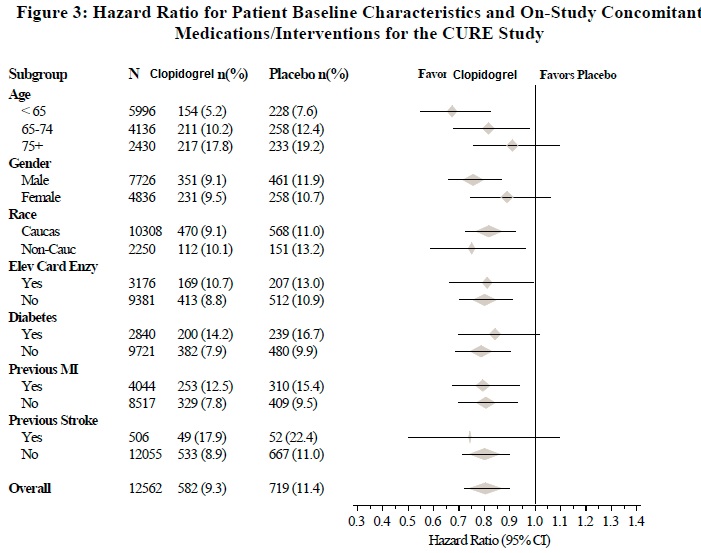
Figure3 (Figure3)
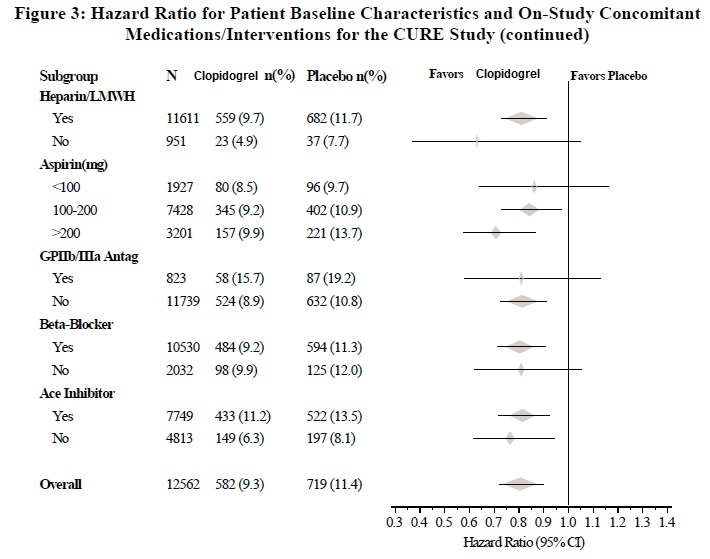
Figure3b (Figure3b)
This is a table showing the hazard ratio for Patient Baseline Characteristics and On-Study Concomitant Medications/Interventions for the CURE Study. The table presents data on subgroups based on the presence of Hepari/INWH, Aspirin(mg), GPIIHTIa Antag, Beta-Blocker, and Ace Inhibitor. The table provides information on the number of individuals in each subgroup, as well as the percentage of individuals receiving Clopidogrel and Placebo. The table also indicates whether Clopidogrel is favored or Placebo is favored. Additionally, the table shows a timeline from 2003 to 2014 on the x-axis and the Hazard Ratio (95%CI), ranging from 0.5 to 2.0, on the y-axis.*
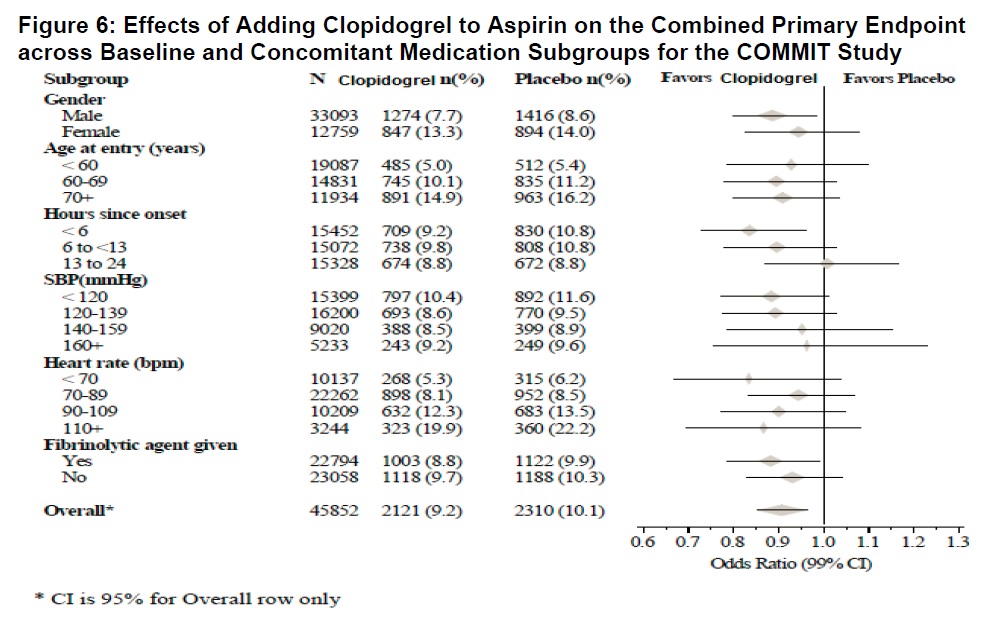
Figure6 (Figure6)
This is a table showing the effects of adding clopidogrel to aspirin on the combined primary endpoint in different clinical subgroups for the COMMIT study. It includes subgroups by gender, heart rate, and fibrinolytic agent given. The table displays the number of subjects in each subgroup, the number and percentage of those who received clopidogrel, and the results of the trial in terms of the number and percentage of those who benefited from it. There is also a graph depicting the odds ratio for each subgroup.*
Figure7 (Figure7)
The figure shows the cumulative event rate for fatal or non-fatal vascular events in the CAPRIE study. The study compared the use of clopidogrel to prevent these events. The x-axis indicates the months of follow-up, and the y-axis shows the cumulative event rate as a percentage. The study found a statistically significant difference in event rates between the clopidogrel group and the control group.*
Chemical Structure-clopidogrel (Clopiodgrel 01)
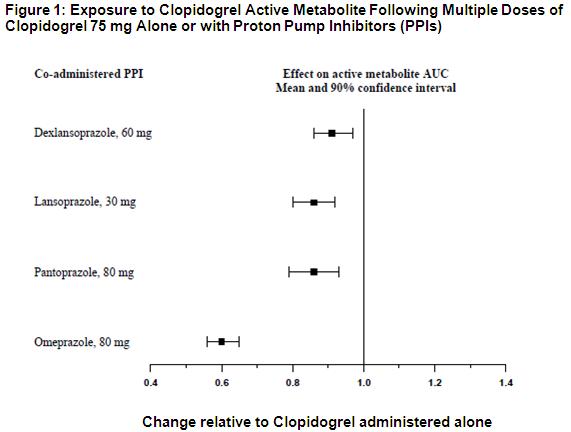
Figure-01 (Figure 01)
This is a figure with data on the exposure to Clopidogrel Active Metabolite with multiple doses of Clopidogrel 75mg alone or with Proton Pump Inhibitors. The figure shows the effect of co-administered PPI on active metabolite AUC mean and 90% confidence interval. The PPIs listed in the figure are Dextansoprazole, 60 mg, Lansoprazole 30mg, and Rabeprazole 20mg. The figure also shows the change relative to Clopidogrel administered alone.*
Figure 2 (Figure2)
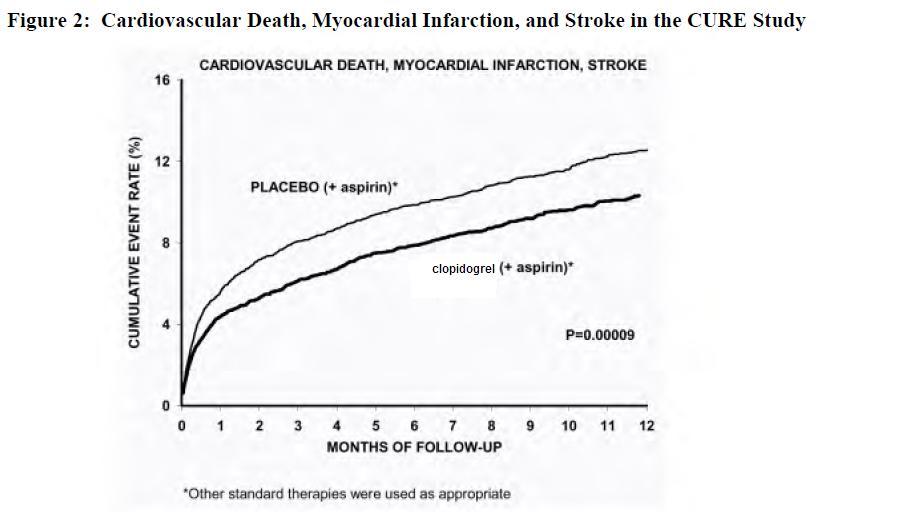
The text describes a figure (Figure 2) from the CURE study, which shows the rates of cardiovascular death, myocardial infarction, and stroke in patients treated with either placebo plus aspirin or clopidogrel plus aspirin over a follow-up period of several months. The figure indicates a lower cumulative event rate for the clopidogrel plus aspirin group compared to the placebo plus aspirin group. Standard therapies were also used in addition to the treatments being compared.*
Figure4 (Figure4)
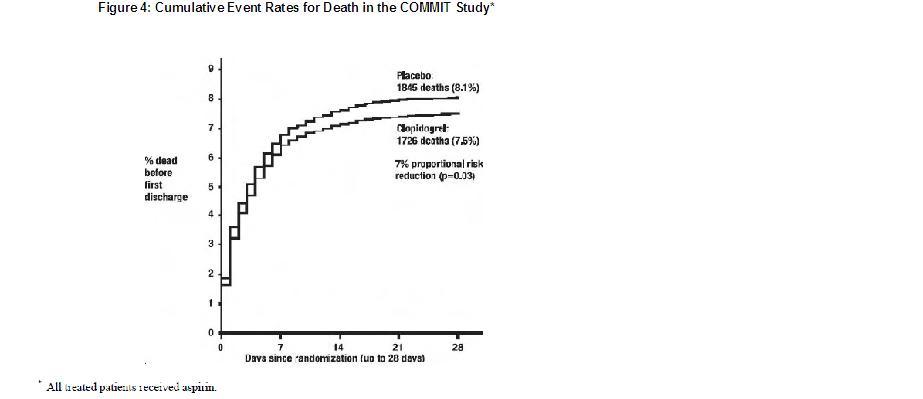
Cumulative event rates for death in the COMMIT study are presented in Figure 4. The study involved 1815 deaths (81%) in the placebo group and 172 deaths (75%) in the aspirin group. The figure shows a 7% proportional risk reduction (p-033) and 21 fewer deaths in patients who received aspirin compared to those who received placebo. All patients included in the study were treated equally.*
Figure5 (Figure5)
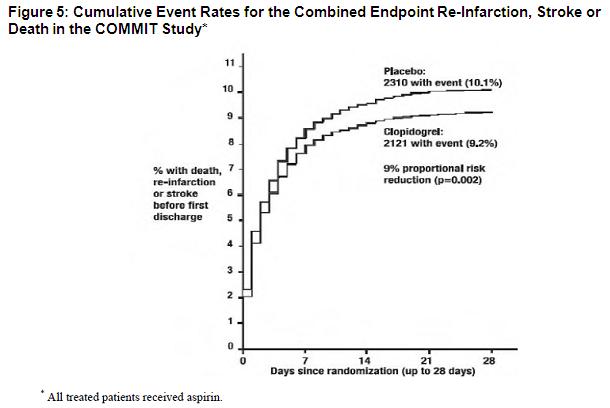
This is a graph from the COMMIT study showing the cumulative event rates for the combined endpoint of re-infarction, stroke, or death. The placebo group had 2310 events (10.1%), while the group taking clopidogrel had 2121 events (8.2%), resulting in a proportional risk reduction of 9% (0.06 with death, 0.07 with re-infarction or stroke) before the first discharge after randomization. The X-axis represents the number of days since randomization (up to 28 days), and all treated patients received aspirin.*
Figure8 (Image 01)
* These product label images have been analyzed using experimental machine learning. Please verify findings with the primary label text.