Lyrica
Product Images NDC 43353-413

View Photos of Packaging, Regulatory Labels, and Product Appearance

Product Visual Gallery

This gallery contains 22 technical images submitted to the FDA as part of the official labeling for Lyrica (NDC 43353-413). Unlike standard consumer photos, these assets often include clinical data figures, molecular chemical structures, and official manufacturer packaging layouts.

As provided by Aphena Pharma Solutions - Tennessee, Llc, these visuals offer a comprehensive scientific overview of the product's physical and chemical identity, aiding pharmacists and researchers in product verification and study.

FDA Label Image

Bottle Label 50mg (43353 263)
FDA Label Image

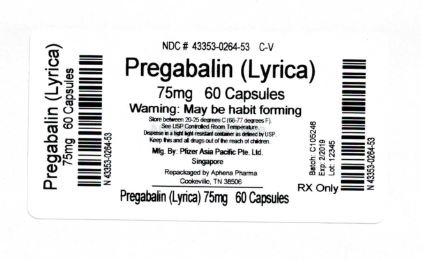
Bottle Label 75mg (43353 264)

Bottle Label 75mg (43353 264)
Pregabalin (Lyrica) is a medication available in capsule form with a strength of 75mg. The package contains 60 capsules.*
FDA Label Image

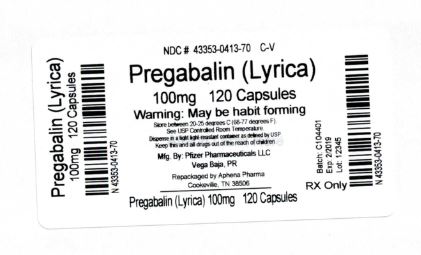
Bottle Label 100mg (43353 413)

FDA Label Image

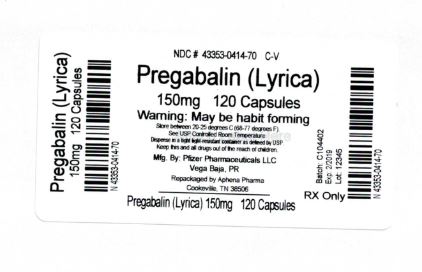
Bottle Label 150mg (43353 414)

Bottle Label 150mg (43353 414)
This is a not-readable text obtained by .*
FDA Label Image

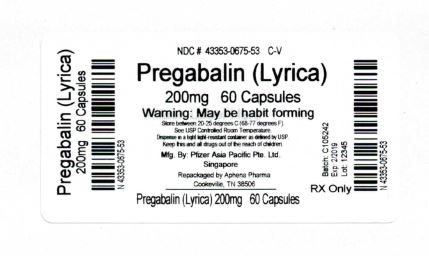
Bottle Label 200mg (43353 675)

Bottle Label 200mg (43353 675)
This is not-available as the has produced gibberish text.*
FDA Label Image

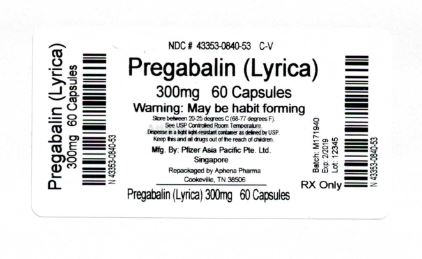
Bottle Label 300mg (43353 840)

Bottle Label 300mg (43353 840)
This is a prescription medication called Pregabalin, also known as Lyrica. The pack consists of 60 capsules with a dosage strength of 300mg. It is important to note that this medication may be habit-forming and should only be taken with a valid prescription.*
FDA Label Image

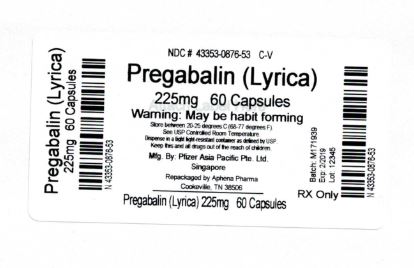
Bottle Label 225mg (43353 876)

Bottle Label 225mg (43353 876)
This is a product description for 60 capsules of 225mg pregabalin (Lyrica) medication. There are no further available details as the output contains some non-English characters.*
FDA Label Image

Aphena Pharma Solutions (TN)

FDA Label Image

Figure (Lyrica 01)

Figure (Lyrica 01)
This appears to be a medical formula for calculating creatinine clearance rate (CLC) for female patients based on age, weight, and serum creatinine levels. The formula suggests subtracting the patient's age (in years) from 140, multiplying their weight (in kilograms) by 5, multiplying their serum creatinine level (in mg/dL) by 72, then dividing the result by the product of age and serum creatinine levels. The result should then be multiplied by 0.85 for female patients.*
FDA Label Image

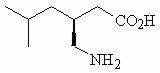
Chemical Structure (Lyrica 02)

FDA Label Image

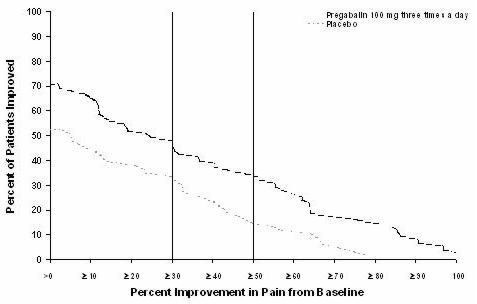
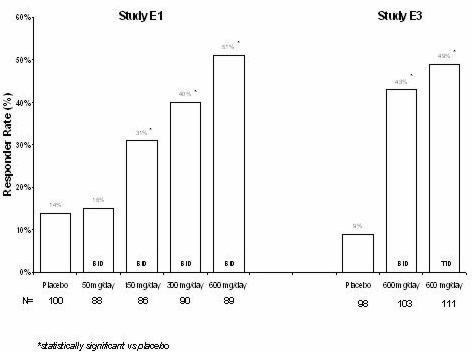
Figure 1 (Lyrica 03)

FDA Label Image

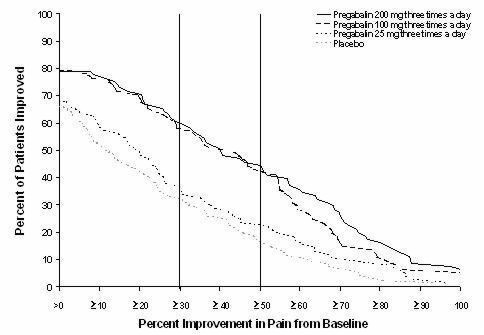
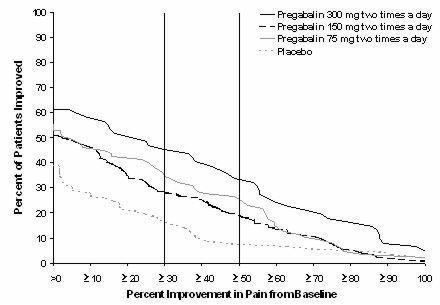
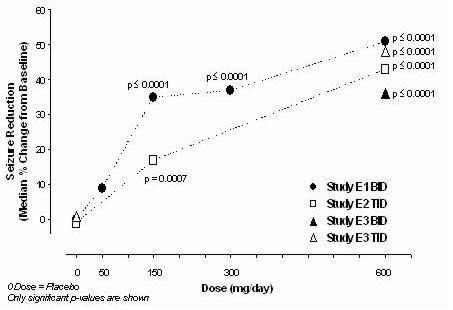
Figure 2 (Lyrica 04)

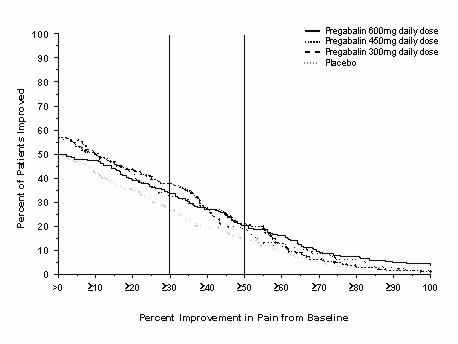
Figure 2 (Lyrica 04)
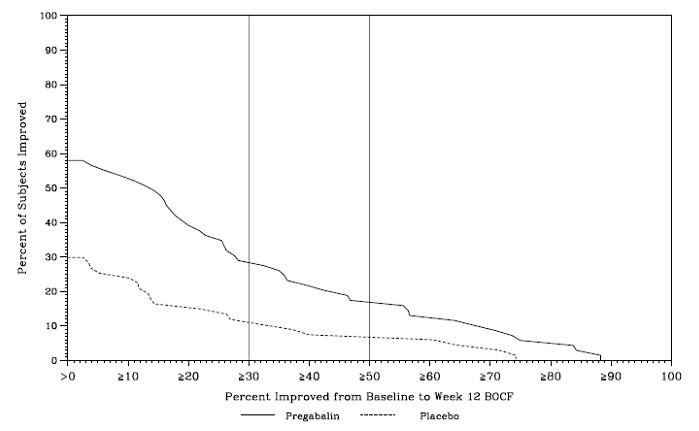
The text is describing a chart or table that shows the percentage of patients improved from a baseline. There are some numbers and symbols that are not recognizable due to incorrect , so the information is incomplete.*
FDA Label Image

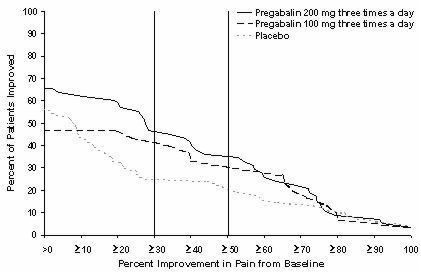
Figure 3 (Lyrica 05)

FDA Label Image

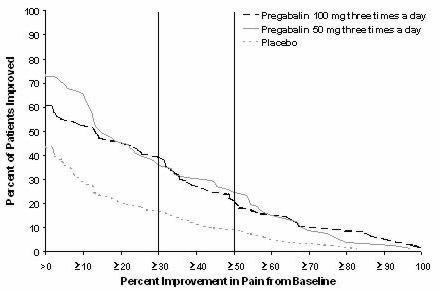
Figure 4 (Lyrica 06)

FDA Label Image

Figure 5 (Lyrica 07)

FDA Label Image

Figure 6 (Lyrica 08)

FDA Label Image

Figure 7 (Lyrica 09)

FDA Label Image

Figure 8 (Lyrica 10)

FDA Label Image

Figure 9 (Lyrica 11)

FDA Label Image

Figure 10 (Lyrica 12)

FDA Label Image

Figure 11 (Lyrica 13)

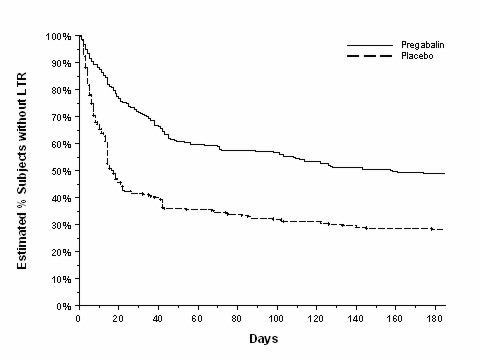
Figure 11 (Lyrica 13)
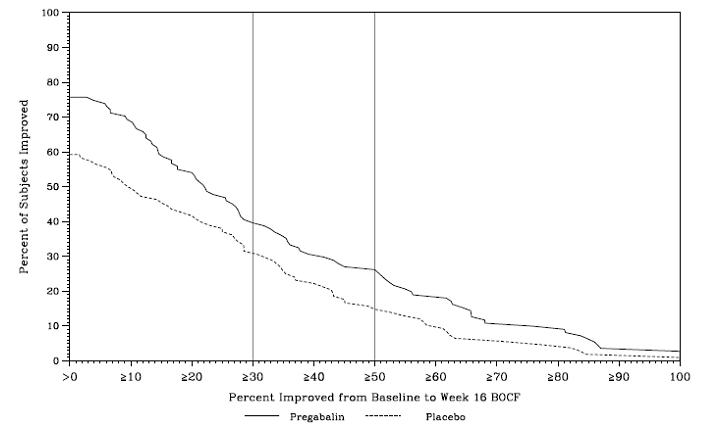
This table shows the percentage of subjects who improved after taking Pregabalin compared to Placebo over a 16 week period. The percentage of subjects who improved was 100%, but there is no additional information available in the provided text.*
FDA Label Image

Logo (Lyrica 14)

* These product label images have been analyzed using experimental machine learning. Please verify findings with the primary label text.